Why Does the World Celebrate International Biodiversity Day?
May 22 marks International Day for Biological Diversity, established by a special resolution of the UN General Assembly in 1995. The main goal of the holiday is to draw public attention to the problem of the irreversible disappearance of many representatives of flora and fauna as a result of human activity.
Each Biodiversity Day has its own theme. This year's motto is "From Agreement to Action: Build Back Biodiversity". Why is it phrased this way? It refers to the adoption in December 2022 of the Kunming-Montreal Global Biodiversity Framework — a historic agreement that sets goals and concrete measures to halt and reverse nature loss by 2050.
CORPORATE PROGRAMS
In all subsidiaries of Zarubezhneft within the Exploration and Production segment operating in Russia, corporate Biodiversity Conservation (BC) Programs have been developed and are being implemented. The programs of Zarubezhneft-Dobycha Kharyaga and RUSVIETPETRO are particularly significant, as these subsidiaries operate in the Arctic zone, which is characterized by increased vulnerability.
The BC Program, based on a list of flora and fauna species that serve as indicators of the sustainable state of the Kharyaga field ecosystems, has been implemented since 2018. In 2020, it was updated: the wild reindeer (WR) was included in the new edition as a flagship species.
ZNDKh monitors the status of the wild reindeer population. In 2021, an aerial survey of reindeer was conducted over an area of 1,500 km2. High-resolution satellite imagery was used to determine the boundaries of the summer range for this species.
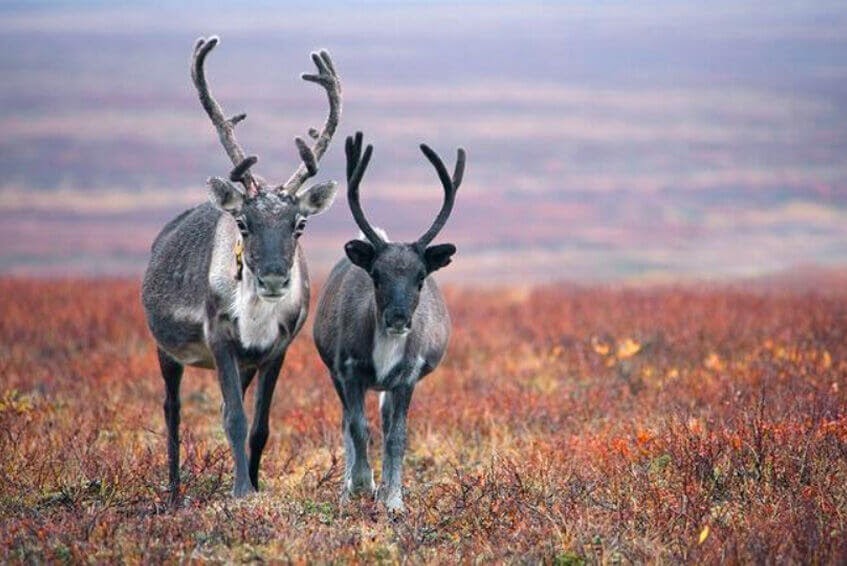
During ground field work in August 2022, reindeer herding teams captured two wild reindeer northwest of the Kharyaga field. Specialists placed collars with satellite radio tags around the animals' necks. This process is called tagging or marking. The GPS-enabled collars are registered in the Argos program, which allows for tracking the animals' movements and monitoring their future.
The BC Program and the study of valuable wetland communities of the Central Khoreyver Uplift at RVP facilities include an inventory of landscapes disturbed by production activities and the development of a map of these territories. Additionally, the company conducts work to identify migration routes of wild animals and birds.
RUSVIETPETRO also implements compensatory measures for the artificial reproduction of aquatic biological resources. Last year, the company's specialists, together with the Northern branch of Glavrybvod and the Onega Fish Hatchery, released 5,555 juvenile brown trout into the Onega River near the village of Porog (Arkhangelsk Region).
FLIGHT OF HOPE
In 2019, Zarubezhneft and the Ministry of Natural Resources signed a Cooperation Agreement regarding the conservation and restoration of the West Siberian population of the Siberian Crane (white crane) as part of the "Business and Biodiversity" project. The implementation of activities is planned for 5 years, with the work being carried out by VNII Ecology and the Oka Nature Reserve.
As a result of active extermination along migration routes, the Siberian Crane was included in the International Union for Conservation of Nature (IUCN) Red List in the middle of the last century. Today, white cranes live in two separate populations: one in Yakutia and the other nesting in Western Siberia. The West Siberian population is in a critical state: its numbers in the wild do not exceed 20 individuals.
In 1979, at the initiative of the International Crane Foundation, a breeding center was established in the Oka Nature Reserve. Based on the experience of American scientists, the "Flight of Hope" program was developed to restore the West Siberian population of Siberian Cranes. Employees of the Rare Crane Species Breeding Center raise Siberian Cranes in captivity for subsequent release into their natural habitat. In total, more than 160 Siberian Cranes have been released into the wild during the reserve's operation.
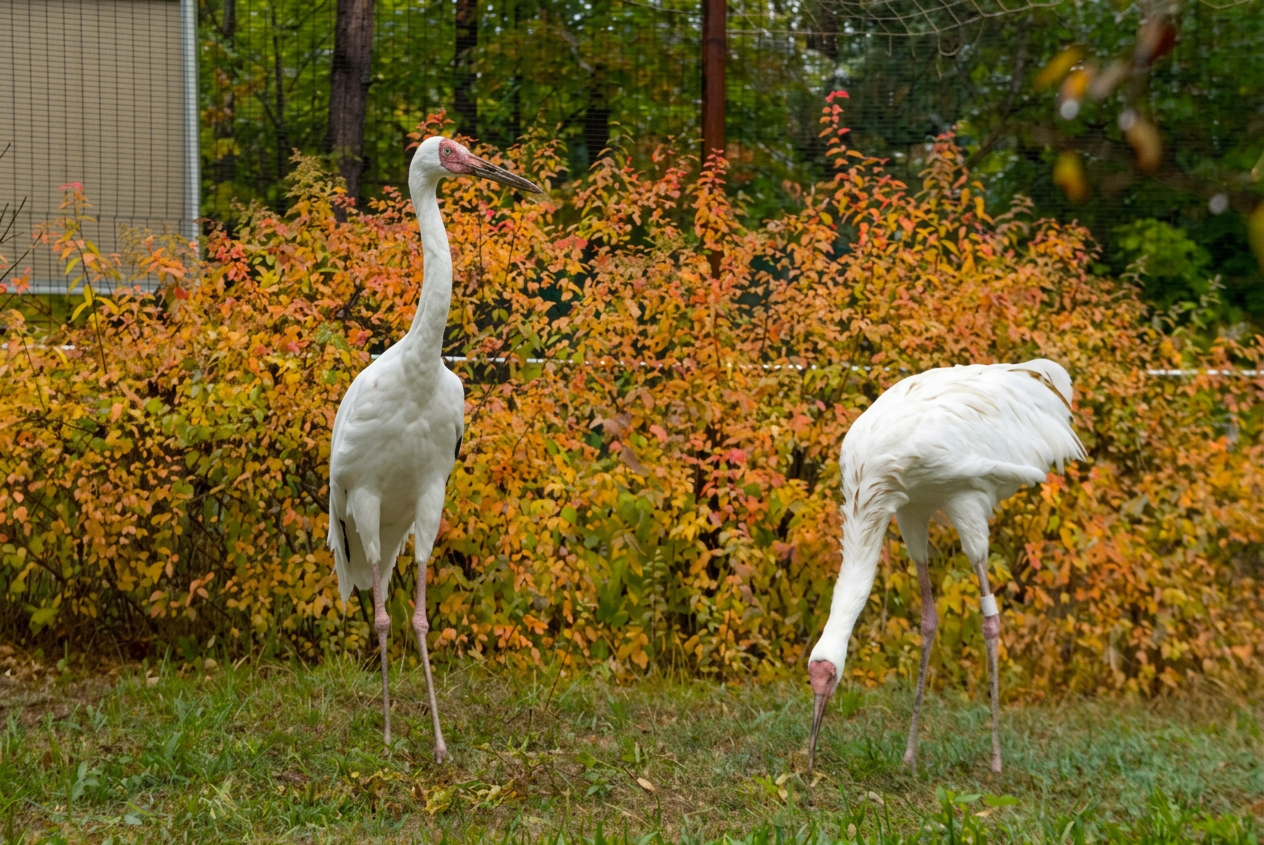
Interesting fact: all chicks in the breeding center are given names. As with all rare species, studbooks are maintained for Siberian Cranes, so every white crane has a pedigree. This is necessary to properly form pairs.
As a participant in the "Business and Biodiversity" project, Zarubezhneft took over the full financing of crane breeding — from feed to equipment. In 2021, thanks to the company's support, specialists from the breeding center were able to go on their first expedition to Western Siberia since the 1980s, bringing back three eggs to increase the genetic diversity of the Siberian Crane group in the center.
With Zarubezhneft's funding, buildings of a multifunctional complex were also built or reconstructed in the Oka Nature Reserve: a feed kitchen, a veterinary block, a workshop, aviaries for housing cranes, a boiler room, and more.
For last year's World Crane Day, the company presented the reserve with a display stand about the crane species that live in the breeding center. In addition to information in the standard text format, it also includes an interactive part: via QR codes, a narrator talks about the birds and how they are bred.
DIVING INTO THE TOPIC
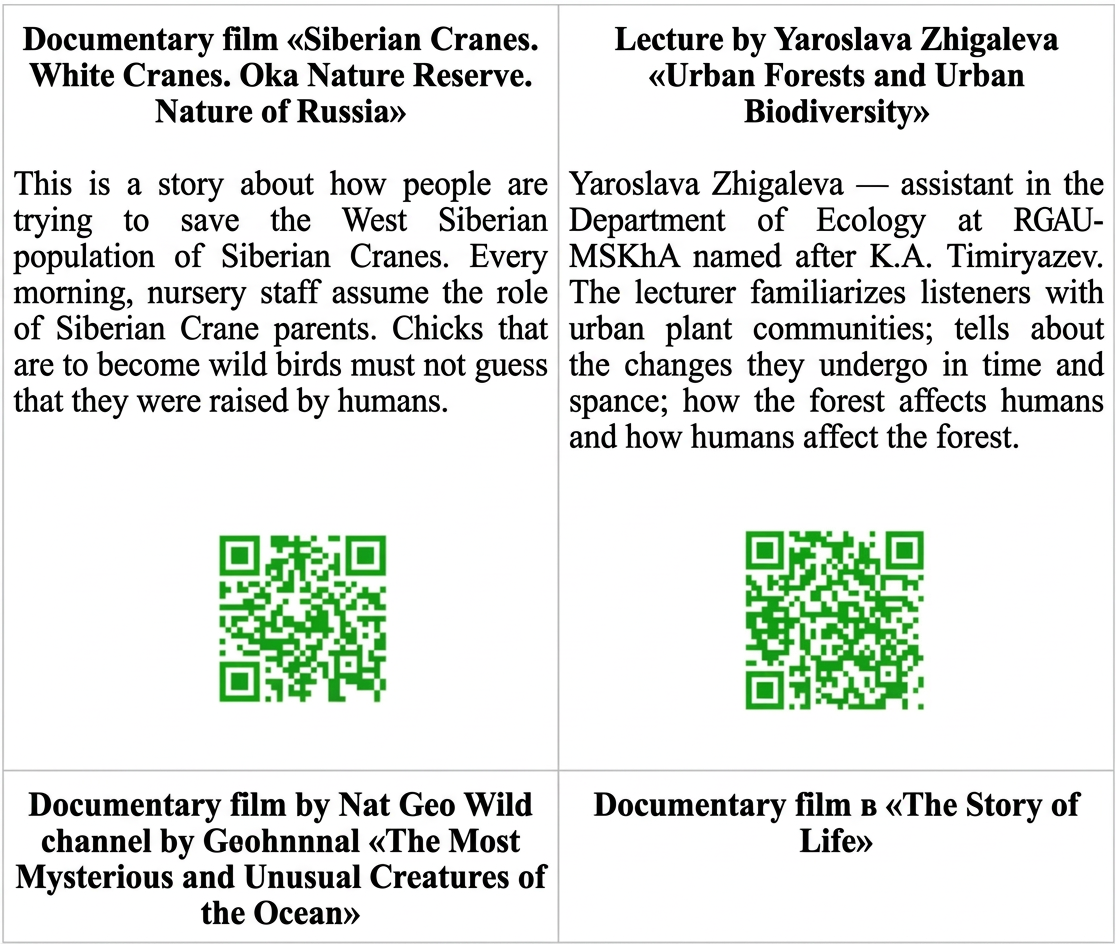
The topic of biodiversity is as inexhaustible as the world's oceans. We invite you to dive deeper into it with our selection of documentaries and lectures.