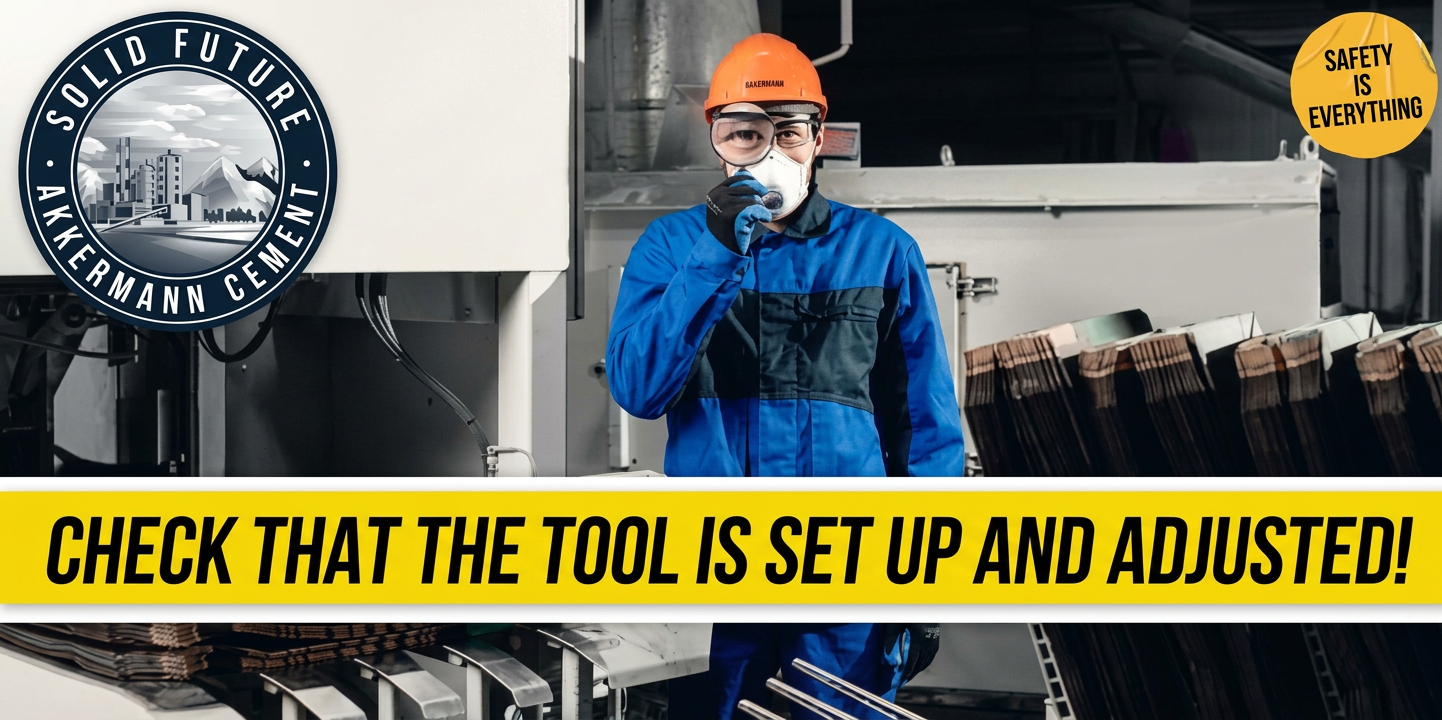
One of Akkermann Cement's Life-Saving Rules: Perform work using functional equipment, tools, and devices
One of the primary causes of accidents is the operation of faulty tools and equipment.
What are the risks of faulty equipment? Maintaining production equipment is generally associated with increased danger, which is why its design is subject to several strict requirements. According to regulations, it must remain safe throughout its entire service life. However, negligent handling, lack of timely maintenance, wear and tear, or use in unintended operating modes can cause mechanical failure and, consequently, lead to worker injuries.
In addition to the safe operation of equipment, using safe tools plays a vital role. The main types of injuries during benchwork, assembly, and repair tasks are bruises, fractures, and wounds caused by malfunctions. Electric shocks resulting from the use of tools with damaged insulation or homemade hand tools hold a significant place among these injuries.
The employer is responsible for the safety of the tools and equipment provided to employees; therefore, constant attention is paid to the organization of tool management at the enterprise. Work equipment must meet requirements that guarantee safety. The primary condition is that the tools and equipment used must be in good working order, in accordance with regulations and legal requirements. Preventing injuries also depends on a detailed study of the design of a particular mechanism and a thorough review of the operating instructions.
Therefore, when starting their professional duties, every employee must first check the condition of their work equipment. If a tool or piece of equipment is faulty, it must never be used. One visual way to warn of potential hazards is to place safety signs at workstations, including the sign "Use only functional tools and equipment." This is a requirement that must not only be known but followed!
Follow the Life-Saving Rules!
Have a safe day, take care of yourself and your loved ones!