Methods for Securing Objects at Height: Practices of ZARUBEZHNEFT-dobycha Kharyaga LLC
Most Russian companies strictly follow occupational safety rules when working at height. Most, but unfortunately, not all. Sometimes, walking down the street of any city in Russia, one can see the construction of a new house and workers walking along the edge of a concrete wall at a height of 20-30 meters without any safety equipment.
However, overall public awareness regarding safety issues is growing: the state regularly reviews regulatory documents and introduces amendments, while companies apply new protection methods and implement advanced technologies.
The All-Russian Occupational Safety Week, held annually in Sochi, showcases the most modern protective equipment for both people and machinery. The market provides opportunities for their purchase and application. Here, in terms of implementation and use, everything depends on the employer's commitment and the level of safety culture present within the company.
ZARUBEZHNEFT-dobycha Kharyaga is one of those employers that does not just fulfill the mandatory requirements of Russian legislation but also seeks and utilizes new approaches and practices to improve safety at its facilities, showing care for personnel, including contractors.
We are talking about the standard for methods of securing objects at height, known internationally as "DROPS". The goal is the absence of unsecured objects at workplaces located at height.
The occupational safety rules for working at height (Order No. 782n of the Ministry of Labor, paragraph 192) state that "equipment, mechanisms, hand-held power tools and other tools, inventory, fixtures, and materials used when performing work at height must be used with safety measures that exclude their falling (placement in bags and pouches, fastening, slinging, placement at a sufficient distance from the edge of a height difference, or securing to the worker's safety harness). Tools, inventory, fixtures, and materials weighing more than 10 kg must be suspended on a separate rope with an independent anchoring device."
This is too general a formulation. Moreover, it refers to section "XI. Occupational safety requirements when using lineman's spurs and climbers." Does this mean that if lineman's spurs and climbers are not used in the work, the paragraph is inapplicable? This does not cover a wide enough range of types of work at height. At the same time, objects weighing less than 10 kg can fall from a height and injure workers.
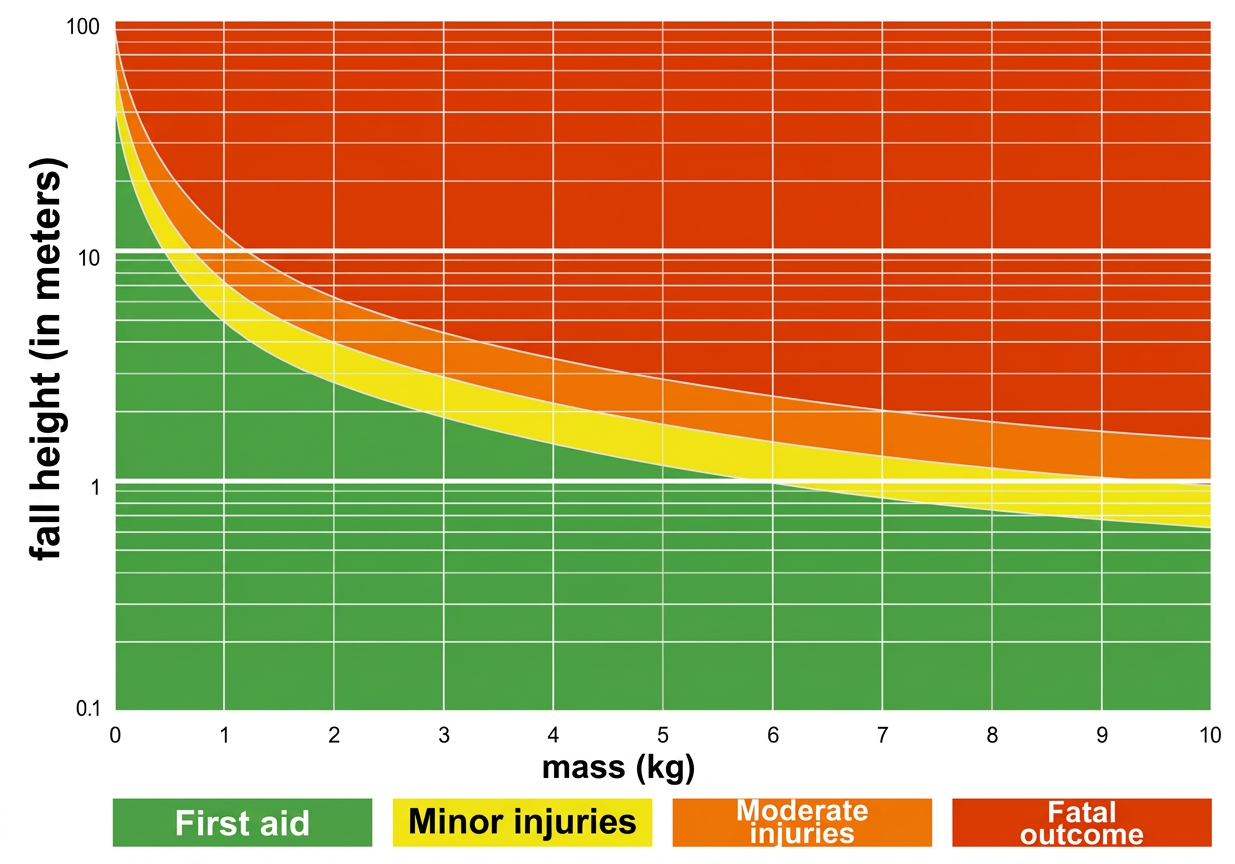 |
The presented diagram shows the consequences of objects falling from a height onto a person wearing work clothes and a safety helmet. Note that even a load weighing 1.5 kg falling from a 10-meter height can lead to fatal consequences. |
How to reduce the risks of objects falling from a height?
Here are the two main approaches used by ZARUBEZHNEFT-dobycha Kharyaga for this purpose:
- from a risk assessment perspective, every object lifted up must be considered as potentially dropped;
- the use of unsecured parts, equipment, and materials at height is not permitted;
In particular, the DROPS standard contains the following key practices:
-
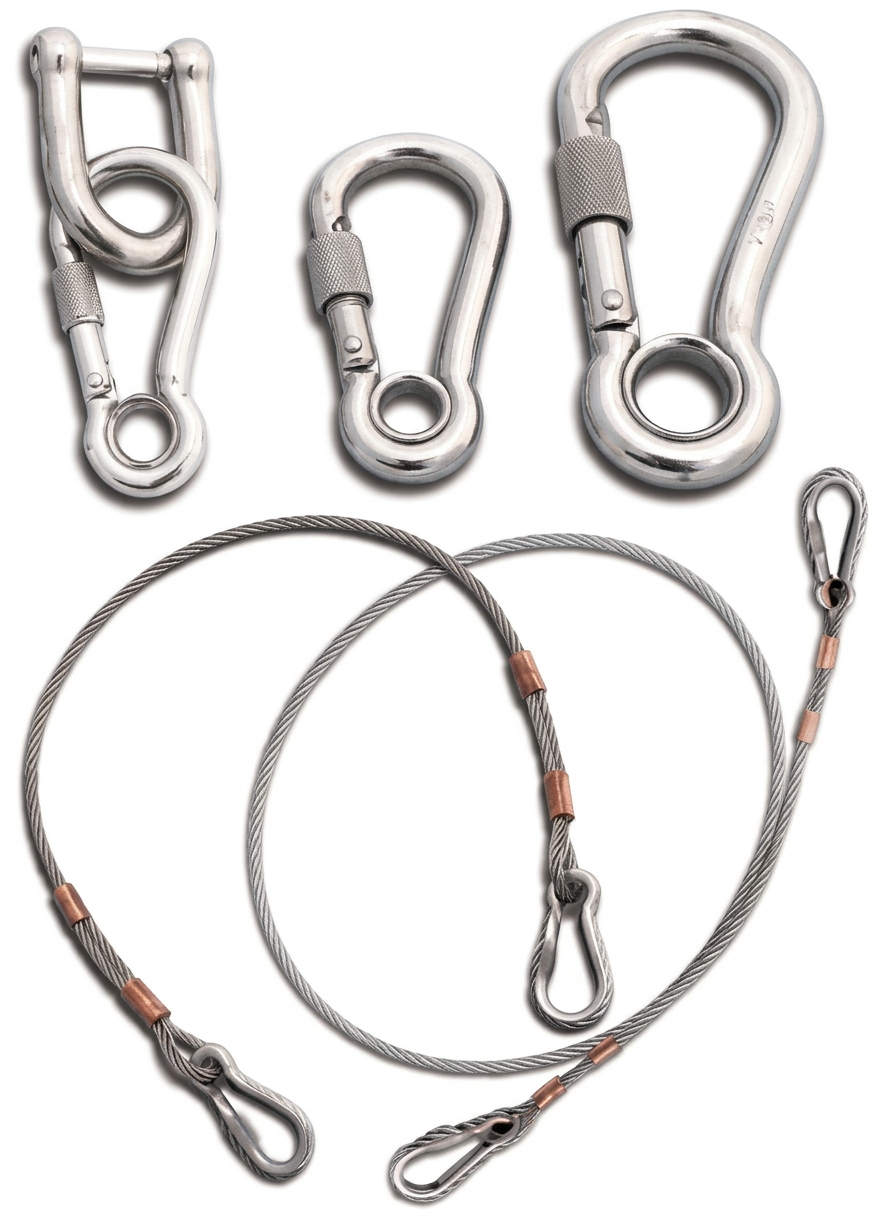
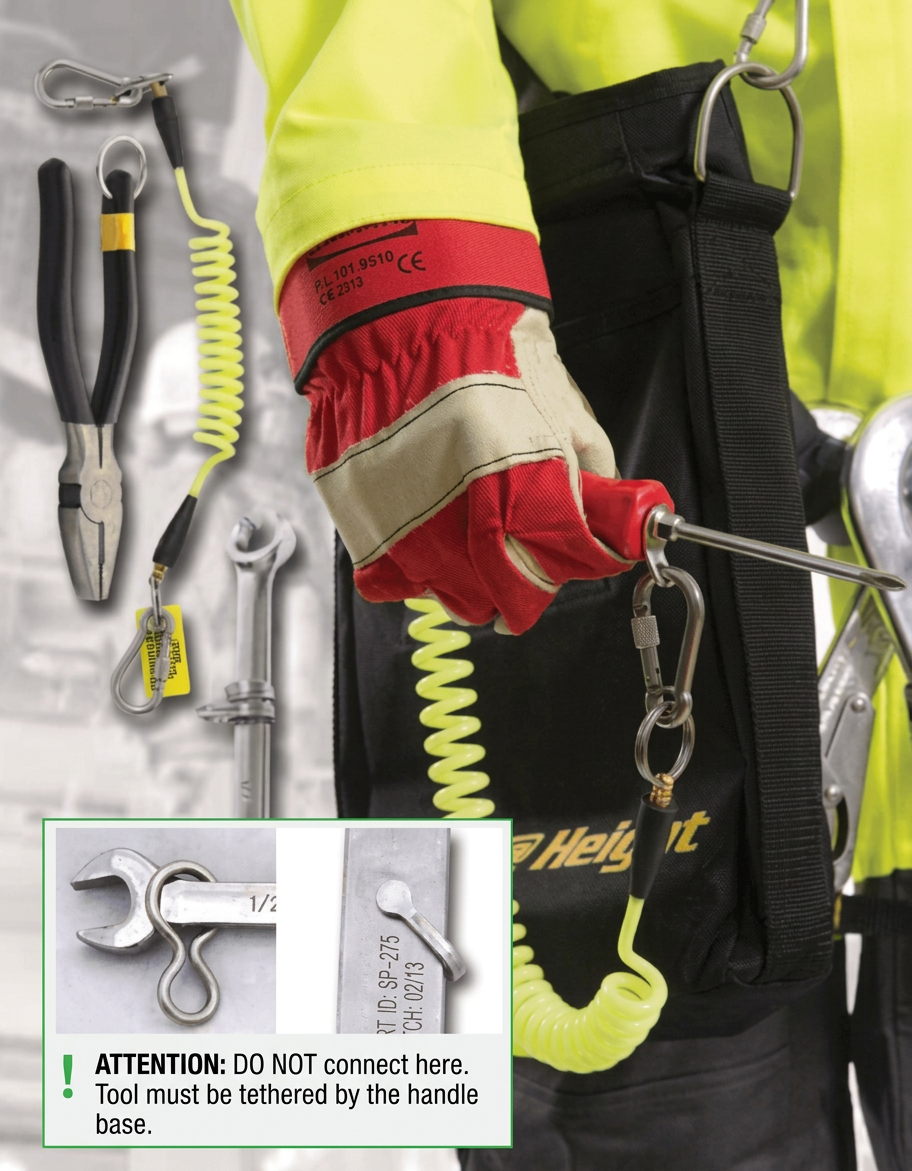
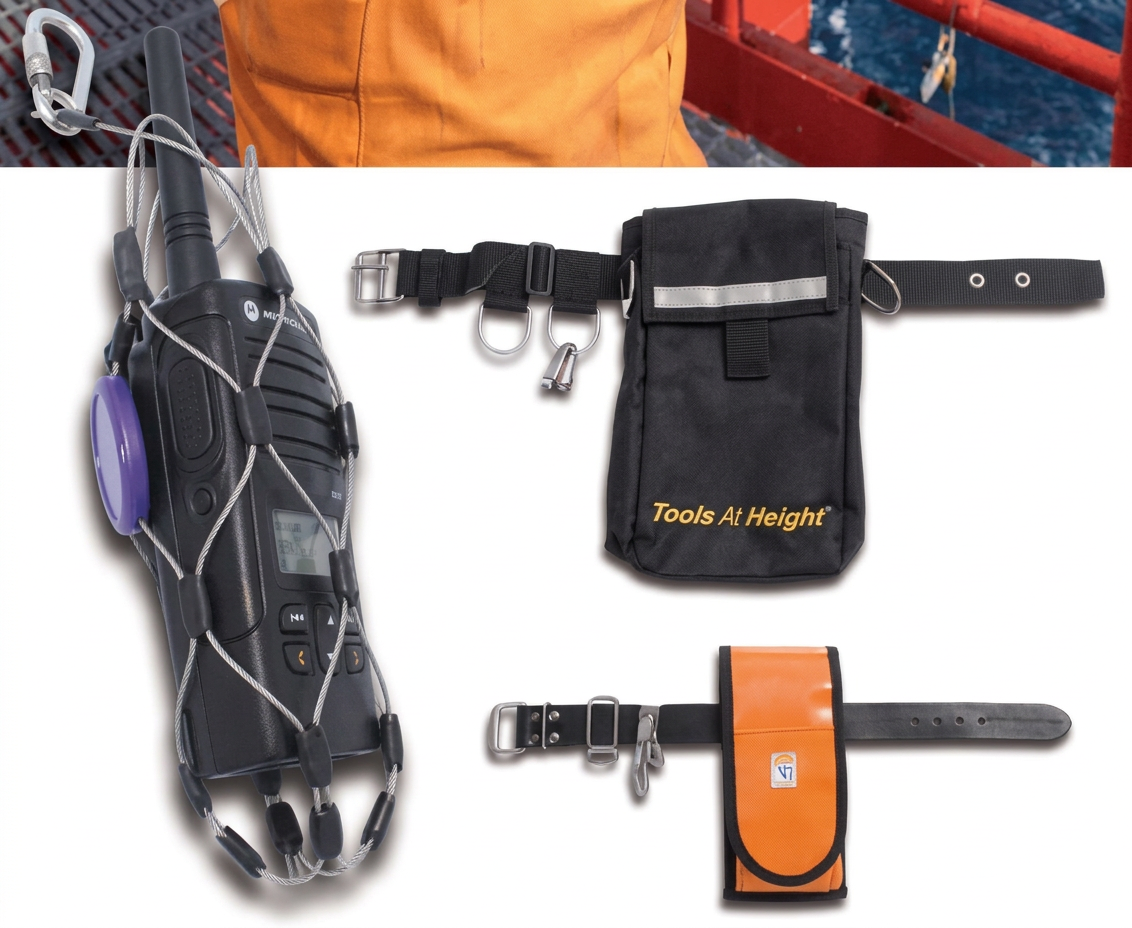
tools weighing less than 2 kg are secured to the body using special belts and lanyards;
- tools weighing more than 2 kg are secured to the structural element (facility) closest to the work site;
-
attachment points/devices on tools are documented, and all safety lanyards undergo inspections in accordance with the manufacturer's recommendations;
- attachment points for tools and mechanisms must be located above the level where work is being performed, on elements of the main structure, not on scaffolding.
 |
 |
-
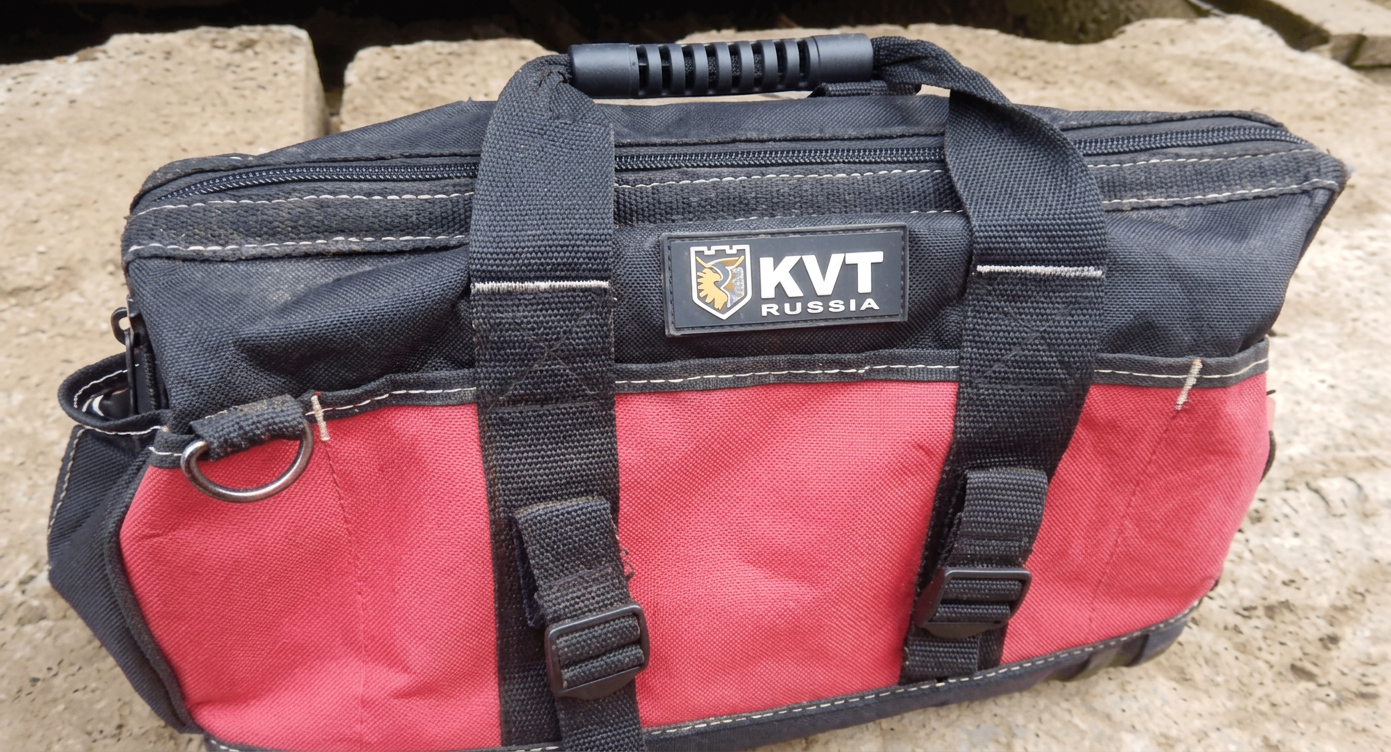
bags with a double locking mechanism are used to carry equipment not equipped with certified attachment points to prevent accidental opening;
- the use of belt clips that allow equipment to be detached by a 180-degree turn, and belts with snap-button fasteners, is prohibited;
 |
 |
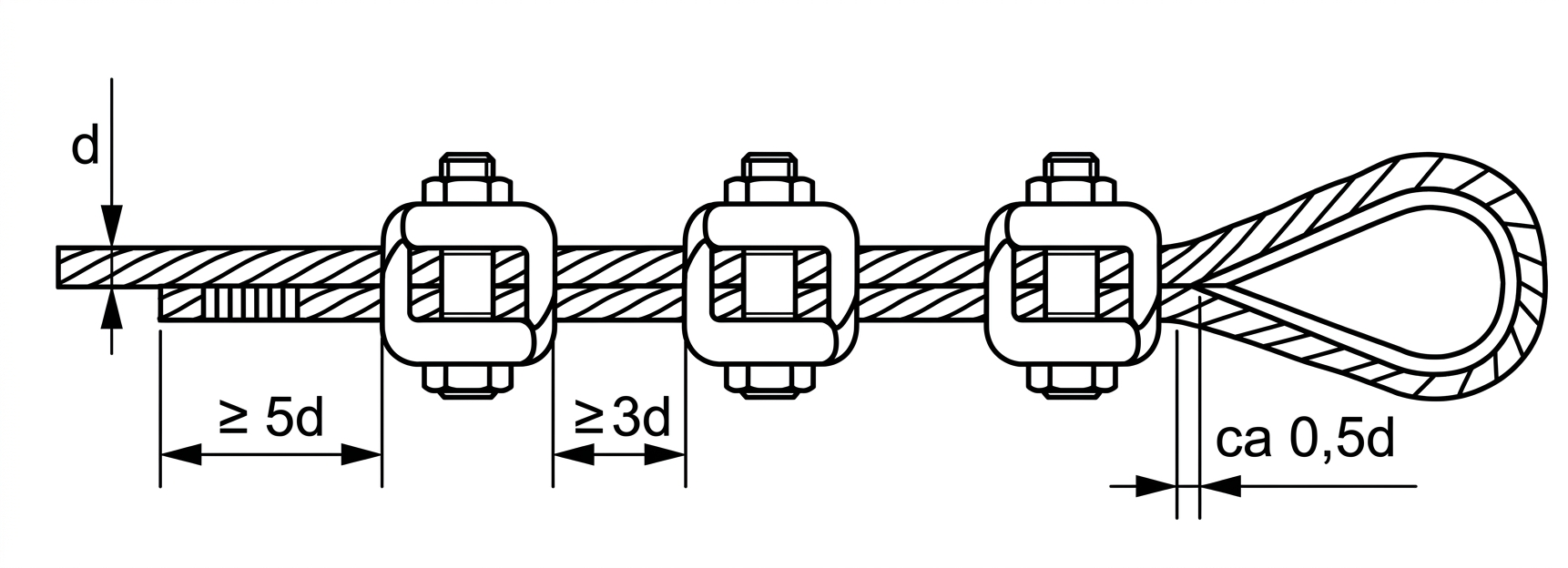
- standards have been established for additional securing of ropes with clamps:
|
Rope diameter, mm |
Minimum number of clamps, pcs. |
|
|
3-9 |
3 |
|
|
10-16 |
4 |
|
|
17-20 |
5 |
|
|
21-26 |
6 |
|
|
27-37 |
7 |
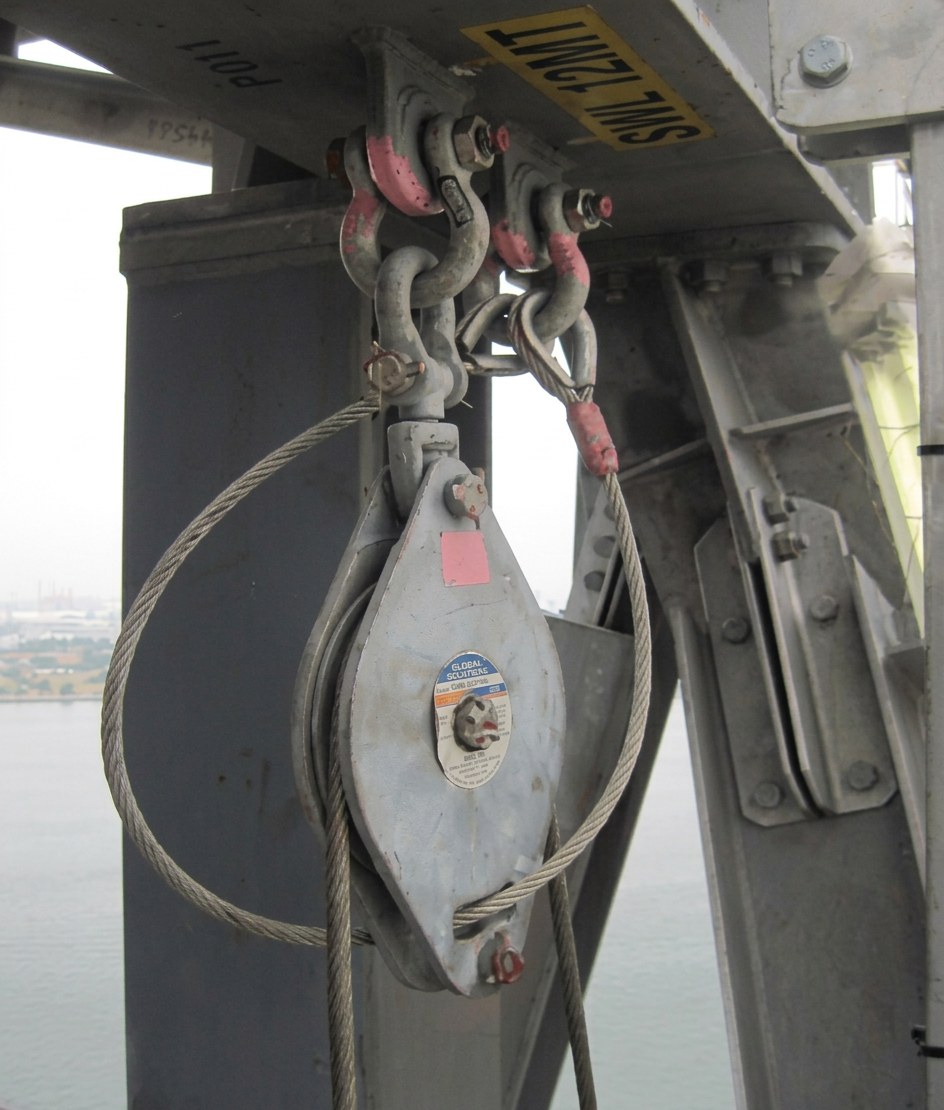
- rigging shackles used must have the required Safe Working Load (SWL), be certified, and marked;
- blocks must be equipped with two built-in barriers (primary and secondary retention means) both on the suspension unit and on the axle.
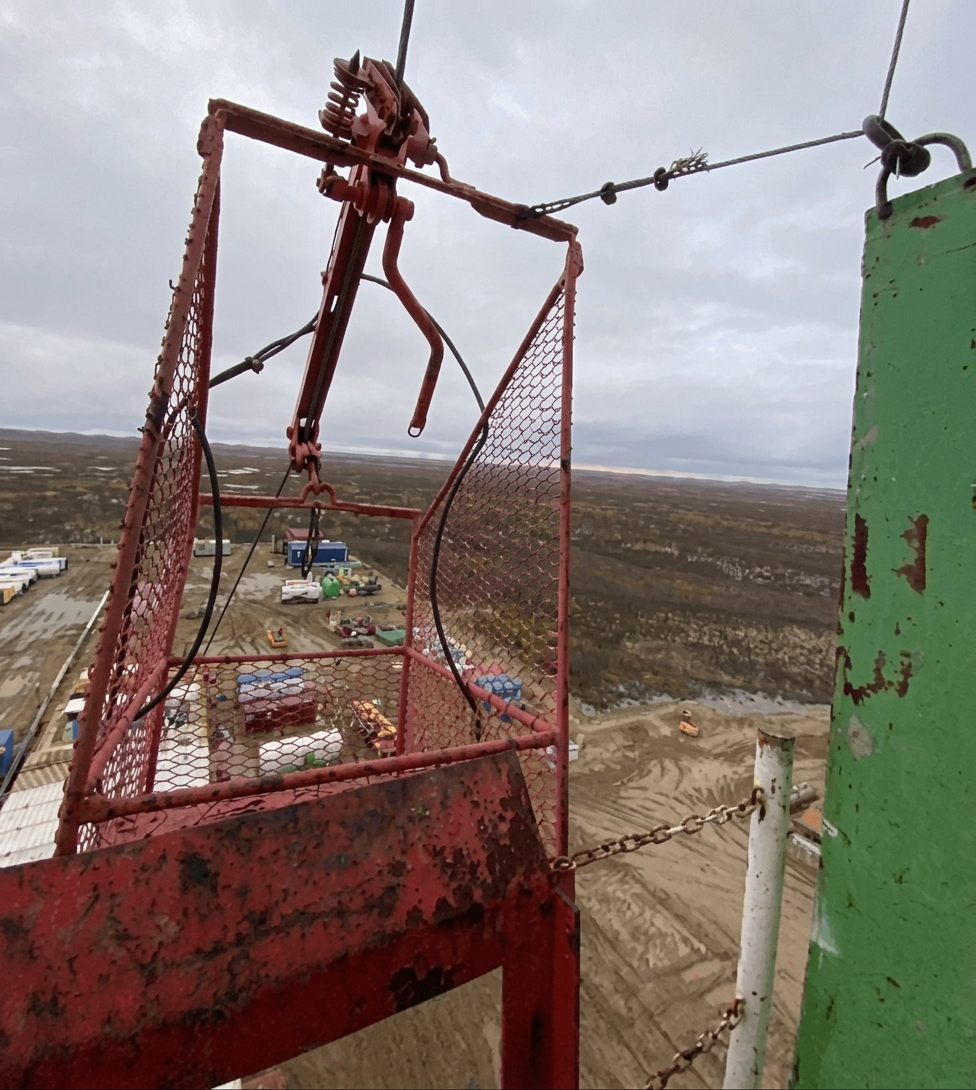
- in restricted access areas, such as the drilling rig derrick, flare boom, and cranes, the entry and exit of tools used for work at height must be registered to avoid leaving tools at the work site;
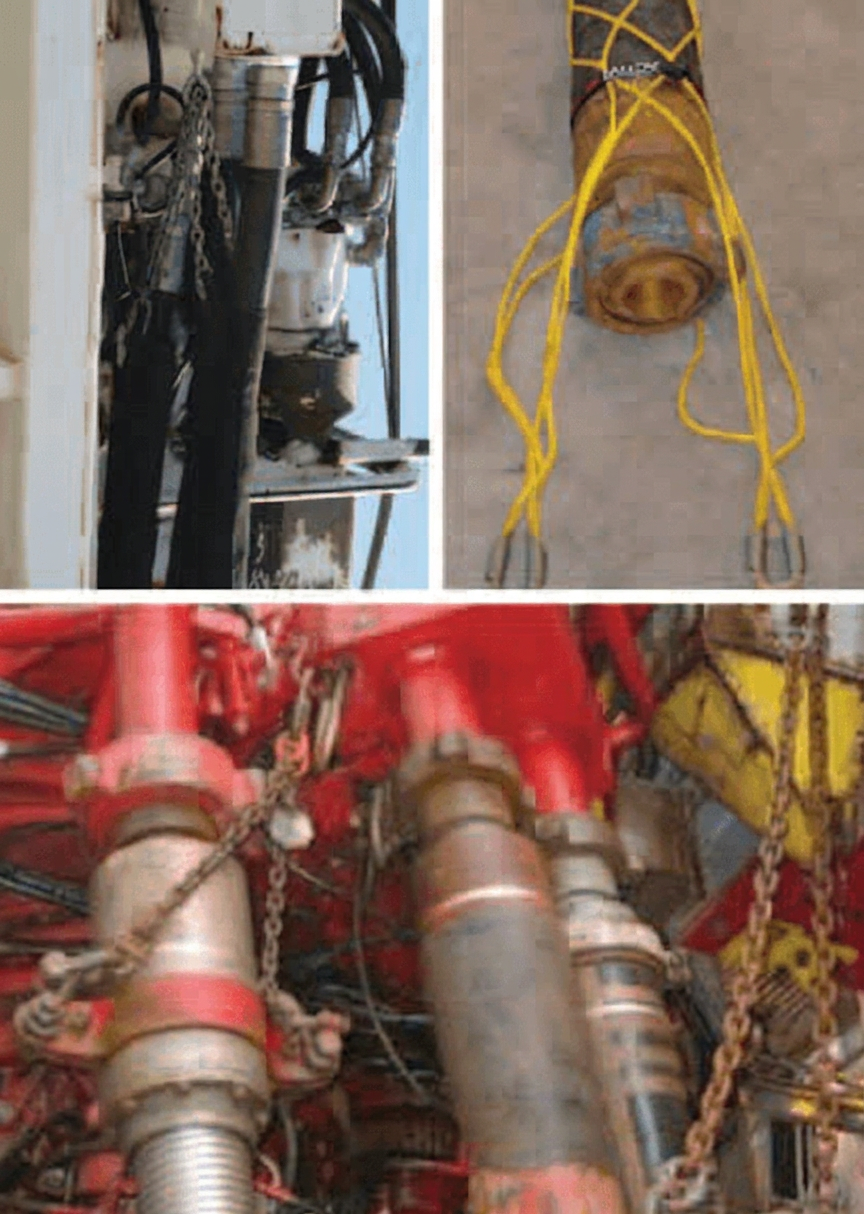
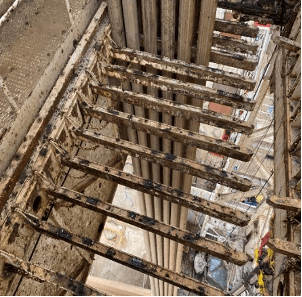
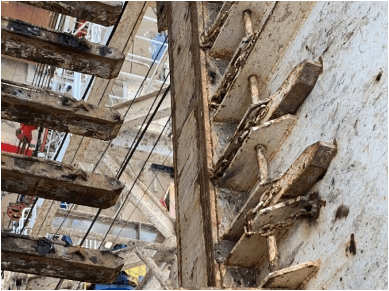
- even at the rig assembly stage, equipment and structures located at height are secured and checked against a checklist as part of the commissioning commission;
 |
|
 |
 |
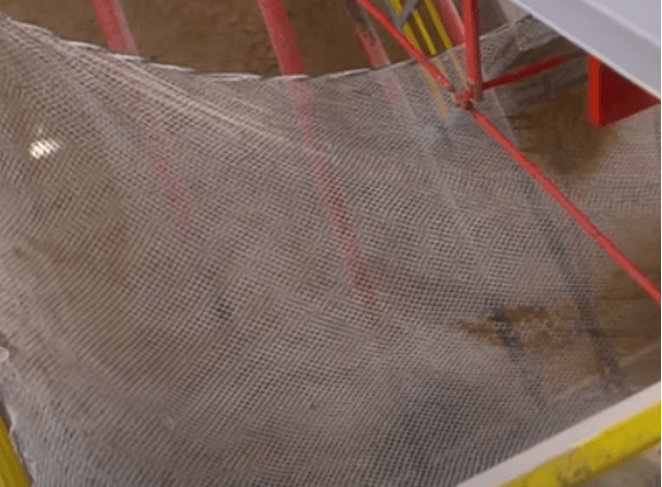
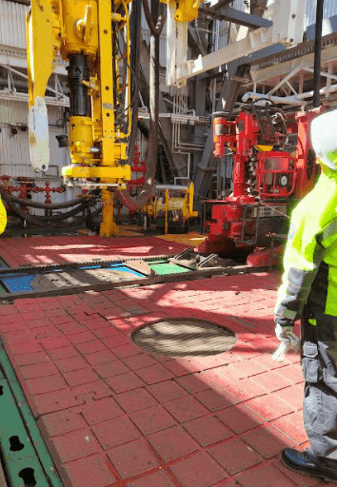
- red, restricted, and safe zones are designated on the drilling rig. Access to restricted zones is prohibited; red zones are areas with an increased risk of objects falling from height — access to them is allowed for specific types of work, and they are additionally fenced with a safety net stretched over the zone around the entire perimeter; safe zones are created for passage to work sites and movement for all personnel;
 |
 |
The standard was developed and implemented in the company in 2017 and included as an integral part of contracts in the list of mandatory requirements for ZARUBEZHNEFT-dobycha Kharyaga contractors. Since the transfer of the Kharyaga PSA operator functions to the company (2016), not a single incident related to objects falling from height has occurred at the facilities.