Implementing Additional Visualization Tools to Enhance Employee Hazard Awareness
One of the key objectives for enterprises across all industries is to ensure safe working conditions and reduce occupational injury rates. Occupational injuries not only harm employees' health but also damage the economy and reputation of companies.
At ZARUBEZHNEFT-Dobycha Kharyaga LLC, not only incidents but also near misses are recorded, including those involving contractor personnel. Over the past 4 years (including contractors), 4 work-related accidents have occurred. There is an annual decrease in the Lost Time Injury Frequency Rate (LTIFR) among contractors, while for ZARUBEZHNEFT-Dobycha Kharyaga LLC, this indicator has remained at zero every year since 2016.
There is also a decrease in the number of near misses, which confirms the effectiveness of existing risk reduction tools. Nevertheless, a significant number of near misses still occur, indicating insufficient employee awareness of existing risks and hazards in the workplace.
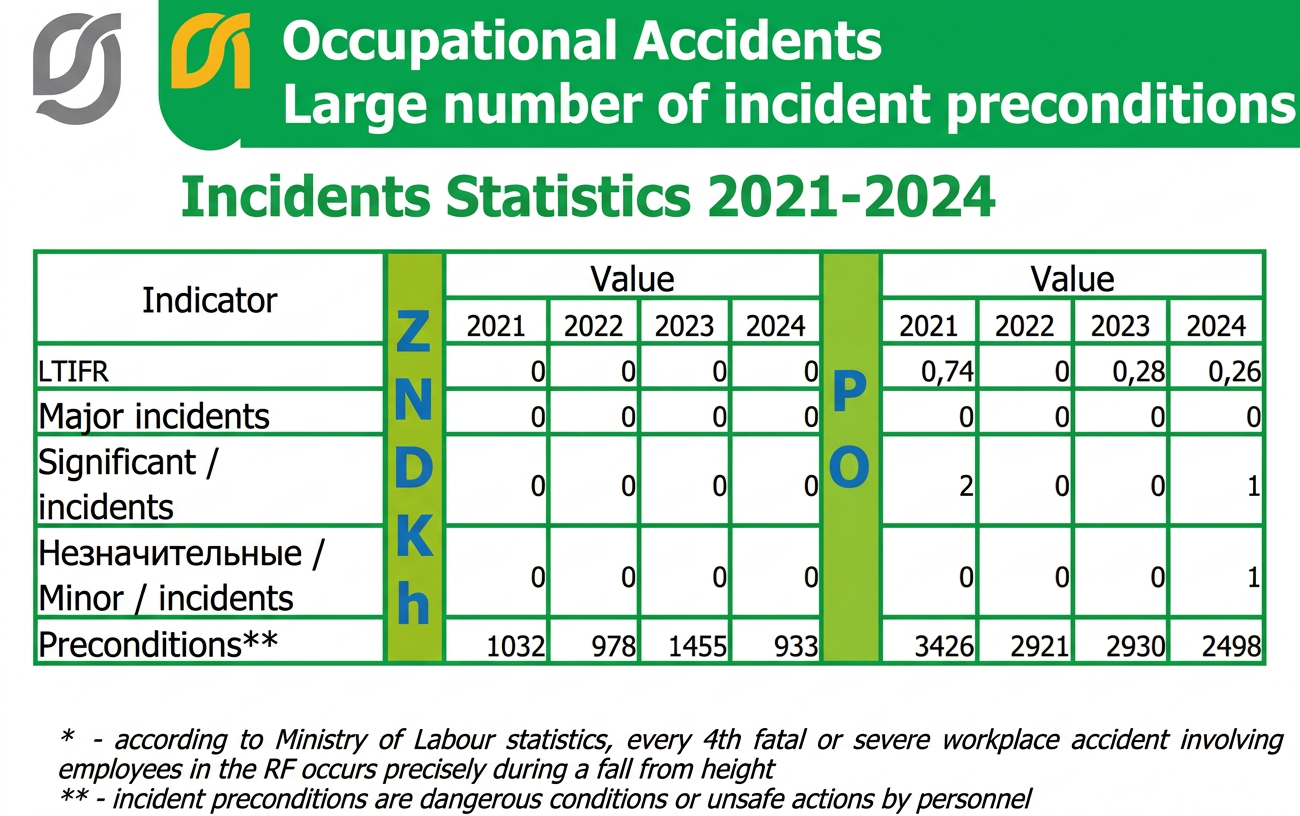
Given the large number of tools already implemented in the company to communicate information to employees, in 2025, the Health, Safety, and Environment (HSE) Department proposed introducing simple and easy-to-understand visualization tools. Studies show that the human brain processes visual information faster than text. About 90% of the information we perceive is visual. Visual elements can trigger an emotional response, which promotes better retention and understanding.
Following a benchmarking exercise, it was revealed that many companies effectively use visualization tools in the field of occupational safety.
Video reviews of accidents at industrial facilities of companies such as Gazprom, Rosneft, and Evraz serve as an important tool for improving workplace safety and informing employees about hazards and occupational risks.
Evraz released a series of videos titled "Remember Safety," featuring people whose lives were ruined by violations of occupational and industrial safety requirements. These videos have garnered over 800,000 views on YouTube, demonstrating the popularity of this format.
Gazprom Neft, in turn, broadcasts "5 Steps to Safety" videos to its employees. According to Rosatom's experience, introducing videos about blue-collar professions with a focus on safety aspects and demonstrating the consequences of not using Personal Protective Equipment (PPE) increased staff awareness of risks and hazards from 80% to 95%. In addition, Rosatom uses desk calendars as a visualization tool describing existing workplace risks and hazards.
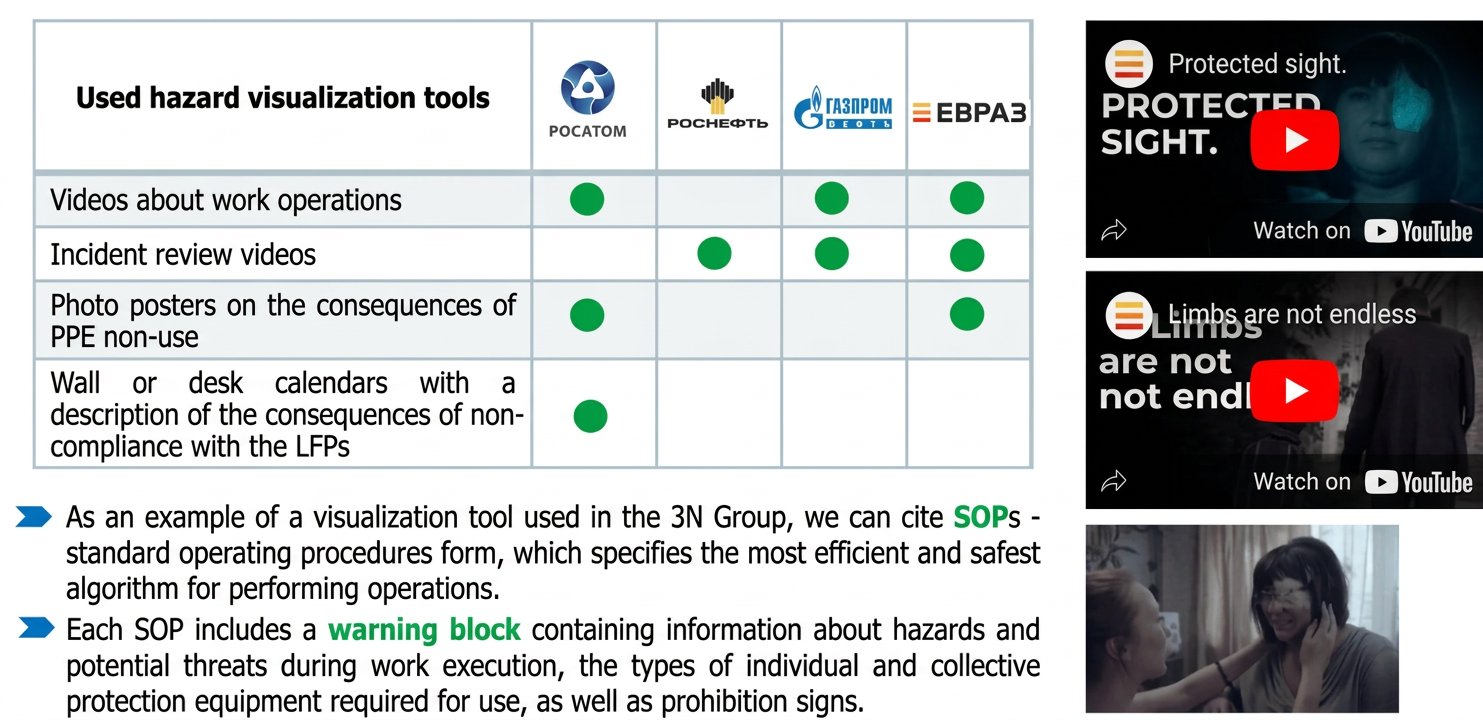
An example of a visualization tool used within the group of companies is the SOP (Standard Operating Procedure) form, which outlines the most effective and safe algorithm for performing operations. Each SOP includes a warning block containing information about hazardous factors and potential threats during work execution, the types of required personal and collective protective equipment, as well as prohibition signs.
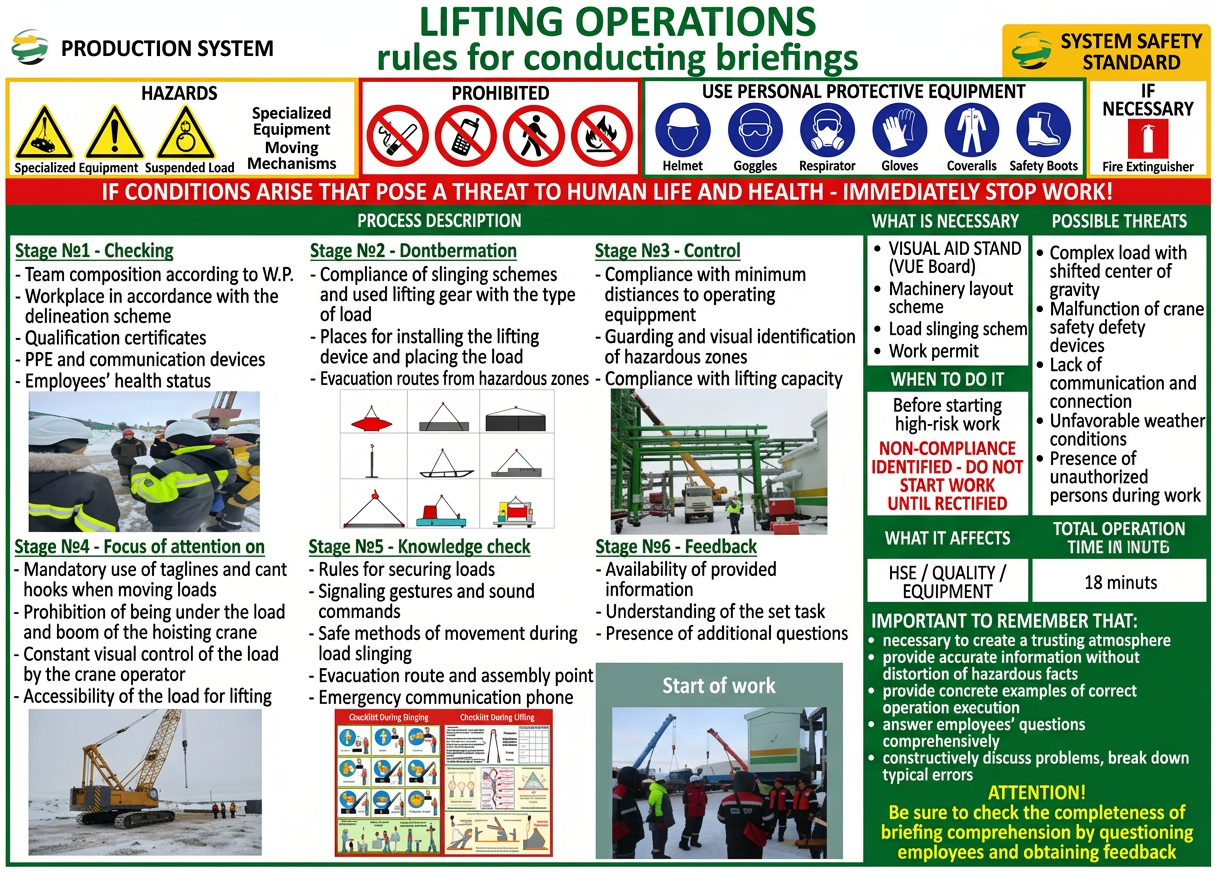
The visualization of HSE requirements involves creating visual materials through the following stages:
- Developing and releasing a series of 3-5 minute "I Work Safely" videos tailored to specific types of work. These videos demonstrate the correct execution of work operations, showcase personal protective equipment, and highlight hazards and the consequences of violating established requirements. They are shown to employees during various types of briefings. The videos provide an accessible and easy-to-understand overview of hazards and occupational risks.
- Developing animated videos reviewing accidents that occurred at ZNDKh (ZN Group) facilities. The videos will present a timeline of events and identify the root causes of the incidents. This approach will help employees better understand how to avoid similar situations in the future. Furthermore, by showing what conclusions were drawn and what measures were taken to prevent recurrence, the company demonstrates its commitment to safety and care for its employees.
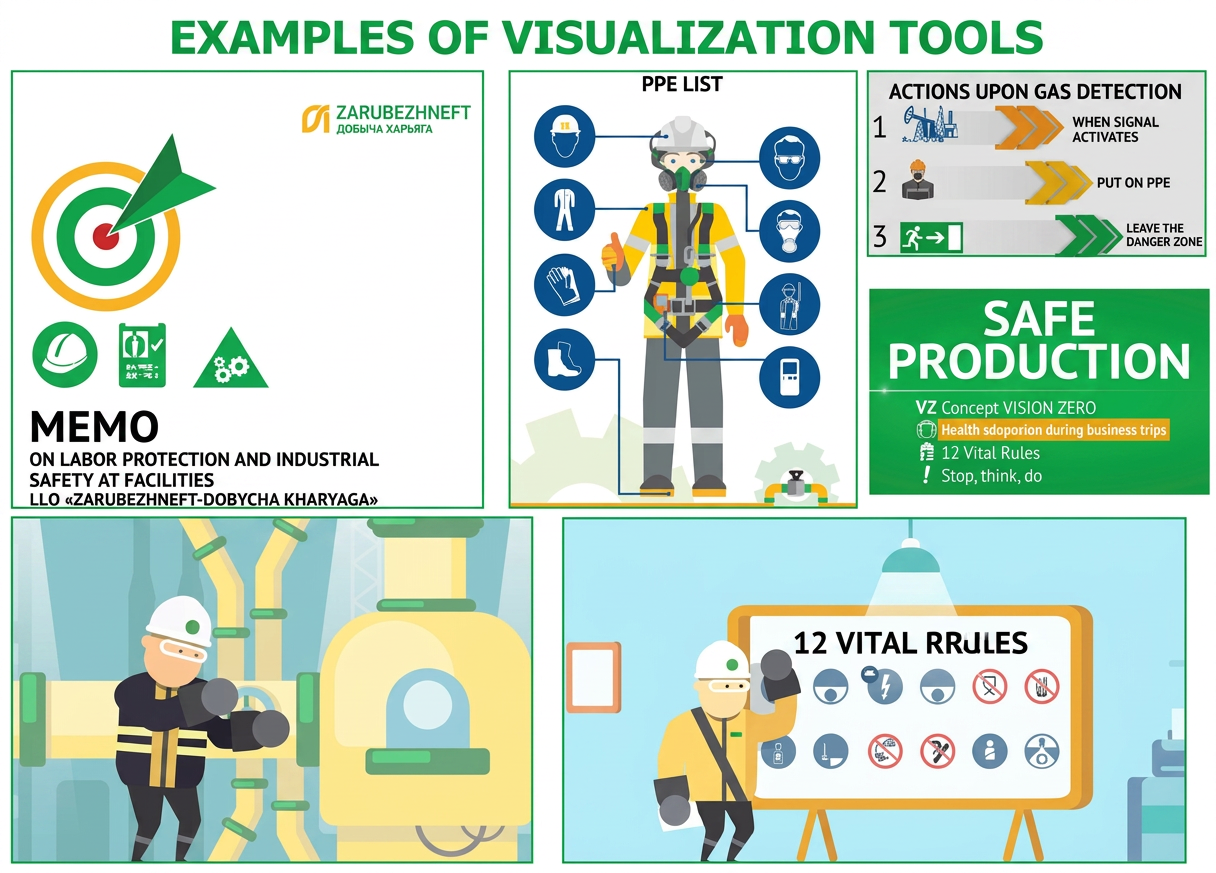
- Developing a series of photo posters illustrating the consequences of not using personal protective equipment under the motto "Choose Life - Use PPE!". Many may not realize the actual consequences of refusing to use protective gear. Creating visual materials will help raise employee awareness about the importance of using PPE and the potential outcomes of its absence. Implementing this project will lead to a more responsible attitude among employees toward their own safety and health. It is proposed to place these posters in work areas. In addition, such posters can serve as a training tool. They can be integrated into HSE programs, where, alongside explanations of risks and PPE requirements, employees can see exactly how the consequences of non-compliance with safety requirements manifest.
- Visualizing the "12 Life-Saving Rules" in the format of a flip desk or wall calendar. Such a calendar will not only serve as a daily date reminder for employees but also help reiterate the risks and hazards associated with their professional activities. Each month can be dedicated to a specific life-saving rule (12 months – "12 LSRs"). The calendar can be designed using bright, informative images and illustrations. This attracts attention and makes the information easier to remember.
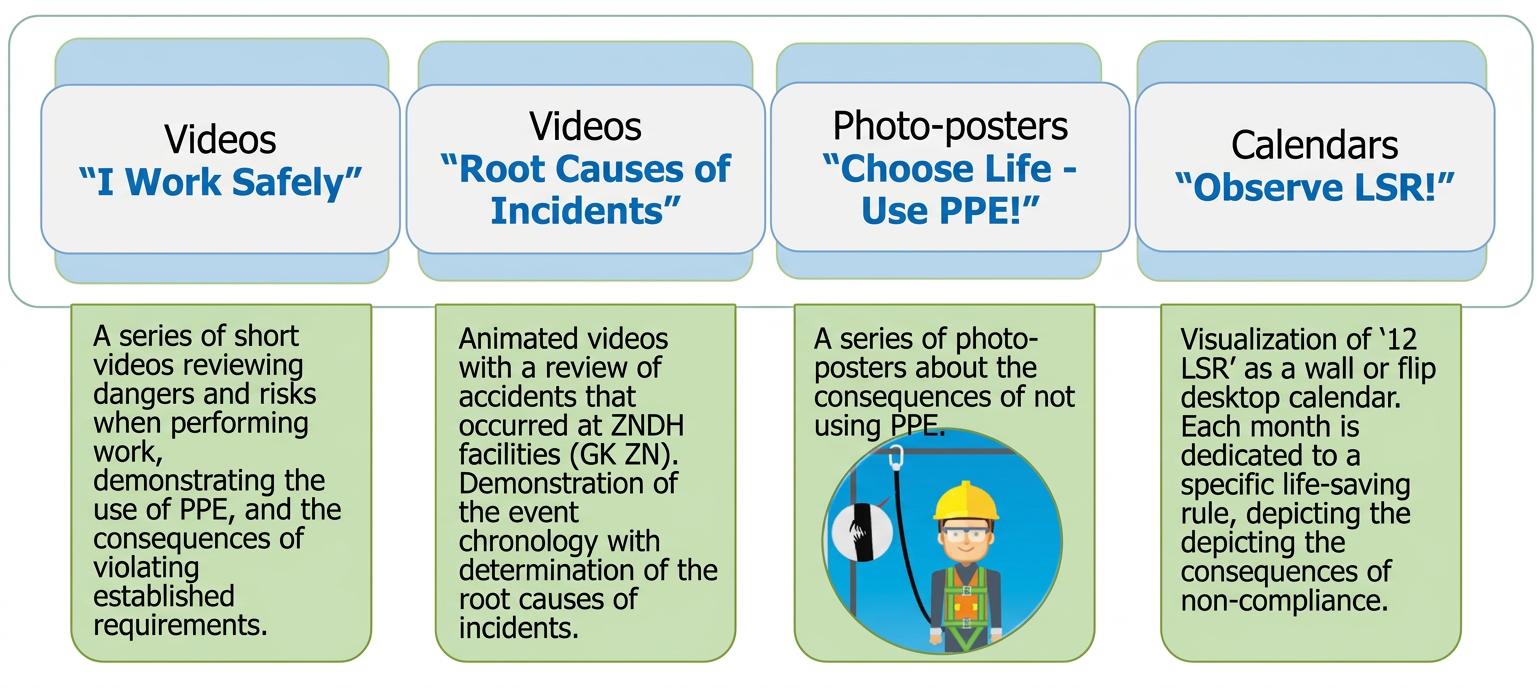
Examples of hazard visualization materials include posters showing the consequences of not using PPE and desk calendar pages. During the preparation of these materials, AI capabilities can be utilized to reduce future financial costs — for example, using ChatGPT 4.5 or DeepSeek based on verbal descriptions (so-called prompts).
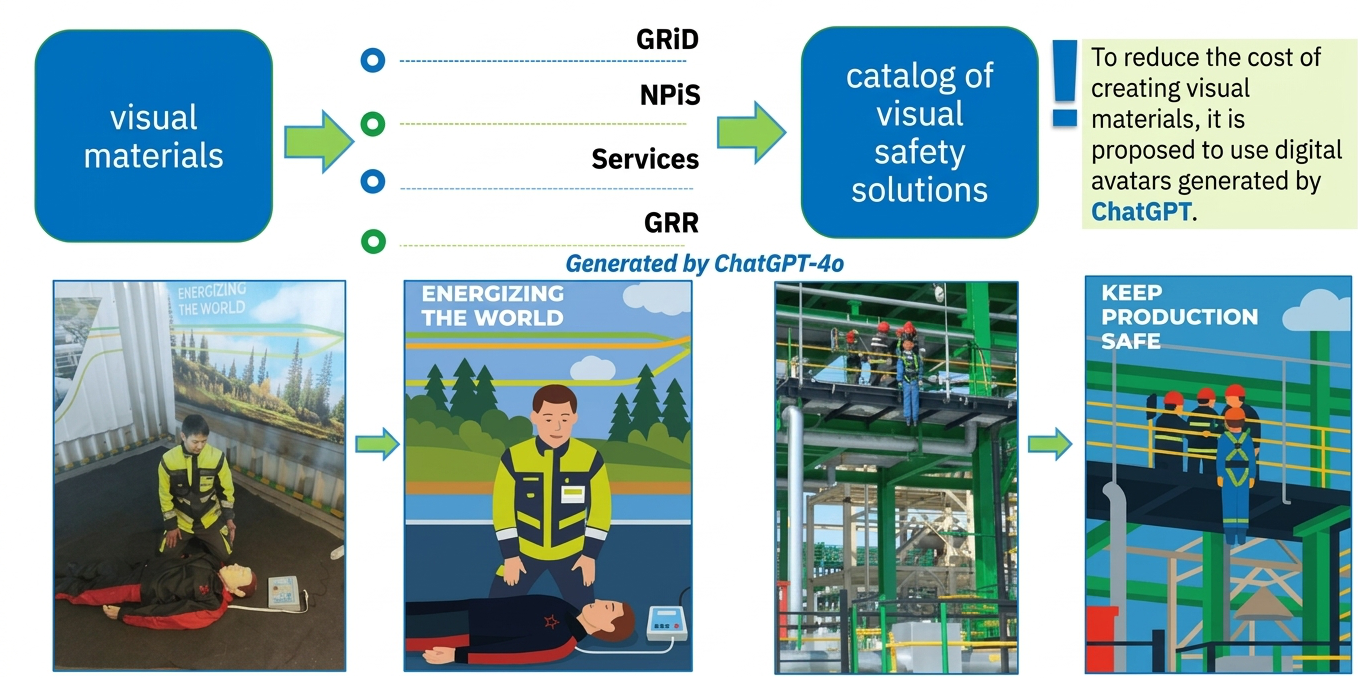
Combining the proposed visualization methods creates a comprehensive approach to informing employees about workplace hazards and risks. Effectiveness will be measured not only by a reduction in the number of accidents and near misses but also by a shift in the attitude of the Company's and contractors' employees toward safety issues, as well as an increase in employee awareness and engagement.
Furthermore, there is no need to be limited to the proposed visualization tools and types of work; using the suggested approach, materials can be adapted for each facility depending on emerging needs.
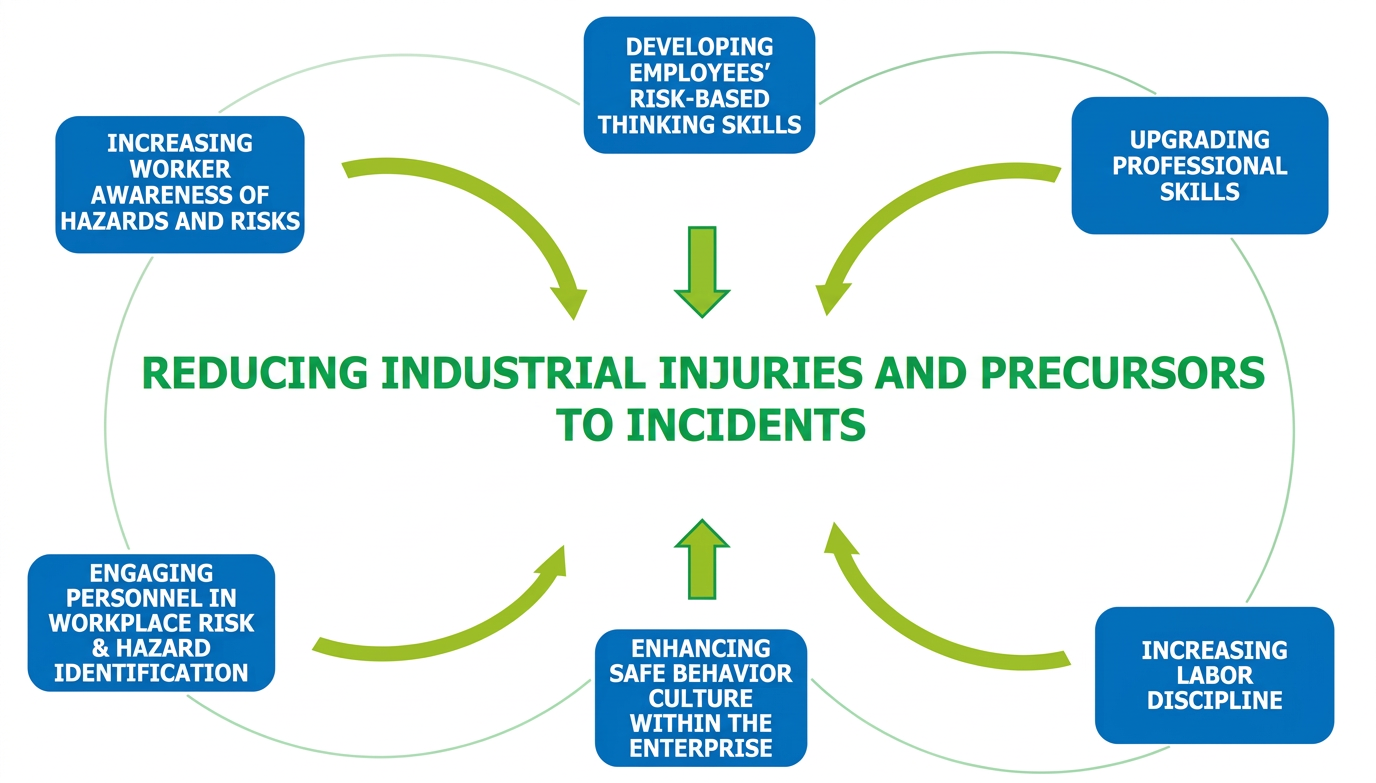
In summary, it can be concluded that to reduce the frequency of incidents, we must continuously improve the HSE management system.
Implementing hazard and risk visualization elements in the workplace does not entail significant financial costs, yet it is a highly effective tool for reducing occupational injury rates, improving working conditions, and, consequently, increasing labor productivity. Thus, by investing in safety, we lay the foundation for the company's sustainable growth and development in the future.