Prospects for Using Exoskeletons at ZARUBEZHNEFT-Dobycha Kharyaga LLC Facilities
Currently, exoskeleton technology is becoming one of the most dynamically developing areas of service robotics, including the development of proprietary exoskeleton systems, particularly in Russia.
An analysis of global experience leads to the conclusion that there are currently three key areas of application for exoskeleton modules and systems based on them:
- military exoskeletons;
- rehabilitation exoskeletons and exoskeletons to compensate for mobility impairments in people with disabilities;
- exoskeletons for industrial applications.
Today, the field of industrial exoskeletons generates the greatest interest for several reasons:
- wearable robotic devices designed for industrial environments are becoming the fastest-growing area for the commercial use of exoskeleton technologies;
- exoskeletons for work and industry can be used on construction sites, in docks, factories, and warehouses;
- production specialists constantly have to resort to manual labor, resulting in exposure to harmful factors that increase the likelihood of injuries — primarily the development of musculoskeletal disorders, which remain one of the most common occupational diseases in the European Union. This, in turn, leads to increased costs for supporting workers during periods of disability and a decrease in overall labor productivity at the enterprise;
- industrial exosuits are less sensitive to the technological limitations typical of the exoskeleton industry;
- the level of requirements for an industrial exoskeleton control system is significantly lower than for similar medical or military solutions.
By design, industrial exoskeletons are divided into upper-body, lower-body, and full-body exoskeletons.
Based on the nature of their force application, they are classified into passive (not equipped with actuators — support and load reduction in such cases are achieved through the use of dampers, springs, counterweights, etc.) and active, which, in turn, are divided into subgroups depending on the type of actuators used (electromechanical, hydraulic, pneumatic, combined).
Currently, at the facilities of ZARUBEZHNEFT-Dobycha Kharyaga LLC, attention is focused on the activities of warehouse workers and the physical demands of their work process, caused by:
- the repetitive nature of routine operations;
- heavy physical exertion during the shift, mainly on the back and legs;
- the inability or impracticality of using lifting devices for loads weighing up to 25 kg.
These factors cause fatigue and pain in the musculoskeletal system, which can lead to occupational diseases or injuries.
As a solution to protect workers from heavy physical exertion, the company is considering the use of industrial exoskeletons as assistants in performing production operations. The use of such devices helps reduce the load on the lumbar spine and back muscles of warehouse workers.
According to the benchmarking results of exoskeleton testing and application in Russian companies, this area is just beginning to develop.
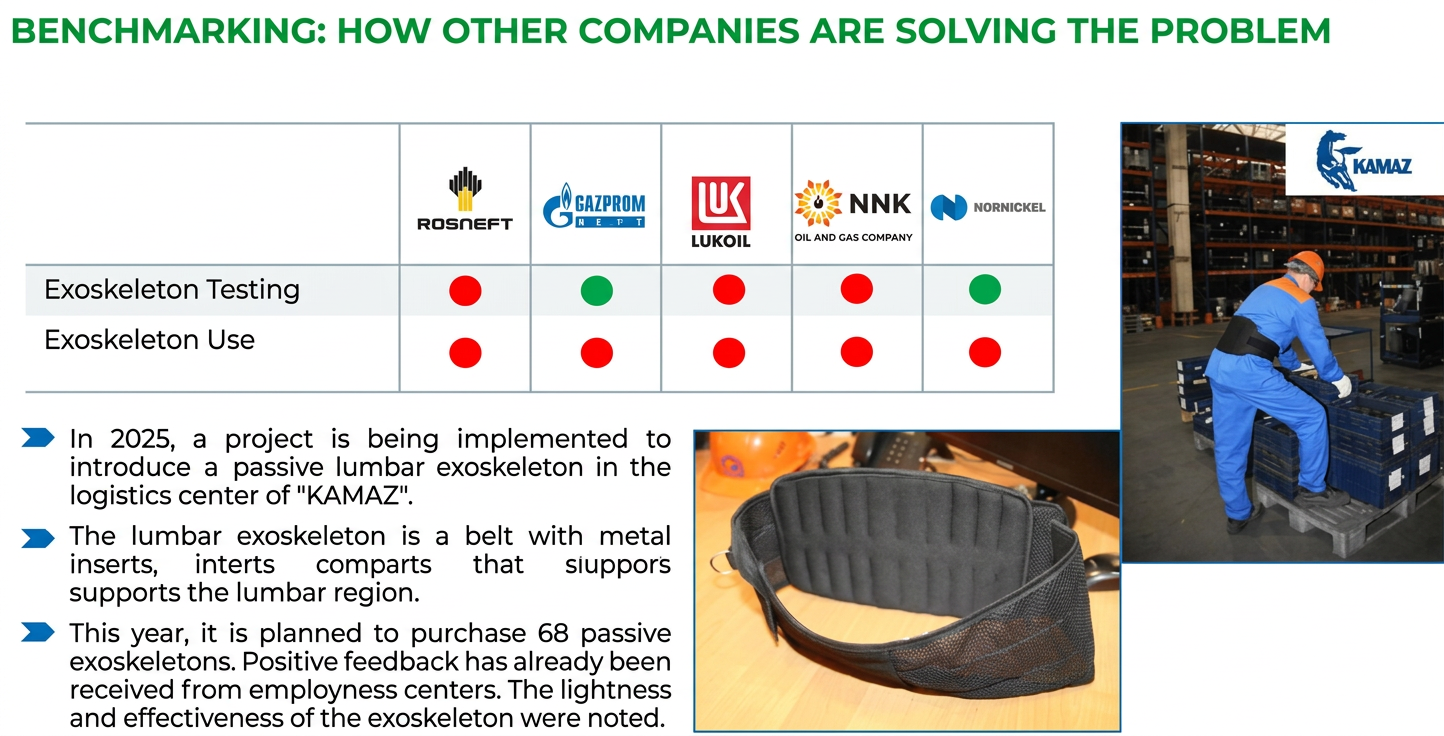
Heavy industries, particularly the metallurgical sector, are at the peak of development. Modern technologies transform and accelerate many processes. Nornickel is one of the leaders in implementing such innovations. The company's enterprises use industrial exoskeletons from various domestic manufacturers. For example, the Copper Plant uses the passive X-Soft exoskeleton manufactured by Exorise.
Since 2023, the KAMAZ plant has been using an assembly exoskeleton with arm reinforcement that compensates for up to 15 kg of weight per arm and secures the wrist when tightening bolts, as well as the passive Exorise exoskeleton used by Nornickel.
In 2025, the KAMAZ logistics center is implementing a project to introduce a passive lumbar exoskeleton — a belt with metal inserts that supports the lumbar area. There are plans to purchase 68 passive exoskeletons. Positive feedback has already been received from the center's employees, noting the lightness and effectiveness of the exoskeleton.
At the production sites of Gazprom Neft, the passive ExoHeaver 3Hander exoskeleton manufactured by Exomed is used. The device allows for the attachment of electric or pneumatic tools weighing up to 15 kg, making it easier to work with them and protecting arm joints from vibration.
Currently, ZARUBEZHNEFT-Dobycha Kharyaga LLC has turned its attention to passive exoskeletons for the following reasons:
-
Simplicity of design: passive exoskeletons have a simpler design, making them easier to manufacture and maintain.
-
Low cost: due to their simplicity and the small number of complex components, passive exoskeletons are cheaper to produce and purchase.
-
Lower weight: passive exoskeletons are generally lighter than active ones, which reduces the load on the user and makes them more comfortable for prolonged wear.
-
Independence from power sources: they do not require batteries or other power sources, making them more reliable in conditions with limited access to electricity.
-
Ease of use: they do not require complex training to operate and are accessible to a wide audience.
-
Stability and reliability: due to the absence of electronics and mechanisms, they are less prone to malfunctions and breakdowns.
-
Support for natural movement: they can be designed to support the user's natural movements, reducing the risk of injury.
-
Wide range of applications: they are suitable for rehabilitation, heavy physical labor, and sports.
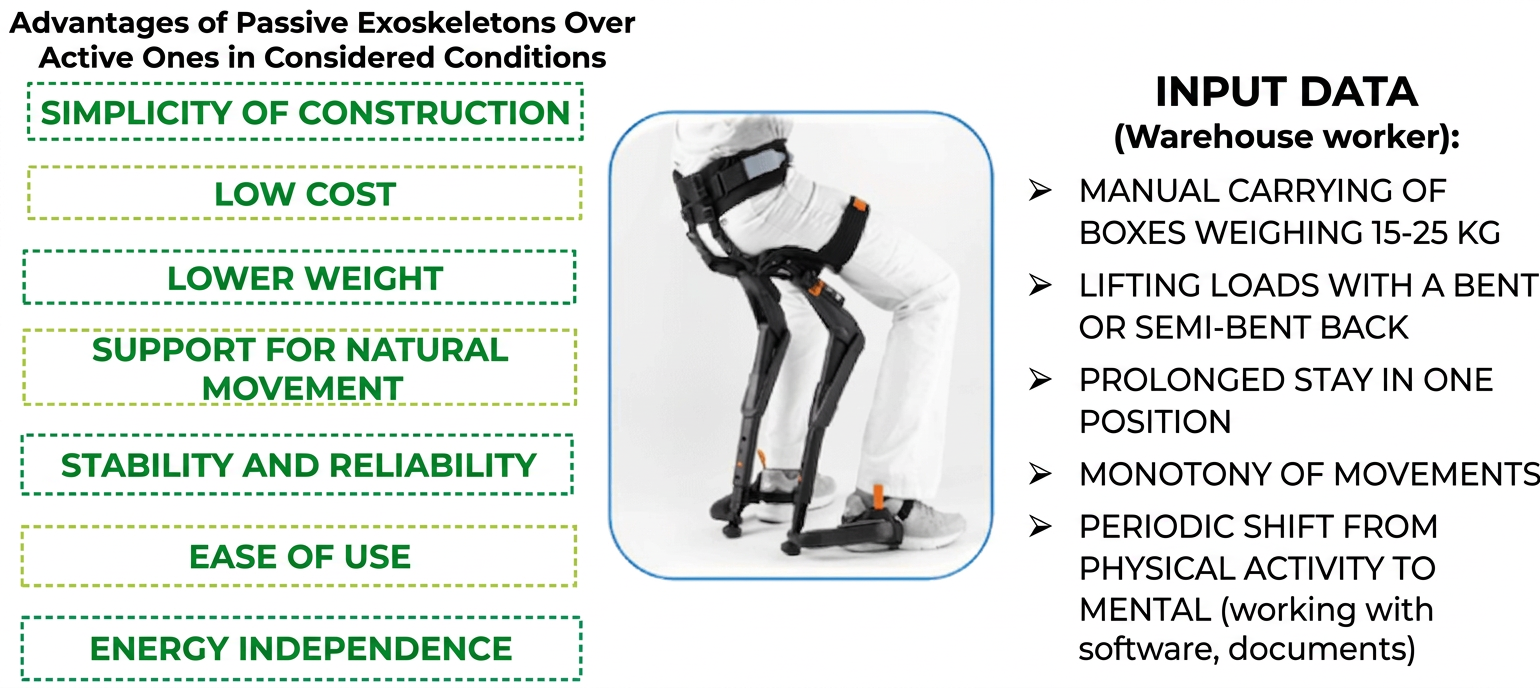
According to a survey by ZARUBEZHNEFT-Dobycha Kharyaga LLC, warehouse workers manually carry boxes weighing 15 – 25 kg, lift loads with a bent or semi-bent back, and can remain in one position for a long time. Passive exoskeletons are lightweight and allow lifting loads weighing up to 30 – 50 kg.
Modern active exoskeletons are not yet ergonomic and comfortable enough: they are bulky, restrict mobility, and prolonged wear can be uncomfortable for workers. However, continuous research and the development of new materials, such as carbon fiber and adaptive composites, promise to improve these characteristics. At that point, it will be possible to revisit the possibility of using active exoskeletons.
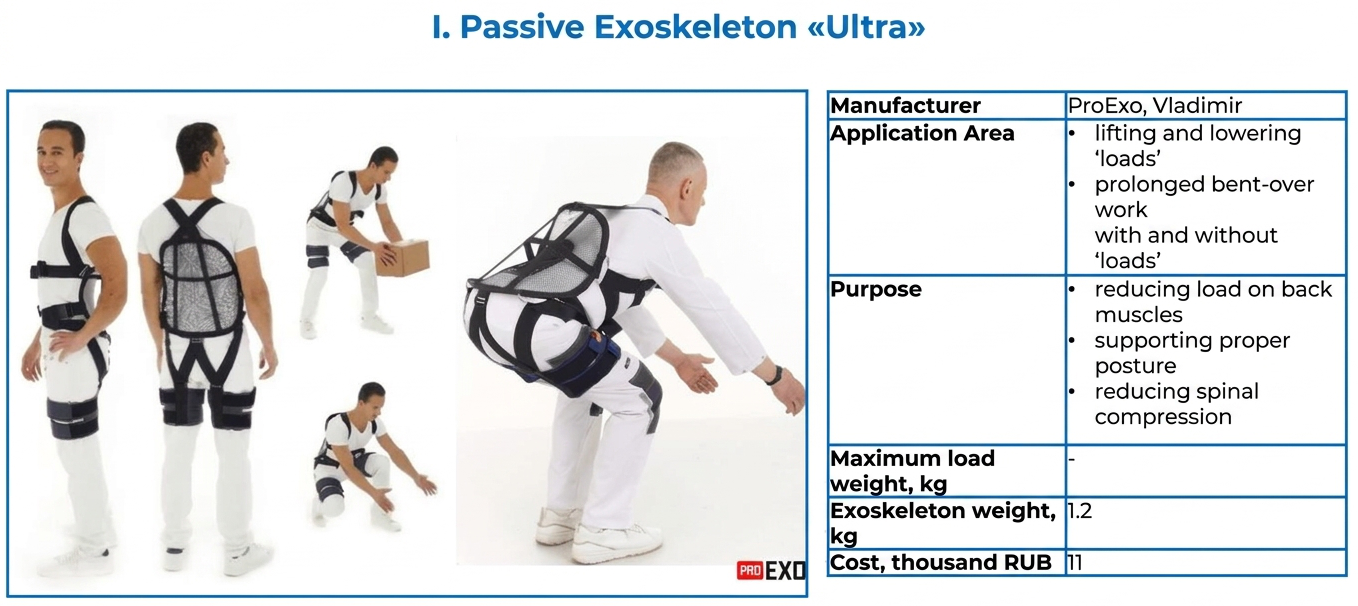
A brief analysis of passive exoskeletons from Russian manufacturers was conducted at ZNDKh.
Three models belong to the company ProExo (Vladimir). One of them, the most affordable Ultra model, does not assist in lifting heavy loads but reduces the strain on back muscles, supports proper posture, and decreases spinal compression. This type of exoskeleton is suitable for female warehouse workers who do not perform heavy lifting.
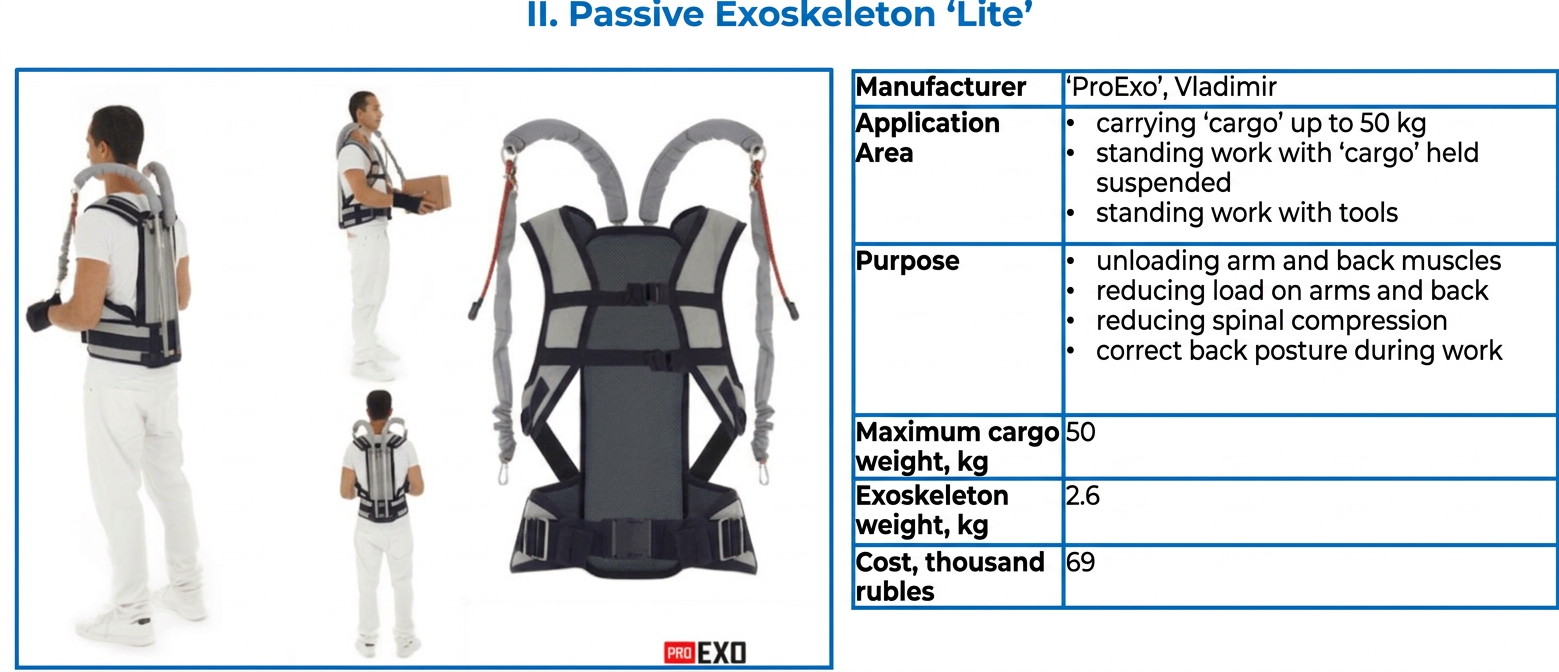
The Lite and Boost exoskeletons from the same manufacturer allow carrying loads up to 50 kg, lifting and lowering loads to waist height, relieving the muscles of the arms and back, and reducing spinal compression by creating the correct back position during work.
The Boost exoskeleton model, featuring thigh cuffs and weight compensators for the legs, allows the load to be distributed from the back to the hips.
According to the manufacturer's 2023 research, the Boost configuration showed good results, providing up to 49% load reduction on the arms, up to 55% load reduction on the back muscles, and up to a 30% decrease in lateral asymmetry (ensuring the left and right sides work approximately equally, as a person carrying a load often puts more strain on one side and unexpectedly reduces the load on the anterior thigh muscles).
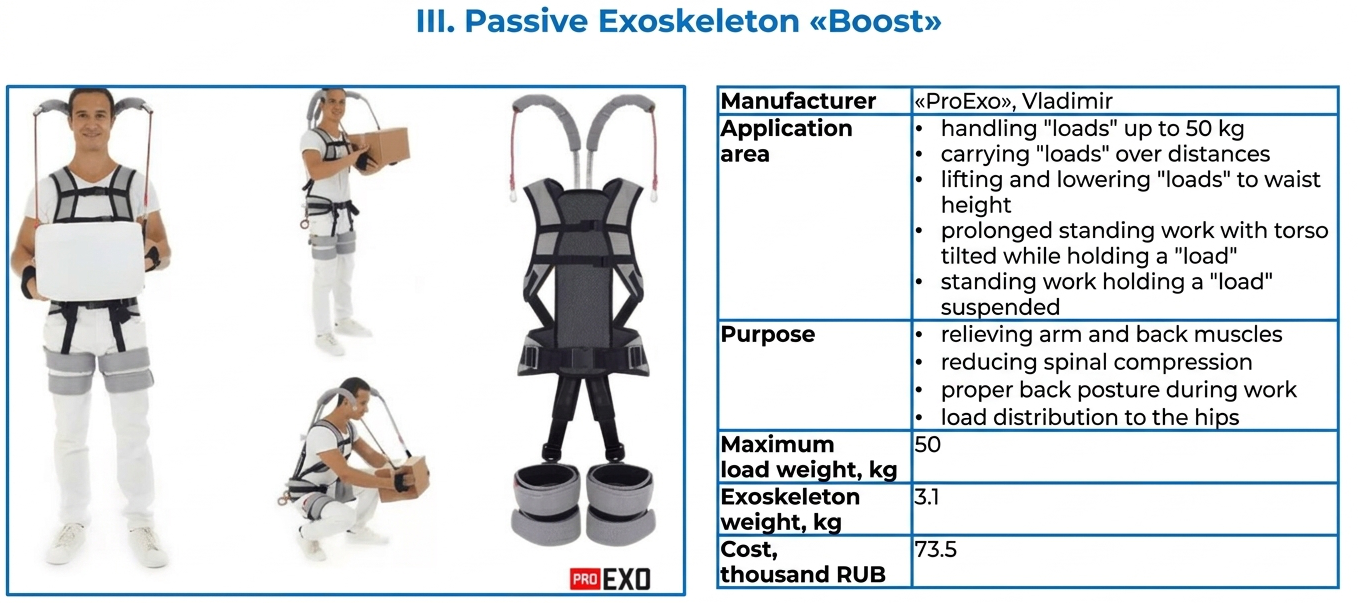
At the same time, in addition to muscle offloading, the Boost exoskeleton configuration reduces the risk of injury to the upper limbs, shoulder girdle, and back, prevents the development of scoliotic deformities, and lowers the risk of exacerbating orthopedic problems. It also reduces energy expenditure by up to 25% and significantly decreases tidal volume by up to 12%. 65% of volunteers noted a reduction in the impact of physical exertion on their back muscles.
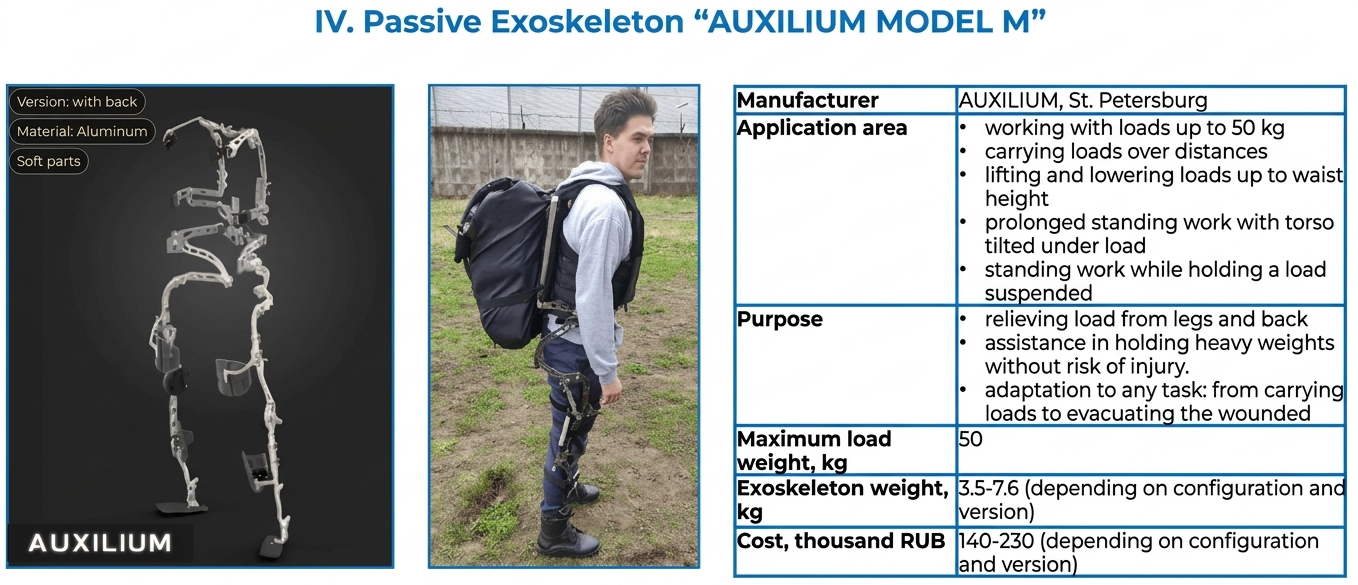
The passive exoskeleton AUXILIUM MODEL M, from the St. Petersburg brand AUXILIUM, entered serial industrial production this year. This product, like the previous two, allows working with loads up to 50 kg, carrying loads over distances, lifting and lowering loads to waist height, and working standing for long periods while leaning with a load. It is available in various modifications and made from two materials — aluminum and titanium — which determines the cost of the final product.
The passive LOWEBACKER exoskeleton, from the Kursk brand Exomed, is designed to relieve the lumbar spine when lifting and carrying loads with a maximum weight of 30 kg from a height of 0 to 1 m.
This product helps to offload the lumbar spine, reduce injuries and occupational diseases, and increase operator endurance by up to 40% depending on the type of work.
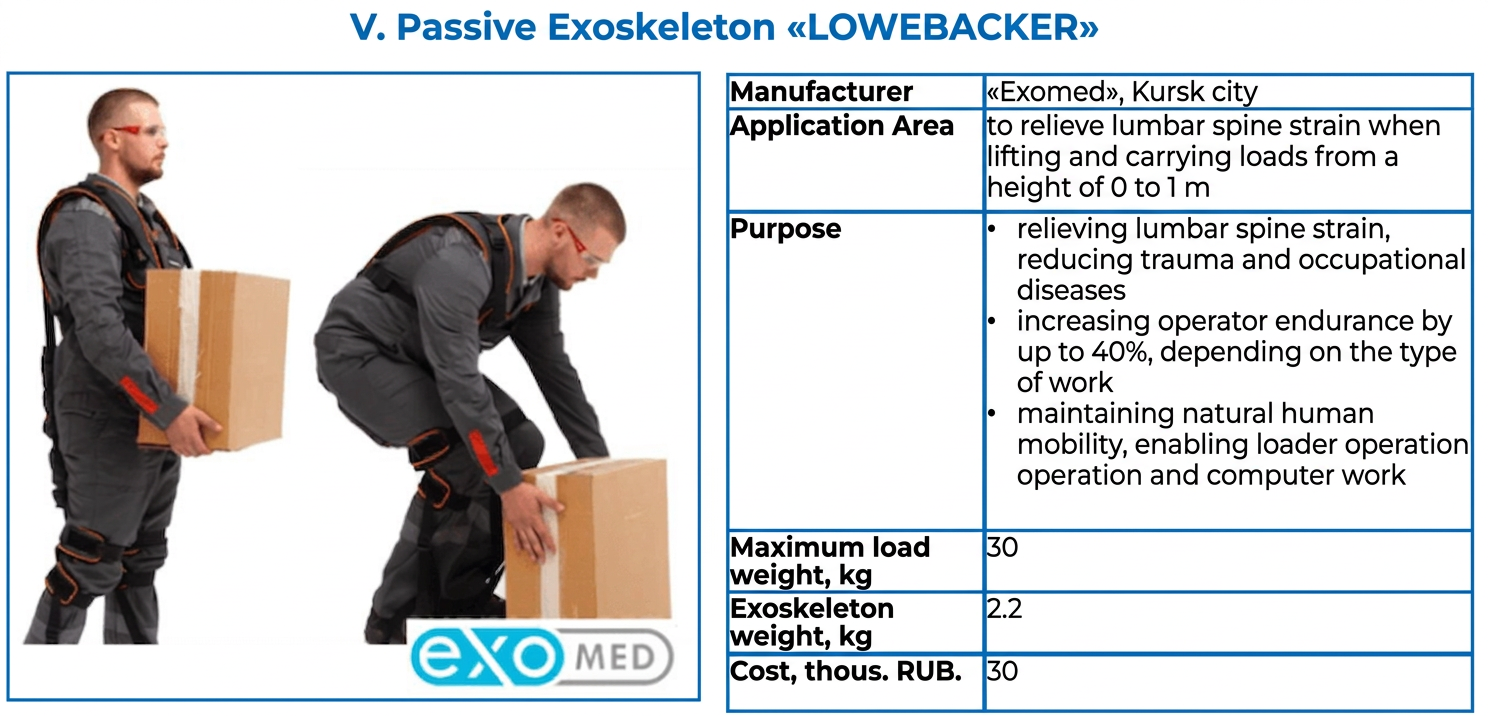
It should be noted that the weight of all the reviewed exoskeletons does not exceed 3 kg.
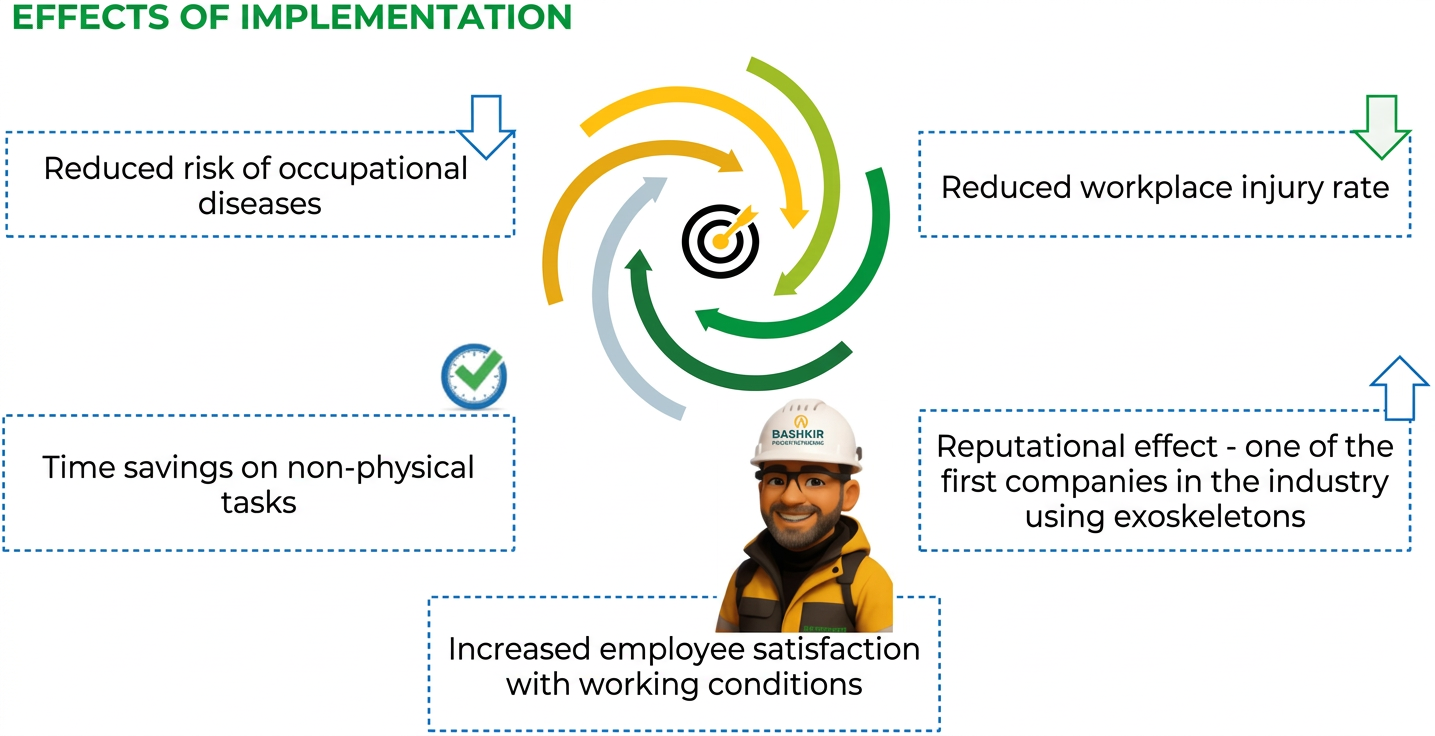
As a result of using passive exoskeletons in the work of warehouse employees, the following is expected:
- A reduction in the risk of occupational diseases.
- A decrease in the level of workplace injuries.
- An increase in labor productivity.
- Time savings on tasks not related to physical exertion (for example, unlike an active exoskeleton, a passive one allows for a quick switch to filling out documents, as the device does not need to be removed).
- Reputational benefits — being one of the first companies in the industry to use exoskeletons.
In addition, according to the requirements of the Labor Code of the Russian Federation, the financing of annual measures to improve working conditions and occupational safety by employers is carried out in an amount of at least 0.2 percent of the cost of production. The introduction of innovative technologies is an effective measure to reduce workplace injuries and gives workers confidence that the employer is interested in improving their working conditions and reducing occupational risks.