Implementation of Digital Technologies in the Safety Compliance Control Process at ZARUBEZHNEFT-Dobycha Kharyaga LLC
A large number of employees work at the facilities of ZNDKh (up to 1,000 per shift, 150 of whom are ZNDKh employees), including contractors. The company's main focus is to prevent fatalities and minimize occupational injuries. The vast majority of accidents occur due to a combination of hazardous conditions and unsafe acts. Overall, there is a downward trend year after year, but a significant number of incidents are still recorded.
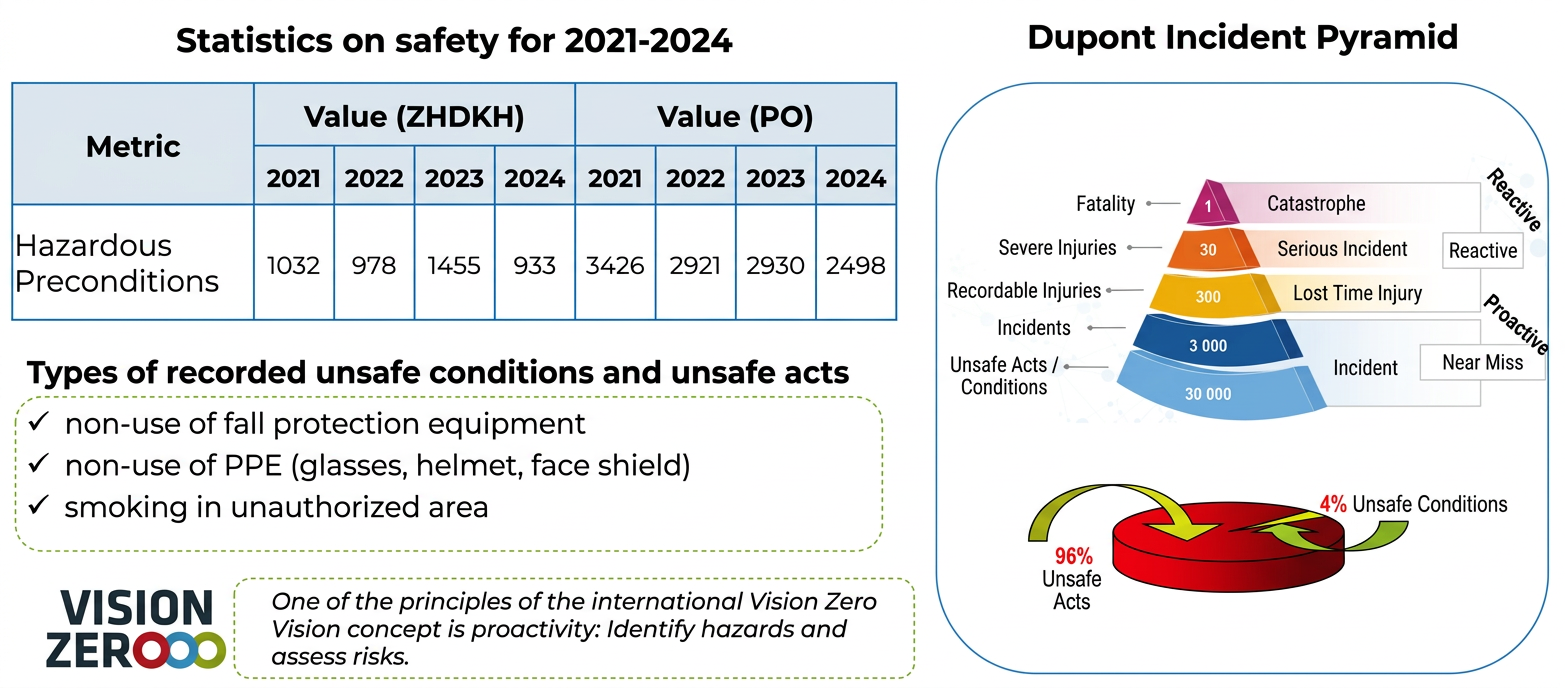
The HSE professional community uses the DuPont Accident Pyramid, based on incident statistics, as one of its analytical tools. According to this pyramid, approximately 96% of incidents are the result of unsafe human behavior in the workplace, and only 4% occur due to equipment failure. For every fatality or serious injury, there are many smaller incidents, both with minor injuries and without injuries.
To prevent fatalities and injuries, an effective occupational safety system must be aimed at:
- Preventing unsafe acts through the creation and continuous improvement of the HSE Management System.
- Eliminating hazardous conditions, including through technical control.
The main idea is to integrate modern technologies into the process of early detection of incident precursors.
Given the general trend towards digitalization, ZNDKh reviewed technologies that can be used to ensure safe working conditions, identifying video surveillance and video analytics as a priority area.
Video analytics systems are based on computer vision and deep learning algorithms that analyze the video stream in real time.
The main functions of video analytics are:
- Early detection: For example, cameras can detect smoke at the smoldering stage, even before open flames appear and traditional smoke or heat detectors are triggered.
- Large coverage area: A single camera can monitor a large open space where installing point sensors is inefficient or too costly.
- Accurate positioning: The system precisely indicates the location of an emergency on the facility plan, allowing forces and resources to be quickly dispatched to the scene.
- Integration and analytics: The system not only detects deviations from normal operations but can also become part of a comprehensive security system: triggering alarms, managing access control systems (unlocking emergency exits), activating smoke exhaust systems, and transmitting video to the security console for verification.
- Operation in harsh conditions: Some systems can be adapted to work in dusty, gas-polluted environments, or outdoors where traditional sensors are useless.
To expand the coverage of facilities, in addition to stationary video surveillance cameras, it is advisable to use patrol robots and UAVs equipped with video cameras and sensors.
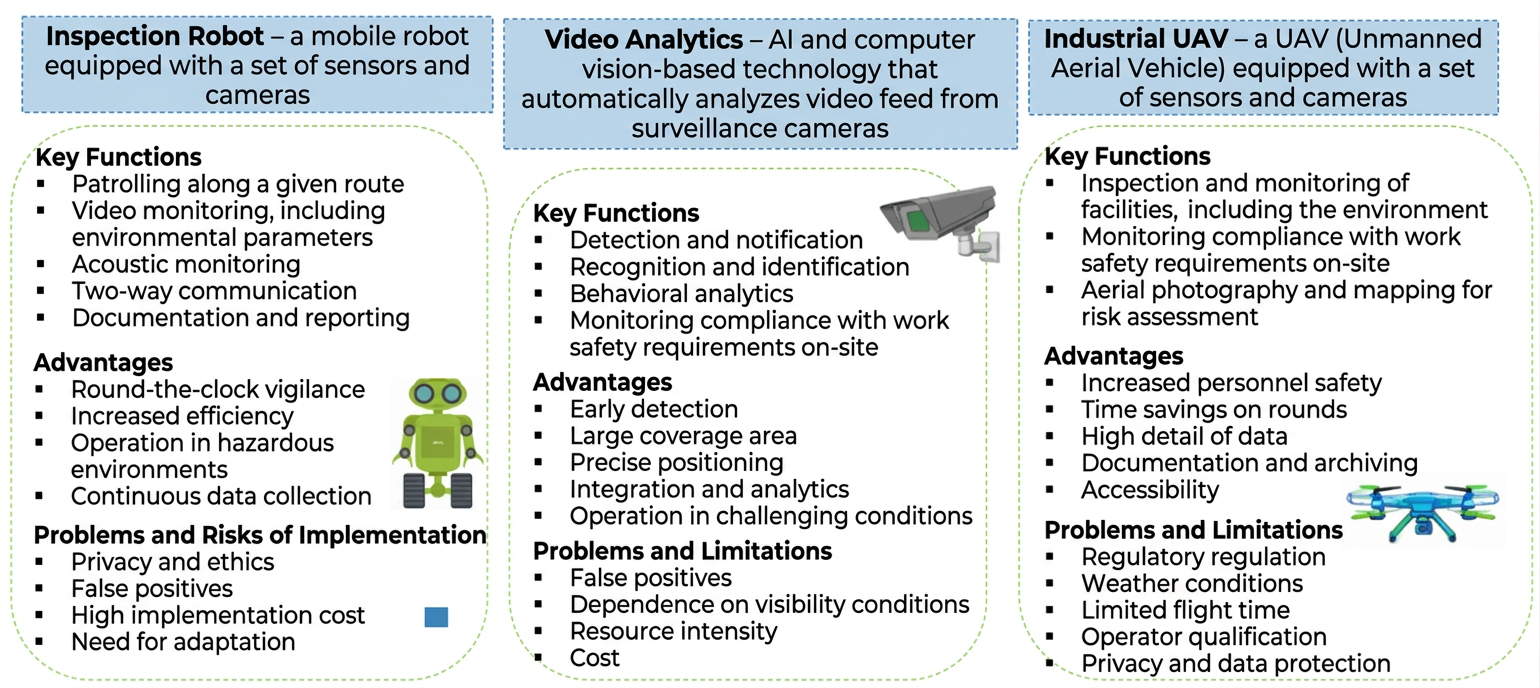
It should be noted that there are a number of limitations when using the proposed solutions, such as:
- Privacy and ethics: Employees may perceive the system as total surveillance, leading to stress and a disruption of the psychological climate.
- False alarms: Algorithms are not perfect and can sometimes make mistakes.
- High implementation cost: Investments in equipment, software, and integration into existing processes are required.
- Need for adaptation: Algorithms must be "trained" for the specifics of a particular production facility, which requires time and expertise.
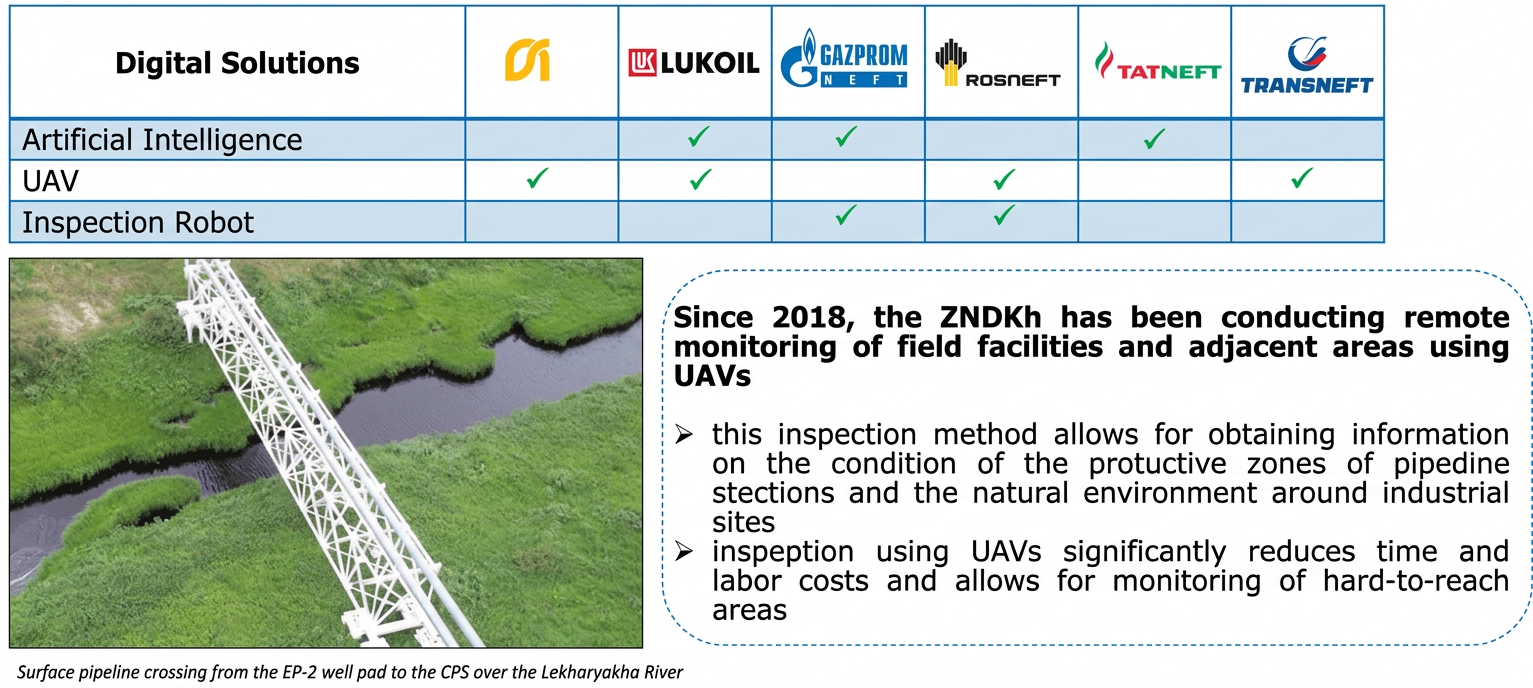
After conducting benchmarking, we found that the Russian oil and gas sector is actively moving towards implementing digital solutions in the occupational safety system.
- Gazprom Neft uses drones and ground robots at its fields to patrol pipelines and detect leaks.
- Rosneft is implementing a large-scale program to introduce digital technologies. The company's enterprises are testing autonomous robots for equipment monitoring and data collection.
- LUKOIL uses drones to monitor oil pipelines and facilities onshore and offshore.
- Tatneft is implementing robotic solutions at its production facilities, including automatic control and diagnostic systems.
Zarubezhneft also uses digital technologies. For example, since 2018, ZNDKh has been conducting remote monitoring of the Kharyaga field facilities and adjacent territories using UAVs. This survey method provides information on the condition of pipeline security zones and the natural environment around industrial sites. Inspections using UAVs significantly reduce time and labor costs and allow for the monitoring of hard-to-reach areas.
ZNDKh plans to implement the Intellect system by introducing a safety module consisting of the following blocks:
- "Detection of People Without PPE" block. It allows detecting people without personal protective equipment and identifying improperly worn PPE.
- "Fire Detection" block. Video analytics recognizes fire and smoke using artificial intelligence algorithms. In any scenario, the system operator will receive video from the site of the probable fire and can immediately assess the situation.
- "Human Behavior Analysis" block (personnel condition monitoring). Neural network video analytics recognizes human postures in the video image that may indicate potentially hazardous situations. For example, if a person is lying on the floor or ground, it is a probable sign that they need help. A situation may arise where an employee feels unwell in one of the production modules where they are alone. In this case, the timely detection of such a person through the video analytics system can ensure the prompt arrival of colleagues at the scene and the provision of first aid. Timely first aid can prevent a fatal outcome and reduce the severity of consequences.
The safety system at the company's production facilities requires employees to hold onto handrails. Video analytics can detect instances where this requirement is not met and immediately notify the security system operator.
It is planned to connect a patrol robot and UAVs equipped with video surveillance cameras to the Intellect system.
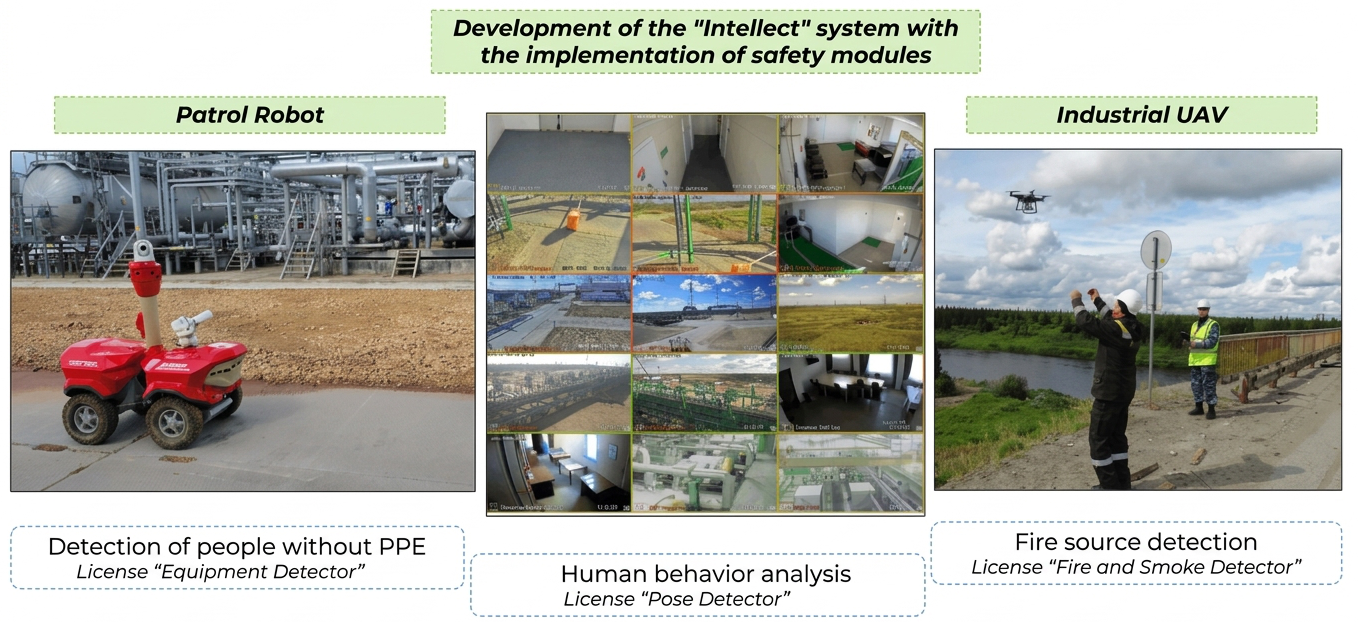
Intellect is a multifunctional software platform for creating comprehensive security systems, developed by the Russian company ITV. This system integrates disparate security systems: video surveillance, fire and security alarms, perimeter security systems, and access control systems (ACS) into a single infrastructure.
Within the framework of the currently existing Intellect system, ZNDKh facilities are equipped with 163 video surveillance cameras. The coverage of work areas is about 50%. Since the active fleet of cameras does not fully cover the production sites, the use of a patrol robot and UAVs integrated into the Intellect system will help expand the facility control zone.
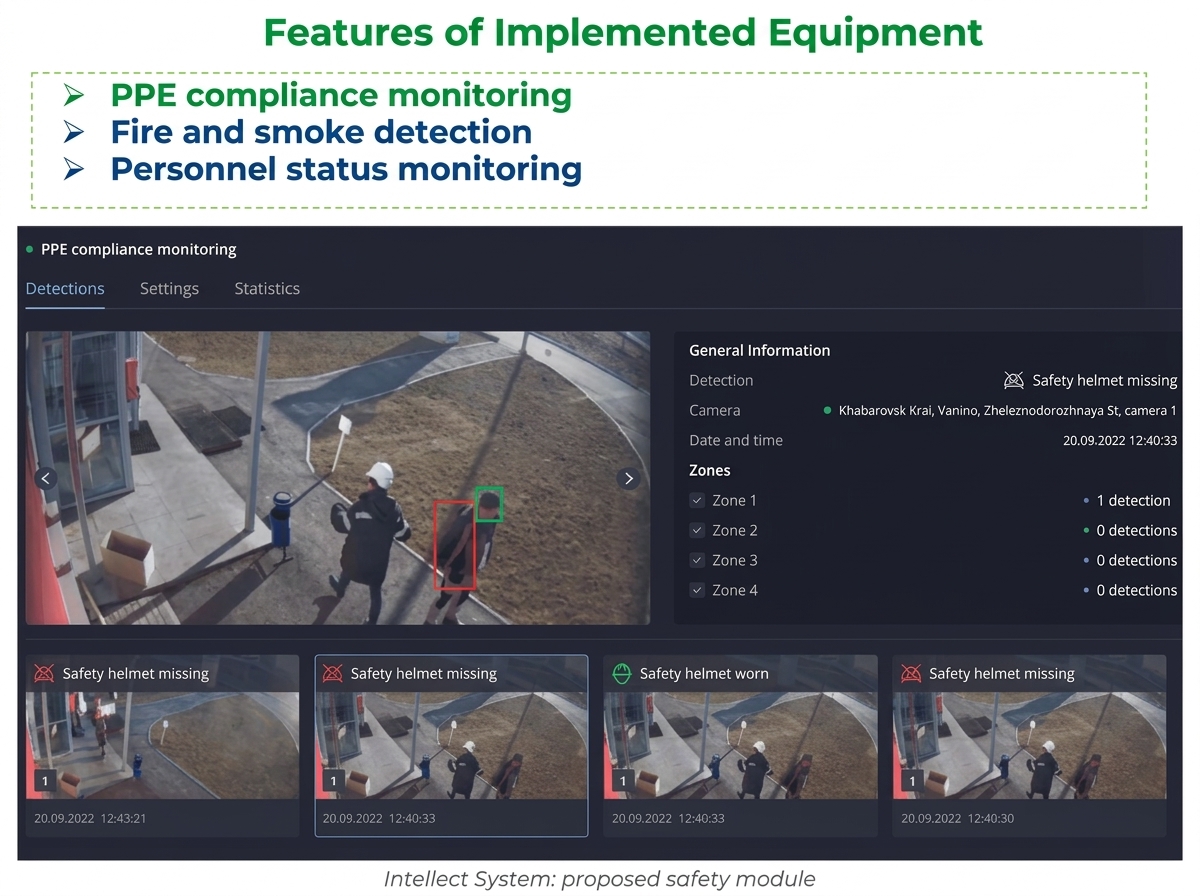
Example of information displayed on the system operator's screen reporting the absence of a hard hat on an employee.
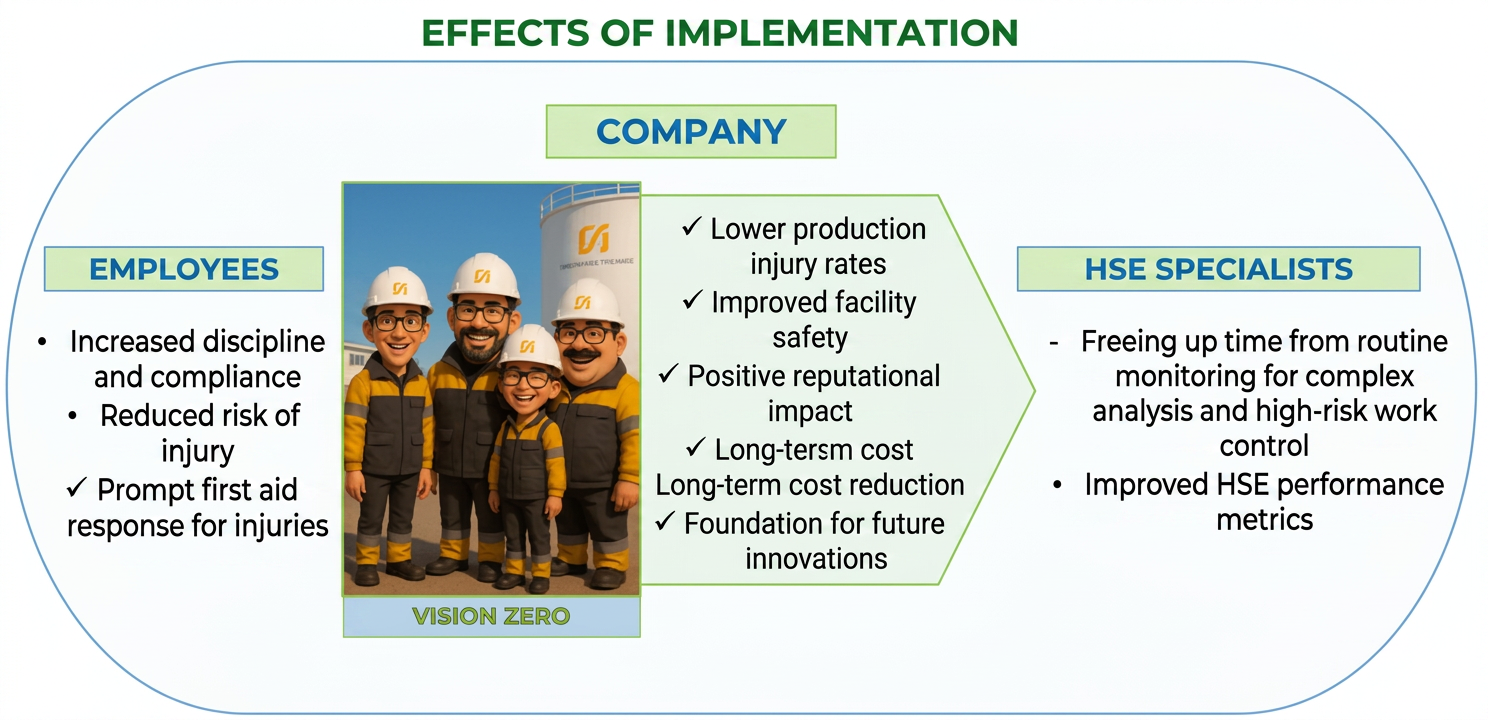
As a result of implementing these solutions, the following effects will be achieved for the company:
- Reduction in the occupational injury rate.
- Increased level of facility safety.
- Cost reduction in the long term.
- Reputational effect.
- Foundation for future innovations.
For HSE specialists, the implemented solutions will free up time spent on routine facility monitoring to solve more complex analytical tasks and control high-risk work.
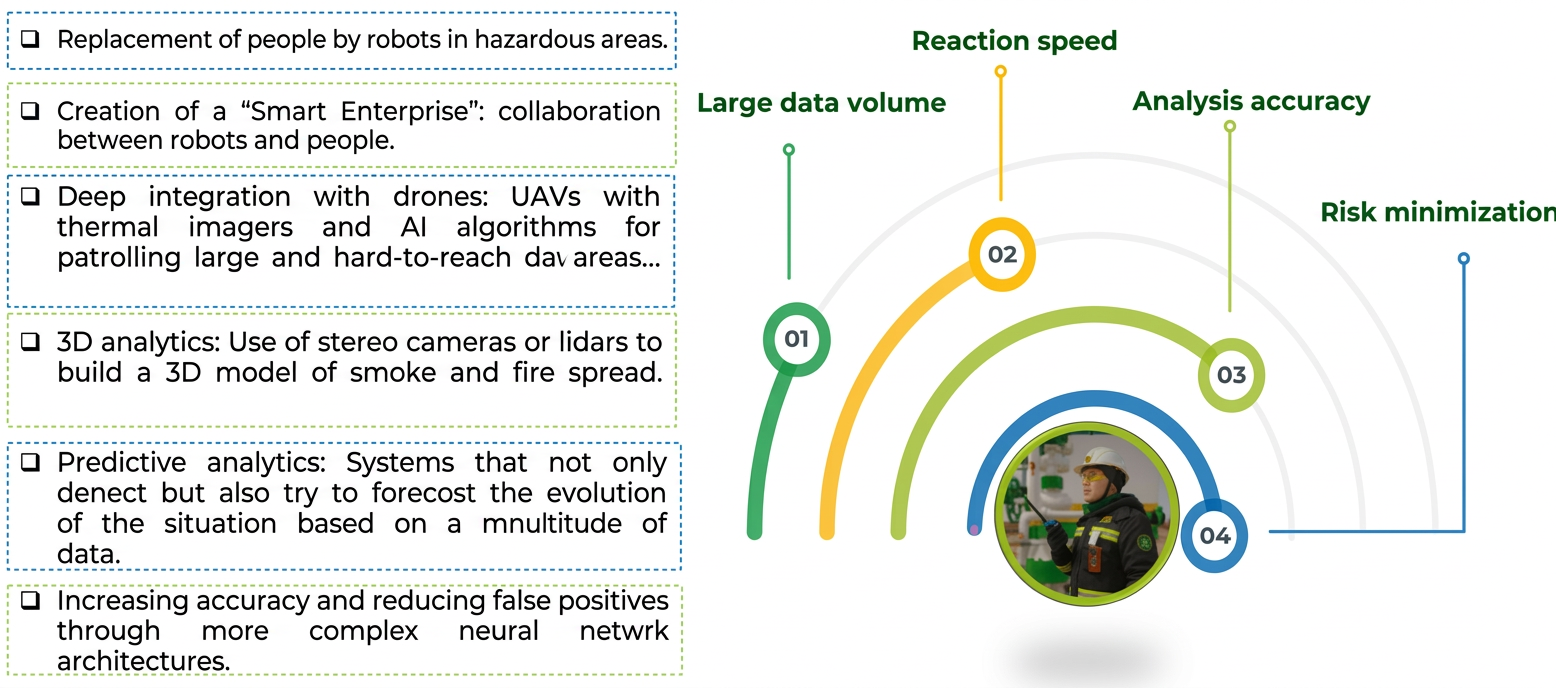
The implementation of the digital technologies under consideration can become a foundation for future innovations in the field of video analytics:
- 3D analytics: Using stereo cameras or lidars* to build a 3D model of smoke and fire spread.
- Predictive analytics: Systems that not only detect but also forecast the development of a situation based on a multitude of data.
- Increased accuracy and reduced false alarms through more complex neural network architectures.
- Deep integration of video analytics with drones: UAVs with thermal imagers and artificial intelligence algorithms for patrolling large and hard-to-reach areas.
- Replacing humans with robots in hazardous areas.
- Creation of a "Smart Enterprise" based on the collaboration of robots and humans.
* - Lidar is a remote sensing technology that uses laser pulses to measure exact distances to objects and their spatial location.
Conclusion: Despite existing difficulties, video analytics and robots are effective tools for ensuring the safety of modern production, and it is necessary to look for opportunities for their implementation and use.
The key to successful implementation is openness and communication with the team. It is important to explain that the system's goal is not punishment, but care for the lives and health of employees. Implementation must be accompanied by a review of procedures, training, and the creation of a safety culture where technologies act as an assistant rather than an overseer. Digital technologies in safety represent an evolutionary step from a reactive model to a proactive one. This makes it possible to save lives, preserve company assets and the environment, and take production efficiency to a fundamentally new level.