#Digitalization
Digital transformation of HSE processes. A systemic look at IT infrastructure: electronic document flow, digital permit-to-work systems, mobile apps. Real examples of how automation frees up specialists' time for field work.

Risk Navigator: How an IT Tool Saves Lives and Budget
Implementation of the Risk Navigator digital tool (mobile and web application) at PJSC MMK to transition from formalistic violation logging to a systematic risk-based approach engaging shop-floor workers and contractors. The system automates risk criticality assessment based on three-year incident statistics, integrates a safe stop-work procedure, tracks the hazard mitigation lifecycle down to root causes, and includes a two-month verification barrier to prevent the recurrence of critical risks....

Transforming Typical Safety Briefings: From "Best HSE Idea" to "Video Briefing"
Transforming typical HSE safety briefings into short instructional videos created directly at the workplace by employees. The practice was implemented through motivational competitions with a prize pool, enabling workforce engagement, building a library of safe work practices, and integrating videos into instructions via QR codes.
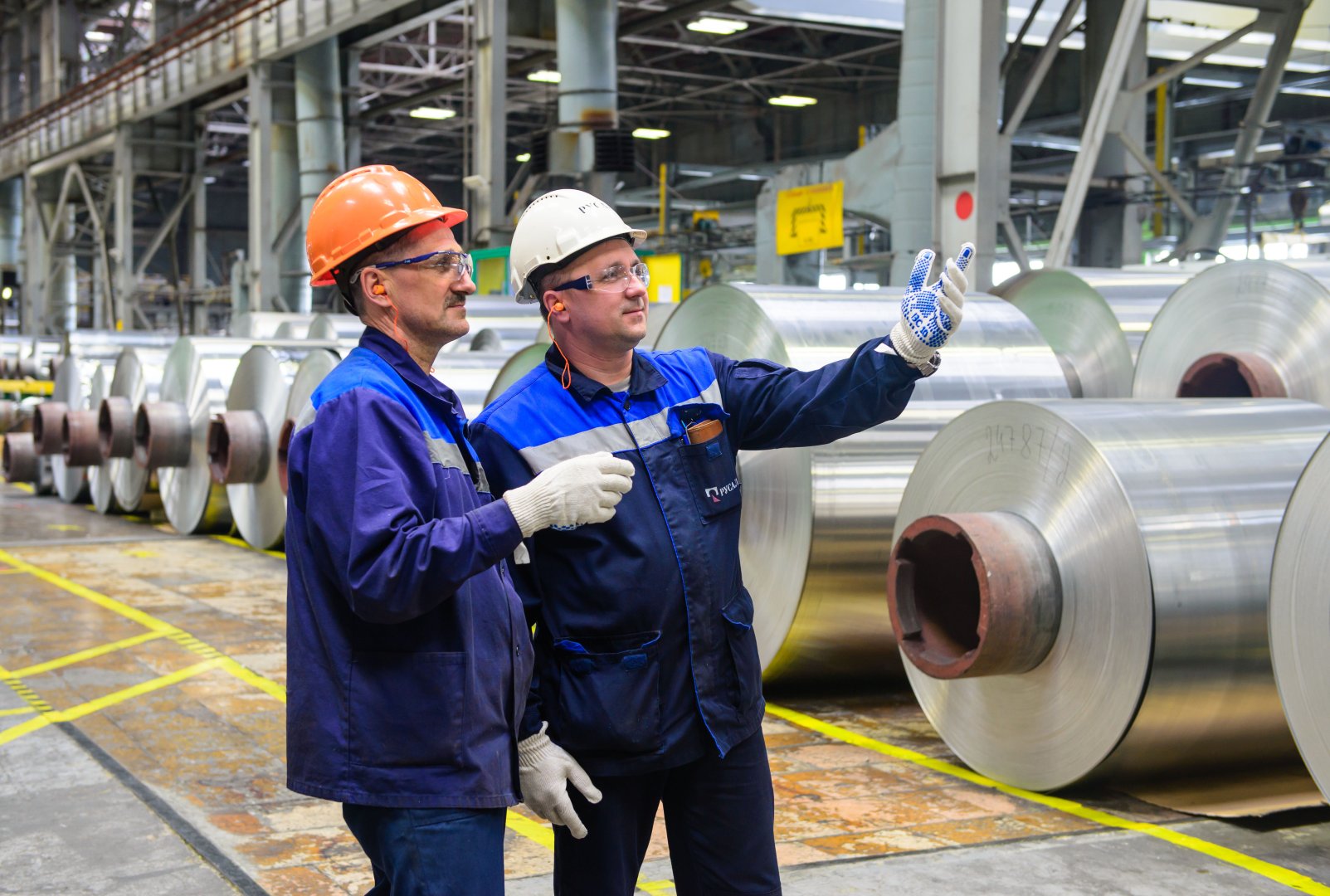
🛡️ Safety: Safety Observation Program (UC RUSAL) — Part 1
The outdated three-stage safety inspection system is becoming obsolete. Read how UC RUSAL's Downstream Division is implementing modern safety observations, overcoming formalism, and building a new HSE culture without massive IT budgets.
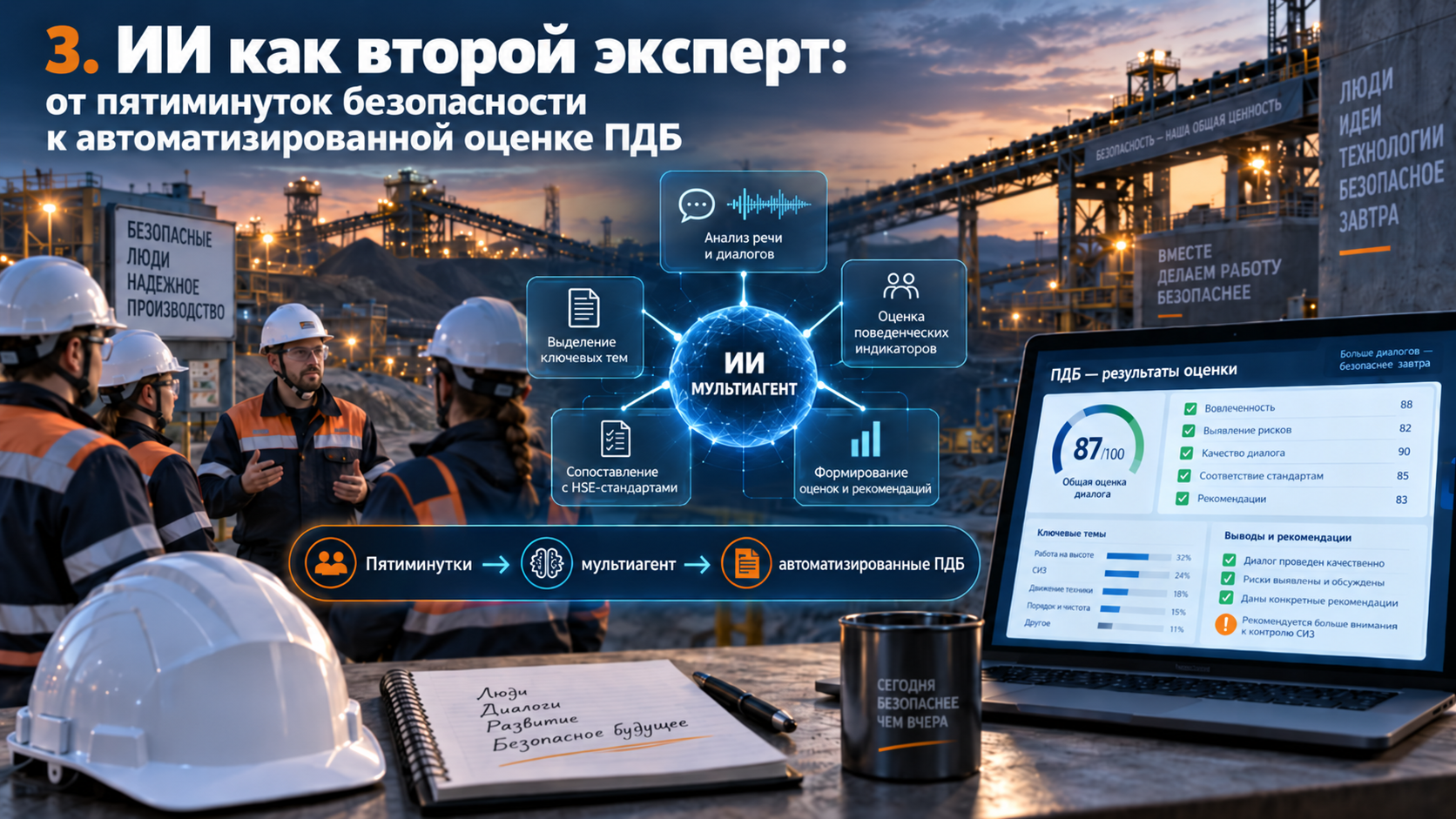
AI as a second expert: from safety talks to automated BSD evaluation
A conducted safety talk is easy to count — it is hard to understand if the conversation took place. The occupational health and industrial safety director of SSGPO JSC shows the next stage of their scheme: an AI assessor analyzes the audio recording of the safety talk and the behavioural safety dialogue using the same criteria, and the manager receives a personal review in about forty seconds. Inside: the path from a manual loop in Perplexity to a Telegram bot on Make and seven ready-made prompt...
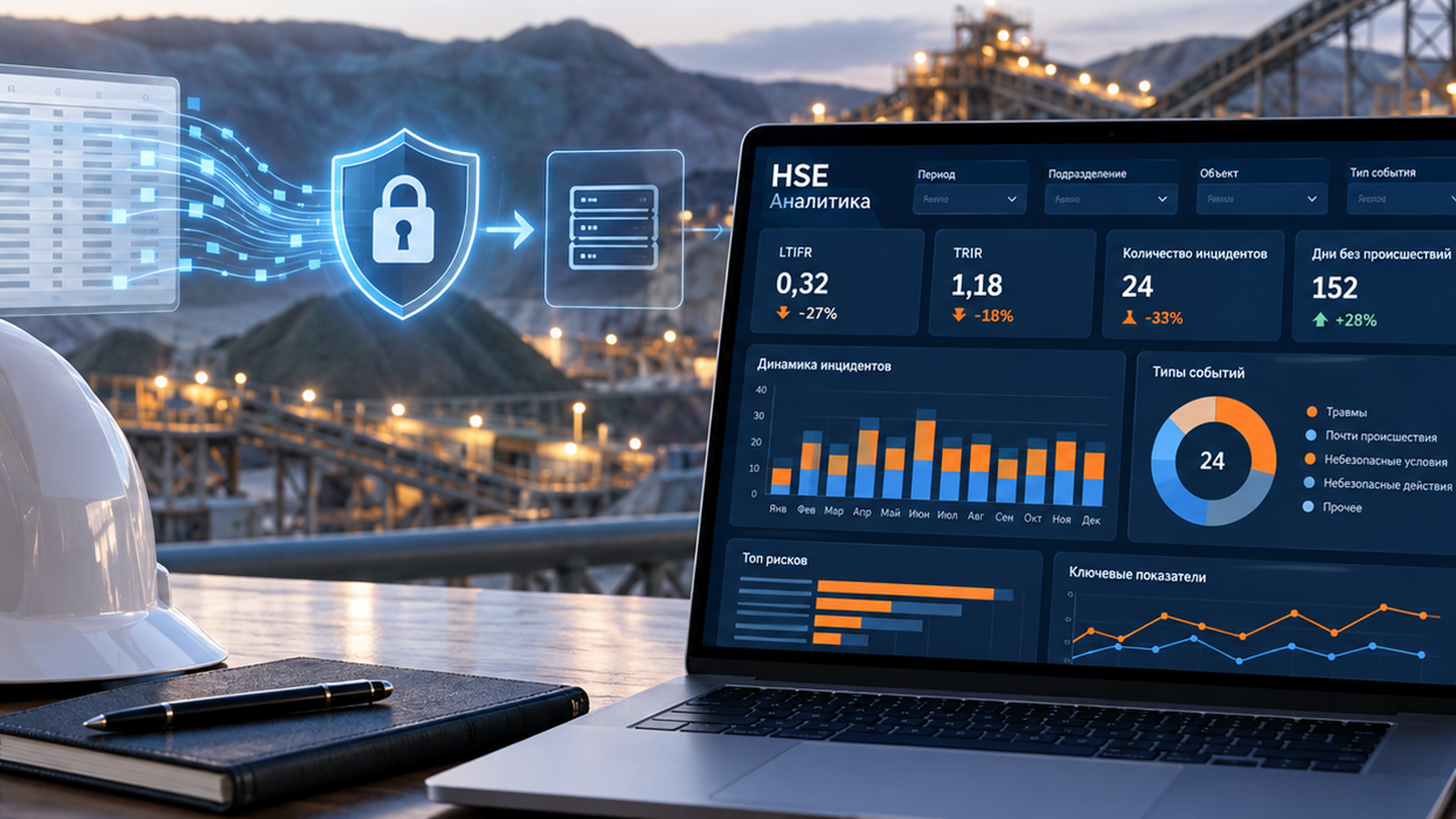
From an anonymized Excel file to management-level HSE analytics. Stage 2: building a standalone interactive HSE dashboard with vibe coding
The anonymized template is ready — what do you do with it next? The HSE director of JSC SSGPO shows stage two: in a few iterations the template turns into a standalone HTML dashboard for behavioural safety dialogues and critical risk control — with filters, clickable charts and drill-down from a general figure to a single record. The real working database is connected locally, once the program is finished. Includes all eight prompts in full.

From Excel to an HSE dashboard and incident analysis without handing over personal data. Stage 1: the offline masker
You cannot simply upload a working spreadsheet or an explanatory note to a cloud AI: they hold full names, personnel numbers, contractors, phone numbers. The HSE director of SSGPO shows the first stage of his scheme — a local masker in a single HTML file: only an anonymized copy leaves the company, while the recovery key and the password stay inside. With ready-made prompts for building the tool.

AI Agents in Health and Safety
A chatbot carries out one instruction and stops; an AI agent drives the task through to the result. We compare the two on a real end-to-end fatal accident investigation — and explain why managing agents is becoming a skill everyone needs.
🛡️ Safety: Why a "Paper" Shield and Trendy Innovations Fail to Protect Businesses
Paper logbooks and trendy AI video analytics won't save production if operational discipline is lacking. Find out why digitalization without changing the safety culture is a waste of budget, and how to transform occupational health and safety from a bureaucratic burden into a real cost-reduction tool.
AI Agents and Vibecoding: What Has Changed in HSE Over the Last 6 Months
The application of autonomous AI agents and vibecoding technology to automate routine processes in industrial safety. The practice includes using neural networks to independently identify hazards from photos, fill out risk registers, calculate budgets, and generate local regulatory acts without involving IT specialists. Implementing this approach transforms the role of the HSE specialist into a "knowledge broker," radically reducing the time spent on analyzing regulatory frameworks and investiga...
The Future of HSE Through the Lens of AI Development Trends
Phased implementation of artificial intelligence tools in occupational health and safety processes to automate routine tasks and data management. The practice includes preparing internal "knowledge brokers," launching a secure corporate analog of generative neural networks, and integrating AI with accounting systems. Implementing this approach in a mining company reduced labor costs for intellectual tasks by 20%.

Results of Implementing Operator Fatigue Monitoring Systems
Large-scale implementation of a hardware-software operator monitoring system based on machine vision for 3,500 drivers of mining and auxiliary equipment. The solution is integrated with dispatch and surround-view systems, automatically warns against falling asleep at the wheel, and collects video data for neural network analysis of production processes.

Transformation of Production Control: Barrier-Based Risk Management Model
Digitalization of production control based on a barrier-based critical risk management model using the Bow-Tie method. The practice includes integrating an analytics system and an operational management system to conduct inspections via a mobile application on explosion-proof devices. It features automated generation of corrective work orders and proactive status updates of locations to "hazardous production situation" in cases of systemic deviations.