#Qualification
Training and certification of personnel: regulatory compliance, competency matrices, and clearance for dangerous work (e.g., electrical safety). Showcases practical approaches to enhancing the professionalism of staff and verifying contractors' skills before work begins.
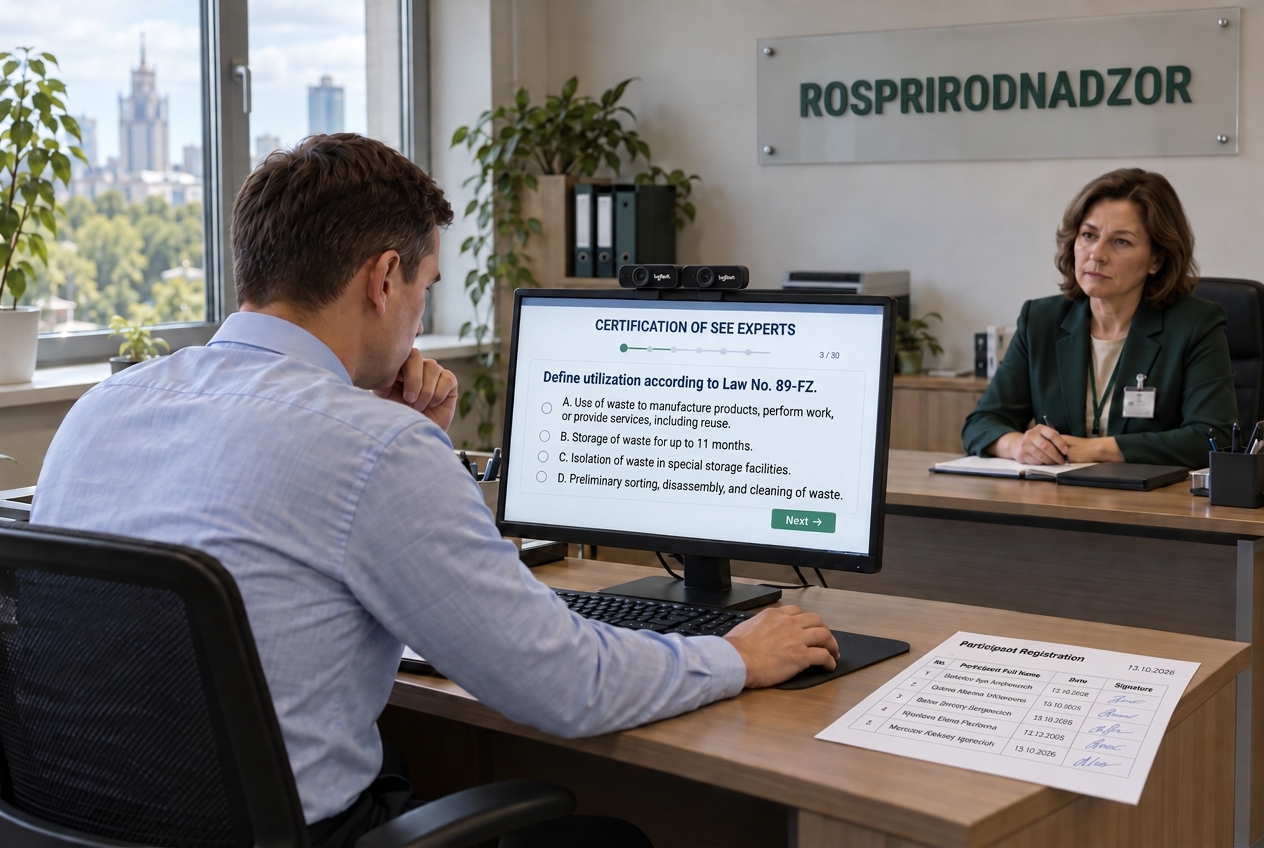
SER Expert Certification at Rosprirodnadzor: Preparation Experience and Pitfalls
A practical breakdown of State Environmental Review expert certification at Rosprirodnadzor under Order No. 110. How to choose certification areas, apply via Gosuslugi, avoid testing traps, and why practical environmental experience alone is not enough to pass the exam.

The occupational safety specialist: a profession that never loses relevance
The Deputy Head of the Occupational Health and Safety Service at Mosgortrans on a profession that almost always remains behind the scenes: why an occupational health and safety specialist today works not only with documents, but also with people, how "invisible" work affects company risks and expenses, and why the development of technology makes this role more complex, rather than simpler.

Prequalification: is a stack of documents enough?
86 documents, 42 criteria, 100 points — and still it is no guarantee. The Head of Contractor Safety at Uralkali analyzes what pre-qualification actually screens out, why only 50 out of 80 companies returned the questionnaire, what to do if a contractor is the only one on the market, and why “accidents don't happen every day” is the most honest and most dangerous argument.


Contractor-Client: Interaction in Safety Matters
A systematic approach to managing the safety of contracting organizations at all stages of interaction. The practice includes differentiating contractors by risk level, auditing at the tender stage, joint training and admission, and applying positive motivation tools instead of fines.

Mentorship or Investment in the Future
Implementation of a mentorship institution to adapt young specialists and reduce occupational injuries. The practice includes developing measurable adaptation programs, integrating HSE requirements into on-the-job training, and a system of material and non-material motivation for mentors.

Improving Production Safety Based on the "Knowledge Monitoring" Information System
Implementation of the "Knowledge Monitoring" information system based on corporate smartphones for continuous personnel microlearning without interrupting production. The system includes NFC authorization, adaptation of questions to workshop specifics, and a web interface for managers to identify knowledge gaps and form a talent pool.

Emergency Drills as a Tool for Building a Safety Culture in an Organization
Implementation of six unconventional emergency drill formats (changing locations, role-playing with victims, quests, joint exercises with rescuers, unexpected timing, and combining with master classes). The practice aims to develop conscious personnel actions in abnormal situations and move away from a formal approach to evacuation.

Safety School – Key Elements in Reducing Injury Rates
Creation of an internal practice-oriented "Safety School" to train employees on production risks. The training includes a theoretical part on the 10 golden safety rules and practical exercises on specialized training stands (electrical safety, LOTO, forklift blind spots, PPE, ergonomics, working with chemicals).

How to Avoid a Fatal Error in a Critical Situation and What Does Practice Have to Do With It?
Individual 15-minute emergency drills at the workplace (DRA Workshop). The trainer simulates an emergency, and the worker physically performs the necessary actions, followed by developmental feedback.

Developing an Internal Trainer Institute. How Can a Trainer Become a Heard Voice of Safety?
Creating and scaling an internal safety culture trainer institute at a large industrial enterprise. The practice includes multi-stage selection, trainer preparation, on-site internships, and the use of artificial intelligence (electronic badges) for objective assessment of training quality.

From Novice to Leader: A Successful Internship Story
Implementation of a mandatory five-stage internship for new managers at the workplace of the Head of the HSE Department. The program includes theoretical training, practical walkarounds to identify violation precursors, leadership walkarounds with top management, and public defense of results.

Safety Starts With You: School of Lead Trainers
Creation and development of an internal industrial safety trainer academy from among company employees. Trainers undergo external certification, are assigned to specific production units, and train personnel from workers to top managers, as well as contractor employees.