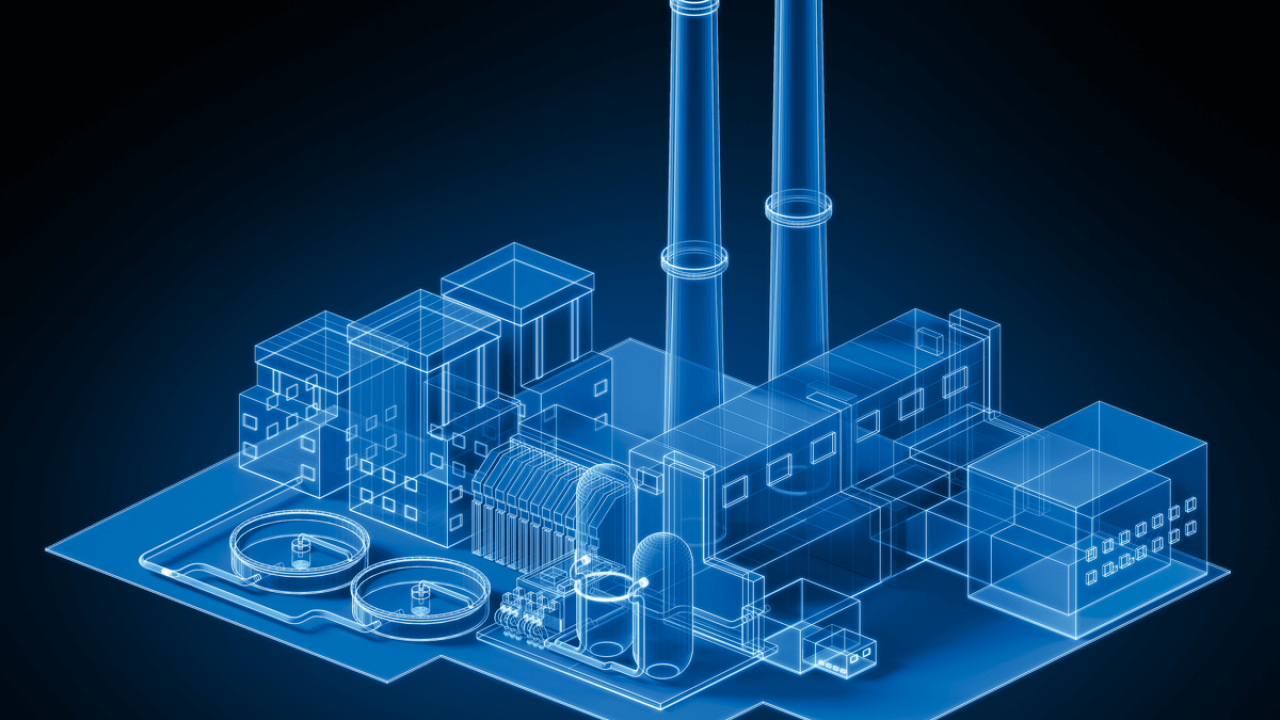
Digital Twins as a Tool for Optimizing Industrial HSE Systems
In today's world, digital technologies play an increasingly important role in all spheres of human activity, including production and management. One promising direction is the use of enterprise Digital Twins (DT), which are virtual models of real objects and processes. These models are created using modern information technologies and mathematical methods, allowing for accurate and up-to-date data on the state of the enterprise and forecasting its development.
What is a Digital Twin?
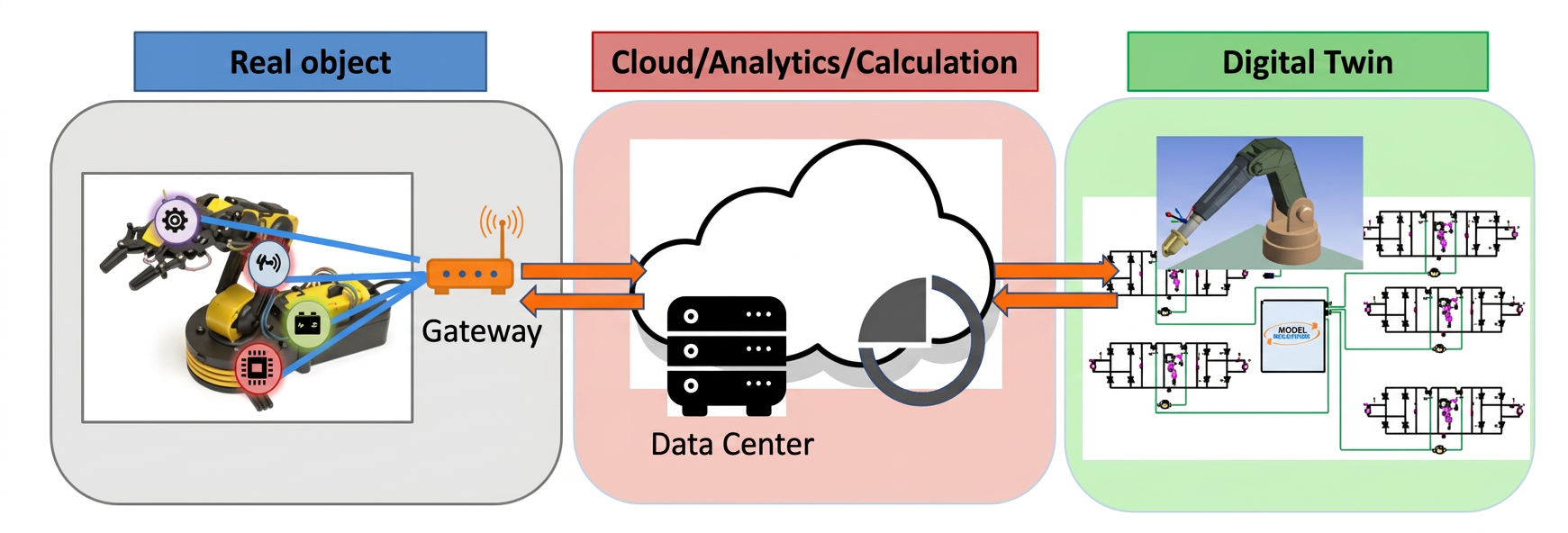
A Digital Twin (hereinafter referred to as DT) is a learning system consisting of a set of mathematical models of various system components that continuously collects information from sensors. This information is adjusted based on actual test results, and the system predicts behavior throughout its entire lifecycle. A Digital Twin allows for simulating the behavior of a real object in the real world.
The Digital Twin concept was first proposed about two decades ago as an innovative, comprehensive tool with clear advantages: real-time monitoring, modeling, and forecasting. Essentially, it is a virtual copy of a real object that exchanges data with it. Since then, the term has become widely accepted, and digital twins themselves gain new capabilities every year.
The capabilities of digital twins for real-time monitoring and data collection depend on the interaction of physical objects with each other in a simulated environment and with the external environment in corporate information systems. Data analysis is based on big data processing algorithms and machine learning tools. Combining these technologies and implementing them in one or more projects requires technical capabilities, deep knowledge, and skills.
Until recently, creating digital twins was a rather complex task, but thanks to breakthroughs in digital technologies such as the Internet of Things, 5G networks, cloud computing, and artificial intelligence, the situation has changed, and today digital twins are one of the main technological trends.
How Do Digital Twins Work?
A Digital Twin consists of three main components: a real object, its virtual copy, and a constant exchange of data between them. Its uniqueness lies in the fact that input data is provided by sensors from real devices operating simultaneously. It can function in real-time (online) or offline mode, allowing for the comparison of digital twin output with real data to detect anomalies and identify their causes.
What are the Benefits of Digital Twins for an HSE Specialist?
For an HSE specialist, digital twins open up new opportunities in risk analysis, planning and monitoring of industrial safety measures, and personnel training.
- Risk Assessment: Digital twins allow for the creation of a detailed model of the enterprise, taking into account all its specific features and connections between various components. This enables risk analysis to identify the most vulnerable areas and processes, as well as the development of measures to prevent emergencies and reduce the likelihood of employee injuries.
- Planning and Monitoring Measures: Digital twins provide the opportunity to evaluate the effectiveness of planned HSE measures in advance, such as equipment upgrades, the introduction of new technologies, or changes in work procedures. This allows for choosing the most effective solutions and tracking the progress of measures at all stages of implementation.
- Employee Training: Digital twins can be used as simulators for personnel training. This allows employees to be trained in conditions as close to real life as possible, increasing training effectiveness and reducing the likelihood of errors in actual work. Additionally, using digital twins can significantly reduce the costs of conducting HSE tests and research, as virtual models allow for testing without risk to people or the environment.
However, it is worth noting once again that the application of digital twins requires certain IT knowledge and skills from an HSE specialist. Therefore, to fully realize these opportunities, it is necessary to provide additional training and professional development for HSE staff.
Thus, enterprise digital twins are a promising direction in the HSE field, allowing for increased operational efficiency and improved working conditions at the enterprise.