Safety at HEIGHT
In today's world, where technology evolves at an incredible pace and construction and manufacturing become increasingly complex and hazardous, the issue of safety when working at height is more relevant than ever. Training grounds for practicing practical skills for safe work at height have become an integral part of professional training and advanced qualification for specialists.
Key Aspects of a Training Ground
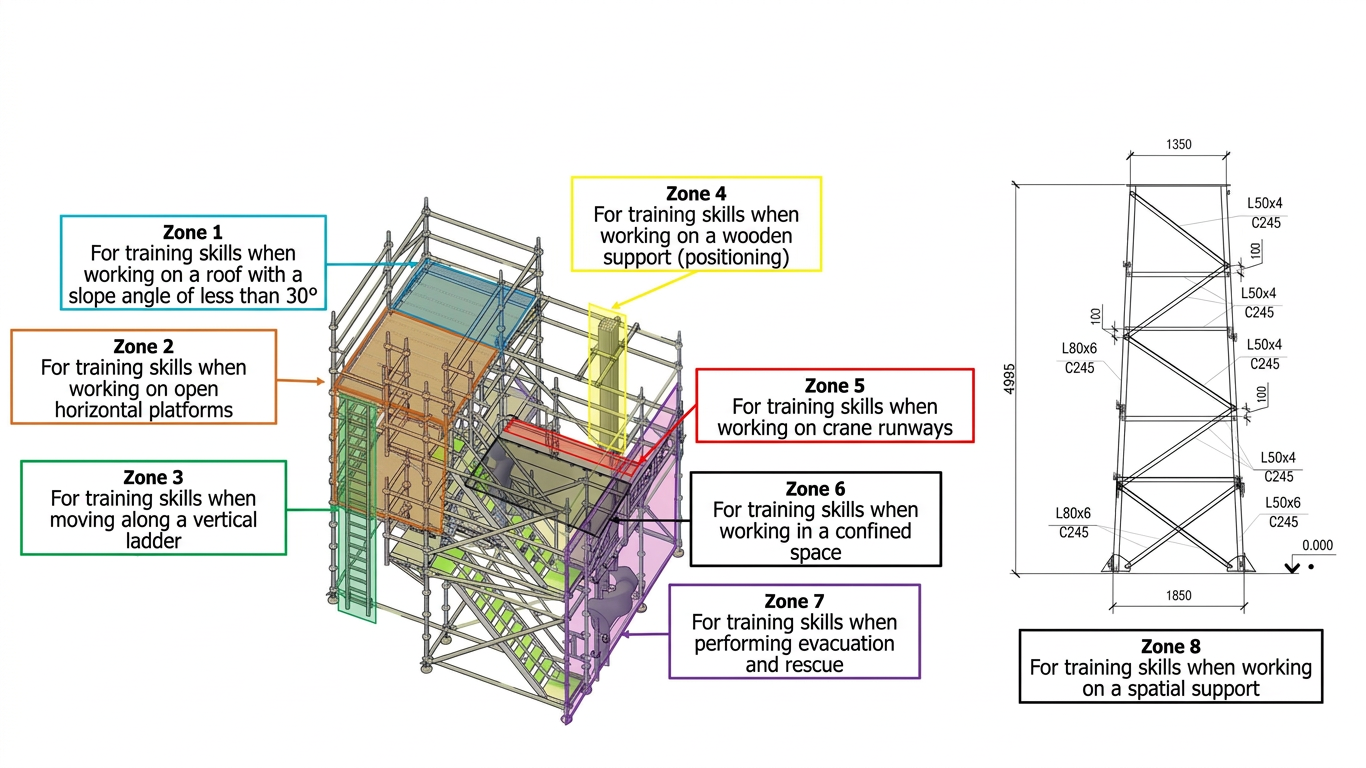
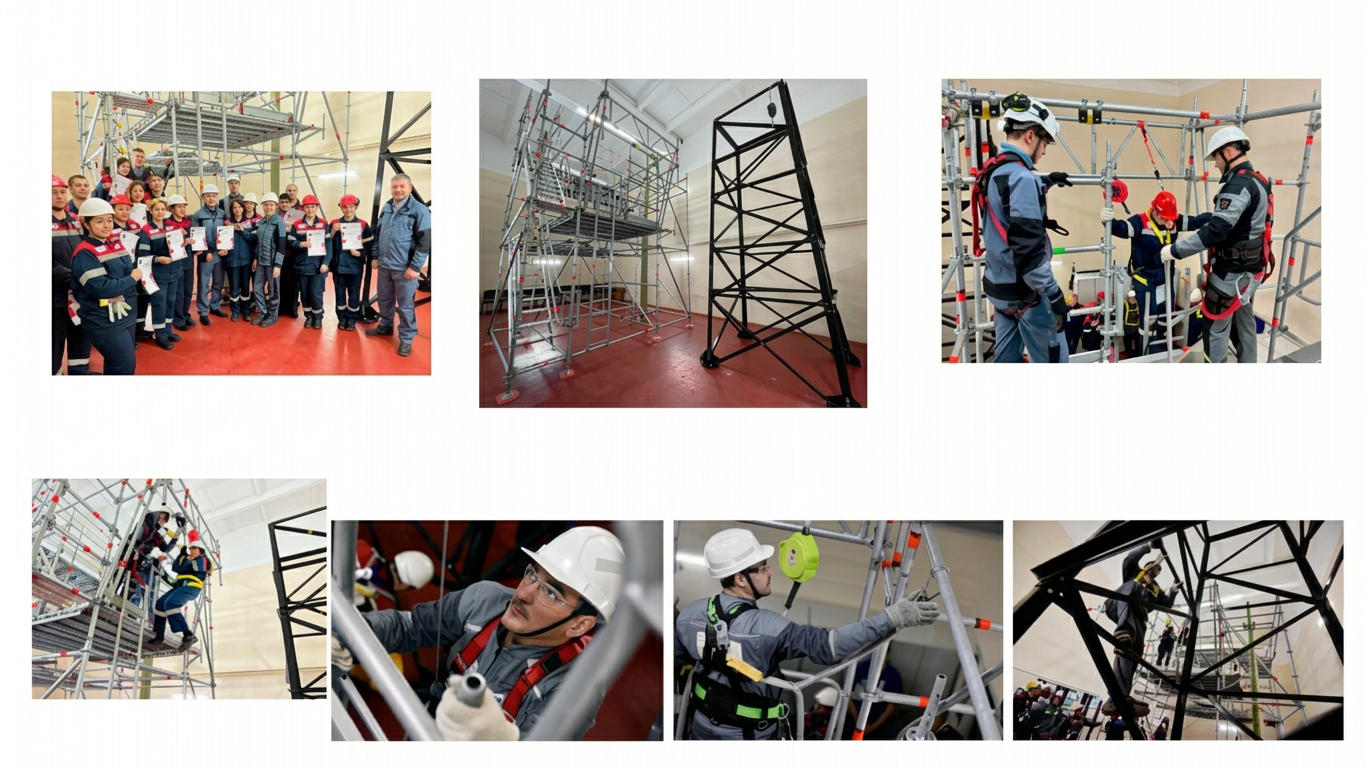
A training ground is a specialized facility equipped with various structures and elements that allow trainees to practice working at height. This can be an outdoor area with installed construction structures or an indoor facility simulating objects at height.
The training ground is equipped with all the necessary gear and tools used for work at height, such as fall protection systems, ropes, carabiners, ladders, etc. Instructors and trainers are also present at the training ground to supervise the learning process and help trainees master the required skills.
Advantages of Using Training Grounds
Using training grounds offers several benefits:
- Practical experience. Training grounds allow trainees to gain hands-on experience working at height in conditions that closely mimic real-world scenarios. This helps them better understand the specifics of working at height and learn how to apply their knowledge and skills in practice.
- Safety. Training grounds are equipped with all necessary safety measures, minimizing the risk of injury during training. Instructors oversee the process and ensure compliance with safety regulations.
- Professional development. Training grounds are an effective tool for upskilling specialists who already have experience working at height. They provide an opportunity to refresh knowledge and skills, as well as master new methods and techniques.
- Reduced risk of accidents. Training at a training ground helps reduce the risk of workplace accidents related to working at height. Specialists who have completed training at the training ground are better prepared for their duties and capable of making the right decisions in complex situations.
- Improved work quality. Experienced and qualified specialists trained at training grounds can perform work at height more effectively and with higher quality. This leads to increased productivity and lower production costs.
In conclusion, training grounds play a vital role in ensuring safety and improving the quality of work at height. Their use fosters the development of professional skills and reduces the risks associated with working at height.