Procedures for Rescue Operations in Manholes and Vessels
1. Introduction
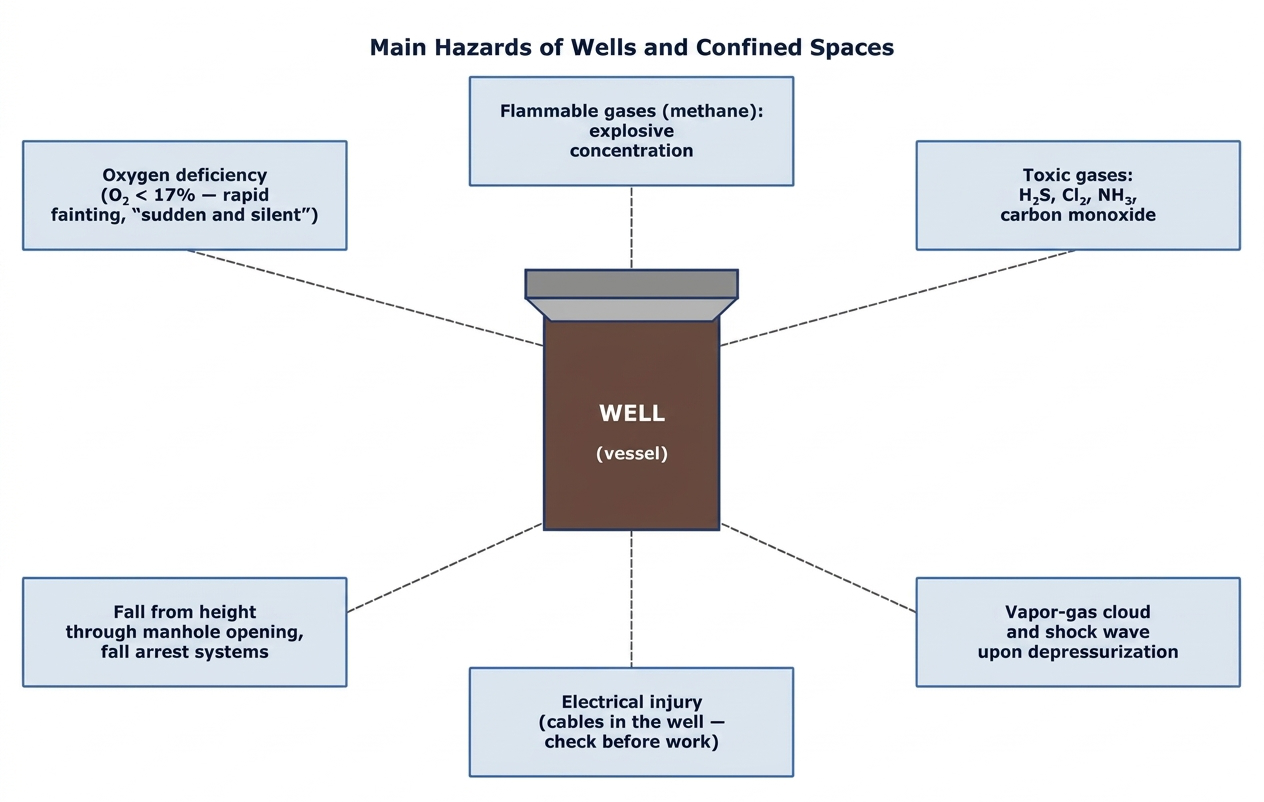
Underground structures—sewer manholes, collector tunnels, storage tanks, and process vessels—are classified as confined spaces, where any deviation from established procedures can cost the lives of both the casualty and the rescuer. The atmosphere inside these structures may contain methane, hydrogen sulfide, ammonia, or chlorine, or suffer from oxygen deficiency that renders a person unconscious within seconds. For this reason, work in these environments is strictly regulated: Federal Law No. 68-FZ of December 21, 1994, "On the Protection of the Population and Territories from Natural and Man-Made Emergencies," sets out general requirements for protecting people during emergencies; Federal Law No. 151-FZ of August 22, 1995, "On Emergency Rescue Services and the Status of Rescuers," defines the status of rescuers and their right to personal protective equipment; and the Occupational Safety Rules for Work in Confined and Enclosed Spaces (Order of the Ministry of Labor of Russia No. 902n of December 15, 2020) establish mandatory permit-to-work procedures, atmospheric monitoring, and fall protection and standby rescue measures for workers.
| Case Study. The Classic "Double" Poisoning Scenario |
|---|
| Inside a collector manhole, a worker felt weak from accumulated hydrogen sulfide and lost consciousness. Seeing this, his coworker climbed down after him without a breathing apparatus and collapsed after just a few breaths. Every such pair of casualties repeats the exact same fatal mistake: attempting a rescue without protective gear or fall protection. The core rule of Order No. 902n—"never enter without atmospheric monitoring and a standby attendant topside"—exists specifically to break this chain. |
2. Rescue Shift Equipment
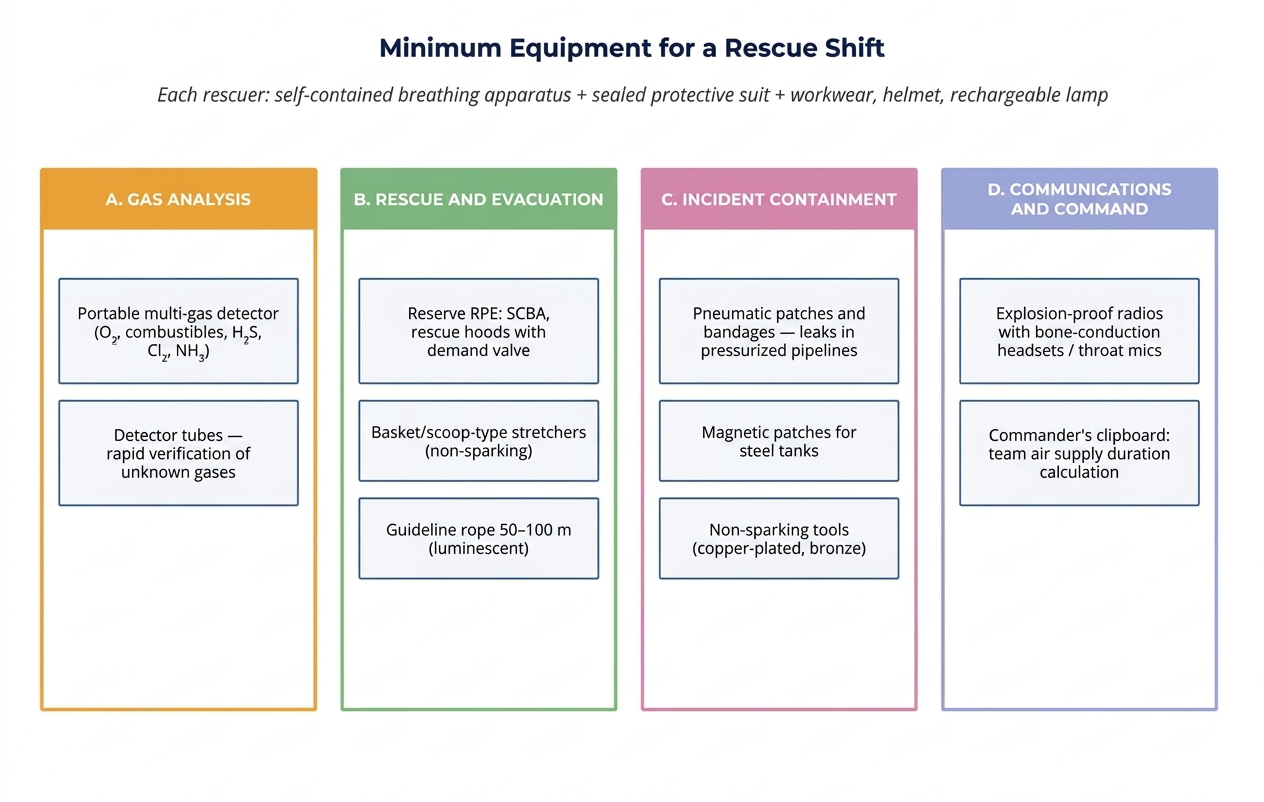
The minimum personal kit for every rescuer includes a self-contained breathing apparatus (SCBA), a gas-tight protective suit, protective workwear, a safety helmet, and an explosion-proof rechargeable lamp. In addition, the rescue shift is equipped across four functional categories: gas detection and monitoring, casualty rescue and evacuation, chemical incident containment, and communications and command. The requirement to maintain a backup breathing apparatus and the capability to evacuate a worker to the surface immediately is mandated by the Occupational Safety Rules for Work in Confined and Enclosed Spaces (Order of the Ministry of Labor of Russia No. 902n).
2.1. Gas Analysis and Atmospheric Monitoring Equipment
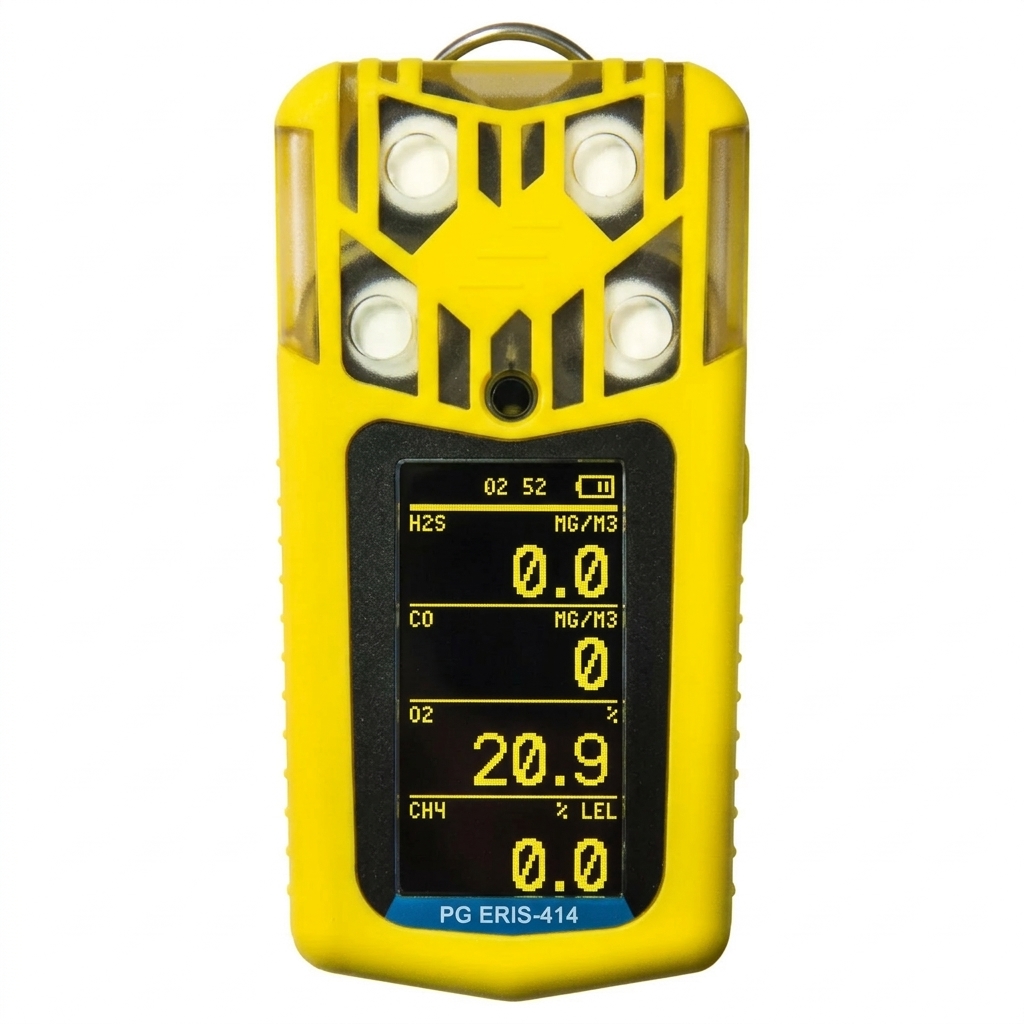
- Portable multi-gas detectors — explosion-proof instruments for simultaneously measuring concentrations of oxygen, flammable gases, and toxic substances (chlorine, ammonia, hydrogen sulfide, etc.).
- Colorimetric detector tubes — rapid chemical test kits for verifying unknown hazardous gases.
2.2. Casualty Rescue and Evacuation Equipment
- Backup respiratory protective equipment (RPE) for casualties: supplied-air breathing apparatus (SABA) or rescue devices (demand-valve hoods) that connect to the rescuer's SCBA.
- Basket or tray-type stretchers made of non-sparking materials resistant to aggressive chemicals.
- A guide lifeline (photoluminescent or braided cord), 50–100 meters long, for team orientation in zero visibility.
2.3. Chemical Incident Containment Equipment
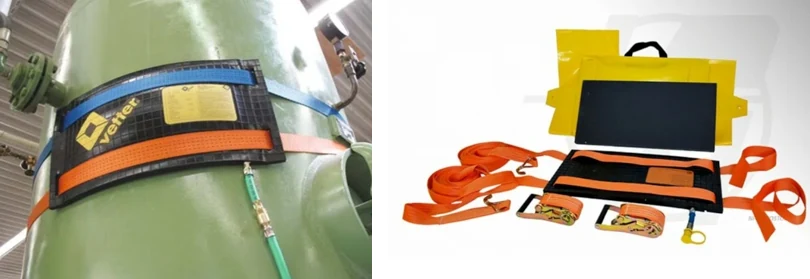
- Pneumatic leak-sealing patch and pipe-bandage kits — inflatable cushions and straps for sealing pinholes and leaks in pressurized pipelines and vessels.
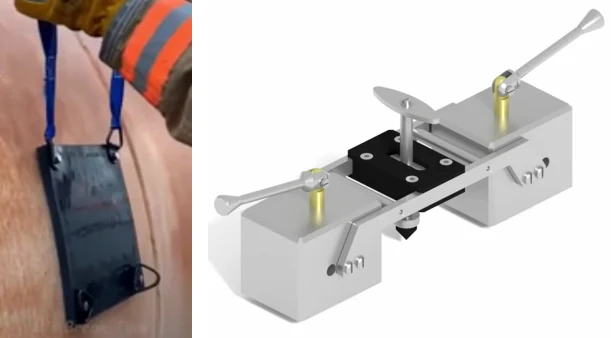
- Magnetic sealing patches for sealing steel storage tanks containing toxic industrial chemicals (TICs).
- Non-sparking tools (copper-plated or bronze) that eliminate the risk of sparks in explosive atmospheres.
2.4. Communications and Command Equipment
- Explosion-proof two-way radios with bone-conduction headsets or throat microphones — a standard handheld push-to-talk (PTT) microphone cannot be used inside a sealed helmet.
- An entry control board for the squad leader to calculate the team's allowable working time based on SCBA air reserves.
| Example: Atmospheric Testing Before Entering a Sewer Manhole |
|---|
| A rescue shift responded to a sewer manhole where a worker had collapsed nearby. The initial gas detector reading above the open hatch showed 0% oxygen — the entire volume of the manhole had been displaced by hydrogen sulfide. Under such readings, entry with a breathing apparatus is permitted only with forced ventilation or supplied-air equipment: a standard air-purifying respirator is completely useless here, and the team's operating duration is calculated down to the minute on the entry control board. |
| Example: Sealing a Leak with a Pneumatic Pipe Bandage |
|---|
| When a process pipeline carrying hydrochloric acid lost containment, rescuers sealed the pinhole leak with a pneumatic pipe bandage in 7 minutes without shutting down production. This emergency response was possible only because a pneumatic sealing patch kit was part of the shift's standard equipment and the tools were copper-plated — flammable vapors were present nearby. |
3. Tactics for Rescuing a Casualty from a Manhole
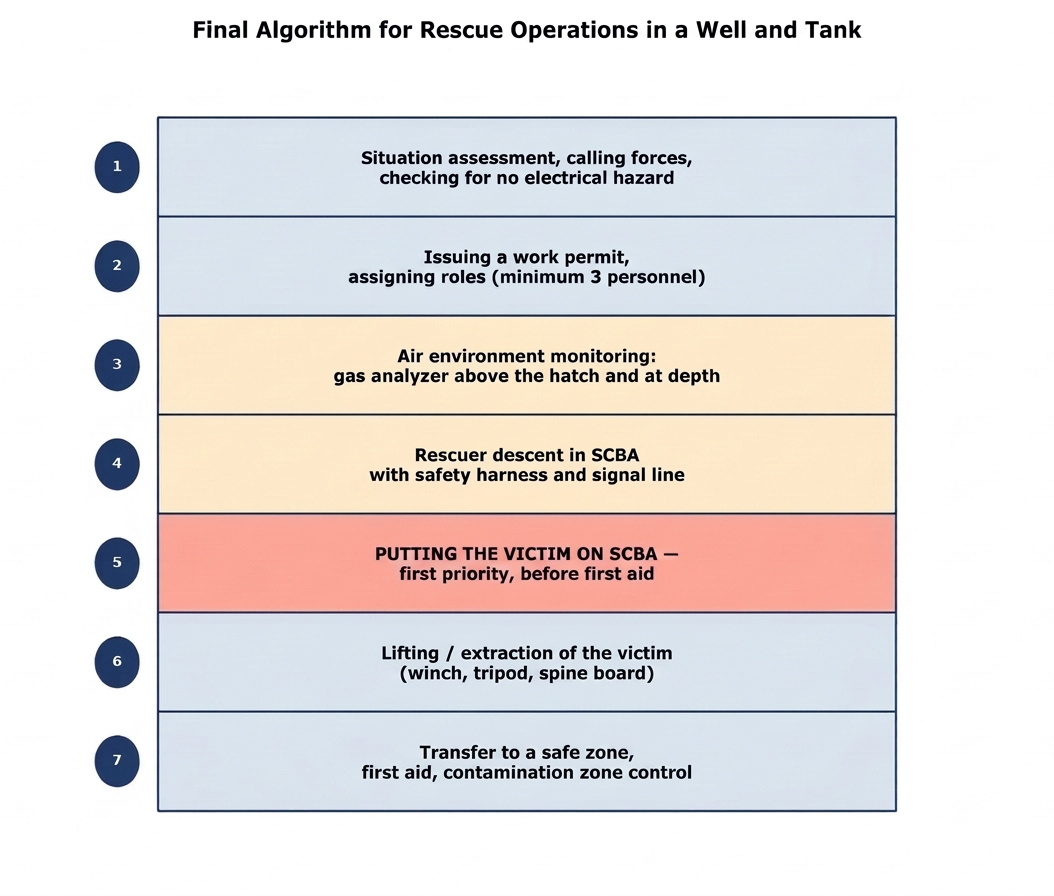
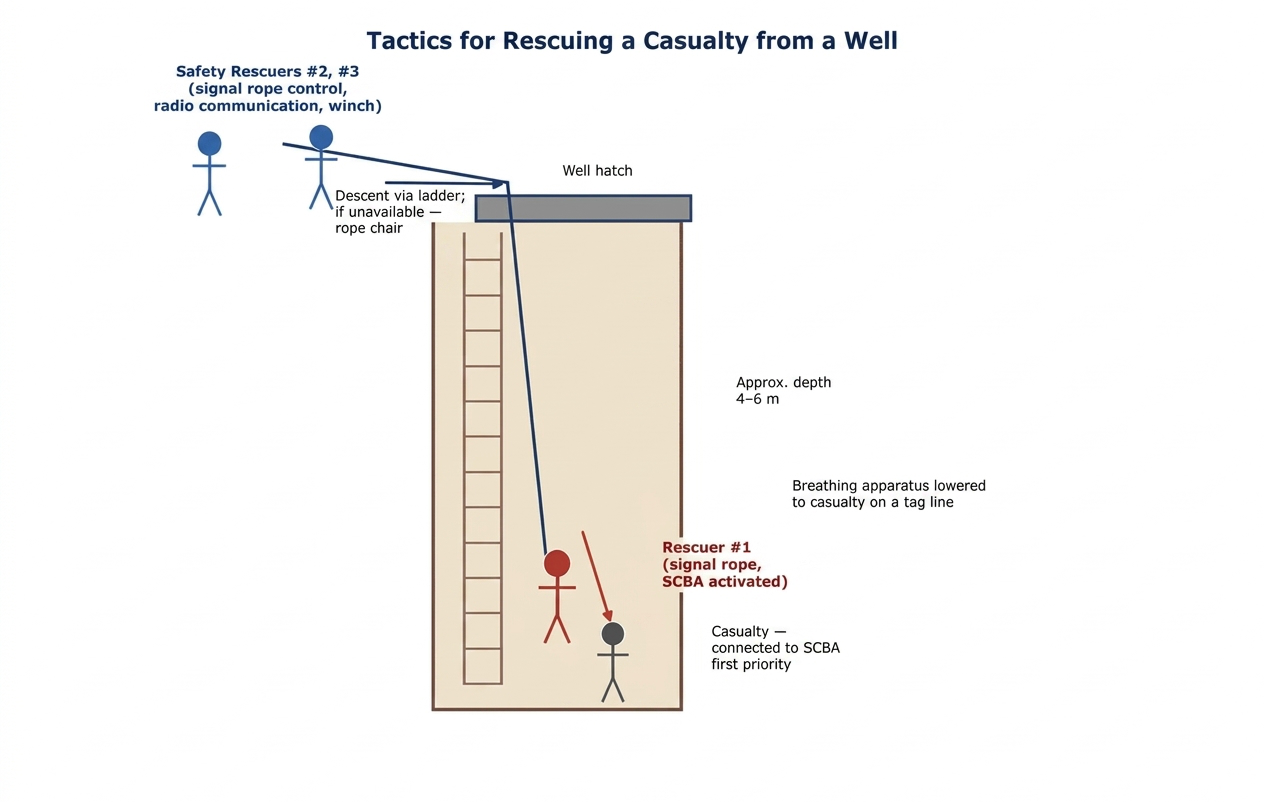
Rescue tactics depend on the hatch diameter, the depth of the manhole, and the presence of a serviceable fixed interior ladder. One mandatory requirement is attaching one end of a signal line to the descending rescuer. The standard protocol is as follows: if the hatch diameter is sufficient, the rescuer descends via the ladder (or using a rope rescue seat if no ladder is present); the surface crew lowers a rescue device, a breathing apparatus, and a rope rescue seat for the casualty; the rescuer's first priority is to put the casualty on RPE and secure their arms; hoisting is performed on signals from the rescuer inside the manhole. An air sample is collected at the casualty's location, and whenever possible, the percentage concentration of the hazardous substance is measured with a gas detector.
3.1. Special Cases
- If the hatch is too narrow for a rescuer wearing SCBA to descend, the rescue is performed using a supplied-air breathing apparatus (SABA).
- If the manhole is located outside a gas-contaminated zone, rescue using PSh-1 or PSh-2 fresh-air hose respirators is permitted — provided the air above the hatch is tested beforehand with a gas detector.
- If the TIC can be absorbed through the skin, rescuers must wear SCBA together with a gas-tight protective suit.
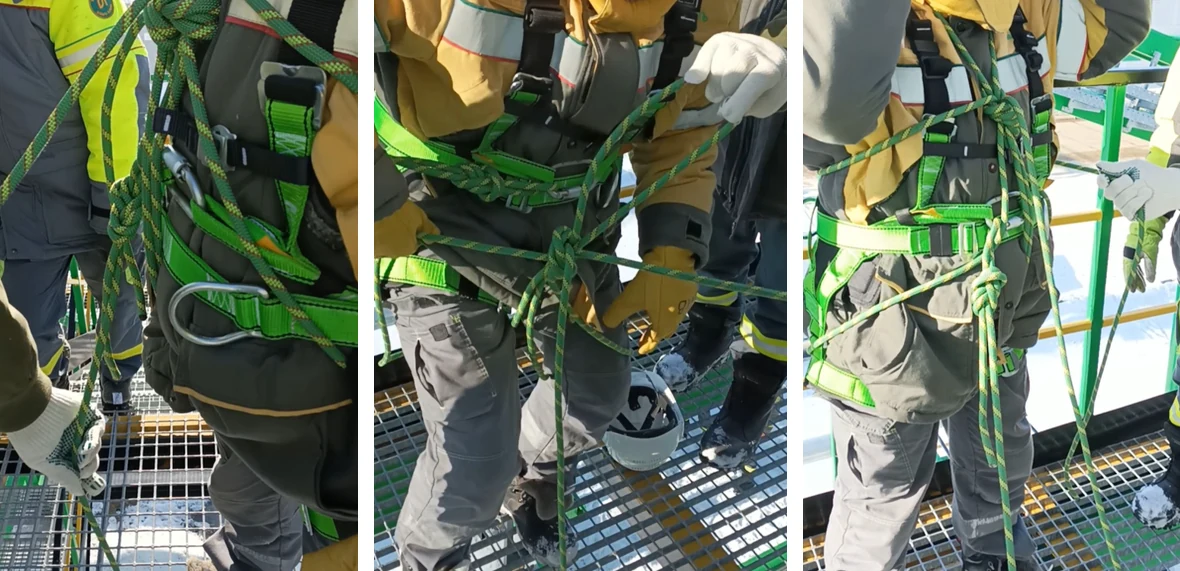
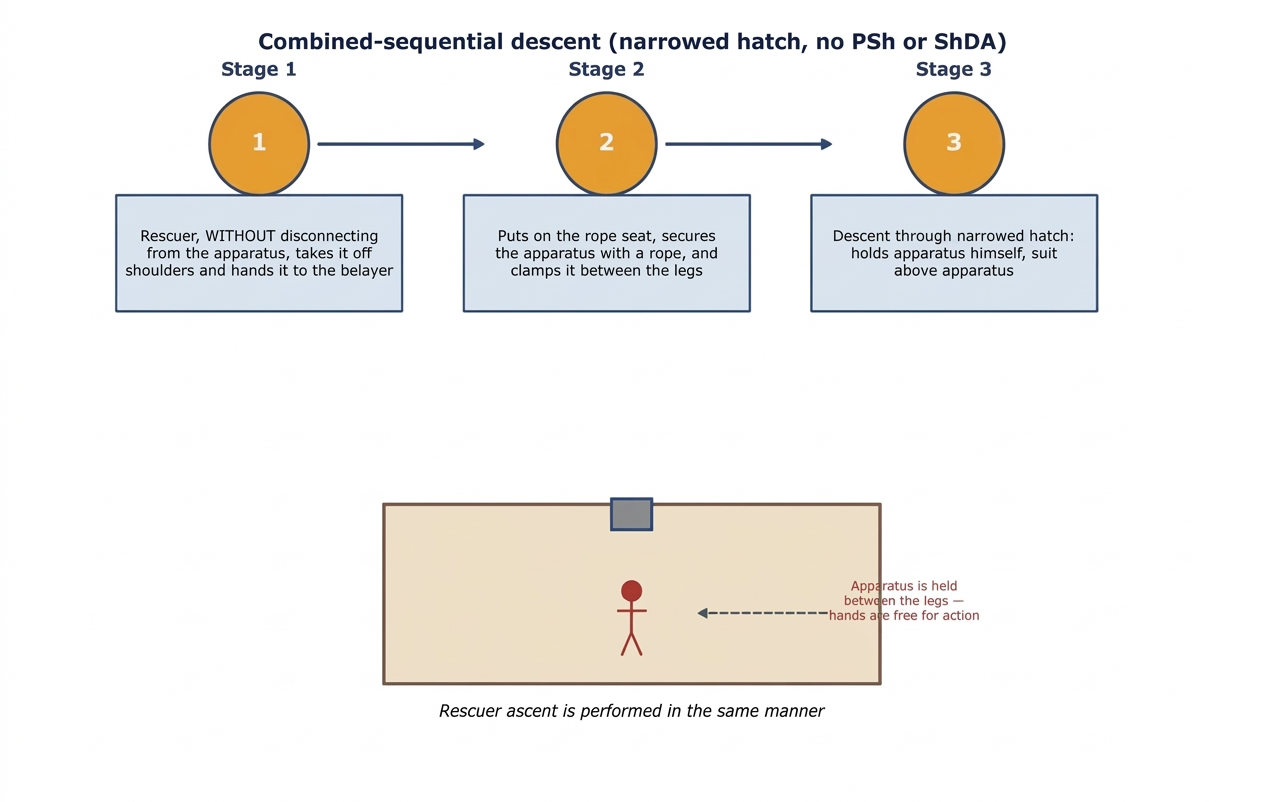
- When PSh-1/PSh-2 respirators and SABA are unavailable, the combined sequential descent technique is permitted: without disconnecting from the SCBA, the rescuer slips the unit off their shoulders and hands it to a standby attendant, puts on the rope rescue seat, secures the SCBA with a line, and descends into the manhole holding the cylinder unit between their legs. Ascent is carried out in the same manner.
| Example: Rescuing a Maintenance Mechanic from a Sewage Pumping Station Manhole |
|---|
| A maintenance mechanic descended into a 4-meter manhole at a pumping station to repair a gate valve and lost consciousness within a minute — the hydrogen sulfide concentration exceeded the permissible exposure limit dozens of times over. Rescuers followed the standard protocol: standby attendants held the signal line while the rescuer climbed down the ladder wearing SCBA, immediately fitted the casualty with a demand-valve rescue hood, secured his arms, and signaled for hoisting. An air sample taken at depth subsequently confirmed the poisoning diagnosis for medical personnel. |
4. Response Operations During Loss of Containment and Rupture of Industrial Vessels
TIC incidents involving loss of containment in storage tanks, vessels, and rail tank cars produce extensive chemical contamination zones and can cause mass casualties. Response actions in such situations are governed by the facility's Emergency Response Plans (ERPs), or, in their absence, by the Emergency Response Card for the specific chemical and the Incident Commander's operational plan. The rupture of semi-buried and underground storage facilities further restricts access to the tanks and limits the scope of response work until the product is completely evacuated.
4.1. Measures During a TIC Release
- searching for and assisting casualties;
- determining the calculated radius of the hazardous contamination zone based on the ERP forecast;
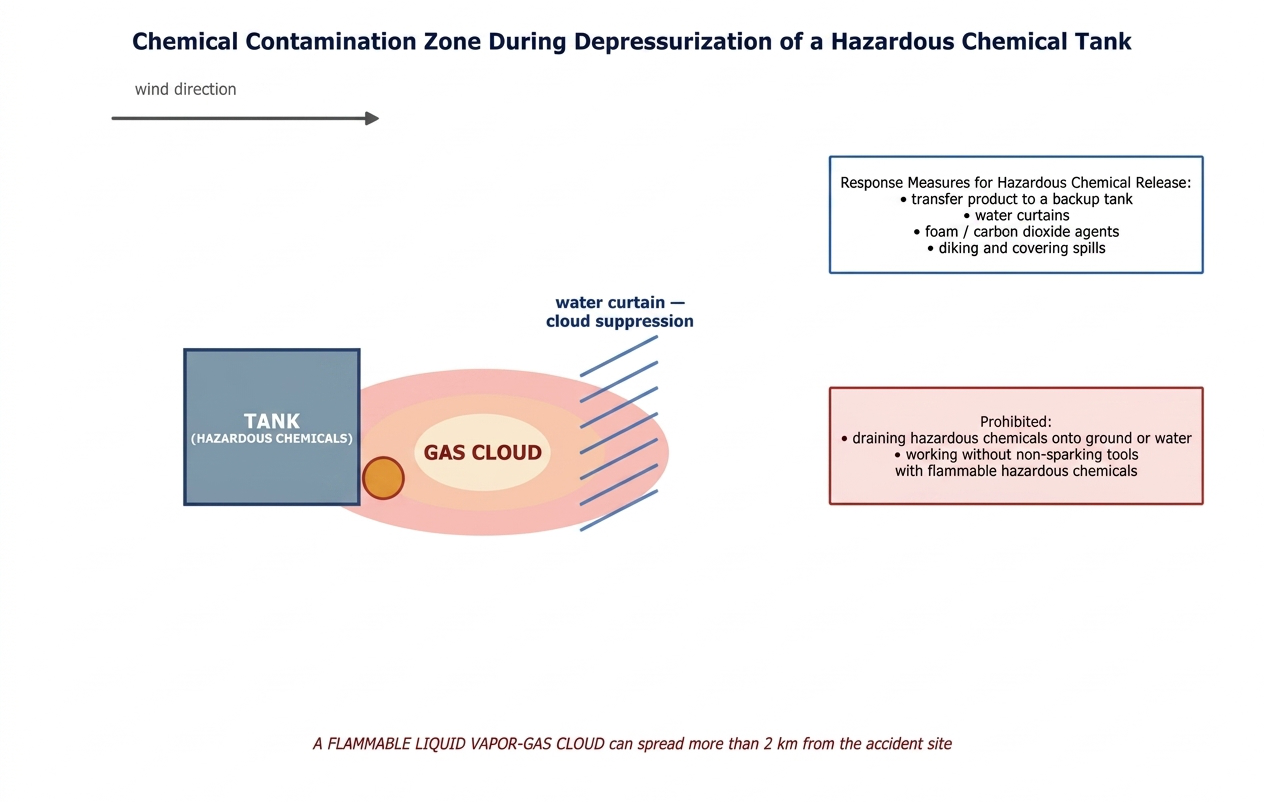
- emergency transfer of the hazardous product into a standby storage tank;
- deploying water curtains to prevent the gas cloud from spreading;
- reducing the TIC evaporation rate using carbon dioxide or foam agents that are chemically neutral to the substance.
4.2. Specific Hazards Rescuers Must Account For
Toxic substances cause severe poisoning through inhalation and ingestion, and many can penetrate intact skin in life-threatening doses; elevated temperatures further intensify their toxicity. Highly volatile TICs create hazardous concentrations at significant distances from the incident site. Many substances are flammable and produce toxic combustion products when burned (carbon monoxide, nitrogen oxides, hydrogen cyanide, phosgene, hydrogen chloride), while several ignite spontaneously upon contact with water. Leaking flammable liquids form a vapor-air cloud capable of traveling more than 2 km, and overpressure in vessels holding compressed or liquefied gases can lead to catastrophic rupture and the instantaneous release of a large mass of TICs. All search and rescue operations must follow the Emergency Response Card; before starting work, rescuers must confirm with the Search and Rescue Commander that there is no electrical hazard.
4.3. Additional Tasks and Prohibitions
In addition to search and rescue operations, rescuers may be tasked with conducting chemical reconnaissance of the incident hot zone, cordoning off the contaminated area with prohibition signs, diking and covering spills, pumping TICs into a standby vessel (in the presence of a specialist), neutralizing toxic substances, disposing of residues, and collecting and removing contaminated soil. At the same time, discharging liquids from damaged vessels onto the ground or into water bodies is strictly prohibited (in exceptional cases, discharging non-hazardous substances is permitted only with authorization from the competent authority and approval from local authorities), as is working without non-sparking tools in the presence of explosive, flammable, or pyrophoric TICs.
| Example: Chlorine Storage Tank Loss of Containment at a Water Treatment Plant |
|---|
| Following a loss of containment in a 55 m³ chlorine tank, a toxic cloud drifted downwind toward a residential district. Using the plant's ERP, rescuers determined the calculated contamination radius, deployed water curtains along the edge of the residential area, and sealed the damaged pipeline with a magnetic patch. Affected operators were led out of the gas-filled machinery room along a guide lifeline using backup RPE, with strict enforcement that no rescuer ever worked alone. |
| Example: Ammonia Leak at a Meat-Processing Plant |
|---|
| An ammonia leak from a refrigeration unit is a classic scenario: ammonia is lighter than air, toxic, and flammable. Rescuers operated in SCBA and gas-tight protective suits (ammonia is absorbed through the skin at high concentrations), deployed water curtains to knock down the vapor, and diked the spill. Discharging aqueous ammonia onto the ground was prohibited — the liquid was collected into a standby tank for subsequent neutralization. |
5. Rescuing a Casualty from a Vessel
5.1. Preparatory Measures
All required equipment is staged at the work site in advance: respiratory protective equipment for every worker plus one backup breathing apparatus or self-contained self-rescuer (SCSR). When working in restricted-access locations, the entrant wears a personal fall-arrest harness, and standby attendants must be able to evacuate them to the surface at any moment using a hoisting retrieval system (a pulley block-and-tackle or a tripod with a winch). Wherever there is a risk of falling to depth, an akja rescue stretcher must be kept on site to transport casualties with spinal injuries. Permit-to-work issuance procedures are established by the Occupational Safety Rules (Order of the Ministry of Labor of Russia No. 902n).
5.2. Tripod Evacuation Through a Top Hatch
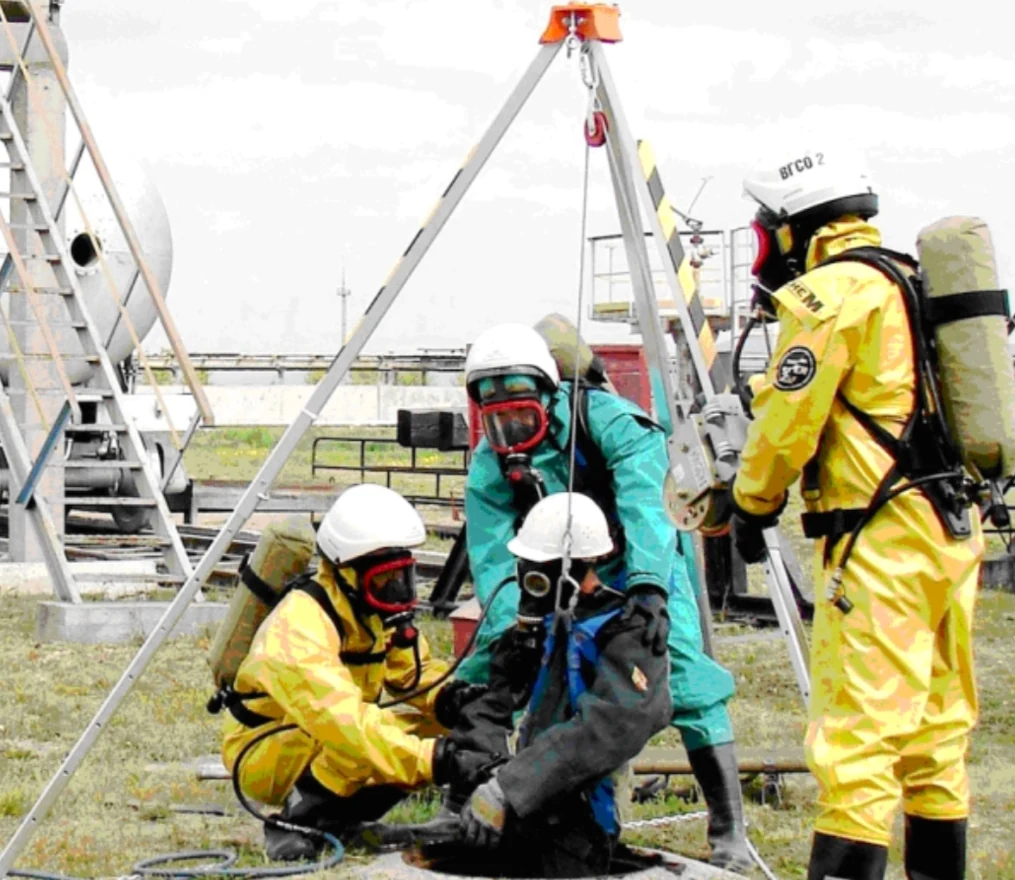
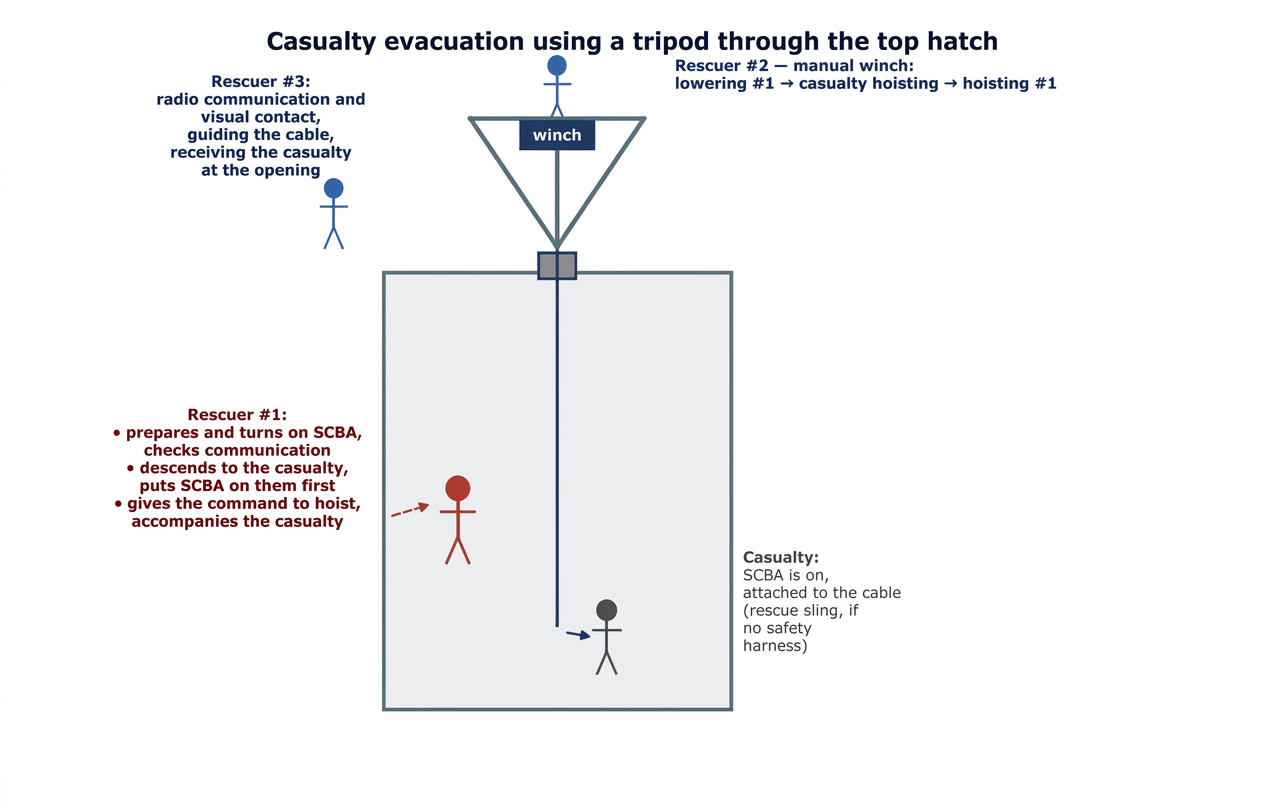
- Rescuer No. 1 prepares their RPE, performs a pre-use functional check, and verifies air reserves; readies casualty aid equipment, including an evacuation triangle if the casualty is not wearing a safety harness; checks radio communications; attaches the cable thimble to their safety harness before stepping over the hatch opening; and begins descent after going on air with their RPE.
- Rescuer No. 2 operates the manual winch: lowers Rescuer No. 1 if no ladder is available, then hoists the casualty up and lowers the line again to retrieve Rescuer No. 1.
- Rescuer No. 3 maintains visual contact and radio communications, suspends the casualty's RPE on a long tether, and receives the casualty at the hatch opening during hoisting to prevent snagging.
The core principle is clear: RPE is fitted on the casualty first, and only then is first aid administered and the casualty prepared for transport. As the casualty lifts off the floor, Rescuer No. 1 guides them to prevent swinging and impacts against internal structures. Once raised to the surface, the casualty is moved to a safe zone.
| Example: Loss of Consciousness Inside a Vessel with an Inert Atmosphere |
|---|
| A process engineer climbed into a vessel purged with nitrogen (under 6% oxygen) and lost consciousness near the hatch. Rescuers set up a tripod over the opening; Rescuer No. 1 descended on the winch, immediately fitted the casualty with a rescue hood, secured him to the cable, and guided him during the hoist to prevent impacts against the vessel walls. Total elapsed time from the alarm to removing the casualty from the hazard zone was 6 minutes — the second backup breathing apparatus and evacuation triangle had been staged in advance. |
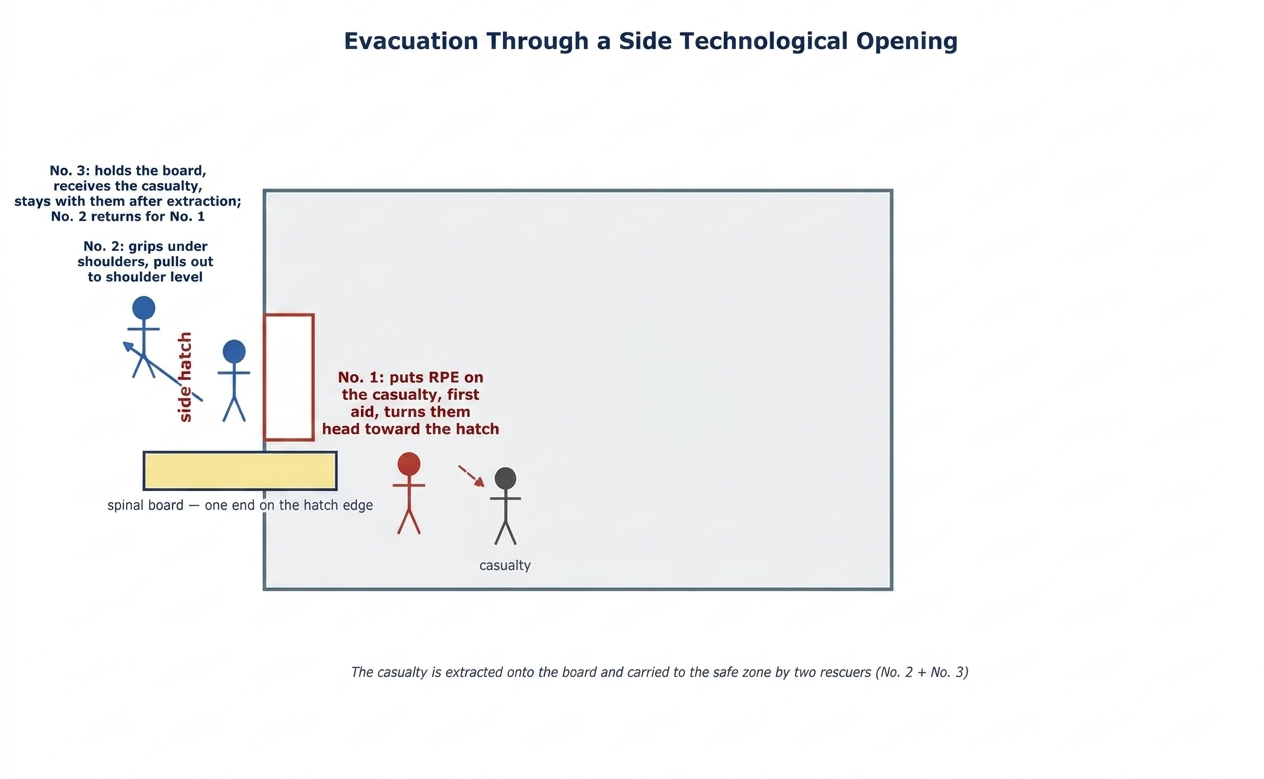
5.3. Evacuation Through Side Process Manways
- Rescuers No. 1 and No. 2 prepare their RPE and rescue equipment, perform pre-use functional checks, and verify air reserves; Rescuer No. 3 prepares RPE for the casualty.
- Assisted by Rescuer No. 2, Rescuer No. 1 enters the vessel through the side manway, fits the casualty with RPE, administers first aid, and positions the casualty head-first toward the opening.
- Rescuer No. 2 grips the casualty under the shoulders and, together with Rescuer No. 1, draws them out to shoulder level; Rescuer No. 3 positions a spine board, bracing one end against the rim of the manway.
- The casualty is slid onto the spine board and carried to a safe zone; Rescuer No. 2 returns to assist Rescuer No. 1 out, while Rescuer No. 3 remains with the casualty.
| Example: Extraction Through a Side Manway After an Internal Collapse |
|---|
| A worker suffered a spinal injury in a fall inside a process vessel and could not be hoisted vertically. Rescuers applied the side-manway extraction protocol: they turned the casualty head-first toward the opening, drew him out to shoulder level, placed him onto the spine board positioned by the third rescuer, and carried him out as a pair while preventing any spinal flexion. An akja rescue stretcher then enabled smooth transport all the way to the ambulance. |

Conclusion and Key Takeaways
- Rescue operations in manholes and vessels are high-risk activities requiring strict compliance with the regulatory framework: Federal Laws No. 68-FZ and No. 151-FZ, Occupational Safety Rules No. 902n, and rescuer certification requirements (Resolution of the Government of the Russian Federation No. 1091, Order of the Ministry of Emergency Situations of Russia No. 517).
- Rescue shift equipment must be comprehensive and cover four core areas: atmospheric monitoring, casualty evacuation, chemical incident containment, and communications. Real-world cases prove that cutting corners in any of these areas directly increases the risk of rescuer fatalities.
- Rescue tactics depend on the structure's geometry and the nature of the hazard: hatch diameter and depth dictate the descent method, while TIC properties determine the choice of protective gear (SABA, PSh-1/PSh-2 hose respirators, or the combined sequential descent technique).
- The top priority is protecting the casualty's breathing: fitting the casualty with RPE before administering first aid is the foundational principle behind every protocol described above.
- Response operations during TIC incidents must strictly follow the ERP and the Emergency Response Card, with mandatory monitoring of the contamination zone, a strict ban on discharging liquids onto the ground, and the use of non-sparking tools in explosive atmospheres.
- Operating in three-person rescue teams equipped with a tripod, winch, and fall-arrest retrieval systems is not a formality — it is a matter of survival, ensuring standby attendants can evacuate an entrant at any moment.
In a confined space, the price of a mistake is measured in human lives; therefore, a unified, thoroughly drilled operational protocol — combined with complete equipment and strict regulatory discipline — is the only reliable guarantee that a rescue ends in a saved life rather than additional casualties.