#Emergency preparedness
Emergency Preparedness and Response (EPR). Synchronizing frantic line staff, firefighters, and miners into one salvation unit. Chronicles grim drills: toxic spills, confined recoveries, and dizzying cliff rescues.


Lessons from OTEKO and Leningrad NPP: Business Continuity and Motivation in Safety Culture
Aleksandr Kuzin (OTEKO) will explain how to identify critical processes, write a continuity plan and test it through exercises before an incident occurs. Dmitriy Stepanyuk (Leningrad Nuclear Power Plant) will discuss how staff motivation supports safety culture and where its limits lie.

UAVs Over Facilities: Protecting People and Assets
The threat of UAV strikes on industrial sites demands new safety approaches. Learn how to organize an effective response in the first 30 minutes: from declaring shelter to operating without communications. Real-world emergency preparedness experience.
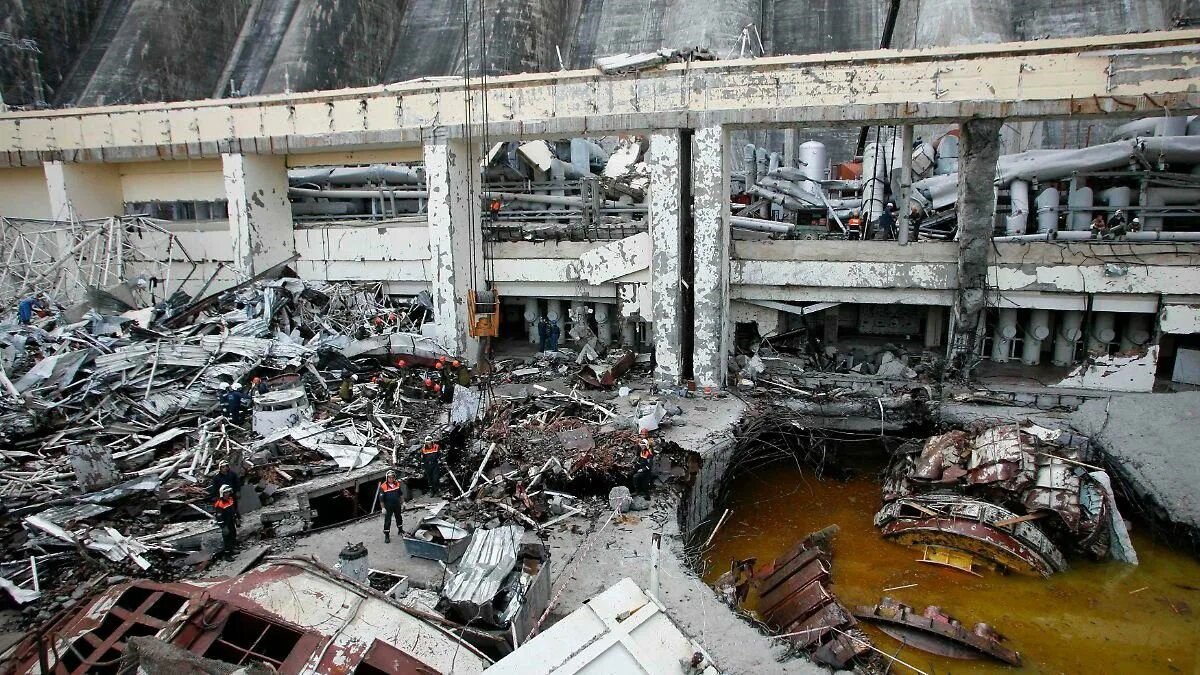
🛡️ Safety: The Sayano-Shushenskaya Dam Disaster Through the Lens of Process Safety
On 17 August 2009, 75 people died at the Sayano-Shushenskaya hydropower plant. We break the accident down element by element against Process Safety Management — and show why the disaster was predictable.

Management Participation in Emergency Drills: The Key to Enterprise Safety and Resilience
Regular emergency drills at facilities often become a mere formality due to scenarios detached from reality and a lack of post-drill error analysis. The article examines key factors that reduce the effectiveness of the training process and explains how the personal involvement of managers in the preparation and analysis of drills helps identify bottlenecks. Management engagement increases staff accountability and allows for the formation of a comprehensive safety culture to prevent real emergenc...

Minimizing Fires in Production
In-house modernization of production equipment to minimize fire risks. Implementation of technical solutions (software reconfiguration, protective guards, machine synchronization) and organizational measures (zonal fire alarms, practical fire extinguisher training) to transition from reactive to proactive fire safety management.


Creating a Public Access Defibrillation System in Public Places and the Workplace for the Most Effective First Aid in Sudden Cardiac Arrest
Creating a public access defibrillation system at an enterprise taking into account changes in legislation (Ministry of Health Order No. 220n). Includes analysis of risk zones, purchase and placement of automated external defibrillators (AEDs), mass training of employees in CPR skills, and regular monitoring of the technical condition of the equipment.

Can You Save Yourself? The Practice of Issuing Self-Rescuers to Employees
The article discusses the practice of providing employees with filtering self-rescuers during introductory occupational health and safety briefings to protect respiratory organs during evacuation in fires or accidents. It considers the types of self-rescuers, the procedure for their application, as well as the benefits of issuing them to protect workers' health and comply with fire safety requirements. In addition, the material pays attention to organizing staff training on the rules for using t...

Digital Personnel Monitoring System as an HSE Risk Management Tool
Implementation of a digital personnel monitoring system at autonomous fields of an oilfield service company. Use of wireless intercom-search devices, explosion-proof fitness bracelets, and radio beacons (LoRaWAN network) to track location, physical condition of workers, environmental parameters, and PPE availability in real time. The system allows prompt response to SOS signals, identifies incident prerequisites, and analyzes unsafe acts to develop corrective actions.

Oil and Gas Production Department Operations During COVID-19
Organization of fly-in/fly-out shift work at an oil and gas production enterprise during the COVID-19 pandemic. A multi-level barrier system (testing, observation), visual identification of contractor categories, and the "Lego" principle for localizing infection outbreaks were implemented.