Defensive Driving: A Reliable Barrier to Reducing Traffic Accidents
Roads are a high-risk environment for all road users. Traffic accidents can happen for various reasons, but most often they are associated with traffic rule violations, and at the center of any emergency situation is always a human being. It is precisely the human factor — attention, anticipation, and readiness for mistakes — that becomes the key to safety. This key is the philosophy and practice of defensive driving.
Defensive driving is a set of actions aimed at preventing dangerous situations on the road.
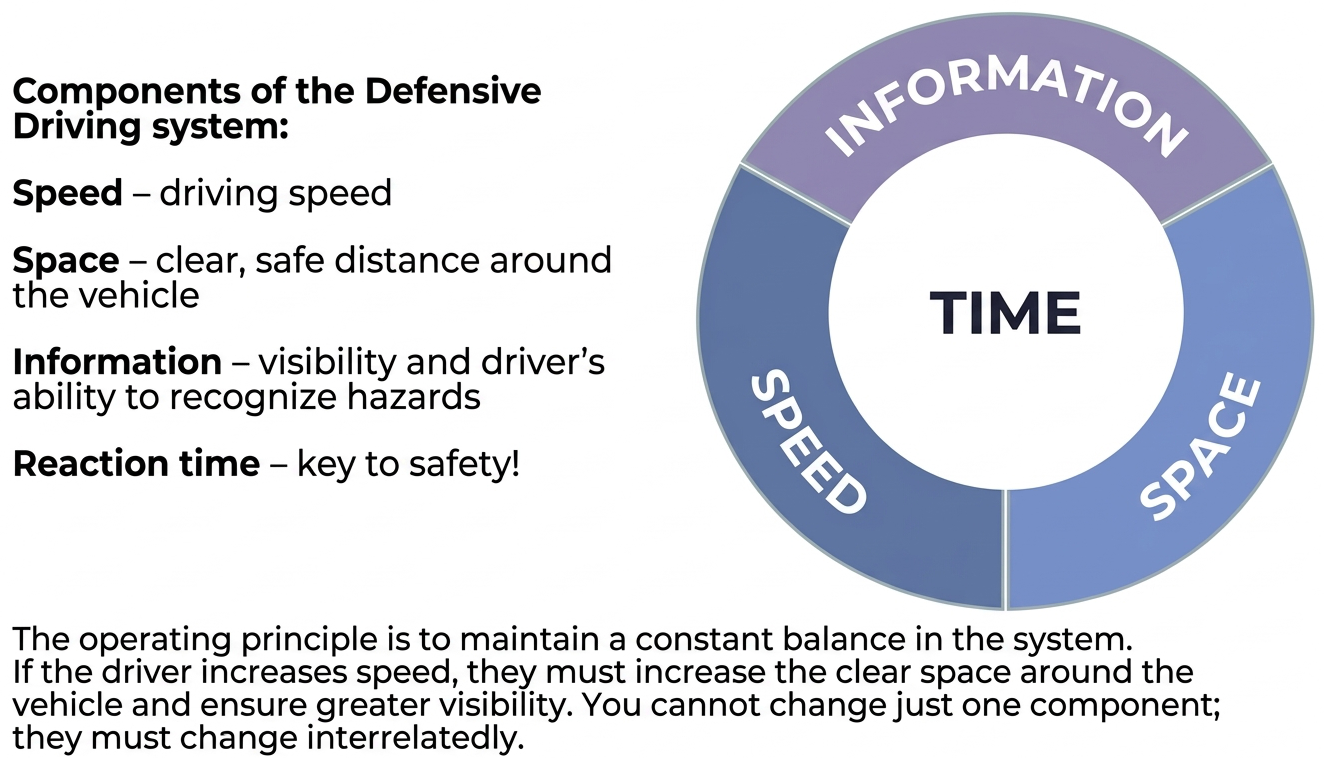
Defensive driving includes:
- Anticipation and forecasting
You cannot be certain that other road users will follow traffic rules, which is exactly why a driver must constantly analyze the road situation 10-15 seconds ahead. What is the pedestrian on the sidewalk doing? Will the car in the next lane suddenly turn? Will a truck pull out from around the corner? Mentally modeling potential scenarios allows you to have a "Plan B".
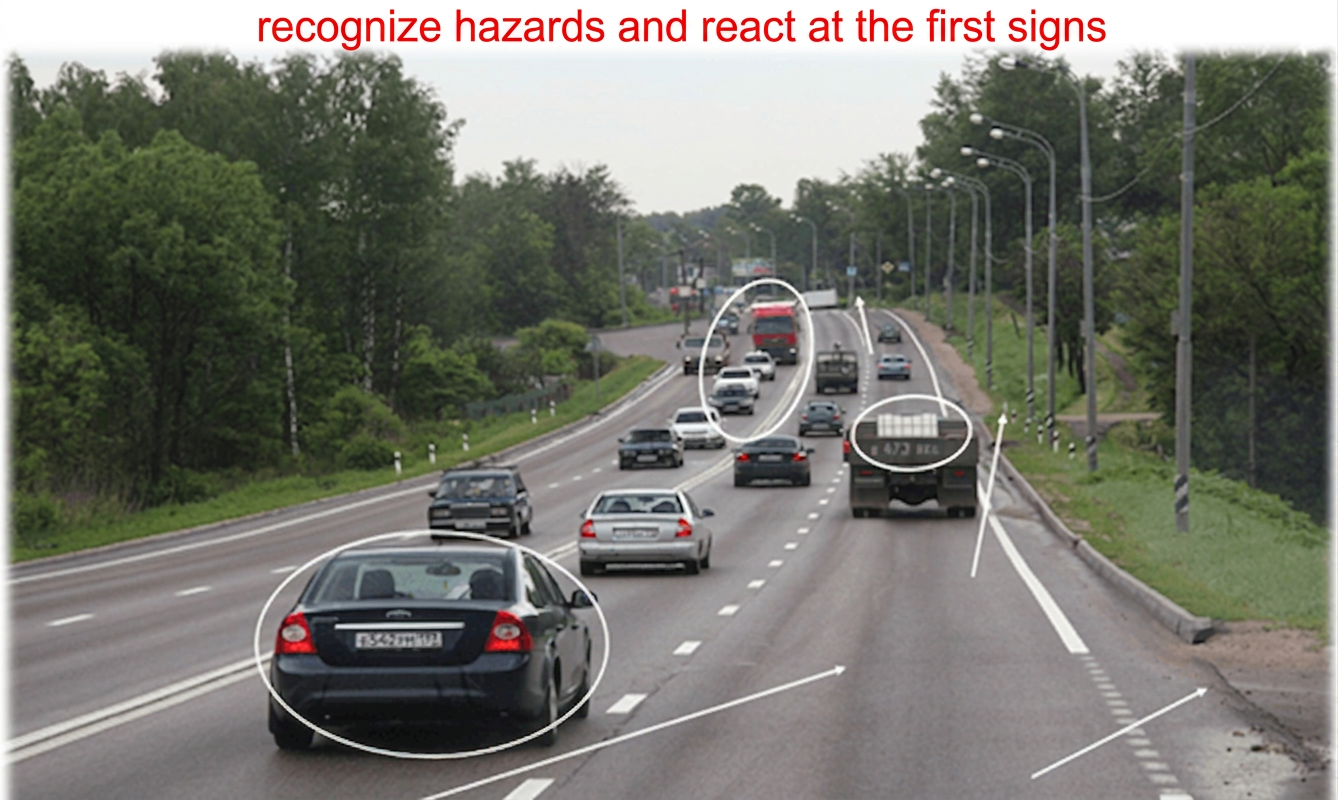
- Constant visual scanning
Your gaze should not fixate on a single point. It is necessary to constantly and actively scan the space around the vehicle: the road, rearview mirrors, and blind spots. This helps you stay aware of what is happening around you at all times.
- Maintaining a safe distance
The "four-second rule" is a classic of defensive driving. A sufficient distance from the vehicle ahead provides precious reaction time in case of sudden braking.
- Being visible and predictable
Defensive driving is not only about self-protection but also about caring for others. Timely use of turn signals, using hazard lights in unusual situations, and the correct use of headlights — all this helps other road users understand your intentions and react to them appropriately.
- Avoiding distractions
Talking on the phone, adjusting navigation, and eating while driving are all deadly hazards. A trained driver understands that even a fraction of a second can cost a life.
- Accounting for road and weather conditions
An experienced driver adapts their driving style to rain, ice, fog, or nighttime conditions. They reduce speed in advance, increase following distance, and avoid sudden maneuvers.
- Avoiding conflicts and "driver's ego"
Letting an impatient driver pass, not responding to rudeness with aggression, and yielding the right of way even to someone who is wrong is not a weakness, but wisdom. The goal is to reach your destination safely, not to prove you are right.
Defensive driving is the corporate culture of companies interested in reducing accidents.