Taking First Aid Training to the Next Level
Providing qualified first aid by personnel of fire and rescue services and other emergency response teams at industrial enterprises is in many cases key to saving an injured person's life, which is particularly important in today's realities.
One of the conditions requiring first aid under Order No. 220n of the Russian Ministry of Health dated May 3, 2024, "On Approval of the Procedure for Providing First Aid," is external bleeding. Realistically reproducing the conditions under which external bleeding is controlled has become the primary function of the trauma and wound simulators introduced at our company in 2026. In addition to exposing trainees to simulated bleeding that closely mirrors real-life conditions, the simulator provides the following training capabilities:
- full-scale search and evacuation drills (thanks to the simulator's height of 180 cm and weight of 80 kg) for rescuing casualties from rubble, buildings, and industrial facilities at temperatures down to -20°C
- realistic design of the simulator overall and the injuries in particular has a positive impact on the psychological preparedness of rescue personnel
- performing chest compressions and rescue breathing, as well as managing airway obstructions and breathing impairments.
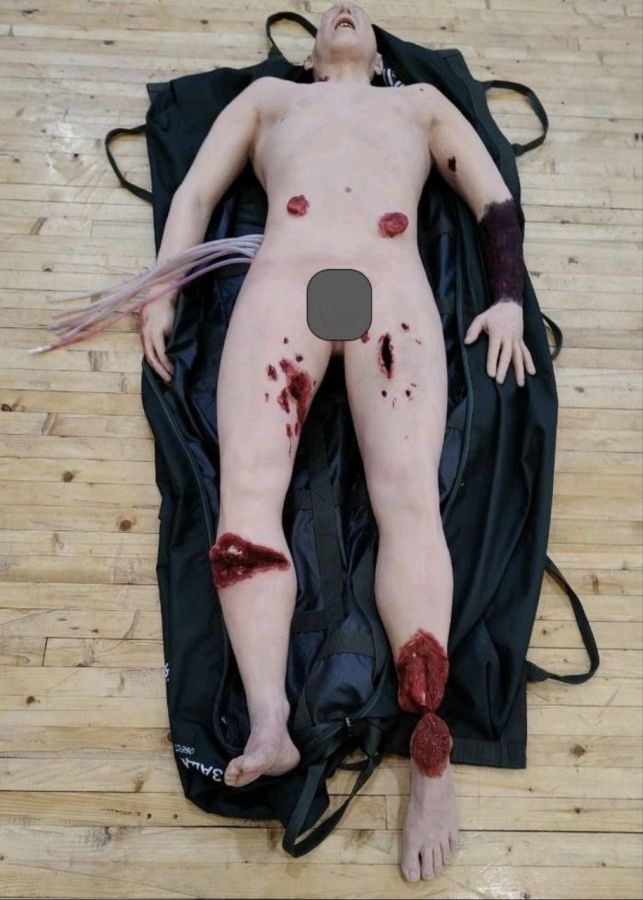
What types of injuries can be practiced on the trauma and wound simulator?
- Avulsion wound of the scalp, allowing trainees to practice applying head bandages to the scalp area.
- Third- and fourth-degree thermal (flame) burn of the left forearm covering 2 to 2.5% of the body surface area, allowing trainees to practice the management protocol for burn patients, assess burn area and depth, and practice applying therapeutic and aseptic dressings.
- Severe right hand trauma with partial avulsion and tissue destruction, allowing trainees to practice bandaging and immobilization techniques for severe hand injuries.
- Perforating wound (trauma) of the right chest, allowing trainees to diagnose chest injuries, practice applying various types of chest dressings, including occlusive dressings and vented or unvented chest seals of different designs, and practice needle decompression.
- Penetrating abdominal wound (trauma) with evisceration (protrusion) of bowel loops, allowing trainees to practice applying moist dressings for abdominal injuries involving multiple organ eviscerations across various abdominal regions.
- Chop wound (trauma) of the upper third of the right lower leg and open fracture of the right lower leg bones, allowing trainees to diagnose and treat open fractures, apply dressings, and perform transport immobilization for lower extremity injuries.
Training sessions are conducted on an ongoing basis at established intervals and generate strong interest among emergency response team personnel.
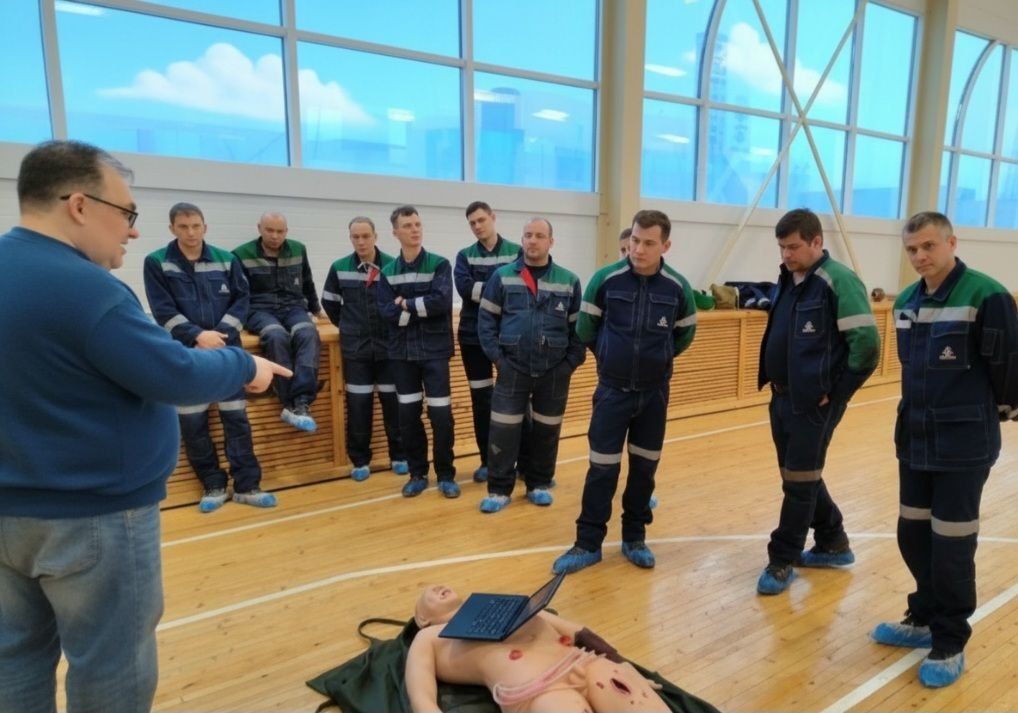
In conclusion, we can confidently say that using the trauma and wound simulator will expand practical first aid skills and competencies while complementing the training program and making it more engaging for trainees.
Comments 2