Identifying Injury Risks in Rail Transport Using Video Surveillance
The ability to manage risks in the field and analyze the production process to identify critical areas that could potentially cause injury to operating personnel is an indicator of the maturity of an occupational HSE management system at a production facility.
Over the first 10 months of this year at Apatit JSC, the joint efforts of departments and units responsible for transport safety identified a number of HSE violations through reviewing video surveillance footage, including cameras installed on locomotives. These violations could have led to severe or fatal accidents involving both in-house personnel and contractor personnel working in the railcar movement zones on private railway tracks at loading/unloading fronts using special shunting devices (electric pushers, shunting winches, locorobots).
Real-life examples:
1. In March of this year, a contractor employee, after cutting open the top of a railcar liner for a batch of cars on the railway track at the "Granulated Sulfur Unloading" front, rolled up the cut portion of the liner. However, instead of lowering it to the 0.00m mark at the storage area, they decided to pull the rolled-up liners off the railcars while the train was in motion, thereby putting their life in danger.
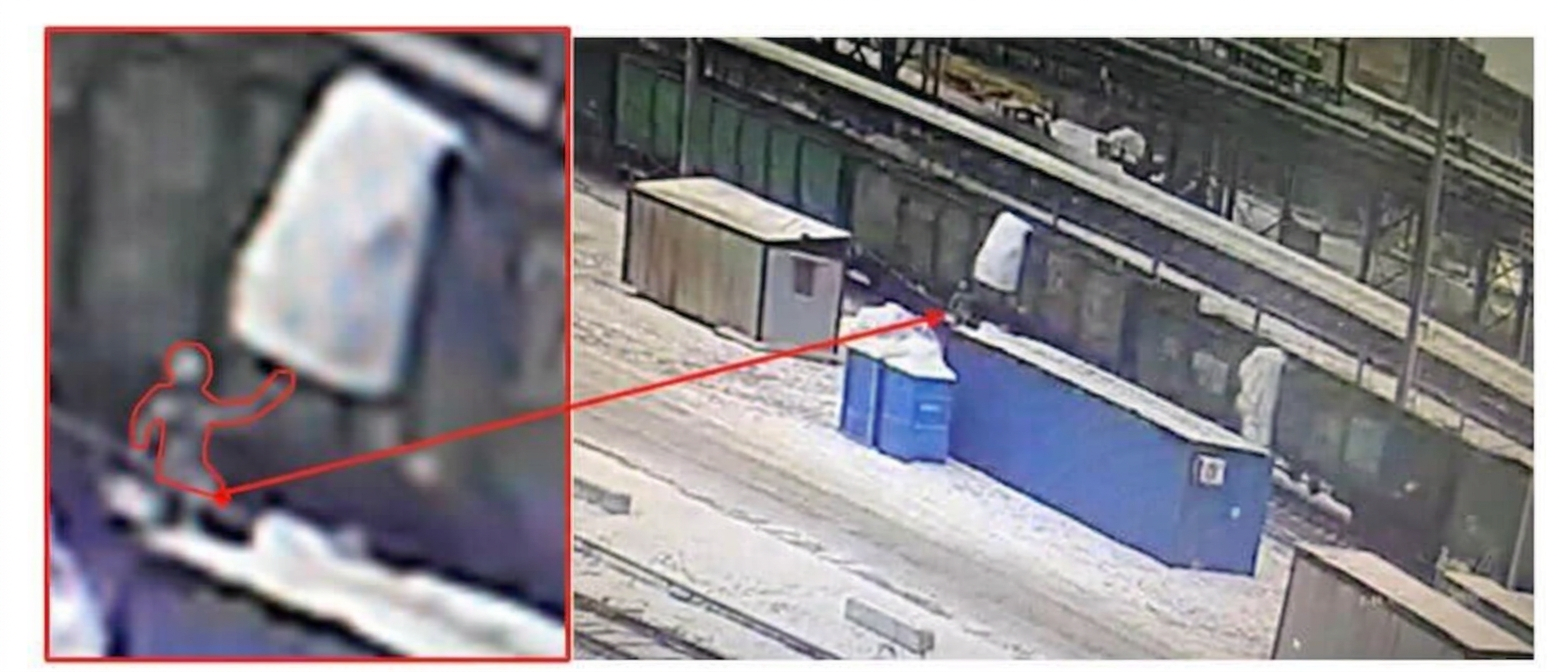
*the arrow points to the contractor employee
2. In May of this year, while removing loaded railcars from the railway track at the "Urea Loading" front, the shunting supervisor was between the railcars connecting the brake hoses between the locomotive and the railcar. At that moment, a loading front representative started the electric pusher without a command from the shunting supervisor. This caused an unauthorized movement of the railcars, endangering the shunting supervisor's life.
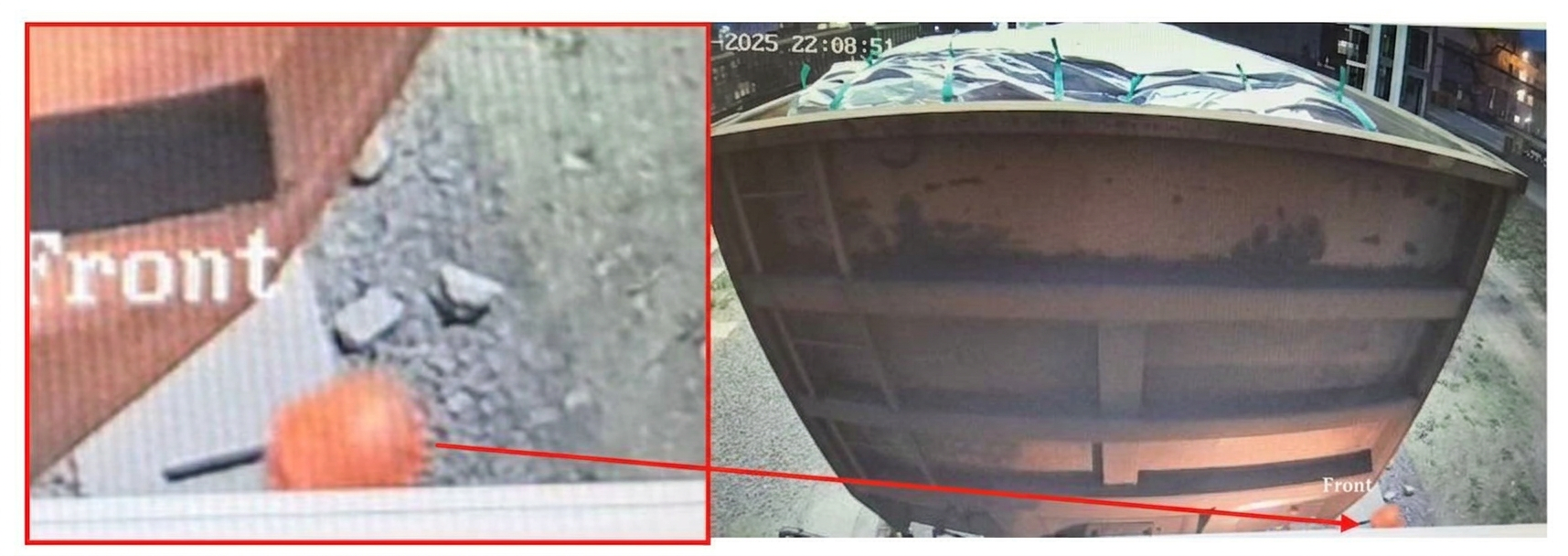
**the arrow points to the shunting supervisor
3. In August of this year, at the "Urea Loading" front, a contractor employee endangered their life by stepping between railcars to uncouple them while they were being moved along the railway track by an electric pusher. This subsequently led to the spontaneous, uncontrolled movement of the railcar, creating the risk of a transport accident. They then placed a brake shoe under the already moving railcar after it was uncoupled.
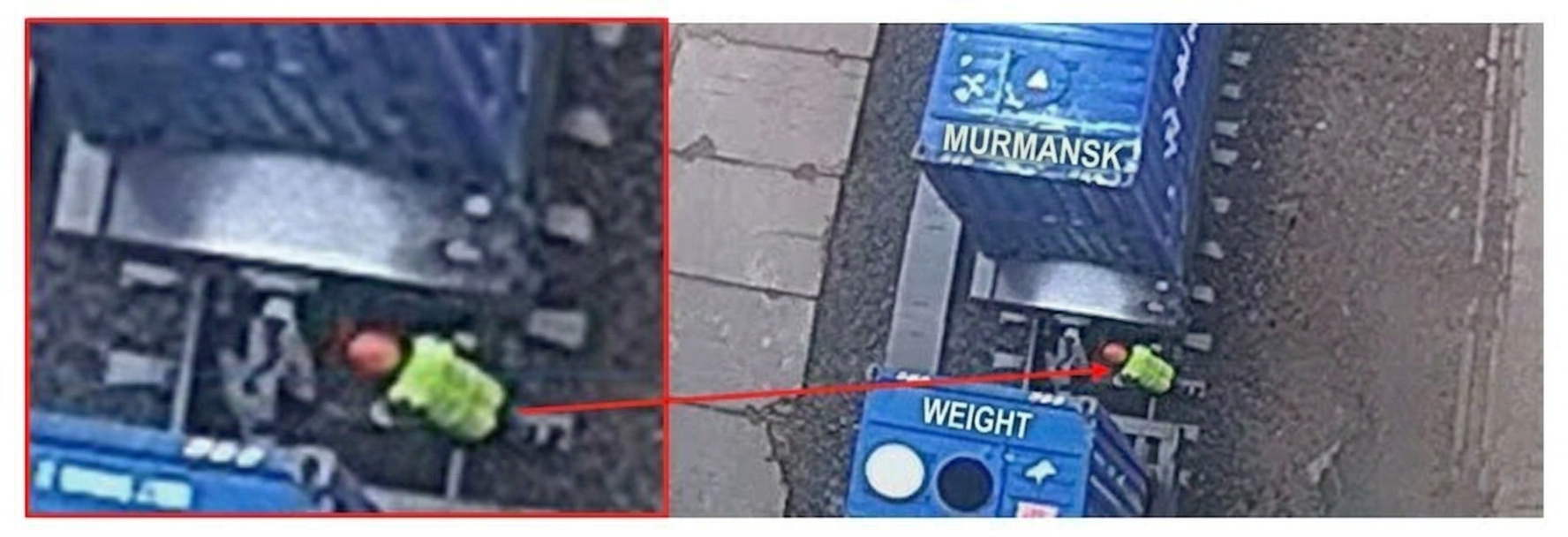
***the arrow points to the contractor employee
What does this mean? These recurring incidents indicated a complete lack of control over personnel actions regarding compliance with basic HSE instructions.
Without waiting for a negative event to occur, I decided to conduct internal investigations into all the aforementioned incidents to develop corrective actions. Leaving aside disciplinary measures, I will focus on some organizational and technical measures. For example:
- developing and broadcasting an educational video during pre-shift briefings on typical potentially hazardous events when working in rail transport movement zones;
- providing contractor personnel involved in loading and unloading operations in rail transport movement zones with personal communication devices (radios) to notify them of railway transport movement operations;
- completely restricting access (blocking personal passes) for contractor employees for violations related to entering the danger zone while performing work on the railway infrastructure;
- conducting pilot tests of a video analytics system using camera data at the loading front of one of the structural divisions, which could ensure the automatic blocking of the electric pusher/electric winch if a person is present in the danger zone.
According to the technical specifications, the system analyzes the video stream from cameras in real time, using computer vision to detect people. It automatically cross-references their location with virtual danger zones set by the user. In the event of an unauthorized crossing of the boundary of such a zone, the system immediately transmits a signal, thereby breaking the electric motor's starting circuit and preventing its further operation.
Upon completion of the testing, the adoption of this system into commercial operation, and the resulting changes, we will definitely share the details on the HSEDAYS project platform.
Comments 2
A good practice for preventing injuries on railway transport.
The application of video analytics systems on railway transport to detect a person's presence in a danger zone is a good practice that will help eliminate workplace injuries during railway movement.