Occupational Safety in Russia: Analysis of Indicators, Conclusions, and Prospects
HSE and industrial safety in modern Russia are undergoing a period of active transformation and development. Companies are increasingly realizing the importance of implementing effective safety standards, which is reflected in both statistical data and practical initiatives. In the context of production, this means that the safety of every employee depends on the conscious actions of all process participants. This analysis aims to examine current trends in occupational safety, identify the causes of changes in indicators, and determine prospective steps to strengthen employee protection in the workplace.
Injury Dynamics: Increased Transparency, Data Digitalization, and the Influence of Market Factors
Positive Trends and Increased Transparency
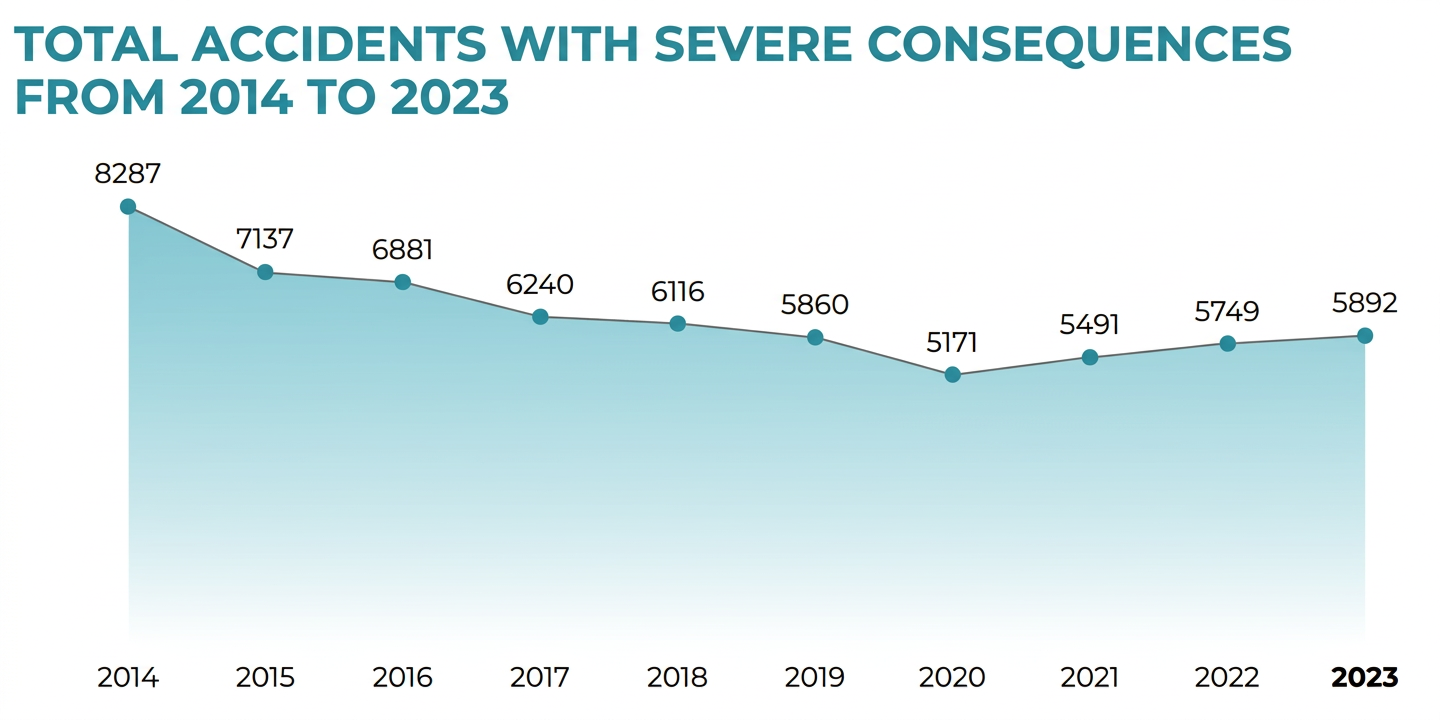
According to 2023 data, the total number of workplace injuries in Russia has decreased by 1.3 times compared to 2014. This positive dynamic indicates a gradual improvement in the occupational safety situation. However, since 2020, there has been an increase in registered injury cases. This growth does not necessarily indicate a worsening of the actual situation, but rather reflects increased transparency and an improved reporting system.
As part of the "regulatory guillotine" policy aimed at updating and optimizing the regulatory framework, companies have had to provide more complete and reliable information about accidents. Winston Churchill said: "The farther backward you can look, the farther forward you are likely to see." Openness and honesty in reporting help to obtain an accurate picture of the state of occupational safety and develop effective measures to reduce injuries.
Digitalization and Improved Data Quality
The introduction of digital technologies in the field of occupational safety has significantly improved the quality and accessibility of data. Companies are actively using monitoring systems, automated information systems, and analytical platforms to track incidents and assess risks. Digitalization contributes to the timely identification of problem areas and allows for prompt decisions to improve working conditions.
The use of modern technologies allows not only for data collection but also for effective analysis to make informed decisions, while maintaining a focus on the human factor.
Influence of International Standards and Market Factors
The entry of Russian companies into international markets and their listing on foreign stock exchanges require compliance with high standards of corporate governance, including HSE and industrial safety. Investors and partners pay great attention to the social and environmental aspects of company activities (ESG factors). Improving occupational safety indicators increases investment attractiveness and strengthens the reputation of companies at a global level.
Henry Ford emphasized that trust is a delicate thread that connects business with society. Compliance with international standards is becoming not just a formality, but the basis for building sustainable relationships with partners and clients.
Personal Protective Equipment: From Formality to Efficiency
Growth in PPE Investment
Between 2019 and 2023, expenditures on personal protective equipment (PPE) for workers employed in harmful and hazardous working conditions increased by 50%, reaching 181 billion rubles. This growth in investment reflects companies' realization of the importance of providing employees with reliable protection and their desire to meet modern safety standards.

Development of Domestic Production and Innovation
The exit of several foreign PPE manufacturers from the Russian market stimulated the development of the domestic industry in this field. Russian companies are investing in the development and production of high-tech PPE, introducing innovative materials and technologies. This contributes not only to import substitution but also to increasing the competitiveness of domestic products on the international market.
Improving the Culture of PPE Use
To ensure effective protection, it is not enough to simply provide employees with high-quality PPE; it is also necessary to improve the culture of its use. Companies are implementing training programs, conducting regular briefings, and practical sessions on the correct application of protective equipment. Forming a conscious attitude among workers toward their own safety and an understanding of risks is becoming a key element in reducing injuries.
Causes of Incidents: Organizational Factors and the Human Element
Analysis of Organizational Shortcomings
Unsatisfactory work organization remains one of the main causes of workplace accidents, accounting for 22.6% of all incidents in 2023. This includes:
- Shortcomings in work planning and coordination: lack of clear instructions and distribution of responsibility.
- Non-compliance of technological processes with established requirements: use of outdated equipment or methods.
- Insufficient control over compliance with safety rules: lack of regular inspections and audits.
Companies are working to improve organizational structures by implementing occupational safety management systems based on a risk-oriented approach and regular monitoring.
The Human Factor and Its Influence
The human factor plays a significant role in the occurrence of accidents. The main problems are related to:
- Violation of labor discipline: non-compliance with the daily schedule and safety requirements.
- Neglect of PPE use: ignoring rules and instructions for the use of protective equipment.
- Insufficient qualification and training of personnel: lack of necessary knowledge and skills.
As Confucius said: "Knowledge without action is useless, action without knowledge is dangerous." To minimize the influence of the human factor, companies are implementing systems to motivate safe behavior and conducting regular training and certification of personnel to ensure not only knowledge of the rules but also their practical application.
Experience Sharing and Implementation of Best Practices
Professional communities and events, such as HSE DAYS, the All-Russian Occupational Safety Week (VNOT), etc., play an important role in disseminating best practices. They allow specialists to discuss current issues, share successful cases, and jointly develop effective solutions to increase safety levels. Aristotle claimed that education is not the filling of a bucket, but the lighting of a fire; I am inclined to agree with him. The joint efforts of specialists contribute to the development of innovation and the improvement of practices in the field of occupational safety.
Regional Differences and Industry Risks
Regional Analysis of Injuries
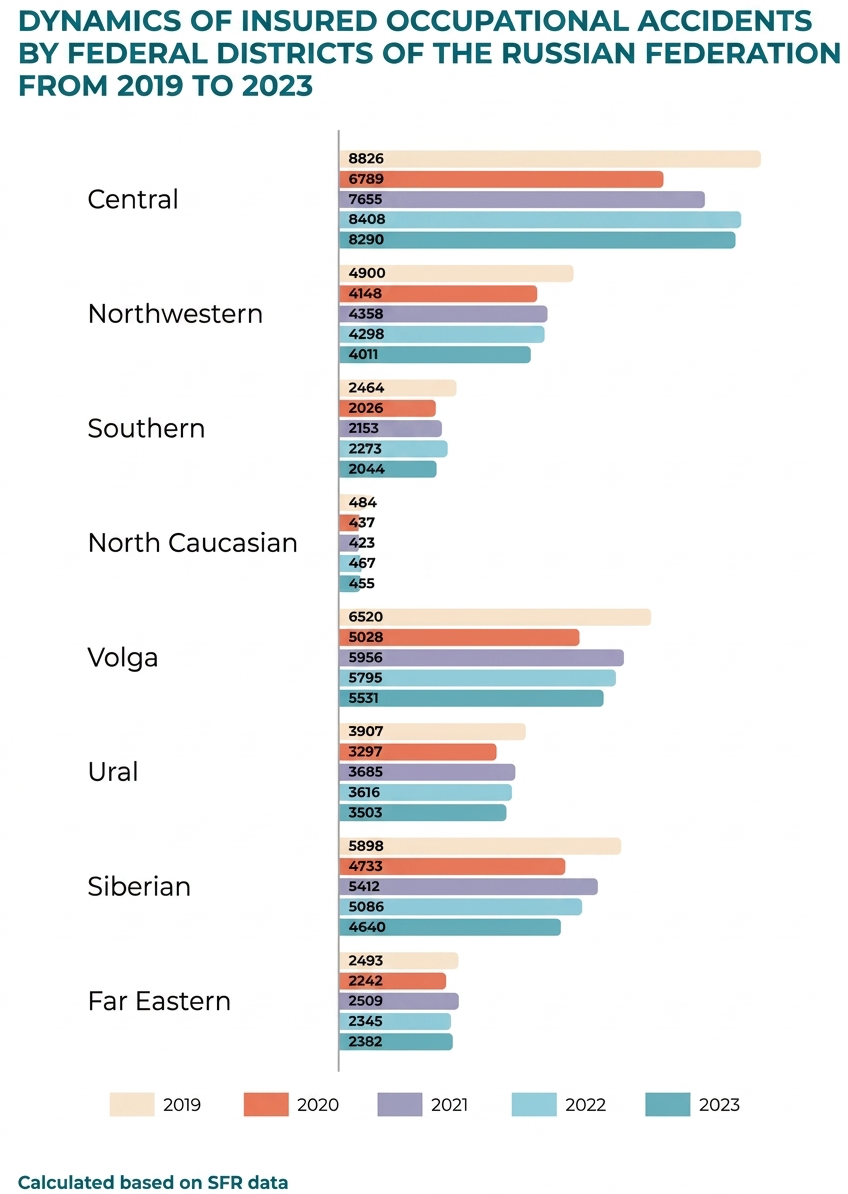
The Central and Ural Federal Districts are characterized by the highest number of accidents with severe consequences. The 23% increase in incidents in the Central District from 2019 to 2023 may be due to:
- High concentration of industrial enterprises: increased load on infrastructure and resources.
- Intensive development of the construction industry: rapid construction rates can lead to violations of safety standards.
- Insufficient level of implementation of modern safety standards in individual organizations.
High-Risk Industries and Specific Challenges
Construction and manufacturing remain the most hazardous industries. Reasons for this include:
- Work in high-danger conditions: high-altitude work, use of heavy machinery.
- Complexity of technological processes: the need for strict adherence to technological maps and instructions.
- High level of physical load on workers: which can lead to decreased attention and fatigue.
The introduction of innovative technologies and methods can significantly reduce risks in these industries.
Measures to Reduce Industry and Regional Risks
- Modernization of equipment: replacing outdated equipment with modern analogues with an increased level of safety.
- Process automation: introducing robotic systems to perform dangerous work, thereby reducing the risk to humans.
- Professional development: organizing training centers and programs for workers to ensure the necessary level of knowledge and skills.
- Regional programs: developing and implementing targeted programs to improve occupational safety in regions with high injury levels, taking into account specific conditions and needs.
Investment in Safety: A Strategic Priority
Economic Efficiency of Investment in Occupational Safety
The increase in occupational safety spending by more than 53% over the past four years indicates that companies understand the economic efficiency of such investments. Improving working conditions leads to:
- A reduction in the number of accidents and associated costs for compensation and production downtime.
- Increased labor productivity: healthy and motivated employees work more efficiently.
- Strengthening the company's reputation among partners and clients, which can contribute to business expansion.
Benjamin Franklin emphasized: "An ounce of prevention is worth a pound of cure." Investment in safety pays off many times over by preventing potential losses.
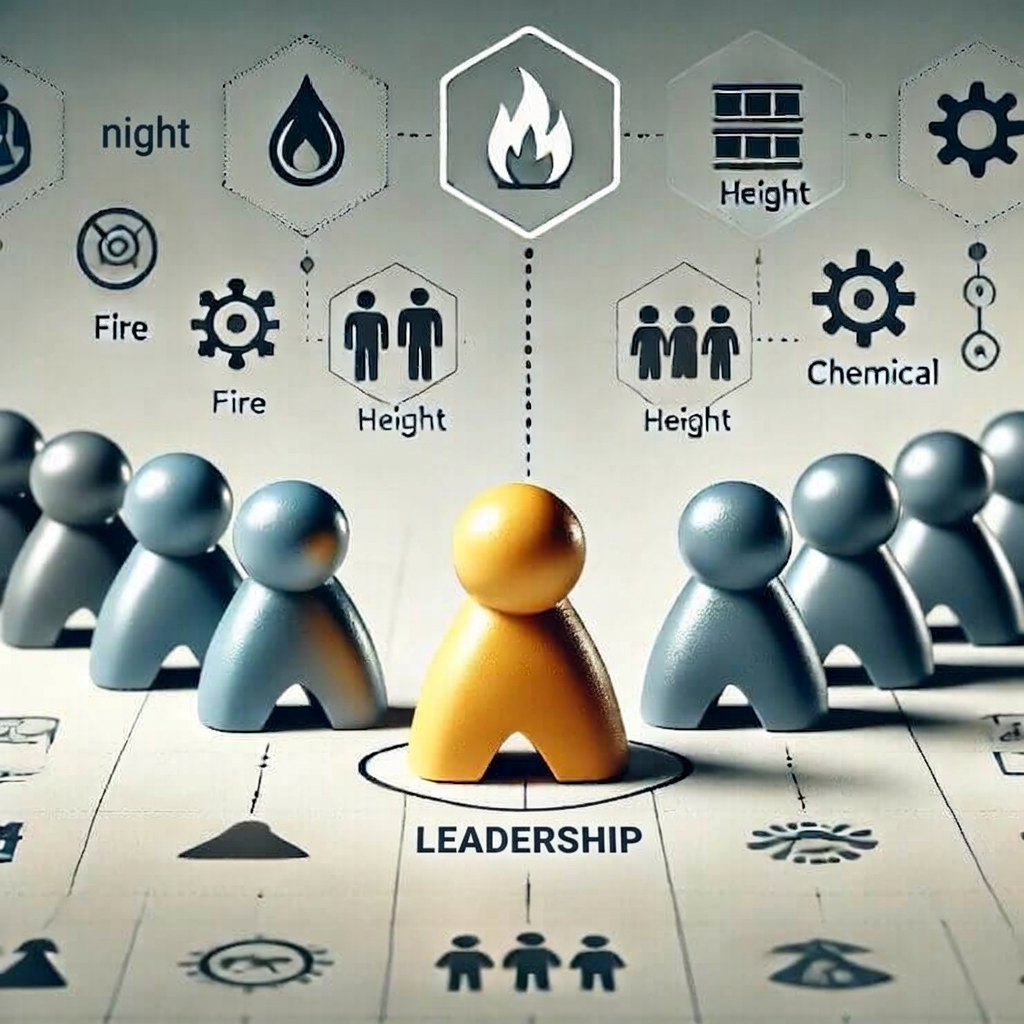
The Role of Leadership and Corporate Culture
Active leadership involvement in occupational safety issues is a key success factor. Company leaders demonstrate commitment to safety principles, which contributes to the formation of an appropriate corporate culture. Important aspects include:
- Personal example: managers themselves follow safety rules, showing the importance of this for all employees.
- Communication: open discussion of occupational safety issues with employees, encouraging feedback and suggestions for improvement.
- Motivation: implementing reward systems for compliance with safety rules and initiatives for their improvement.
Steve Jobs claimed that innovation distinguishes between a leader and a follower. Management that actively introduces innovations in the field of safety becomes an example for the entire industry.
Corporate Social Responsibility and Sustainable Development
Occupational safety is an integral part of corporate social responsibility. Companies include safety performance indicators in sustainable development reports, which contributes to:
- Increased trust from investors and society, demonstrating responsibility and transparency.
- Improving the company's image in the market, attracting new clients and partners.
- Attracting qualified personnel interested in working in safe and comfortable conditions.
Conclusion: Paths for Further Development
Improving the Regulatory Framework
The state continues to work on updating the legislative framework in the field of occupational safety, including:
- Developing new regulations and standards that take into account modern technologies and work methods.
- Harmonizing Russian requirements with international standards, such as ISO 45001, which facilitates integration into global markets.
- Strengthening control and supervision over compliance with legislation, introducing a risk-oriented approach in inspections.
Innovation and Technological Solutions
The integration of modern technologies opens up new opportunities for increasing safety:
- Internet of Things (IoT): using sensors to monitor the state of equipment and the environment in real-time.
- Artificial Intelligence (AI): analyzing big data to predict risks and prevent incidents.
- Virtual and Augmented Reality: training personnel in a safe environment using simulations that allow practicing actions in emergency situations.
International Cooperation and Experience Sharing
Participation in international projects and organizations allows for:
- Access to best practices and technologies, which contributes to the implementation of innovations.
- Increasing the qualification of specialists through training and internships abroad.
- Developing partnerships with foreign companies, which can lead to joint projects and initiatives.
Human Capital Development
Investment in personnel remains a priority:
- Training and retraining: regular professional development programs that take into account new requirements and technologies.
- Safety culture development: forming values and beliefs oriented toward safety in all aspects of work.
- Psychological support: creating a favorable working climate, preventing professional burnout and stressful situations.
Uniting Efforts to Achieve Common Goals
Achieving a high level of occupational safety requires joint action:
- The State: creating favorable conditions and incentives for business, developing effective legislation.
- Business: implementing best practices, investing in safety and innovation.
- Society: increasing awareness and demand for occupational safety issues, active participation in discussions and initiatives.
Mahatma Gandhi urged: "Be the change that you wish to see in the world." The joint efforts of all stakeholders can lead to a significant improvement in working conditions and a reduction in injuries.
Summary
Occupational safety in Russia is on a path of progressive development. Companies realize that worker safety is not only a moral and legislative duty but also an important factor for sustainable business. Modern trends indicate that uniting the efforts of the state, business, and society can lead to a significant improvement in working conditions and a reduction in injuries.
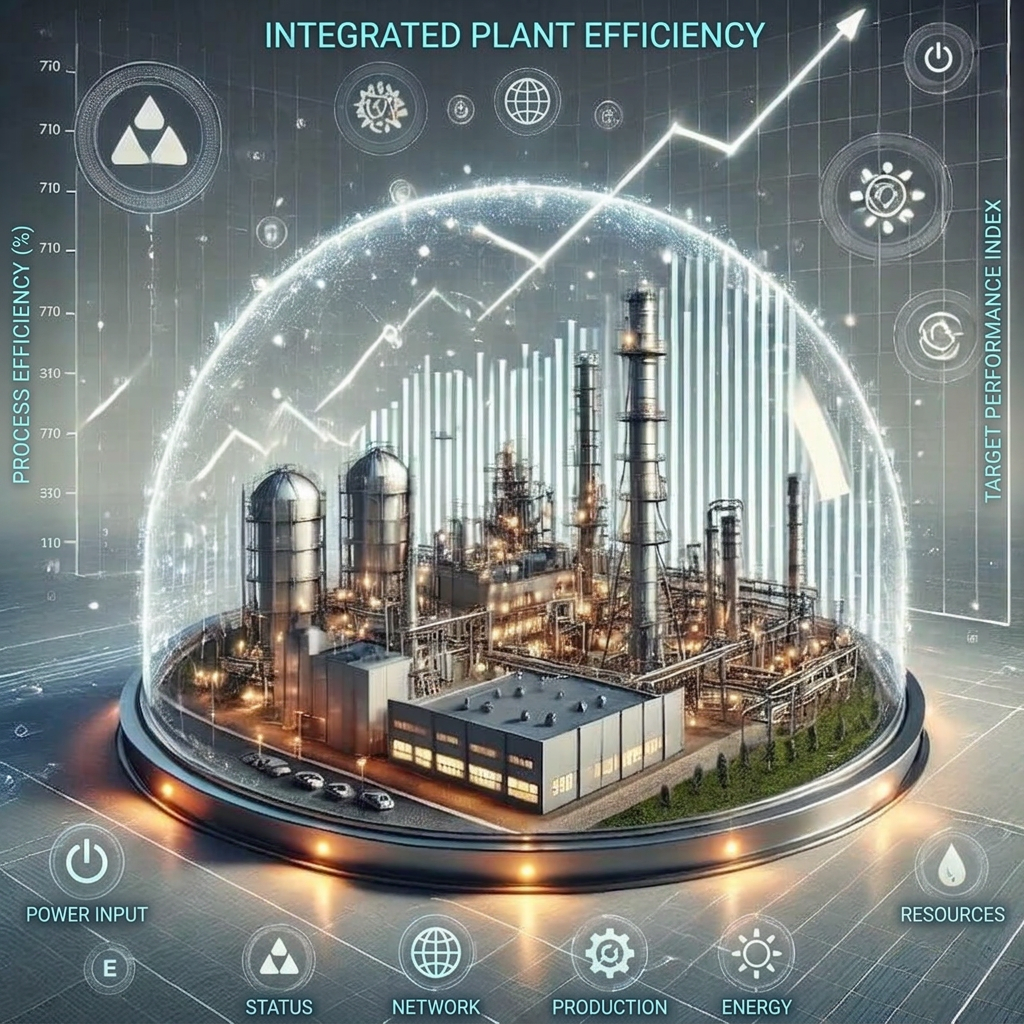
By continuing to invest in technology, education, and safety culture, Russia can achieve high standards of occupational safety and ensure a safe future for all workers. The desire to create safe working conditions today is the key to well-being and prosperity tomorrow.