#Accidents
Analytics, reviews, and management of industrial incidents and accidents. Open exchange of severe experiences is a key component of mature safety cultures. Built around real-case responses, crisis management, and 'Lessons Learned'.

Cardinal Safety Rules: Placebo or Effective Medicine
Implementation and optimization of Cardinal Safety Rules (CSR) in a large industrial company. Reducing the list to six key rules, strict enforcement (up to dismissal), and analyzing the impact on fatal injury statistics.
Not By Oil Alone
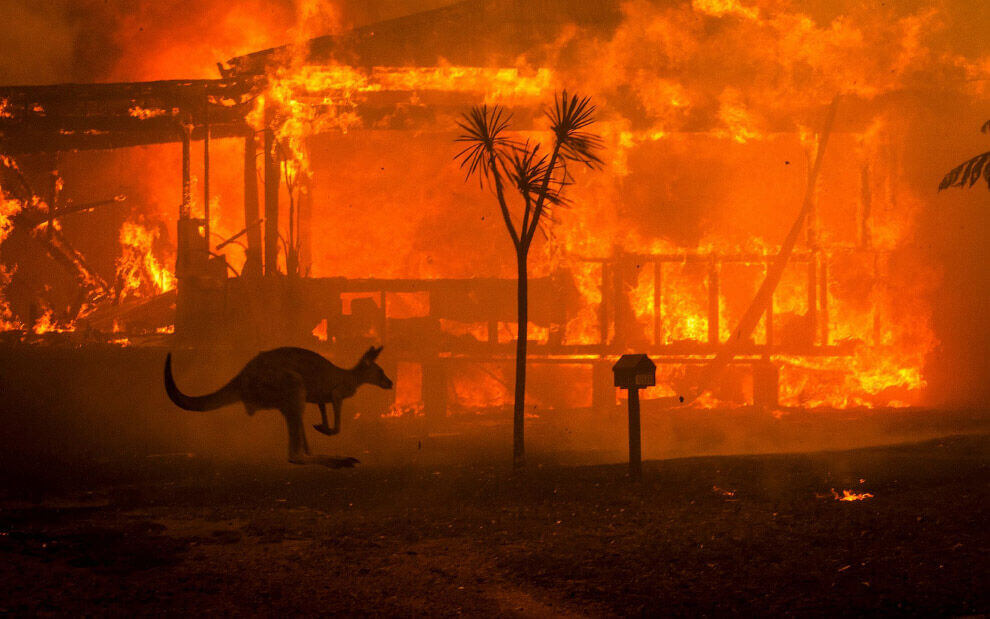
Although public attention to environmental accidents is focused mainly on the oil and gas sector, virtually any human economic activity carries potential danger. This article presents the author's ranking of the largest non-oil-related disasters of the past century — from chemical spills and radiation accidents to dam failures and large-scale fires. The publication reminds us that preventing incidents is much more important and cheaper than eliminating their consequences, which often prove to be...

Exercise for Practicing the Identification of Accident Causes: Immediate, Underlying, and Root
The publication presents a practical exercise for determining the immediate, underlying, and root causes of an accident using a case study as an example. Based on a story about a female employee being injured on stairs, it is proposed to analyze the combination of factors that led to the incident. At the end of the material, the author provides their own version of the analysis for checking and comparing the results obtained.
Immediate, Underlying, and Root Causes of an Accident?
The article explains the three-level classification of workplace accident causes — immediate, basic, and root — and explains why incident investigations should not be limited to recording obvious facts. The author shows how identifying deep systemic violations in occupational health and safety management helps eliminate the root causes of incidents instead of a formal search for culprits. Understanding the difference between these levels allows implementing sustainable corrective actions, improv...
Why Use a Structured Approach in Accident Investigation?
The effectiveness of workplace accident investigations directly depends on a methodology that allows moving from superficial analysis to true root causes. The article examines a structured approach that eliminates subjectivity and replaces finding fault with the systematic improvement of the occupational health and safety system. You will learn how applying established methods helps identify systemic flaws, implement effective preventive measures, and strengthen safety culture.

The "5 Whys" Method: A Simple Tool for Finding the Root Causes of Incidents
The "5 Whys" technique, developed by Sakichi Toyoda, allows during workplace incidents to move away from superficial factors and determine the true cause of a failure in a system or process. By sequentially asking the question "Why?", it is possible to reach the root of the problem, not to look for culprits, but to prevent a recurrence of the situation. The article demonstrates the algorithm for applying this tool using a practical example and explains its role in forming a systematic approach t...

Partners
A story from the practice of an occupational health and safety specialist describes the investigation of an unusual accident involving two electricians in a compressor shop. Due to the accidental activation of a switch by a jacket hung on it, one of the workers injured a finger on the rotating impeller of an electric motor. Using a real-life example, the material shows how haste and inattention during investigative actions led to a repeated similar injury to his partner.
Seryoga "The Pistol"
The story tells of Sergey, a slinger who was forced to change his profession as an installer due to an occupational injury to his right hand. During the construction of a military facility on the Franz Josef Land archipelago, he set off to accompany a new driver who did not know the road to the construction site. Sergey's attempt to indicate a right turn with a gesture using a crooked finger led to an erroneous maneuver and the vehicle driving off into a ravine.
The Wasteland
The author's personal story connects a 1989 childhood memory of his uncle's death on the railway with his appointment to the position of an occupational health and safety specialist years later. Having studied the archival investigation materials, he learned the real circumstances of the tragedy — the foreman's haste, the lack of lighting, and a dead walkie-talkie during unloading. The publication clearly demonstrates what severe consequences result from neglecting workplace safety rules.

The Impact of Training on Personnel Performance
The article examines the impact of stress on erroneous decision-making by workers in emergency situations and the role of the human factor in industrial accidents. The author analyzes the mechanisms of brain function at critical moments and relies on research data confirming that regular practical training reduces stress levels and increases the psychological resilience of personnel. The material shows the importance of moving from formal inspections to workplace skill development using the exam...

Winter Driving: Tips for Drivers
Difficult winter road conditions require special attention from drivers and a change in their usual driving style. In this article, the author recalls the main aspects of vehicle preparation and safe driving, including tire selection, the use of ABS and ESP systems, as well as distance-keeping rules. Following these recommendations helps to better control the car on a slippery road and significantly reduces the risk of getting into a traffic accident.

Relevance and Integration of the Human Factor in Oil and Gas Companies
Integration of the human factor concept into the HSE management system of an international oil and gas company. The approach includes transitioning from punitive measures to analyzing systemic flaws, identifying error traps, and revising leadership programs with a focus on a growth mindset.