#Legislation
Changes in occupational health and safety legislation and the regulatory base. Overviews of state labor codes, regulatory rules, and ISO standards. Expert lawyers provide practical advice on swiftly adapting corporate documents.

12 Life-Saving Rules: Why They Are Enforced and How to Properly Document a Violation
Mistakes when drafting a Life-Saving Rules violation report can invalidate disciplinary action in court and derail contractor penalties. We break down 7 rules for legally flawless violation reporting: from committee composition and exact coordinates to photographic evidence and written explanations.
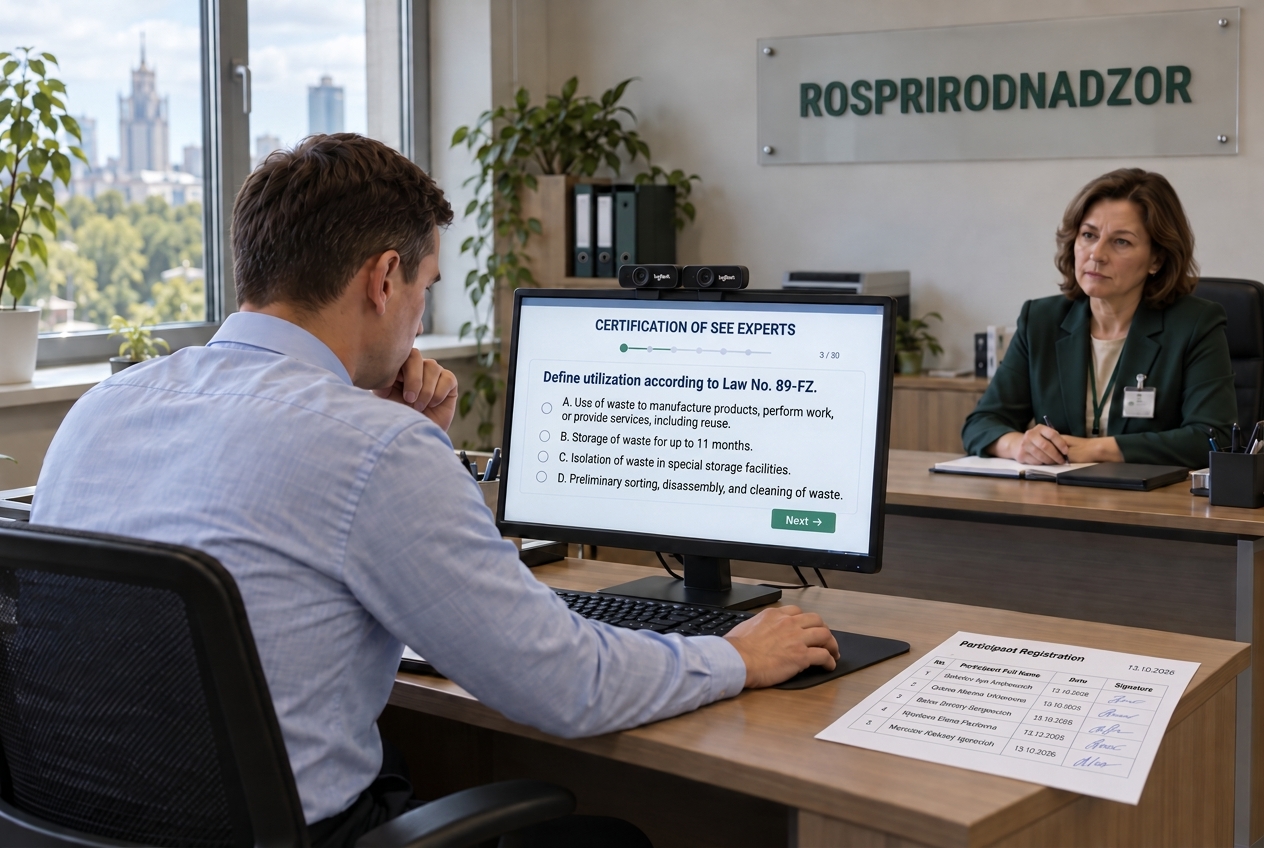
SER Expert Certification at Rosprirodnadzor: Preparation Experience and Pitfalls
A practical breakdown of State Environmental Review expert certification at Rosprirodnadzor under Order No. 110. How to choose certification areas, apply via Gosuslugi, avoid testing traps, and why practical environmental experience alone is not enough to pass the exam.

Why Your Fire Alarm "Lies" and How Much a False Alarm Costs Your Business
Frequent false fire alarms lead to production downtime, employee alarm fatigue, and the dangerous disabling of safety automation. We break down SP 484 requirements, the root causes of detector failures, a formula for calculating hidden financial losses, and a step-by-step action plan to protect your facility.

Freight Car Building: Manufacturer Efficiency VS Customer Safety
Integration of safety elements (brake shoes and structural anchors for fall protection systems) directly into the freight rolling stock design at the production stage. The initiative aims to reduce injury risks for consumer companies and change industry standards in railcar building.

Subsoil Use Waste. Ecologists vs Geologists
Algorithm for determining the status of rocks and subsoil use waste in accordance with amendments to the Subsoil Law and Federal Law No. 89. The practice includes analyzing project documentation, controlling storage locations, and the targeted use of extracted rock to prevent double accounting and environmental fines.


Current Trends, Regulator's Vector, Changes from 2026
Optimization of environmental payments for negative environmental impact (NEI) amid a multiple increase in rates. The practice includes transitioning from standard calculations to actual ones, detailing waste accounting, automating calculations, and strengthening financial discipline in interaction with supervisory authorities.

Prevention of Cardiovascular Diseases
A workplace cardiovascular disease prevention system including occupational risk stratification, a five-level investigation of sudden deaths, and control of medical check-ups via a corporate network linked to VHI. Workers with critical illnesses are moved to light duty with a chance to return after successful treatment.


Occupational Safety in the 21st Century: Challenges and Solutions
Transition to a risk-oriented HSE management model, where occupational risk assessment becomes the foundation of all processes. Implementation of a human-centric approach, including quality staff selection considering risk propensity, onboarding, mentoring, and effective communication to build a conscious safety culture.


 +3
Plenary Session "Leaders on the Frontline: How CEOs Ensure Enterprise Safety Through Active Dialogue with Owners and Operational Staff"
Building a transparent system for escalating information about critical technical and production risks from line personnel to business owners. The practice includes using objective metrics from automated control systems and the phased work of specialized committees up to the Board of Directors. Transitioning from emotional problem discussions to the language of numbers to justify long-term safety investments.

How Modern Freezing Technologies Affect Food Safety: Challenges and Solutions
The article examines gaps in the current EAEU regulatory framework and Rospotrebnadzor's inspection system in the field of frozen ready-to-eat food production. The author analyzes key food safety risks, including the lack of a unified industry standard, outdated SanPiN microbiological standards, and the difficulties of cold chain control in production. The material presents practical recommendations on tightening internal microbiological control standards at enterprises and business participatio...

Occupational Risk Assessment: A Crucial Element of the HSE Management System
Occupational risk level assessment allows employers to systematically influence the creation of safe working conditions and the preservation of workers' health. The article explains why involving the organization's own employees helps to move away from a formal approach and make this procedure a "live" mechanism for ensuring safety. Constant monitoring and feedback from personnel allow timely adjustments to risk reduction measures.

The Cornerstone of Environmental Investments: Offsetting Costs Against Negative Environmental Impact Fees
The article clarifies the legal mechanism for offsetting expenses on environmental protection measures when calculating payments for negative environmental impact (NVOS). The material considers the conditions for cost deduction through approved Environmental Efficiency Improvement Programs (PPEE) and Environmental Protection Action Plans (PMOOS), as well as the risks of fee recalculation with a coefficient of 100 if the required effect is not achieved. The author points out a legislative restric...