Microsleep: The Invisible Enemy Behind the Wheel
The monotonous hum of a mining dump truck engine, the swaying of a multi-ton body, dust, and a repetitive route. The work of a mining dump truck driver is not the romance of the open road, but a severe test of attention endurance. It is precisely in such conditions that a treacherous and invisible enemy sneaks up: microsleep. In this article, I will explain what it is and share our experience in combating it.
In 2020, Bystrinsky GOK conducted the first pilot test of a Driver Fatigue Monitoring System (DFMS), and its results raised the alarm. In just two months of testing on five dump trucks, the following was revealed:
- 711 instances of driver fatigue,
- 597 instances of driver distraction.
Each of these episodes could have been fatal.
But the greatest concern was the fact that mining dump truck drivers were falling asleep at the wheel. They fell asleep briefly, for only 3 to 12 seconds, without even realizing it. Such states (microsleeps) occurred both during the day and at night, becoming more frequent in the second half of an 11-hour shift.
Just a few seconds of involuntary loss of consciousness on a steep ascent with a full load or on a descent, and a multi-ton behemoth can spiral out of control.
To combat this threat, Bystrinsky GOK implemented a smart DFMS. It is not just a "camera in the cabin", but a true partner that never gets tired or distracted.
Technology Guarding Safety: How DFMS Works
After three years of painstaking work by the project team under sanctions, the DFMS was put into commercial operation across the entire fleet of the GOK's mining dump trucks in early 2025.
The DFMS is a vibration- and dust-resistant hardware and software complex that includes:
- Analytical cameras with IR illumination (for working at night and with drivers wearing glasses).
- Alarms and recorders.
- Vibrating seat covers.
Key System Functions:
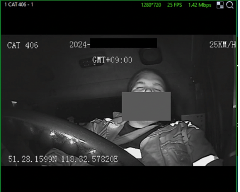
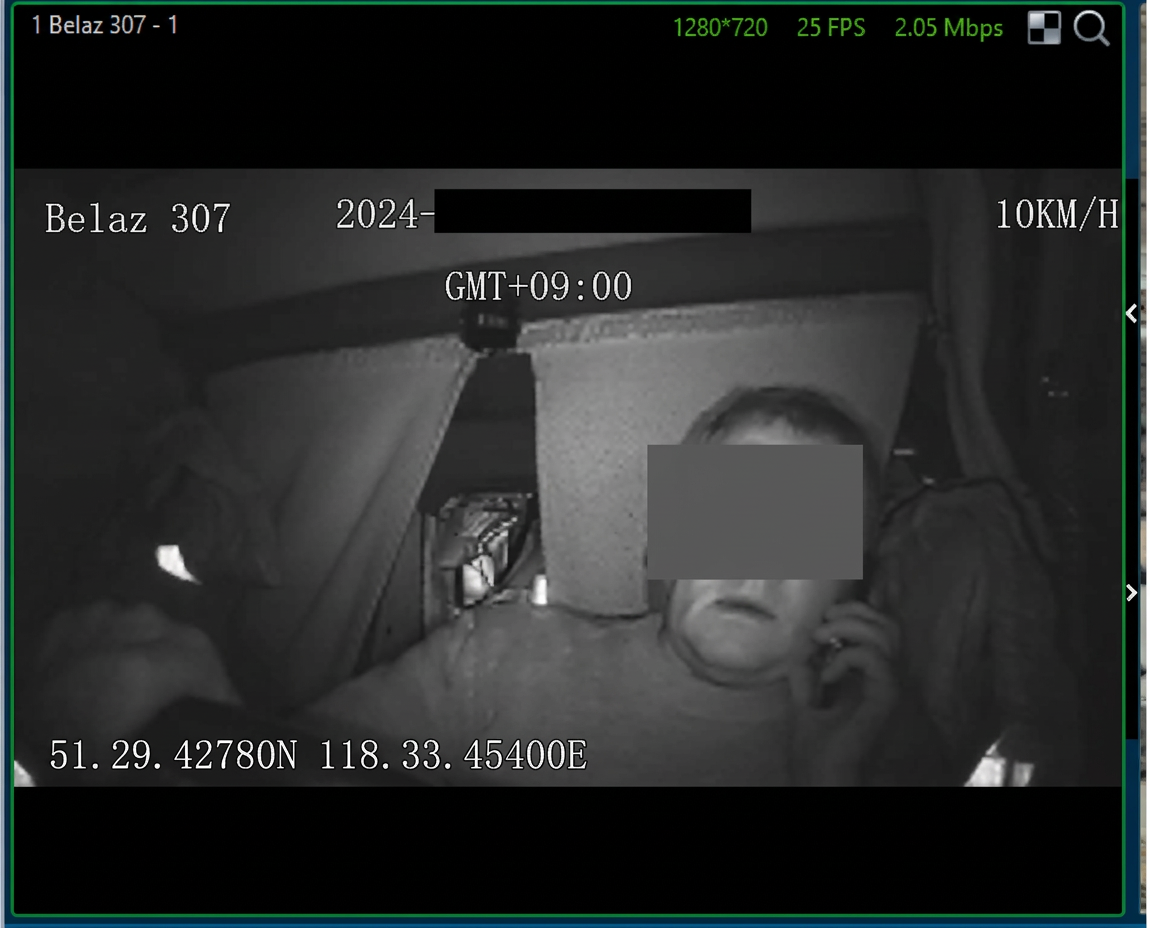
- Continuous monitoring of the driver's condition. Real-time video analytics track the face, determining the blink rate and degree of eyelid closure, as well as the position of the eyebrows and lips, identifying signs of fatigue, distraction, failure to use a seatbelt, phone usage, or smoking.
- Instant response. Upon detecting a dangerous state (falling asleep, fatigue, distraction), the system emits an audio signal and activates seat vibration, gently but persistently bringing the driver back to reality.
- Report generation and dispatcher notification. The system records all events and notifies the mining dispatcher of potentially dangerous states for a prompt response.
From Denial to Acceptance
Initially, the implementation of the DFMS caused a wave of negativity. Drivers complained: "they are spying on us", "it interferes with work", and expressed concerns about harmful radiation from the cameras. It even reached the point where cameras were massively covered up or turned away. But the system is smart; it recognizes such sabotage attempts and reports them to the dispatcher.
Systematic work with the driving staff was required:
- Explaining the goals. The main objective of the DFMS is not punishment, but preventing accidents and saving lives.
- Discipline. Disciplinary actions were applied for instances of sabotage.
- Proof of safety. An accredited laboratory conducted measurements and confirmed that the infrared radiation from the cameras fully complies with sanitary and hygienic standards.
The turning point came when drivers experienced the system's effectiveness firsthand. The most frequent feedback was: "I didn't even realize I fell asleep". For them, the DFMS transformed from an overseer into a vigilant partner that can save a life.
Numbers and Results: What the System's Operation Showed
The statistics speak for themselves: on average, there are 6-8 system triggers per vehicle per month for "fatigue/falling asleep". Moreover, the peak of incidents indeed occurs in the second half of a long shift.
It should be noted that for certain drivers, the number of falling asleep incidents is significantly higher than for others. Conversations are held with such employees, and they are offered medical examinations. The analysis also helps identify domestic issues, such as sleep deprivation due to noise from dorm neighbors with different work schedules (Bystrinsky GOK operates on a fly-in/fly-out shift basis). We also solve such problems by accommodating employees in dormitories based on their schedules.
In case of fatigue, it is a mandatory requirement to give the driver a 20-minute operational break. It is known that even a short rest and a change of activity can provide a boost of energy.
Furthermore, the DFMS has radically reduced the number of violations, such as unfastened seatbelts or talking on the phone. The understanding that any violation will be recorded forms safer habits among drivers.
 |
 |
Conclusion
In conditions where the cost of an error is measured in human lives and millions in losses from equipment downtime, a fatigue monitoring system is no longer an option, but a critically important safety element.
The technology, which initially seemed like an invasion of personal space, has proven its main value: saving human lives. It does not merely record fatigue and violations, but actively intervenes at a critical moment, interrupting a sleep lasting just a few seconds, which could be enough for a tragedy to occur. In a world where road risks are higher than ever, such a co-pilot is not a luxury, but a wise and necessary investment in safety.