#Monitoring
Continuous facility monitoring with IoT & Machine Vision. The jump from episodic checks to automatic 24/7 anomaly radars. Neural networks spot missing PPE, red-zone trespassing, and gauge transport speed.
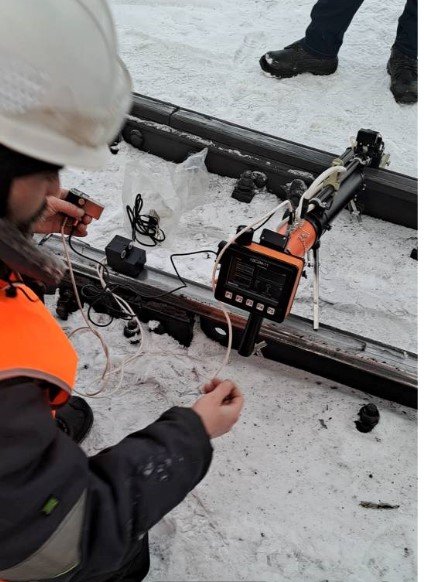
Do You Know What Rail Flaw Detection Is?
The derailment of loaded freight cars due to a fatigue crack in a rail head demonstrated the consequences of hidden track wear. We examine the primary non-destructive testing methods for rails and turnouts, the specifics of ultrasonic flaw detection, and inspection schedules to prevent accidents.

Digital Solutions for Ensuring Safety in Mining Operations
Implementation of a complex of digital systems in mining operations to monitor the condition of dump truck drivers and prevent collisions. Use of video analytics (OKO system) to detect falling asleep and distraction, as well as the integration of GPS trackers with ACS for personnel positioning and hazardous zone control.

Microsleep: The Invisible Enemy Behind the Wheel
The article describes the experience of implementing a driver fatigue monitoring system (SKUV) at the Bystrinsky GOK to combat microsleep — involuntary falling asleep at the wheel of a mining dump truck. The hardware and software system tracks signs of fatigue in real time and instantly responds with an audio signal and seat vibration. The author reveals the technology's design, the process of overcoming employee distrust, and the practical benefits of the system for preventing traffic accidents...

Experience of Interaction Between Yugra State University and Salym Petroleum Development in Implementing Infrastructure and Applied Science Projects
Implementation of applied science climate projects jointly with a university, including greenhouse gas monitoring in peat bogs and the creation of an integral biodiversity map for safe infrastructure design. Implementation of an online equipment energy consumption monitoring system and infrared scanning to find methane leaks in order to reduce the carbon footprint.

Strategic Directions for Developing the Occupational Safety System at SUEK-Khakassia LLC
A comprehensive approach to ensuring safety at open-pit mining enterprises, including risk-based thinking training, critical risk management, behavioral audits, and the implementation of digital monitoring systems (sensors, tags, Karyer system). The practice demonstrates the integration of technical solutions with data analysis to evaluate training effectiveness and interaction with production departments.
Implementation of the Climate Agenda at Tatneft
Comprehensive implementation of the climate agenda and circular economy principles in a large industrial holding. Introduction of CO2 capture and storage technologies, use of UAVs and AI for emissions and safety monitoring, and creation of a closed-loop recycling system for rubber products using pyrolysis.

How Do Artificial Intelligence and Computer Vision Control HSE at Industrial Facilities?
Implementation of an AI and computer vision-based video analytics system for automatic control of HSE compliance. The solution recognizes correct PPE usage, personnel presence in dynamic hazardous areas, and uses Multimodal LLM for contextual incident analysis.

Top Risk of Working in Gas-Hazardous Areas: Ural Steel Experience
Implementation of a LoraWAN-based online control system for remote monitoring of workers in gas-hazardous areas. The system tracks MPC exceedances, personal gas detector battery levels, and employee immobility, transmitting signals to dispatch centers.

Automated HSE Platform
Creation and implementation of an automated HSE management platform for a company with over 32,000 employees. The platform includes a mobile app for recording risks and non-conformities, integration with corporate ERP systems, a gamification system for staff engagement, and interactive instructions for user training.

Implementation of Sustainable Development Principles by JSC Russian Railways
Implementation of the environmental strategy of JSC Russian Railways to achieve carbon neutrality by 2050. Introduction of an environmental monitoring system, development of renewable energy sources, installation of reverse vending machines for plastic collection, and industrial waste recycling.

Risk Management for Highly Vulnerable Groups and Lone Workers
Implementation of a lone worker monitoring and positioning system based on smartphones and BLE beacons. The platform monitors employee status in real time, detects falls and immobility, and allows sending an SOS signal for rapid response by medical and security services.

The Role of Digital Processes in the Strategy and Tactics of Corporate HSE Development
Transition from paper regulations to embedded digital risk management processes using Gazprom Neft as an example. Implementation of a four-level safety digitalization model: digital assistance, digital control, digital embedding, and digital replacement.