HSE Budgeting: Structure, Calculation, and Defense
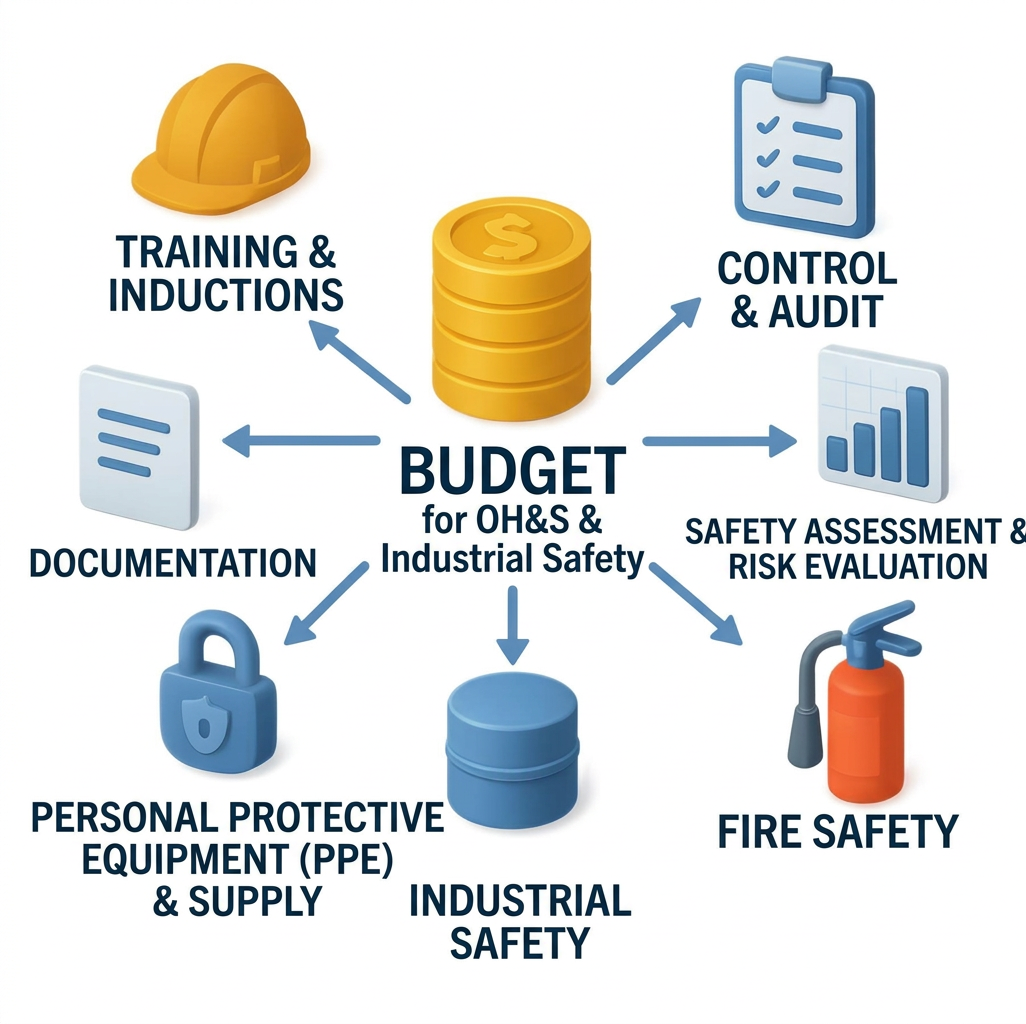
An HSE budget is more than just a technical document or a line in an Excel file. It is a tool through which an organization manages operational risks, fulfills its obligations to the state, and, most importantly, demonstrates that human life is valued here.
The question is not whether spending is necessary, but how to spend wisely and be prepared to explain the purpose of every line item.
What’s in the Budget: From Mandatory to Mindful
In most companies, the HSE budget is divided into two areas: mandatory expenses and developmental expenses (the latter are sometimes called "secondary," but only in a formal sense).
Mandatory Items:
- PPE: Personal protective equipment (clothing, footwear, helmets, gloves, etc.) — mandatory under Art. 221 of the Labor Code of the Russian Federation and TR CU 019/2011.
- Medical Examinations: Preliminary and periodic, especially for employees working in hazardous or dangerous conditions (Art. 213 of the Labor Code).
- Training and Briefings: From induction to refresher and specialized briefings, including first aid and emergency response (Art. 212 of the Labor Code, Decree No. 2464).
- SAWC — Special Assessment of Working Conditions, conducted every 5 years (Federal Law No. 426-FZ).
- Industrial Control — Monitoring workplace environment parameters: microclimate, lighting, hazardous substances (Federal Law No. 52-FZ, GOST 12.1.005-88, SanPiN 2.2.4.548-96).
- Fire Safety and Compliance with Regulatory Orders — A separate budget line, as violations here lead not only to fines but also to production shutdowns.
These items must be included. To ignore them is to jeopardize the entire production process.
Developmental Items: A Signal of Maturity
Here, everything depends on the company's level of awareness and the owner's priorities. Formally, these expenses are not required by law, but they are what distinguish a proactive system from mere formal compliance.
Such expenses include:
- Digitalization of Safety Systems: Implementing EHS platforms, audit systems, incident reporting, and mobile apps for site inspections.
- Technical Safety Measures: Mirrors, markings, powder fire extinguishing systems, access control, walkway lighting, and heavy equipment monitoring.
- Infrastructure: Fire access roads, new exits, unloading zones, and pedestrian route safety.
- ISO 45001 Certification, and integrating safety into the ESG agenda.
- Modernization of Working Conditions: Landscaping, break rooms, cleanliness, and workplace ergonomics.
And — an especially important point:
Artificial Intelligence: From "Hype" to Practice
AI is already helping HSE departments solve tasks faster and more accurately:
- Automated verification of documents and deadlines for medical exams, briefings, and training.
- Video stream analysis: Detecting violations (missing helmets, approaching danger zones).
- Predictive analytics: The system identifies where incident risks are rising (based on personnel behavior, history of observations, and current conditions).
- Report generation, assistance in incident investigations, and building "root cause trees."
Such tools are not just about development; they are a step toward reducing the workload on specialists. Their implementation requires justification, but the effect often exceeds expectations.
How to Calculate the Budget
There are three basic approaches.
1. Regulatory-based
Simple and formal: calculated based on standards. For example, 0.2% of production costs is the minimum under the Labor Code (Art. 226).
Add to this: PPE standards, medical exams, frequency of briefings, and SAWC requirements.
Formula: Standard × Quantity × Frequency.
This approach provides a minimum but does not account for the specific risks of the enterprise.
2. Risk-oriented
Modern and sophisticated. It starts with risk assessment (P — probability, S — severity): R = P × S
Priority measures are identified based on the risk level.
A financial model is added: E(Loss) = P × C,
where C is the expected damage. If prevention is cheaper than potential losses, the measure is justified.
This approach is especially important in complex industries where a mistake is costly.
3. Combined
The most realistic — mixing regulations and risks. Add:
- SAWC data;
- Injury statistics;
- FR and SR (frequency and severity rates);
- Analysis of the previous year's incidents.
Goals can be set: "reduce FR by 30%" — and measures are assembled to meet this target.
How to Defend the Budget
This is less about numbers and more about the ability to speak to shareholders or financiers in their language.
Tools:
- ROI: Demonstrating that safety investments return through reduced downtime, fines, and compensation.
- Scenario Analysis: Comparing what happens with and without the budget. Losses from a single accident can many times exceed the entire amount that was not approved.
- SIF Support: Part of the costs (medical exams, PPE, training, SAWC) can be compensated by the Social Insurance Fund — up to 20 – 30%. This reduces the actual financial burden.
- Roadmaps: For complex projects — phased implementation over 2 – 3 years. This lowers the barrier to entry.
It is important to remember: unjustified expenses will not pass. But underfunding critical areas also entails liability.
Final Emphasis
Effective HSE budgeting is not about "what we can afford," but about "what is truly needed to avoid risking lives and the business."
The more mature a company is, the more accurate its safety budget. This is one of the markers of maturity. And where there is maturity, there is trust: from employees, regulators, partners, and the market as a whole.
Safety itself does not generate money. But it is what prevents money from leaking through sick leaves, fines, downtime, and tragedies.