Risk Management on Internal Territory
As industry specialists, we are well-versed in the field of occupational risk management.
At various stages of employee onboarding, we discuss this — providing introductory briefings on general site risks, introducing workplace hazards and risks, teaching how to identify hazards and eliminate risks, jointly developing effective control measures, and explaining why this is crucial primarily for the employees themselves and how it impacts their personal safety.
However, in most cases, focus is placed on processes that the worker performs directly with their own hands or through contractors in production.
But do we always pay attention to "general processes," as we might call them? The hazards and risks that accompany them. For example, the process of moving across the internal territory of a production site — the movement of employees, contractors, and visitors.
Do we consider that there are also hazards there with a very high potential severity level, where an incident could have fatal consequences?
Sources of risk include trucks and cars, forklifts, snow removal equipment, slippery surfaces, and more.
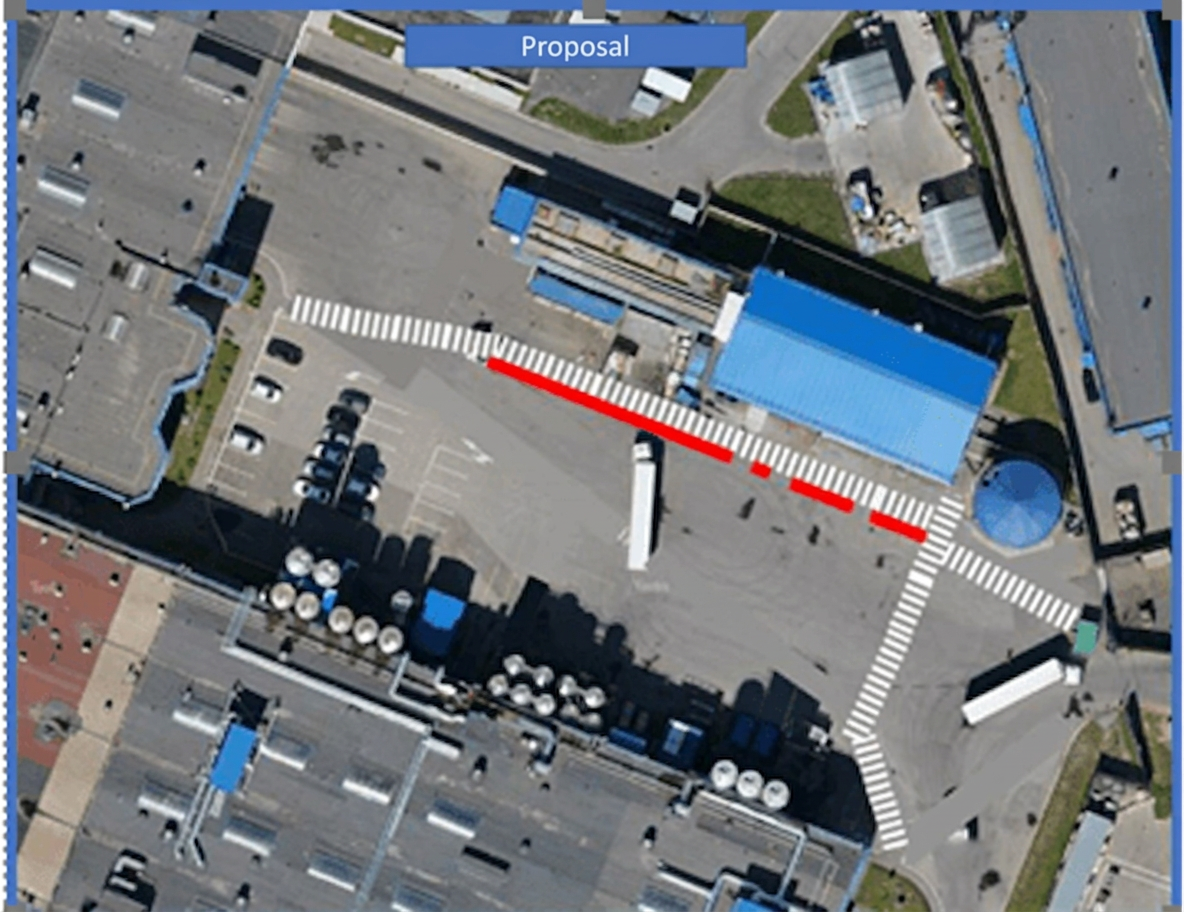
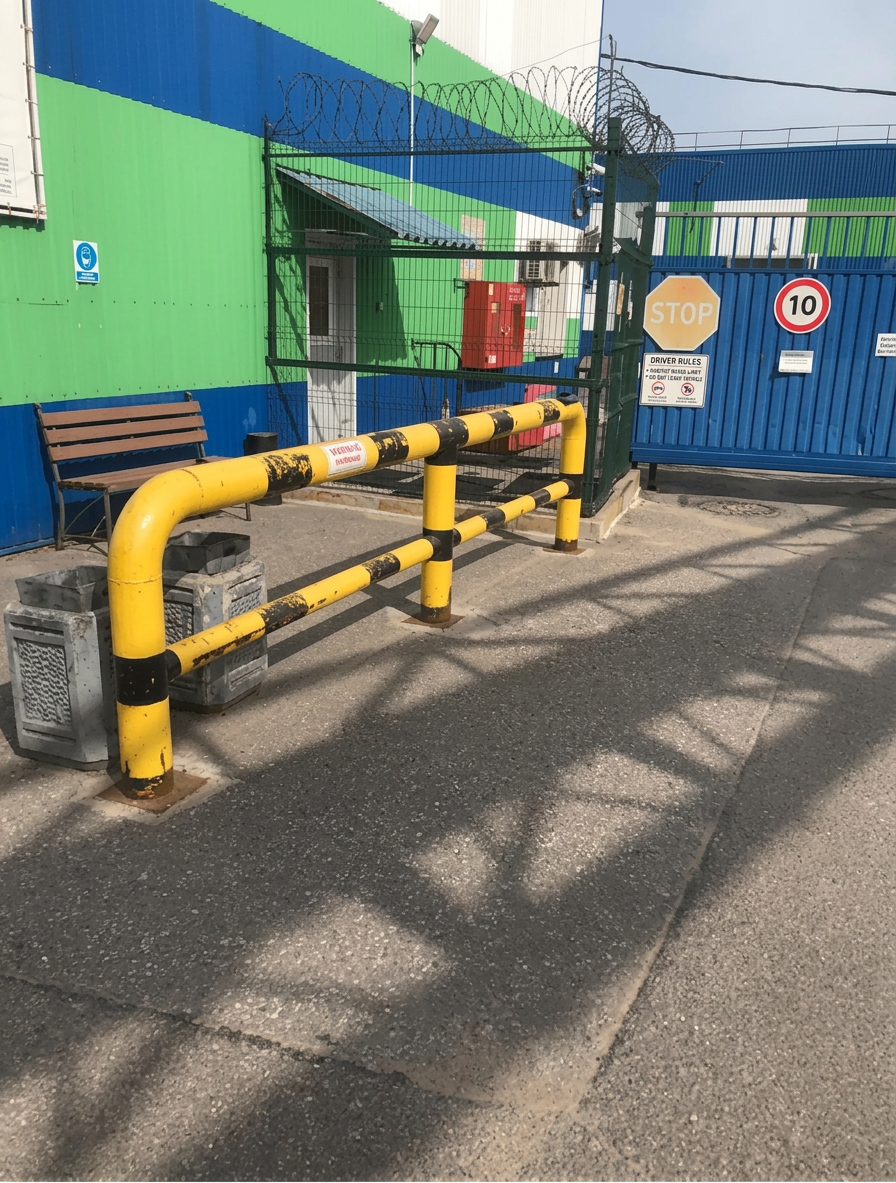
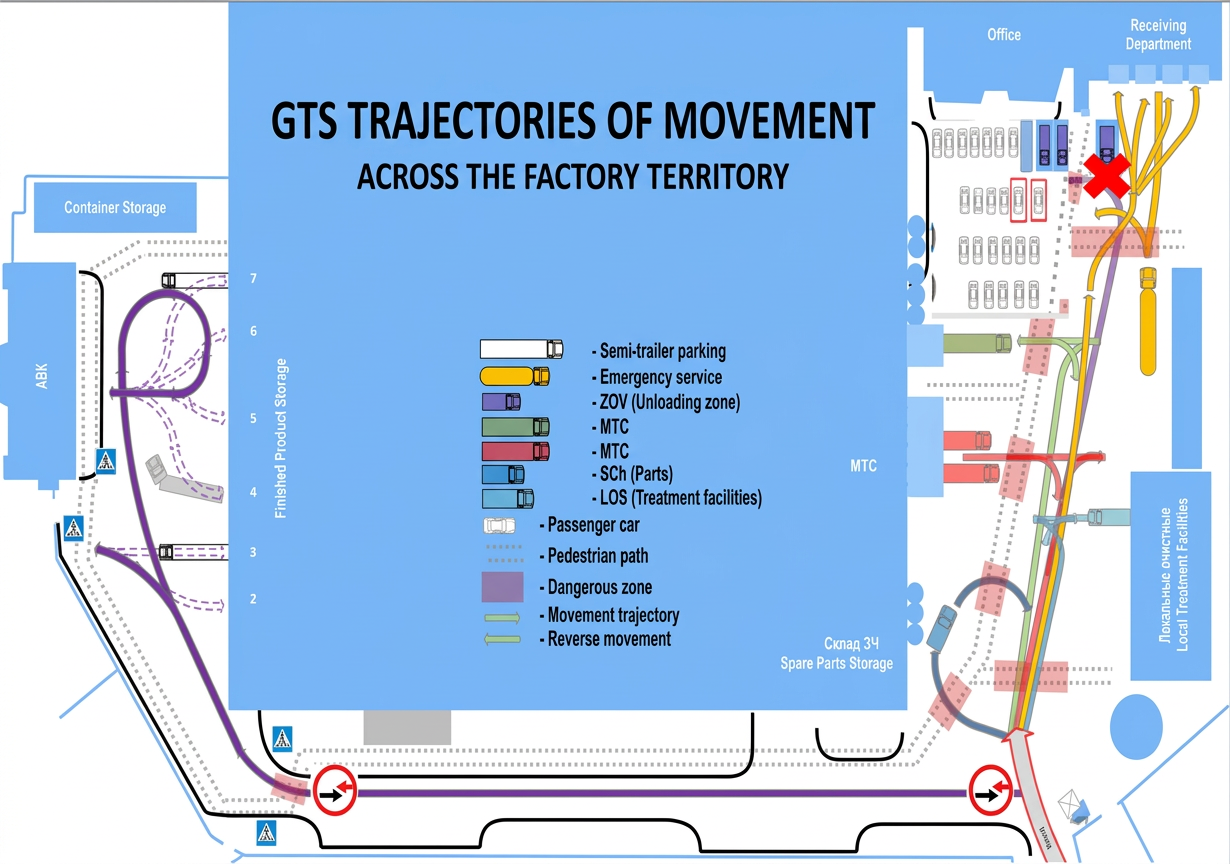
Effective measures to manage such risks include: access control systems for organizing the passage of freight and passenger vehicles; driver briefings at the entrance by security personnel; issuing driver memos with site maps and parking trajectories for different zones; installing priority and speed limit signs on internal territory; installing barriers in pedestrian areas; pedestrian markings; installing traffic lights at unloading zone entrances and special acoustic devices for reversing trucks; snow removal schedules; auditing critical points for cleaning quality (e.g., the parking area itself); and LOTO for vehicles — installing wheel chocks, turning off the engine, and handing over car keys to the person in charge during loading and unloading. This list of measures can be expanded. The key is that it should not be expanded after an incident, but rather updated based on quality work in timely risk identification and elimination.
Examples: