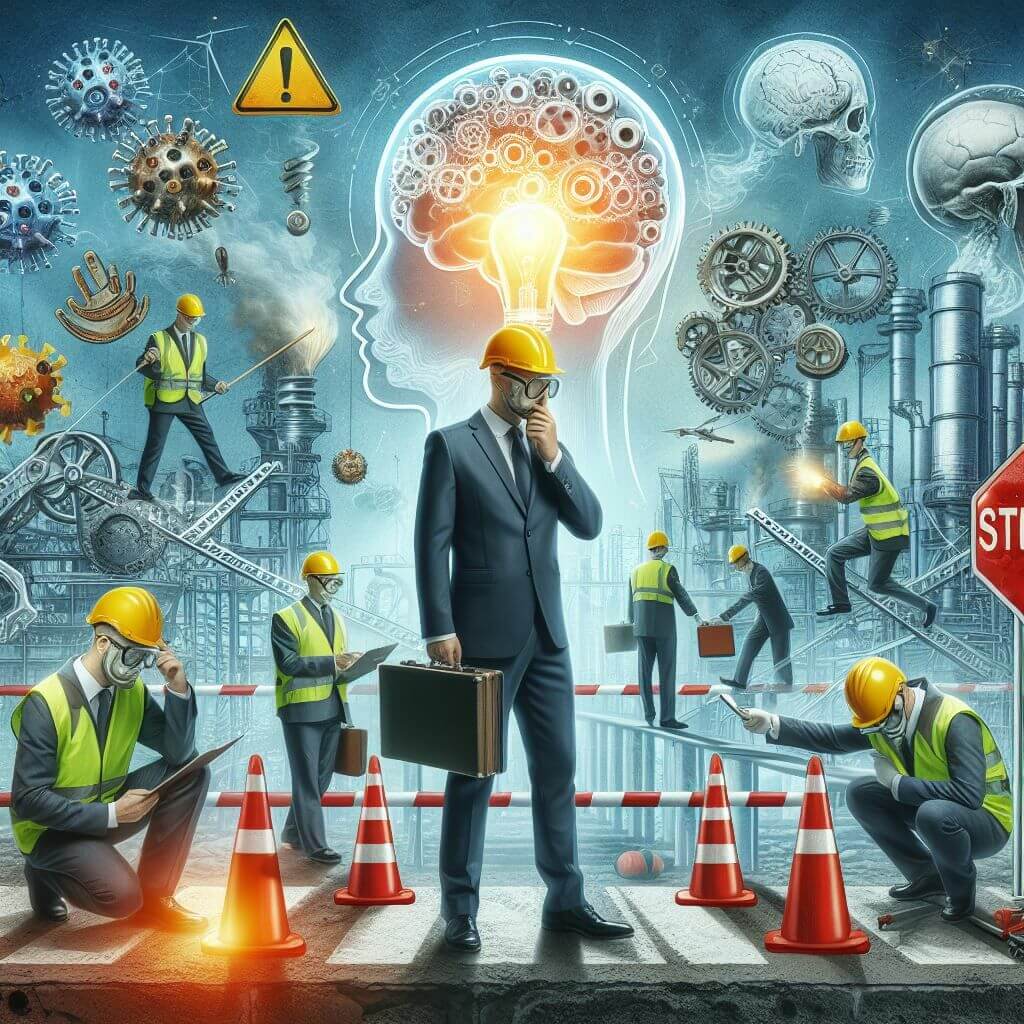
Risk-Based Thinking in Industrial Safety and HSE
Risk-based thinking in industrial safety and HSE is the ability to analyze and manage potential hazards and consequences associated with production activities. Risk-based thinking helps prevent or minimize accidents, injuries, illnesses, and environmental damage. It also contributes to increasing the efficiency, quality, and competitiveness of the enterprise.
To implement a risk-based approach in industrial safety and HSE, the following stages must be carried out:
- Risk identification. This is the process of identifying outcomes that could lead to negative consequences for employees, equipment, the environment, or the enterprise's reputation.
- Risk analysis. This is the process of assessing the probability and severity of risks, as well as their interrelationship and impact on achieving the enterprise's goals.
- Risk evaluation. This is the process of comparing risks against established criteria and determining their acceptability or unacceptability.
- Risk treatment. This is the process of selecting and implementing measures to reduce, avoid, transfer, or accept risks depending on their significance and priority.
- Risk monitoring and control. This is the process of observing changes in risks and the effectiveness of treatment measures, as well as adjusting plans and actions in accordance with the monitoring results.
Risk-based thinking in industrial safety and HSE requires continuous improvement and personnel training, as well as interaction with stakeholders such as government agencies, public organizations, customers, and suppliers. Risk-based thinking must also be integrated into all enterprise management processes, such as planning, design, procurement, production, operation, maintenance, and decommissioning.
An example of risk-based thinking in industrial safety and HSE is a system for proactive analysis and accident prevention at an industrial enterprise.
Within this system, enterprise management and employees actively identify potential risks and hazards in the workplace, analyzing their probability of occurrence and potential harm. Based on the information obtained, measures are taken to prevent and reduce risks.
Applying risk-based thinking in this case means that HSE and industrial safety are not limited to simple compliance with standards and regulations, but also involve active work on identifying potential hazards, analyzing them, and taking appropriate measures to eliminate or manage risks. This approach helps prevent industrial accidents and incidents, as well as increase the safety and efficiency of work processes.