#Industrial safety
Industrial safety and accident risk management at hazardous production facilities. Practical solutions for the operation of technological equipment, pipelines, and lifting structures. Focuses on interacting with supervisory authorities, digitalizing safety control, and extending equipment lifespan.
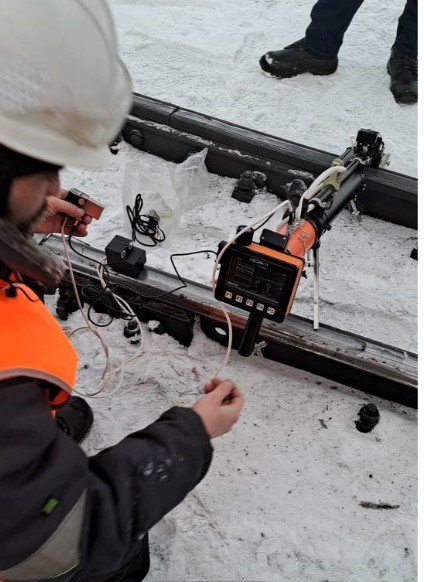
Do You Know What Rail Flaw Detection Is?
The derailment of loaded freight cars due to a fatigue crack in a rail head demonstrated the consequences of hidden track wear. We examine the primary non-destructive testing methods for rails and turnouts, the specifics of ultrasonic flaw detection, and inspection schedules to prevent accidents.

UAVs Over Facilities: Protecting People and Assets
The threat of UAV strikes on industrial sites demands new safety approaches. Learn how to organize an effective response in the first 30 minutes: from declaring shelter to operating without communications. Real-world emergency preparedness experience.
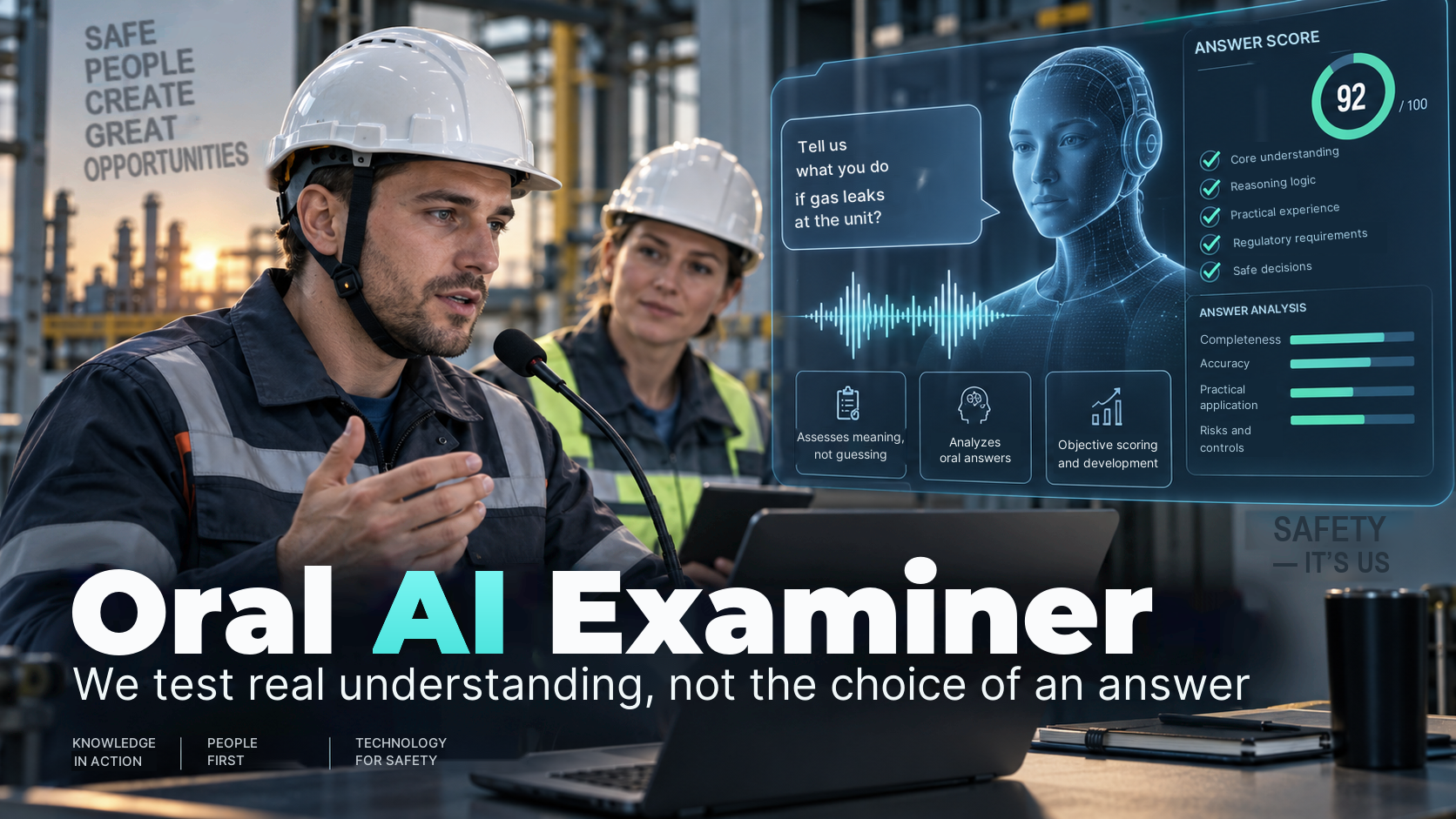
No Options A, B, and C: The Oral AI Examiner
How we went from a NotebookLM and Gemini combo and our own random question generator to a portable browser examiner that listens to the answer and assesses actual understanding. A pilot on 54 employees, an RSS code instead of a full name, and nine ready-made prompts to replicate it yourself.
Coal Stockyard as an Underestimated Hazard: What Happens to Coal After Mining
Open-air coal storage often remains overlooked, even though coal actively oxidizes and is prone to spontaneous combustion. We examine why conditions in a storage yard are worse than underground, how to properly extinguish hot spots, and which methods help prevent fires at terminals.
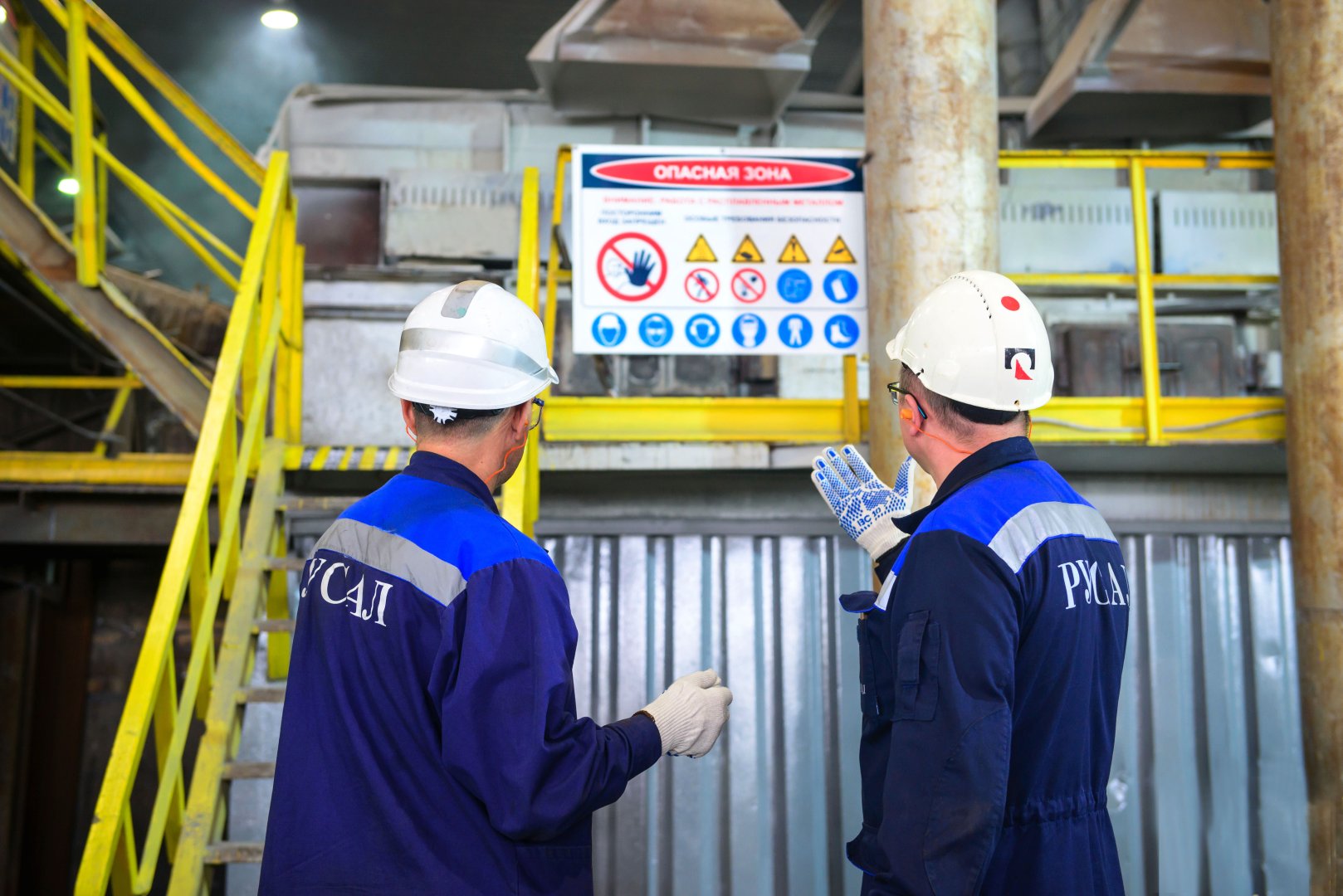
🛡️Safety: Visual safety management at RUSAL — sharing our experience
A rusty sign taped to the shop gates reads loud and clear: safety is of no interest to anyone here. Ivan Bobrov explains how RUSAL’s Downstream Division — 11 plants and about 8,000 employees — built visual safety management with its own people in two and a half years: a single standard for signs and floor marking, three steps of “see it — design it — apply it”, ready solutions for hazardous areas, stairways and pedestrian flows, and the seven conditions without which none of it works.
Tanks that need no rescue: four layers of protection instead of endless repairs
A tank farm lives between two budgets — for painting and for consequence remediation. OTEKO's Production Safety Director breaks down how to stop fighting design consequences: a dome and internal pontoon instead of floating roof repair, a polymer liner instead of major overhaul, composite roof protection, and two levels of grounding — complete with numbers, regulatory references, and a checklist for the Industrial Safety department.
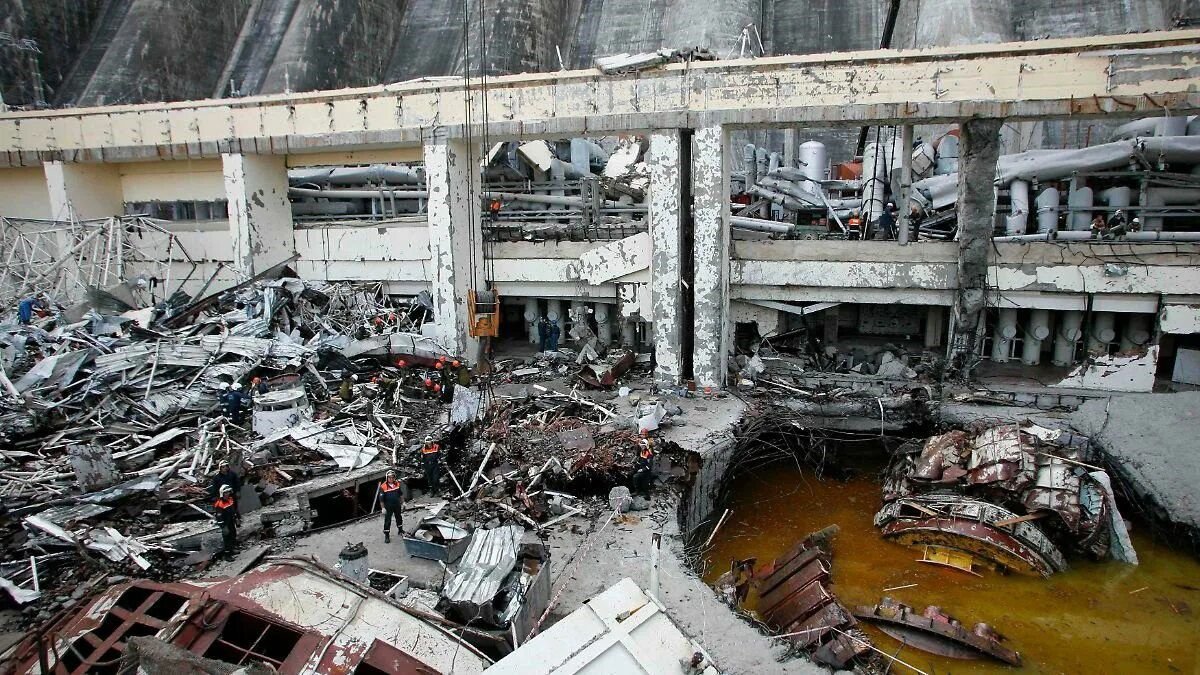
🛡️ Safety: The Sayano-Shushenskaya Dam Disaster Through the Lens of Process Safety
On 17 August 2009, 75 people died at the Sayano-Shushenskaya hydropower plant. We break the accident down element by element against Process Safety Management — and show why the disaster was predictable.

🛡️ Safety: Unpacking the System
Over 30+ years of working in HSE, I have seen a wide variety of 'assemblies' of occupational health and safety and industrial safety management systems. How is an effectively functioning mechanism of such a system structured? Let's unpack this box!
🛡️ Safety: HSE Risk Management — Sharing My Experience
An overview of the occupational health, safety, and industrial safety risk management system at OMK: from methodology to real case studies of fatal risk reduction and automation. Learn how to combine best practices and avoid a formal approach.

The Future of HSE Through the Lens of AI Development Trends
Phased implementation of artificial intelligence tools in occupational health and safety processes to automate routine tasks and data management. The practice includes preparing internal "knowledge brokers," launching a secure corporate analog of generative neural networks, and integrating AI with accounting systems. Implementing this approach in a mining company reduced labor costs for intellectual tasks by 20%.

Principles of Leadership Development
Implementation of leadership principles and the Human Performance concept into the daily operational activities of an enterprise. The practice includes moving away from a culture of blame in favor of systemic root cause analysis of errors and the formation of psychological safety within the team. The process is aimed at integrating safety standards into the overall business management system and eradicating tolerance for violations to prevent a dangerous "new normal."

History of Personal Protective Equipment
The article traces the historical path of the development of personal protective equipment from primitive ancient prototypes to modern high-tech systems. The material examines key stages in the evolution of PPE, including the Industrial Revolution, breakthroughs of the First World War period, the systematization of standards, and the introduction of composite materials. The review shows how protective equipment consistently adapted to new industrial risks, turning into ergonomic multifunctional...