Effective Cooperation Between HSE Specialists and Department Heads
In modern production environments, occupational safety has always been a crucial aspect of a company's success. HSE specialists play a key role in shaping a safe work environment, but their work requires active participation and support from department heads. Let's look at how to establish effective interaction between HSE specialists and department heads.
- Leadership of Department Heads
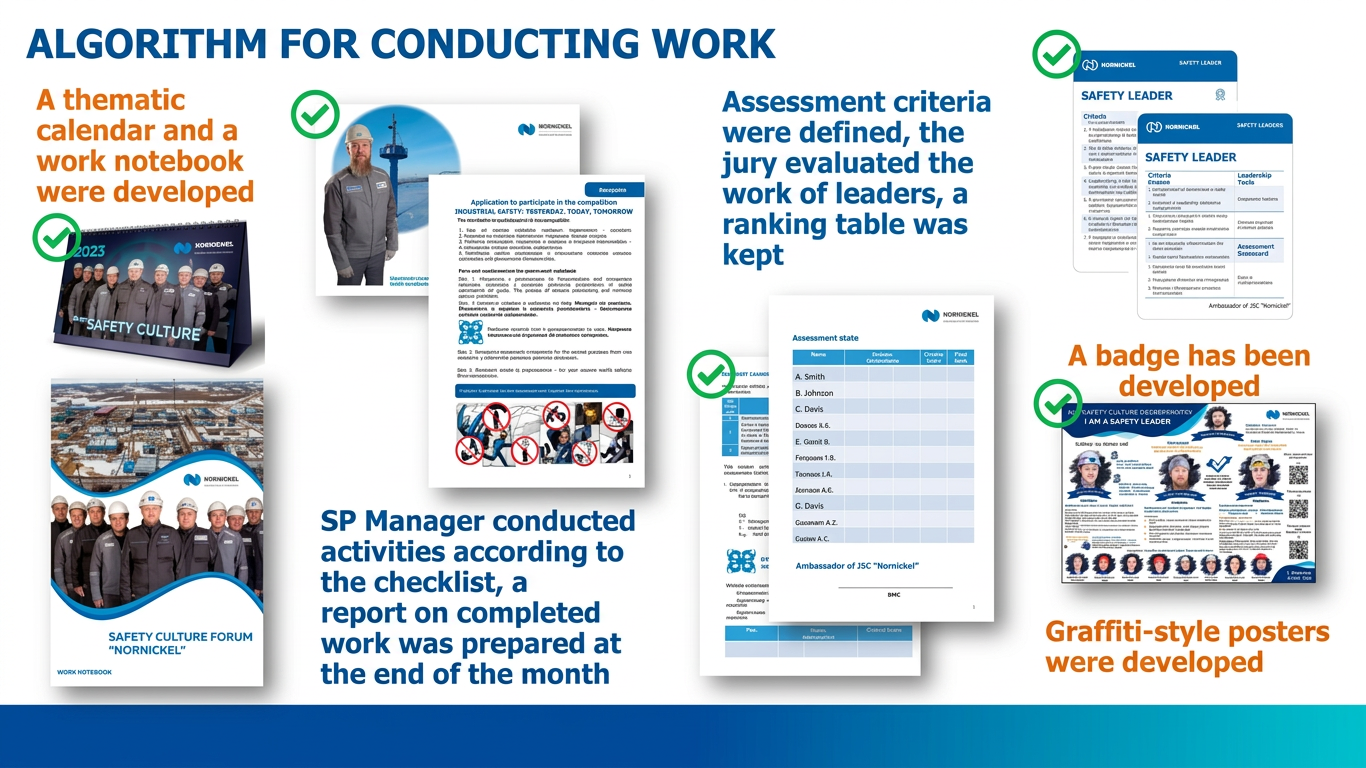
The first step toward successful cooperation is involving managers in the process of building a safety culture. Leaders must not only realize the importance of HSE but also actively participate in its development. What needs to be done is to gather department heads and suggest they become key figures throughout the year through full immersion in safety issues. Most importantly, obtain their consent that yes, we need this.
- Theme of the Year: "Safety Culture Formula"
Choosing a single theme for the entire company for the year will help focus the efforts of all employees on achieving a common goal. The "Safety Culture Formula" theme can include various aspects: from training to implementing new technologies and practices. This will create a unified information flow and allow all participants in the process to work in the same direction.
- Themed Desk Calendar and Workbook
Developing a desk calendar with themed tasks and safety recommendations will become a useful tool for managers. The calendar will serve as a reminder of the direction we are moving in. A workbook with practical assignments will help managers navigate what to do. This will not only simplify the work but also increase the level of engagement.
- Assigning a Month to a Manager
Each month, one of the managers can be appointed responsible for safety across the entire Company. This will allow each of them to dive deeper into safety issues and become an example not only for their own employees. This approach promotes the formation of responsibility for safety at every management level.
- Atmosphere of Openness and Trust
Creating an atmosphere of openness and trust between workers and line personnel is a key aspect of successful HSE work. Regular meetings, discussions, and feedback will help identify problems and propose solutions based on real working conditions.
Immersion in Active Work
An HSE specialist should become an assistant to the manager during their production site visits. This includes not only observing processes but also actively participating in solving identified problems. Preparing presentations on the work done and disseminating information about the results achieved are also important for increasing employee safety awareness.
Conclusion
Activities to improve safety culture do not require significant financial costs, but they do require time and effort from managers and specialists. It is important to understand that HSE work is not just a task, but a joint process that requires the active participation of all employees. Finding your "Zen" in working with production personnel means creating an effective team capable of ensuring safety at all levels.
How do you involve your managers in safety leadership?
You can see how we did it on the organization's official website: https://www.ngaz.ru/press-tsentr/news/v-ao-norilskgazprom-podvedeny-itogi-goda-kultury-bezopasnosti/