Why "No!" Doesn't Save: A Scientific Look at the Effectiveness of Prohibitory Signs
Good day, my name is Roman Portnyagin, and today I would like to emphasize the importance of a conscious approach to prohibitory and mandatory industrial signs and posters.
Signs and posters hold a special place in ensuring workplace safety. However, their effectiveness largely depends on how a person perceives them. In this article, we will examine the differences between prohibitions and mandatory instructions from the perspectives of psychology and physiology, and analyze which approaches work better in industrial safety.
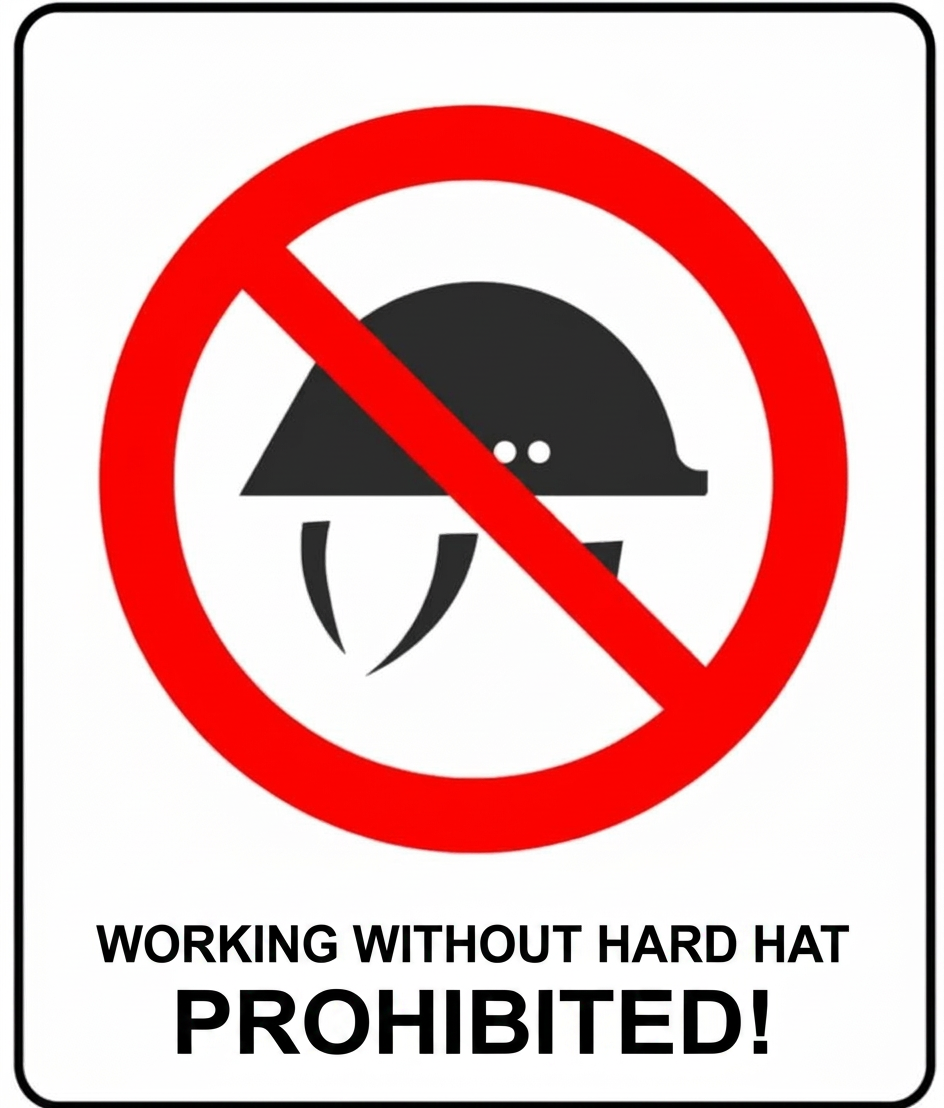
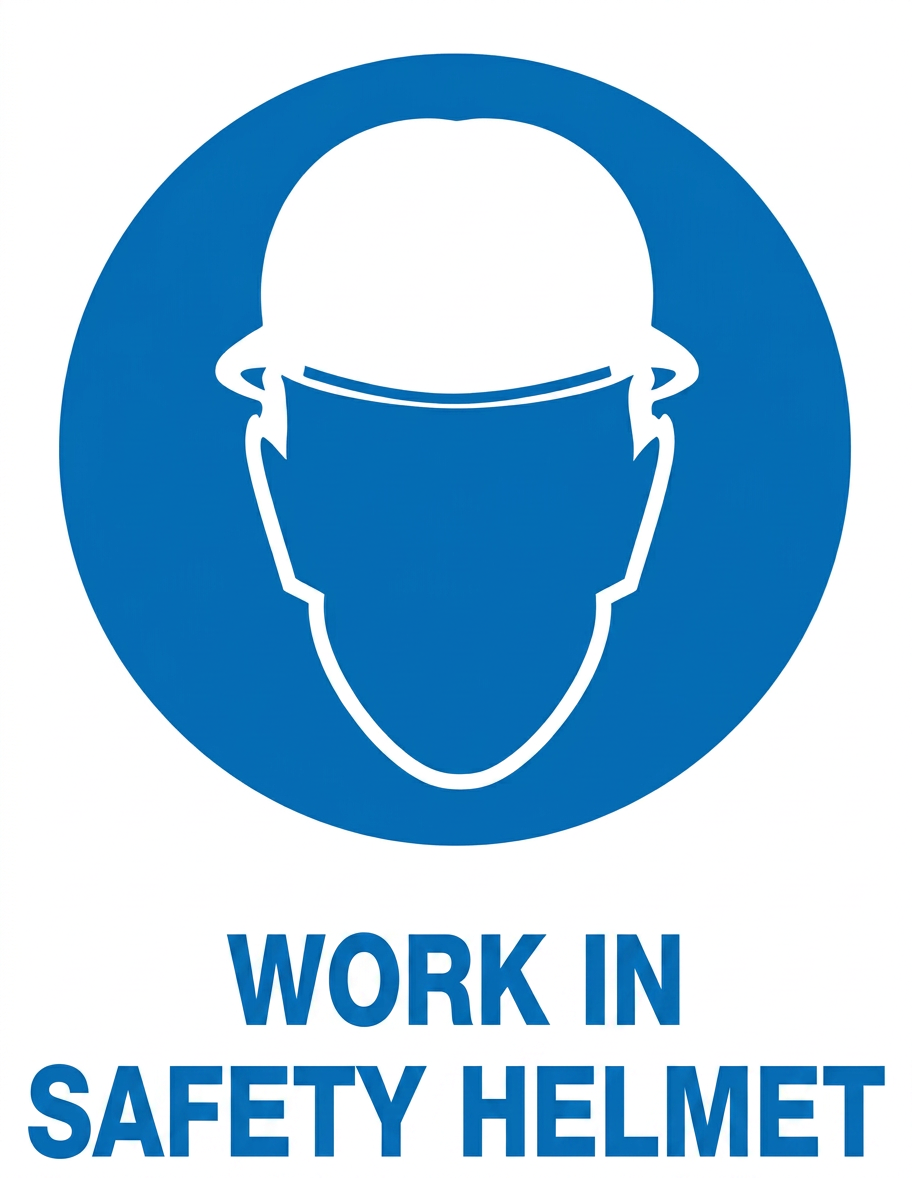
Before we delve into the issue of perception, please look at these two signs and think about your internal feelings...
 |
 |
Physiology and Psychology of Perceiving Prohibitions
Pavlov's Teachings and Conditioned Reflexes
Ivan Pavlov proved that humans (and animals) form conditioned reflexes in response to stimuli. In the case of prohibitions, an "inhibitory reflex" is triggered — an avoidance reaction. However, the problem is that prohibitions require the conscious suppression of an already existing impulse.
For example, a "Do Not Enter!" or "No Smoking!" sign first triggers an automatic reaction of resistance, especially if the action was previously habitual.
Let's imagine: a worker moving across an industrial site sees a "Do Not Step" sign near a hatch. If the worker has already walked this route before, the prohibition will be perceived as a nuisance rather than a warning.
Psychological Resistance to Prohibitions
Research in psychology shows that prohibitions provoke:
- Reactance (Brehm) – when a person feels their freedom is being restricted and begins to violate the prohibition out of spite.
- Cognitive Dissonance (Festinger) – if a person is already used to performing an action, a prohibition causes internal conflict and a desire to ignore it.
- The "Forbidden Fruit" Effect (Wicklund) – the stricter the prohibition, the higher the desire to break it.
So,
- Strict prohibitions ("Do Not Enter!", "No Smoking!") can cause resistance (reactivity effect).
- People are prone to selective perception — if a prohibition seems non-obvious, it is violated.
- Prohibitions work better when backed by real consequences (fines, injuries).
Mandatory Instructions
Physiology of Positive Reinforcement
Unlike prohibitions, mandatory instructions work through positive reinforcement (Skinner, operant conditioning). They don't just block an action; they form a new behavioral model:
- "Use a safety belt!"
- "Hold the handrails!"
These formulations direct a person toward the correct action rather than simply restricting them.
Cognitive psychology research (Kahneman, 2011) shows that the brain responds better to clear instructions than to prohibitions.
Mandatory instructions:
- Reduce cognitive load – there is no need to analyze what is "forbidden"; it is immediately clear what "needs to be done."
- Form automaticity – the more often a person performs an action, the faster it becomes a habit.
Comparing the Two Approaches:
| Criterion |
Prohibitions |
Mandatory Instructions |
|
Color and shape |
Red circle, black pictogram |
Blue circle, white pictogram |
|
Emotional impact |
Cause anxiety, can provoke resistance |
Perceived more calmly, but can be ignored |
|
Effectiveness |
Better in emergency situations |
Better for everyday norms |
Let's look at a simple situation that I think every one of us has encountered, for example, a "No Smoking!" sign. If there are no obvious risks nearby that would lead to consequences, in most cases, a person will ignore the prohibition (an example from personal practice: the restrooms in the departure lounge of Domodedovo Airport).
If a person is given an alternative like "Smoking Area 100 m," most of us, as socially adapted citizens, will go to the designated place. While studying the issue, I came across an article that uses a combined approach, which, in my opinion, is the most effective.
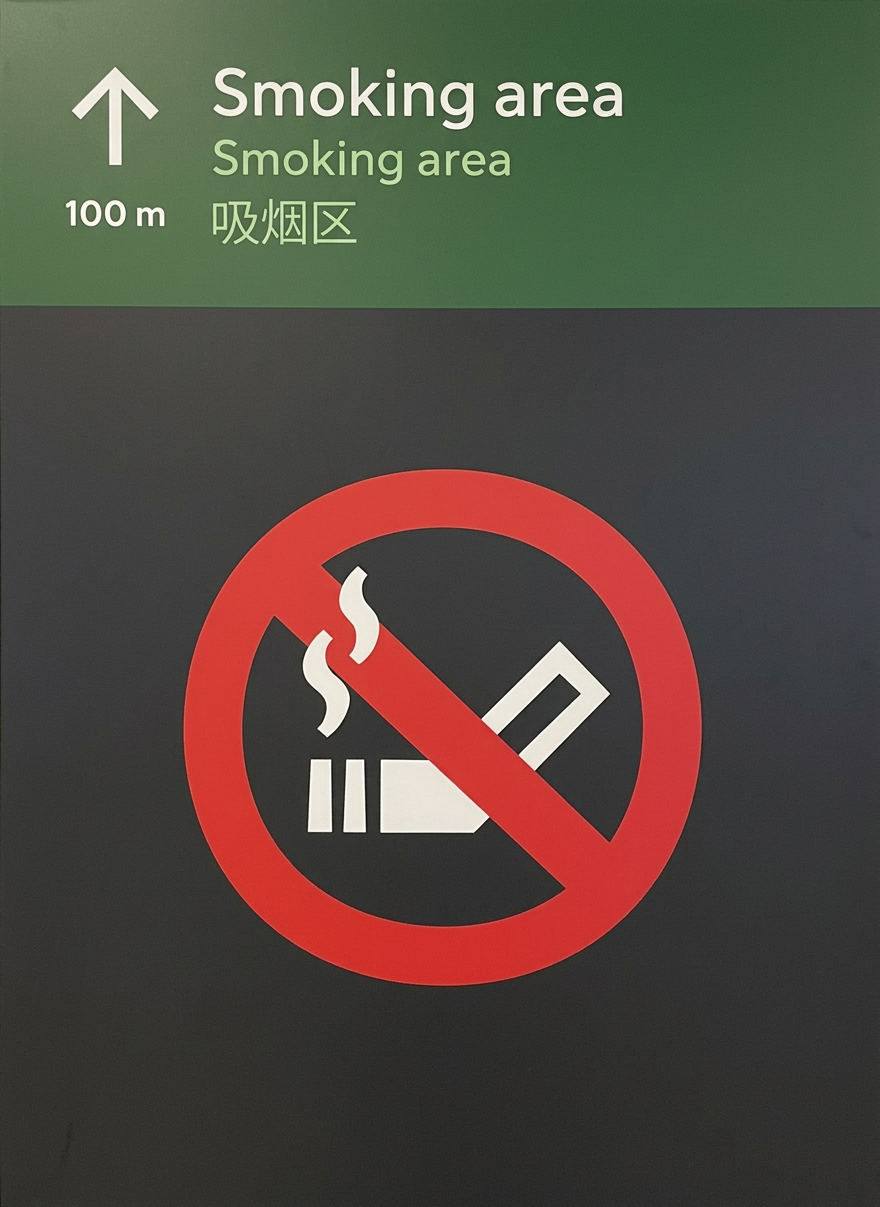
Conclusion: Prohibitions can cause "hidden resistance" ("Why can't I?") and do not explain the alternative ("What should I do instead?"), while mandatory signs trigger "positive motivation" ("This will preserve my health"), specify "concrete actions" ("Do this!"), and subject the worker to less stress (no pressure of "No").
This provides an understanding of why it is important in HSE not just to prohibit, but to competently guide workers, reducing resistance and forming safe behavior. However, an ideal safety system combines both approaches: clear prohibitions with an explanation of risks and positive mandatory instructions that form correct habits.