DOR Practicum
Good afternoon! My name is Roman Portnyagin.
I realize that due to limited time, I wasn't able to cover the entire DOR Practicum program discussed during the webinar!
And your feedback — "What exactly was Roman trying to show? The case is completely unclear" — is accepted with gratitude. Otherwise, the idea to provide a detailed explanation of this unique tool wouldn't have come up.
This tool can help you take a fresh look at the emergency response training process.
Today, I am writing this article both for those who attended the webinar but still have questions, and for those who missed it. I will try to reveal the potential of this tool, which is primarily aimed at helping employees make decisions under stress.
From the very beginning
Norilsk Nickel has vast experience in employee training.
The company operates its own Corporate University and an Institute of Internal Trainers. It uses 7D simulators for training LHD operators, VR technologies, an underground training ground, and one of the largest surface training grounds!
Everything is connected
And, of course, advanced training methods include practical exercises, because:
"Theory without practice is dead, practice without theory is blind," as Alexander Vasilyevich Suvorov used to say.
An accident
It all started with the investigation of incidents that occurred within the company.
At that time, it became obvious: people are trained, briefings are completed, and practical skills are practiced. We strive for a proactive approach and, of course, try to assess all risks. But an event occurs that, at first glance, should have unfolded differently: the employee was supposed to save himself using the infrastructure specifically designed for this purpose... and he ran right past it. As a result, he could not be saved.
Panic?
Yes, of course, the easiest thing is to blame it on panic. But an analysis of his actions showed that the employee was following a certain logic and trying to save himself. The question remains — what was missing?
The answer lies on the surface: there was a lack of practiced movement — something you have already done physically.
Let's think about your own apartment. It's completely dark. You are walking down the hallway and, so as not to wake anyone, you don't turn on the light.
Why don't you bump your head against every wall or corner? That's right — you know exactly what to do.
Statistics
Everything is simple here: hundreds of incidents, dozens of fatalities, billions in damages. These conclusions can be drawn from 20 major incidents in Russian companies over the past 10 years.
According to open-source reports, 9 out of 10 investigations conclude that it is possible to minimize damage and reduce the number of victims, but to do so, employees must:
-
know how to act correctly;
-
have clear instructions;
-
be prepared to take action.
The simple path to legal compliance
Yes, training is a very important stage of personnel preparation. And according to Federal Law No. 116-FZ (Art. 10, Part 1), hazardous production facilities must "train employees on actions in the event of an accident or incident." However, "training" can be interpreted in different ways: for example, learning through lectures, seminars, and other classroom activities. Or practical training — through drills, alarms, and exercises. For some reason, the latter option receives little attention in the regulations, although everyone admits it is a useful thing.
So, we must teach employees, practice the procedures, and ensure that everyone and everything is ready. Usually, such things appear exactly in documents, for instance, in the Emergency Response and Mitigation Plan.
An annual schedule, employee notifications, appointing a responsible person, a commission report, follow-up actions, logging in a journal, a final report. Emergency services are also frequently involved to ensure everything happens "just like in real life."
At the same time, it remains more of a "laboratory game." Much like a beautifully executed fire evacuation drill: anyone who has ever been inside a burning building knows what I am talking about.
What should be done?
Practice right during work, directly at the workplaces.
This is exactly where our company takes a step toward a proactive approach and moves forward to preserve human life and health, rather than just minimally complying with legal requirements.
The "trainers" step into action
An internal trainer is an assistant, the person who can help resolve safety-related issues both in the classroom and next to a tank (excuse me, a machine tool).
The tool in question was developed and is implemented by internal trainers, but in other companies, it could be any motivated specialist. It's only a matter of the nuances of coordinating workplace visits.
I think an HSE officer can easily play this role — after all, in most cases, this person regularly visits workplaces.
15 minutes
The DOR Practicum program is designed with the production process in mind, where an employee cannot be distracted for long.
Important: maintain a dialogue from an equal position, be able to provide feedback, and be prepared (know the algorithms, equipment, requirements, and actions).
The DOR Practicum is conducted individually. For metric purposes, it is necessary to meet at least twice.
A scenario is written for each profession to practice actions in the event of an emergency.
Results are recorded in a checklist after the DOR Practicum. The items are developed taking into account time requirements and the specifics of the profession.
What we have already seen:
-
There were cases when an employee could not independently remove a manual fire extinguisher from a vehicle's mount.
-
Various mistakes were made when donning the OSR self-contained self-rescuer.
-
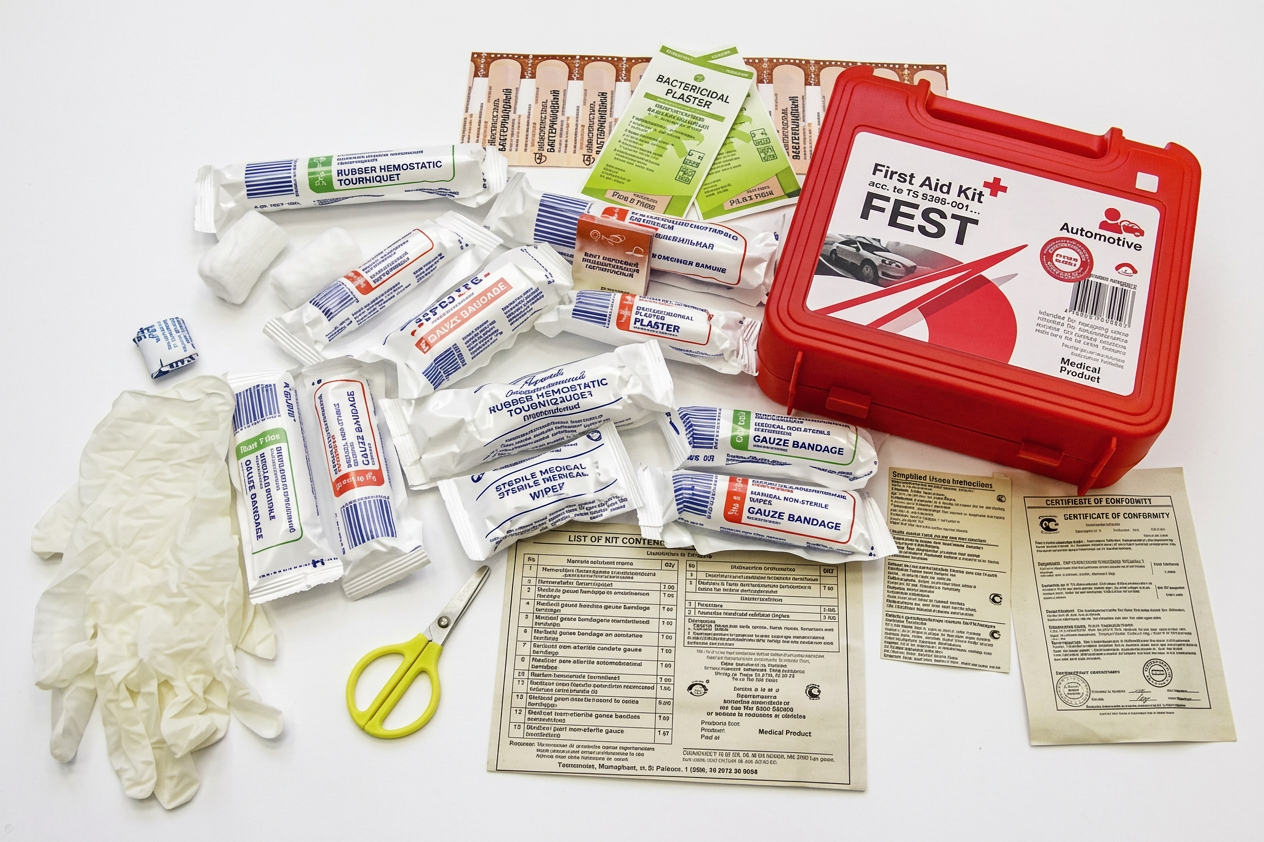
Employees failed to find a tourniquet in the first aid kit.
-
They didn't immediately see where the glass-breaking hammer was located to evacuate.
-
Attempting to grab a conditionally red-hot surface with their bare hand.
-
It wasn't so easy to find a place to wash up if something got into their eyes.
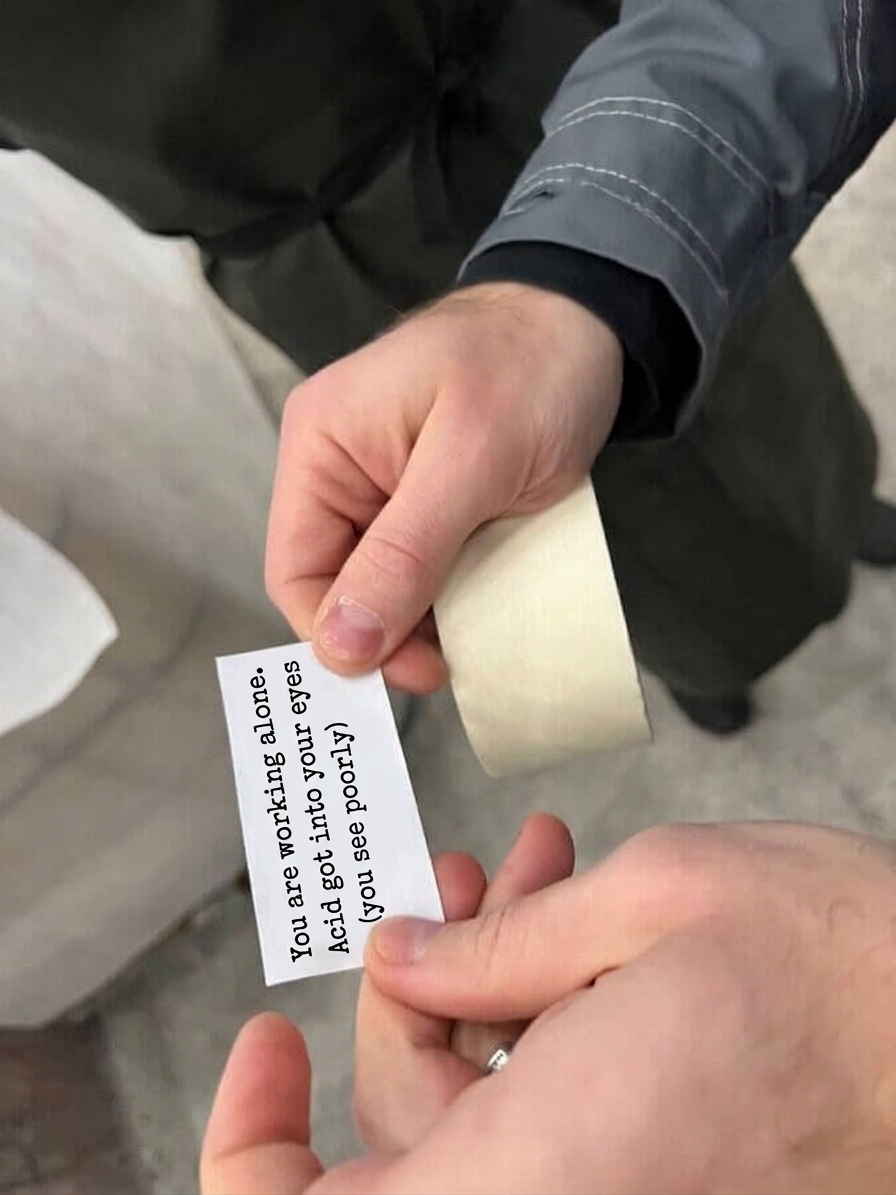
It's cliché, but true — during the DOR Practicum, I received feedback from people who had completed all possible training, including practical exercises in other programs:
-
"I always thought I was ready — in reality, it turns out to be harder. I need to train more."
-
"Only now did I realize that there isn't as much time as it seemed before."
-
"Rookie mistakes. I realized that this could cost a life."
Expected effect
According to the data already received, the DOR Practicum uncovers on-site problems that are not identified during staged training. For example:
-
The fire extinguisher was loose — so the shift worker decided to tie it down with wire.
-
The first aid kit had to be opened while holding it. At the same time, there is no clean surface, we are looking for a tourniquet, and losing precious minutes.
-
And what is the chin strap for? I lean over to the victim — and my hard hat falls off.
We might think that we have conducted training, all possible briefings, a semi-annual drill of the emergency response and mitigation plan, sent employees to PPE training — and everyone is ready.
But the process reveals a different side when you come to the workplace of a person who is performing their daily, routine work.
The most important effect of the DOR Practicum is an honest and open dialogue. Preparing the person, not the document!