#Incident investigation
Comprehensive incident management and accident investigation at industrial enterprises. Moving from mere blame-seeking to deep root-cause analysis (5W principle) and building a proactive culture. Transforming routines for 'Target Zero'.

AI as the Investigation Committee’s Assistant: From a Cloud Agent to Offline Incident Investigation
How we moved from our first cloud experiments to an operational “masking tool → AI agent → unmasking” workflow, then built a test offline investigation system, and are now preparing for the next step: Fire, a secure corporate AI environment.
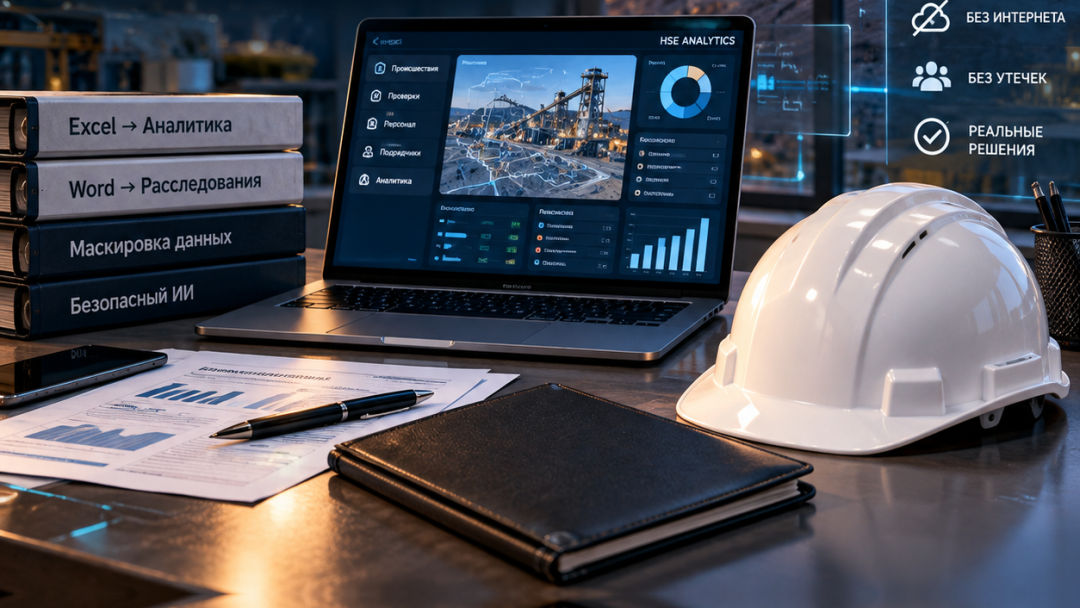
From Excel to an HSE dashboard and incident analysis without handing over personal data. Stage 1: the offline masker
You cannot simply upload a working spreadsheet or an explanatory note to a cloud AI: they hold full names, personnel numbers, contractors, phone numbers. The HSE director of SSGPO shows the first stage of his scheme — a local masker in a single HTML file: only an anonymized copy leaves the company, while the recovery key and the password stay inside. With ready-made prompts for building the tool.

AI Agents in Health and Safety
A chatbot carries out one instruction and stops; an AI agent drives the task through to the result. We compare the two on a real end-to-end fatal accident investigation — and explain why managing agents is becoming a skill everyone needs.
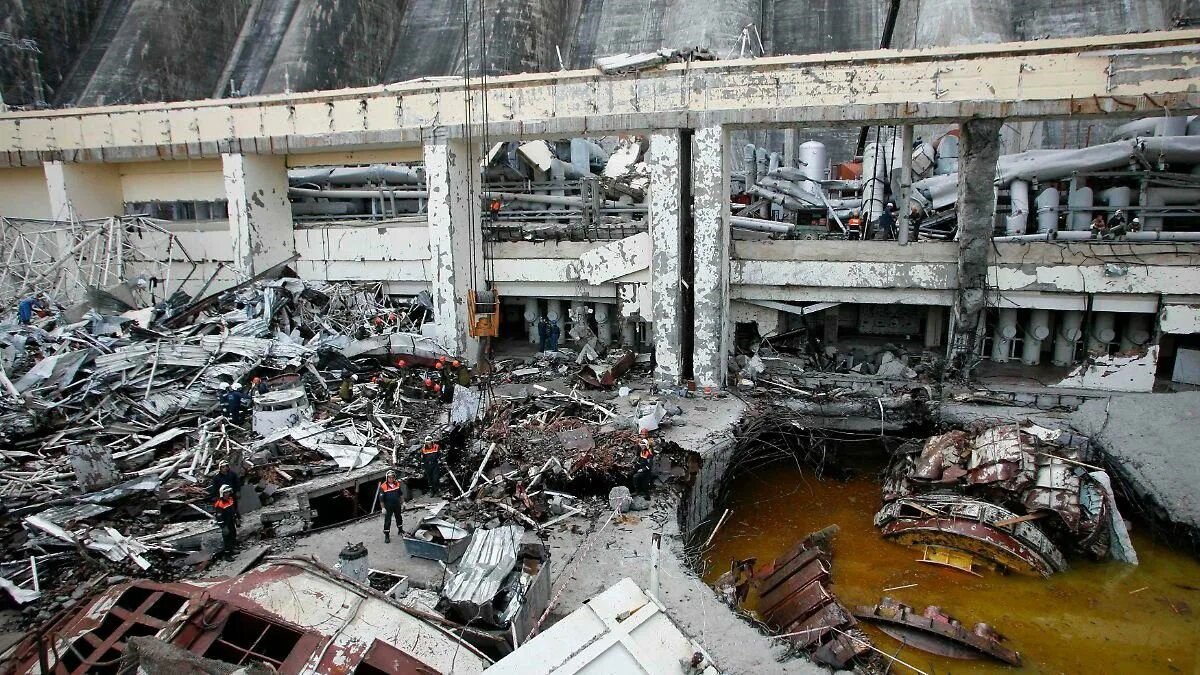
🛡️ Safety: The Sayano-Shushenskaya Dam Disaster Through the Lens of Process Safety
On 17 August 2009, 75 people died at the Sayano-Shushenskaya hydropower plant. We break the accident down element by element against Process Safety Management — and show why the disaster was predictable.

How to Establish a Technical Training Center: Lessons Learned
Creation of corporate technical training centers with a focus on practical training and the rejection of the academic approach. Educational programs are formed based on incident investigation reports, and active production staff are involved as instructors. The effectiveness of the system is measured by the trend of reducing production incidents after at least 60% of the target audience has completed the training.
AI + Automation in HSE
Implementing artificial intelligence tools to automate routine HSE processes. Practices include using AI bots to collect Near Miss data, hybrid search systems (RAG) for regulatory databases, software robots (RPA) for reporting, and generating engaging content for briefings.

Destructive Thinking Patterns: Who Hides the Truth During Investigations
A methodology for internal incident investigations that eliminates experts' cognitive biases. The approach is based on perceiving a person as an adapter of an imperfect system, rather than a mechanism, and avoiding evaluative words when formulating root causes.

Cardinal Safety Rules: Placebo or Effective Medicine
Implementation and optimization of Cardinal Safety Rules (CSR) in a large industrial company. Reducing the list to six key rules, strict enforcement (up to dismissal), and analyzing the impact on fatal injury statistics.

Prevention of Cardiovascular Diseases
A workplace cardiovascular disease prevention system including occupational risk stratification, a five-level investigation of sudden deaths, and control of medical check-ups via a corporate network linked to VHI. Workers with critical illnesses are moved to light duty with a chance to return after successful treatment.

The Swiss Cheese Model in Occupational Safety
The "Swiss cheese" concept, proposed by psychologist James Reason, explains how the overlap of vulnerabilities in different protection systems leads to industrial accidents. The article analyzes the functioning of the main levels of industrial safety — from design solutions to personal protective equipment — and the potential weaknesses of each of them. From the material, you will learn which practical methods, including barrier audits, redundancy of measures, and digitalization, help build a re...

A Modern Approach to Safety: Prompt Emergency Reporting
The article describes the implementation of an automated emergency notification system based on 1C, replacing verbal notification schemes. Depending on the severity of the incident, the system automatically sends mailings via corporate email or SMS messages to managers. Such a solution eliminates the human factor, reduces response time, and improves the quality of decision-making at critical moments.
Why Eliminating Minor Non-Conformities Matters, or the "Broken Windows Theory"
The article explains the application of the "broken windows theory" in the field of occupational health and safety, according to which even minor deviations from safety rules lower the bar of what is acceptable and can trigger serious workplace injuries. The material examines how zero tolerance for minor violations, regular monitoring, and the personal example of managers help form a safety culture and prevent major accidents. The author also shows the need for a balance between strict control a...