#Industrial safety
Industrial safety and accident risk management at hazardous production facilities. Practical solutions for the operation of technological equipment, pipelines, and lifting structures. Focuses on interacting with supervisory authorities, digitalizing safety control, and extending equipment lifespan.
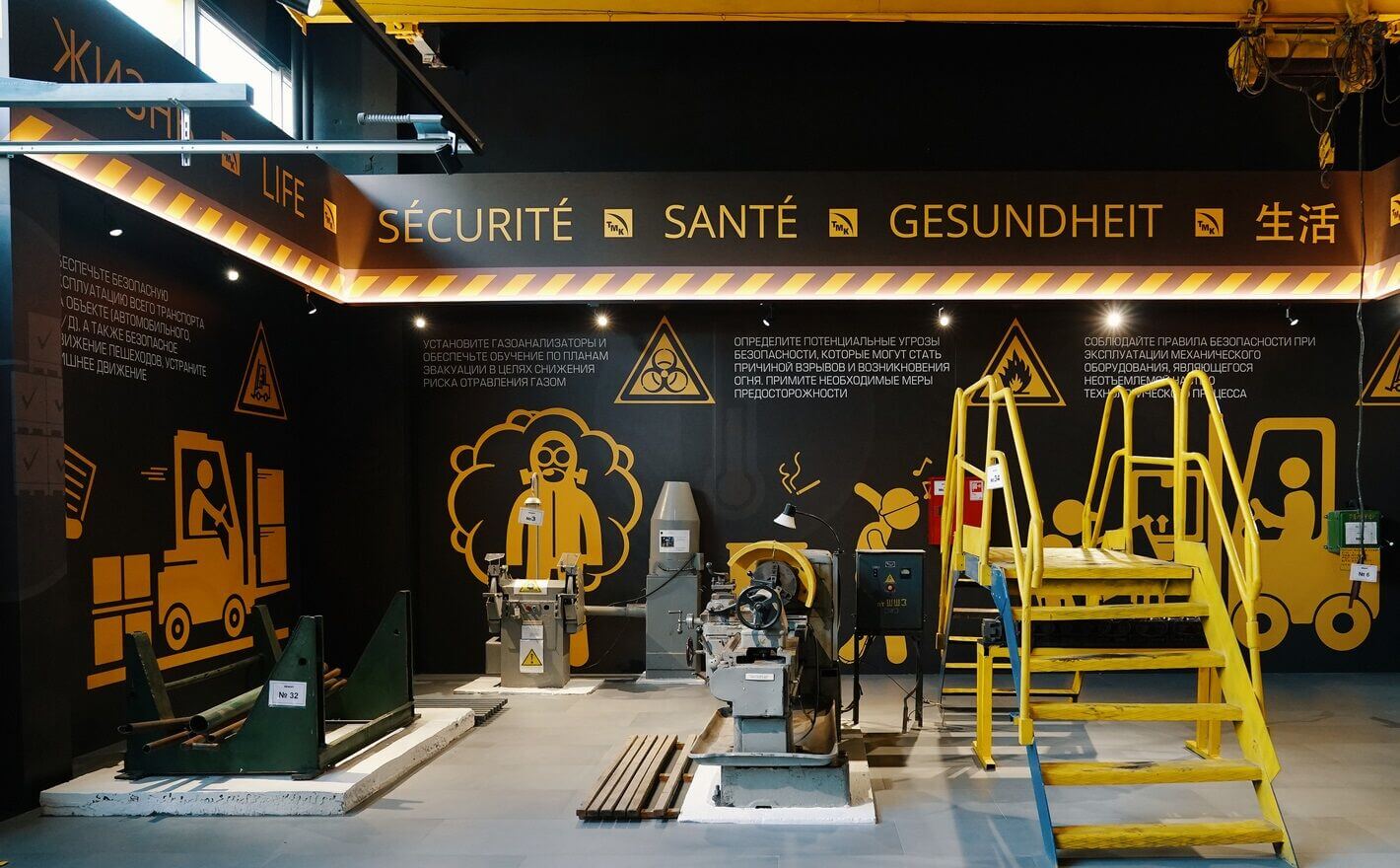
"Quest Room" for Practical Occupational Safety Skill Assessment
The quest room is a special platform for the practical testing of skills of line managers and middle managers in the field of occupational health and safety, industrial and fire safety. Examinees act as persons checking compliance with regulatory requirements at facilities with artificially created violations of equipment, tools, and documentation. Practical verification allows evaluating the ability to apply knowledge in practice and raising the level of personnel competence in the field of ens...

Practice of Implementing the Information System "1C: Industrial Safety. Comprehensive"
Implementation of the "1C: Industrial Safety. Comprehensive" information system to automate production control processes at a large enterprise. The practice includes digitizing the issuance of prescriptions, automatically generating tasks to eliminate violations, and creating a unified electronic database for technical devices and buildings with expertise deadline control.

Reducing Accident Risks in Gas Distribution Networks
A project to reduce accident risks in gas distribution networks by eliminating unused equipment instead of mothballing it. Includes relocating gas control points outside production premises and implementing an automatic gas hazard monitoring system with SMS alerts.

Industrial Safety Certification: Understanding the Subject or Test-Solving Skills?
The article is dedicated to Krastsvetmet's experience in changing the approach to preparing employees for industrial safety certification. The author tells how the development of video lectures explaining the essence of Federal Law No. 116, instead of simple test cramming, helped make training simple and clear, as well as increased the first-try exam pass rate from 60% to 80–90%.

Digitalization and its Development in Industrial Safety at Kolmar Management Company LLC
Comprehensive digitalization of industrial safety processes at a coal mining enterprise. Implementation of a unified safety ecosystem, including an electronic work order book, automated mine access, a unified dispatch center, and transport and equipment monitoring systems.

From "Russian Roulette" to Modern Safety Systems
The article is dedicated to the Lockout/Tagout (LOTO) protective lockout system used to prevent the uncontrolled release of hazardous energy and the unexpected startup of equipment during maintenance or repair. The material examines the causes of occupational injuries, key steps for isolating energy sources, and principles of hazardous energy control. The author explains how to properly implement clear LOTO procedures and train personnel to ensure the safety of employees at the enterprise.

Mobile Inspector: A Mobile Solution for Real-Time Equipment Monitoring
Implementation of the "Mobile Inspector" system based on explosion-proof smartphones and NFC tags to automate equipment condition monitoring. The solution allows planning routes, recording defects with photo/video, transferring data to the M&R system, and analyzing inspection results via BI dashboards.

Implementation of a remote supervision system at facilities
Implementation of an industrial safety remote control system on an ice-resistant stationary offshore platform. The practice includes automated collection of telemetry data, video streams, and electronic document flow with Rostechnadzor for continuous monitoring of technological processes and risk assessment.

Implementation of a Critical Risk Management Project at the International Mine of ALROSA PJSC
Implementation of a critical risk management system in an underground mine using barrier thinking. The practice includes developing paper checklists for workers and electronic checklists in a mobile app for mining foremen to monitor barrier operability before starting a shift.
HSE Training: How to Move Away from Formalism, Incompetence, and Influence Awareness?
Transformation of the corporate HSE and industrial safety training system, shifting from a formal approach to a "flipped classroom" format. Implementation of short video lectures for independent theory study and the use of face-to-face or online trainings for practical skills, including virtual risk assessment using 360-degree video. Application of emotional context and analysis of real incidents to build a conscious attitude towards safety.

Experience in Implementing the LOTO Standard
Implementation of the Lockout/Tagout (LOTO) system across the entire production volume, including equipment audit, LOTO card development, training for personnel and contractors, and visualization of isolation points. System development includes integrating LOTO into electronic work orders, in-house 3D printing of non-standard lockouts, and creating a training ground.

Experience in Implementing the LOTO Standard
In-house implementation of the LOTO (Lockout/Tagout) hazardous energy control system after an unsuccessful experience with a contractor. The practice includes developing internal standards, integrating roles into the existing staff, multi-level training, technical modernization of equipment, and changing the safety culture through motivation and cardinal rules.