Preserving Endemics and Protecting Red Data Book Species
According to the Environmental Doctrine of the Russian Federation, the preservation and restoration of natural systems is one of the priority areas of state activity.
During construction on a site inhabited by Red Data Book species, the requirements of Article 60 of the Federal Law "On Environmental Protection" prohibit activities leading to their death or the degradation of their habitat.
Our company implements projects for field development, gas pipeline laying, and the construction of gas processing facilities in more than 40 regions of the country. Naturally, such unique large-scale projects affect the habitats of endemic and Red Data Book species.
Endemics are species, genera, or other taxa of plants and animals that inhabit a limited geographical area and are not found anywhere else in nature.In this blog, I will share practical tips to help minimize risks and comply with the law by following this step-by-step algorithm:
1. Conducting a State Environmental Expertise (SEE). This is a mandatory procedure for many facilities, conducted at the design stage. Its goal is to assess and prevent potential negative environmental impacts. Without a positive SEE conclusion, a project cannot be approved.
2. Development of Environmental Protection Measures (EPM). This is a mandatory document within the project documentation. It includes measures for biodiversity conservation, including Red Data Book species.
3. Conducting an environmental audit/survey. This independent assessment will help obtain objective information about the condition of the territory and populations of plants listed in the regional Red Data Book of the Russian Federation, as well as their transplantation and/or reintroduction to a site located along the construction facilities. The audit will identify all legal risks, assess potential damage, and help develop effective environmental protection measures. During the surveys, scientific experts must not only confirm the presence of a Red Data Book species but also evaluate the landscape structure required to preserve its population. This is key to proving the viability of your compensatory measures.
4. Obtaining a permit for the extraction (removal from nature) of Red Data Book species from the territorial department of Rosprirodnadzor. After developing the project and before starting construction, submit an application to Rosprirodnadzor to obtain a permit for the extraction of flora and fauna objects. The application review procedure takes up to 30 days.
5. Implementing compensatory measures. If removal is unavoidable, the law provides for measures to preserve the genetic pool. This may include:
- transplanting plants to similar habitats;
- reintroduction to an area where they previously lived and grew, but from which they disappeared for some reason, to create a new and stable population;
- translocation (capture and relocation) of animals;
- creation of artificial shelters or nests for animals.
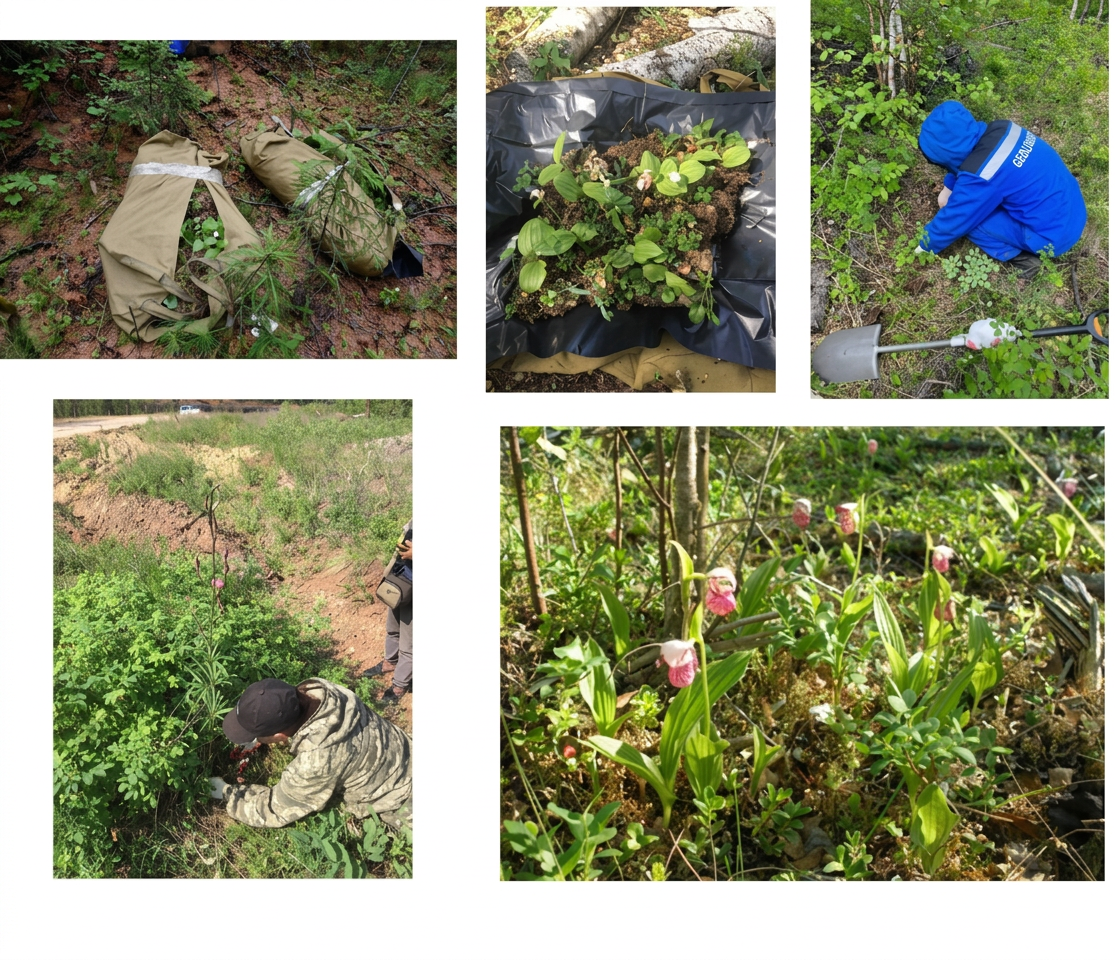
Gazstroyprom transplanted Red Data Book plants | RBC Companies
6. Conducting monitoring activities. A mandatory final stage of relocating rare and endangered plant species is monitoring their condition. Currently, there are no absolutely reliable transplantation methods, and some plants, represented by isolated, suppressed specimens with low viability, may die. Monitoring activities include a general assessment of the condition of transplanted plants, morphometric indicators, the presence of flowering, the degree of population expansion vegetatively (by rhizome), and the examination of specimens for potential diseases, pests, or signs of suppression. Based on the survey results, conclusions can be drawn about the ability of transplanted plants to self-sustain in new conditions, ensuring full survival as the primary form of compensatory measures. Insufficient attention to monitoring issues can lead to the disappearance of endemics and the depletion of overall biodiversity, including in regions where the oil and gas industry operates, which is a subject of environmental audits.
7. Protection and prevention. For effective protection during work periods, it is necessary to inform, draw attention to, and warn all workers at facilities in the regions of presence. To achieve this, the company developed mock-ups featuring Red Data Book plants and animals of the regions, placed banners at construction sites, and conducted briefings.
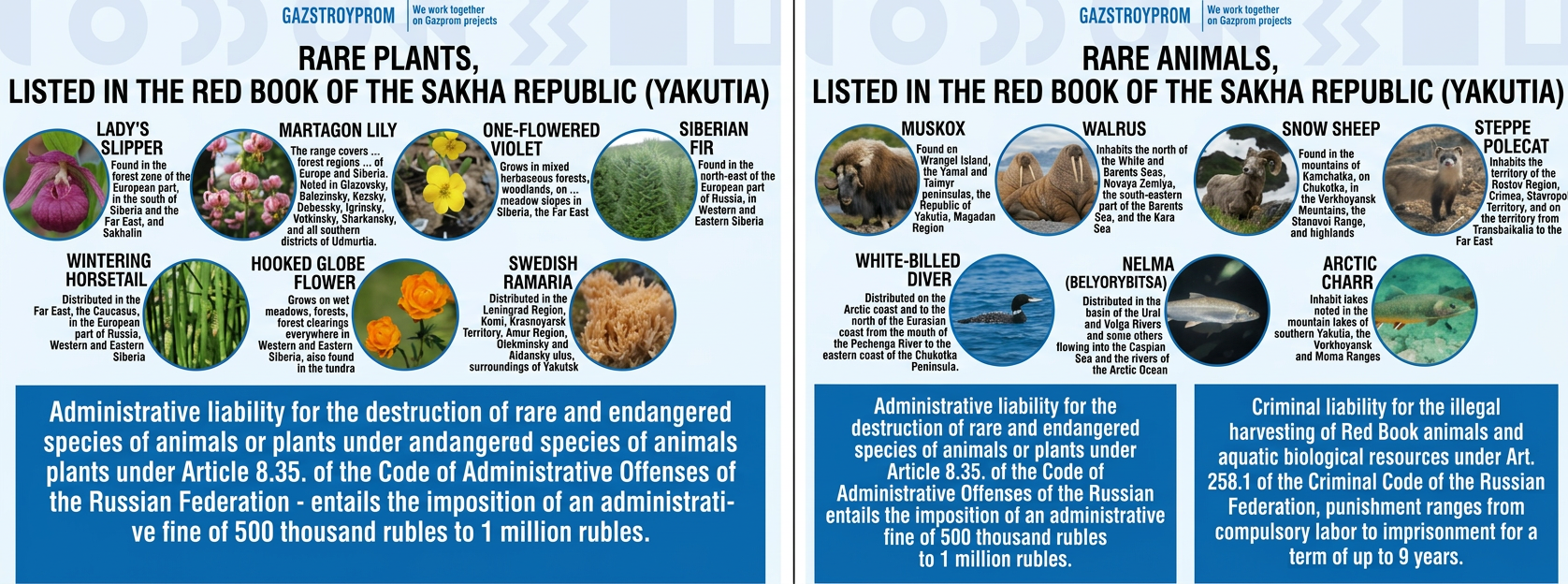
Carrying out works to protect rare, unique, and vulnerable species of native flora during the preparatory period, the construction phase, and the subsequent operation of facilities will help to maximally prevent and minimize the negative impact on the plant communities of the developed territory and preserve the natural landscapes adjacent to the facility as much as possible.