Safety Starts at Home: How We Turned Employees' Kids into HSE Ambassadors
The safety briefing is over, the log is signed, and the employee gets to work. From a formal process standpoint, everything has been done by the book. But how do you turn an HSE requirement into a personal value — one that people don't leave at the site gate along with their badge?
One effective approach here is to involve the family. When a child draws their parent in a hard hat, asks questions about their job, or completes a family quest with them, safety becomes a topic of conversation at home. As a result, it takes on a new, much more personal meaning.
My colleagues and I developed this approach through children's drawing contests, kids' quests, and online challenges for employees' families. Activities like these are often viewed as part of corporate culture or the HR agenda, when in fact they can also support the HSE system — provided they are designed not as one-off events, but as thoughtful communication with families.
Why a Family Format Strengthens Safety Culture
At a production site, employees most often hear about safety in the context of obligations: follow requirements, wear PPE, complete training, and report unsafe conditions. All of this is essential, but external motivation has its limits. A rule only sticks when a person understands why it exists.
Family helps build this internal understanding of the "why."
- First, an abstract rule turns into a personal story. Suddenly, safety is no longer just a line in a manual — it means peace of mind for loved ones, returning home safe and healthy, and caring for the people waiting for you.
- Second, knowledge is revisited in a new setting. To explain to a child why a hard hat is necessary or why you must never ignore a warning sign, an adult rearticulates the purpose of the rule for themselves. It doesn't replace professional training, but it helps reinforce it.
- Third, it opens up a dialogue without the usual hierarchy. A child's question — "Why do you do it like that?" — can sometimes make you think harder than yet another safety checklist. It doesn't sound like an accusation and allows for a calm conversation about habits and risks.
Finally, family projects create a positive emotional context. HSE stops being associated solely with inspections, corrective notices, and violation reviews. It takes on a different meaning — looking out for one another, shared responsibility, and treating every employee as a human being rather than a "unit of labor."
A Child as an HSE Ambassador? YES!
Because a child can talk about the value of safe behavior, ask questions, invent family rules, and serve as a reminder of simple truths: staying alert, not rushing, and never hiding a hazardous situation are things an employee does not so much for the employer, but for themselves and their family.
How Different Family Formats Work: What We Tested Firsthand at GEROPHARM
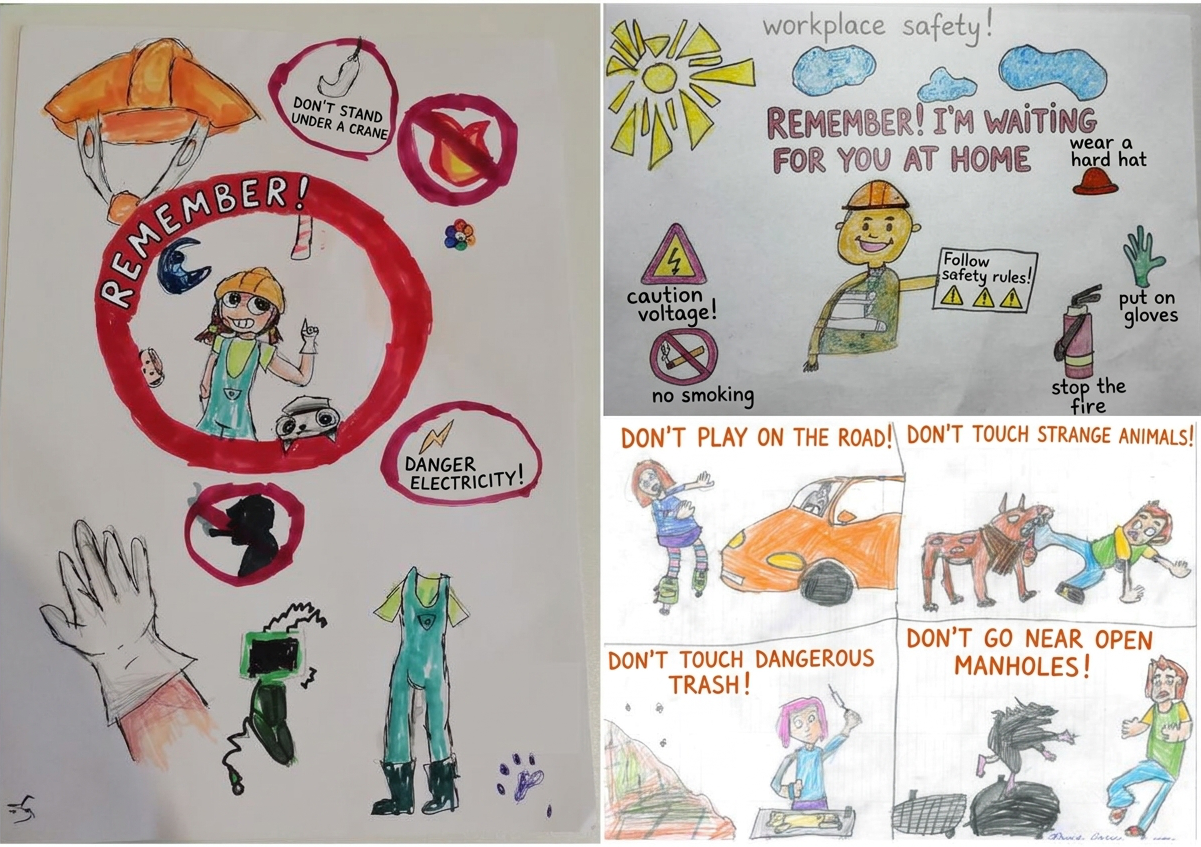
Children's Drawing Contest
This format helps you see safety through a child's eyes. It's important not to judge solely on artistic skill — otherwise the contest turns into a competition among parents who happen to be great at drawing (or gluing, sculpting, sewing, and so on). We all remember those times when parents bring masterpieces to preschool that no three-year-old could possibly make. Instead, you can recognize original ideas, expressions of care, or an unusual perspective on safety. Age categories also make participation fairer.
Family Quest
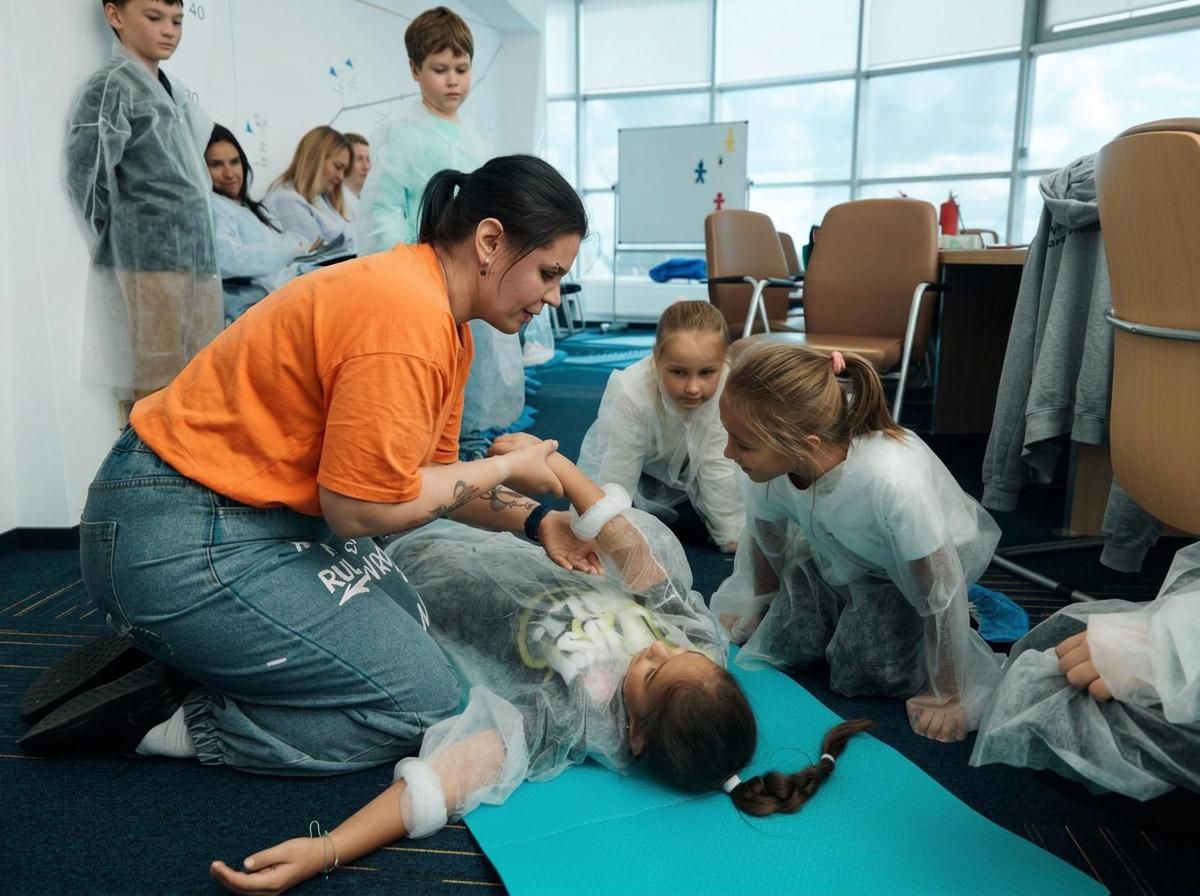
This turns knowledge into shared action. It can combine everyday household situations with simple workplace safety concepts adapted for kids — for example, what to do if you spot a hazard, who to tell, why you must never remove a warning sign, and how to tell a safe decision from a risky one. Children don't need to act out distressing scenarios or be exposed to industrial equipment unnecessarily.
A simple universal sequence is enough:
stop → step back → call an adult → explain what happened.
For example, the kids' quest at GEROPHARM is organized jointly with other company departments as a station-based game where children work together, with their parents present, to complete a chain of tasks leading to a final goal. HSE topics are featured at the largest station of the quest. There, we show the kids how we keep their parents (or grandparents, aunts, or uncles — whichever applies) safe at work, explain why safety matters, and teach them practical essentials they may encounter in real life: basic first aid skills, fire safety rules, and evacuation procedures.
Online Challenge
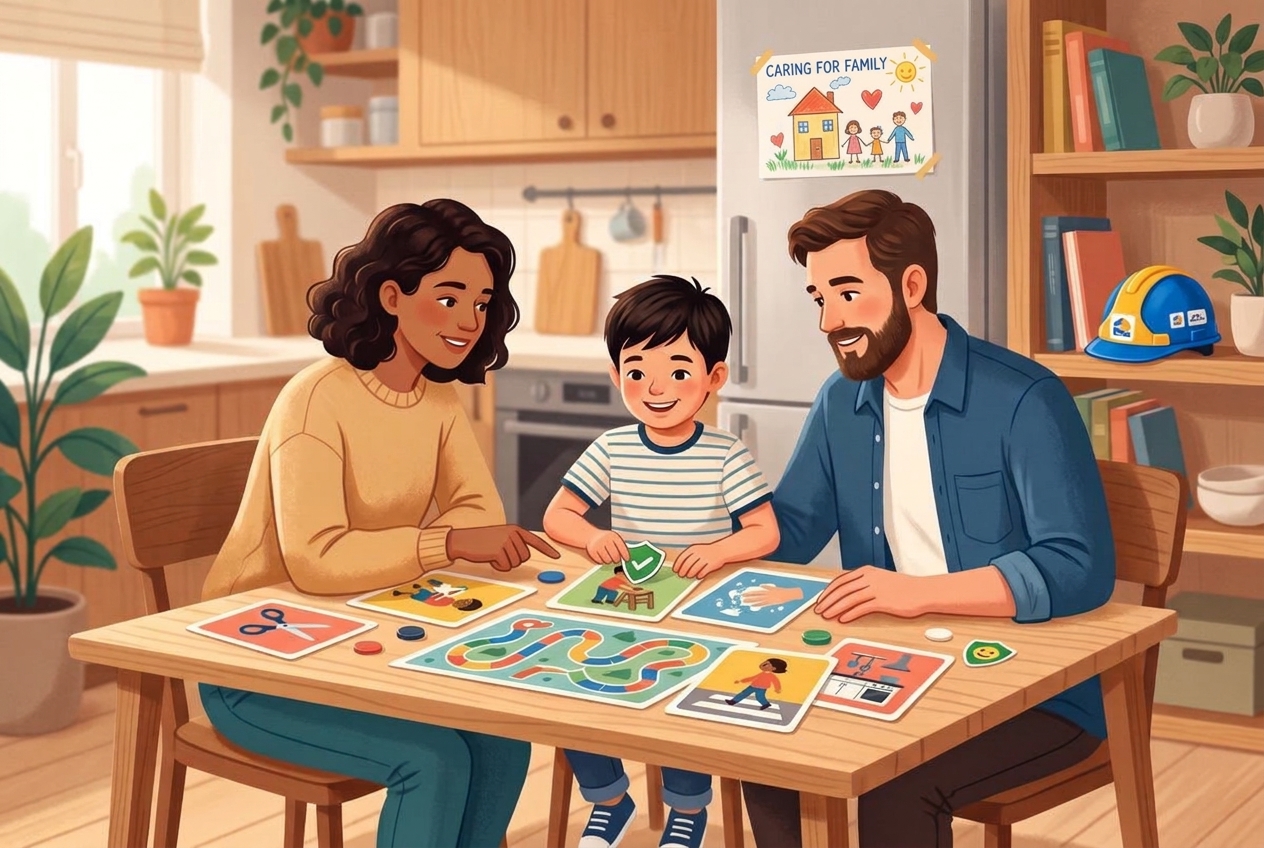
This format helps create a steady rhythm. Several short, hands-on tasks lasting 10–15 minutes — such as analyzing images or real-life scenarios — usually work better than one long livestreamed video lesson. Families can discuss a situation, make a drawing, run a mini safety audit at home and record it on video, or invent their own safety rule.
In an online challenge, the child isn't policing the adult — together, they learn to spot risks, talk them through, and choose a safe solution. You can watch an example of a video filmed for the challenge by one of our employees and her daughter at the end of this article.
Warm smiles and inspiration are mandatory!
How to Turn Individual Activities into a Cohesive Program
For family projects to deliver lasting impact, we recommend building your program around the following principles:
Start with a Clear Goal
Simply wanting to engage employees' families isn't enough. Define which aspect of safety culture the project supports: willingness to speak up about risks, understanding the importance of PPE, attentiveness to hazardous situations, or building the habit of stopping unsafe work.
Combine the Expertise of Different Teams
The HSE specialist ensures the accuracy of the program's content, HR and internal communications own the format and engagement, and parents provide personal support to their child. When working with younger age groups, it helps to involve an educator or child psychologist (or at least an employee with experience working with kids).
Account for Different Ages and Family Circumstances
Preschoolers, younger school-age children, and teenagers need different types of tasks. Participation must be voluntary, as employees may have very different family circumstances. It is also essential to announce the opportunity to participate well in advance — no one should feel left out of company life.
Provide Feedback
Children's questions can — and should — be collected and reviewed with the HSE team. That is the only way parents will see that their family's contribution didn't go unnoticed, and children will understand that their voice truly matters.
Follow Ethical Guidelines
Consent to participate and consent to publish photos, drawings, or a child's name are two different things. Publicity should never be a condition for winning a prize. It is best to plan ahead for an option to take part without sharing images or personal data.
P.S. All children's artwork published in this article is shared here with their parents' permission.
How This Impacts Loyalty and Your Employer Brand
Loyalty here doesn't come from gifts or certificates, but from experiencing genuine respect. An employee sees that the company views them not merely as someone fulfilling a role, but as a person with a family, loved ones, and a life outside work.
Family activities also build new cross-departmental connections. Children of employees from different departments take part in a shared project, while parents get to know each other, exchange experiences, and see one another beyond their job roles. This can strengthen trust and a sense of belonging to the company.
For your external employer brand, stories like these serve as proof of genuine care — but only if they are backed by real working conditions. That is why family outreach must be an extension of an actual safety system, not just window dressing.
What to Measure Beyond Participant Numbers
Reach is only the first level of measurement. It helps to track repeat participation rates, representation across departments, and the quality of feedback. After a contest, quest, or challenge, you can ask kids and parents which rules they remembered and which family habits they decided to change.
To evaluate the impact on safety culture, qualitative signals matter most: are employees talking about safety with colleagues more often, are new suggestions coming in, and do they feel comfortable asking questions and reporting risks?
The Key Is Not to Stop at a Single Event
A one-off contest can spark positive emotions, but culture changes through repetition and consistency. A steady cadence works much better: a family challenge, then a drawing contest, and later a quest — or in a different order. Each format builds on the previous one and brings participants back to the same core idea.
Safety begins with the employer's responsibility. And home is where it becomes a personal value. Children don't help us police one another better — they help us see what matters most: every HSE rule ultimately exists for the life, health, and peace of mind of a real family.