Sustainable Urban Construction
Authors:
Vladislav Shustov, SUE Mosgortrans
Daria Kitaeva, SUE Mosgortrans
Urbanization is advancing at a rapid pace today. The share of the urban population at the beginning of the 20th century was 13%; in 2007, it grew to 50%, and by 2020, it reached 56.2%. The population continues to grow. On November 15, 2022, the world's population exceeded 8 billion people.
Construction is currently experiencing a boom. Modern urban planning technologies allow for the erection of high-rise buildings in the shortest possible time. However, the creation of new spaces often causes damage to the environment.
Currently, it is necessary to approach the urbanization process more rationally, not only by borrowing its elements from nature but also by being able to reconstruct existing spaces and restore natural components.
Ecological design is an approach to urban planning that takes environmental aspects into account. It is designed to meet the needs of residents while considering ecological requirements. It aims to bring people closer to nature while preserving the integrity of the environment. Ecological design includes ecological architecture, infrastructure, and recreational areas.
Ecological architecture should harmonize with nature and humans, be stylistically diverse, and create conditions for the rational use of resources, among other things.
The construction of eco-cities begins, first and foremost, with high-quality construction. There are green building standards such as the British BREEAM, the American LEED, and the German DGNB. Each rating system takes into account the construction site, the materials used, the method of their disposal, resource efficiency, safety and comfort inside the building, as well as ease of operation.
The presence of green building certificates has a positive impact on the economy and scientific developments, raises people's living standards, and positively affects the quality of the environment.
Ecological infrastructure is an integral part of ecological urban design. Half of an eco-city should be reserved for natural areas and infrastructure facilities that harmoniously blend with each other. Ecological infrastructure implies the presence of public amenities such as schools, hospitals, shops, and other institutions. All of them must be accessible via public transport, alternative modes of transport (e.g., scooters, bicycles, etc.), or within walking distance. It is also necessary to maintain the condition of human proximity to natural areas. Creating a convenient household waste disposal system is equally important. Furthermore, it is crucial to eliminate factors that affect human health, such as air pollution, which negatively impacts the respiratory tract; light pollution, which disrupts biological rhythms; and noise pollution, which has a significant impact on the human psyche.
Recreational areas in cities are no less important than the previous aspects. These can be landscaped parks, forests, and coastal zones. Life in an urbanized modern city is certainly convenient, but for many millions of years, humans evolved in a natural habitat. People need a break from the hustle and bustle of the city, but there is not always the time or opportunity to travel far out of town or abroad to escape the urban noise. Therefore, it is necessary to create recreational areas within the city, providing conditions that allow people to relax and take a break from the eternal race against time.
Examples of ecological design in cities.
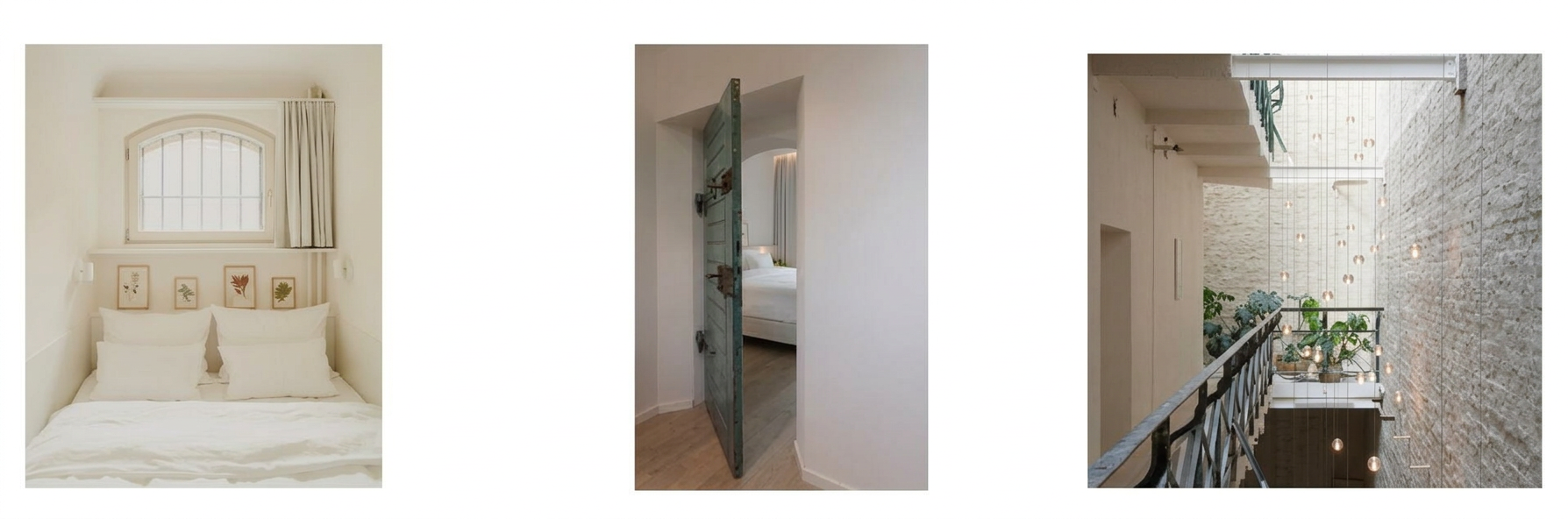
A women's prison in Berlin turned into a hotel.
In Berlin, there was an abandoned building that had been used for various purposes over several centuries, but in its final years, it served simply as a women's prison. It was heavily damaged during World War II, but it has now been restored and transformed into a family hotel.
The new building features a restaurant, a gallery, a fireplace room, a bar, a library, a spa center, and a gym. There are many plants inside the hotel. The roof has a terrace. The windows in the rooms were extended downwards, but the bars on the windows were preserved.
The conversion of a women's prison into a hotel is a prime example of redevelopment. An old, unused building in an upscale neighborhood of Berlin has found a worthy application in the modern world.
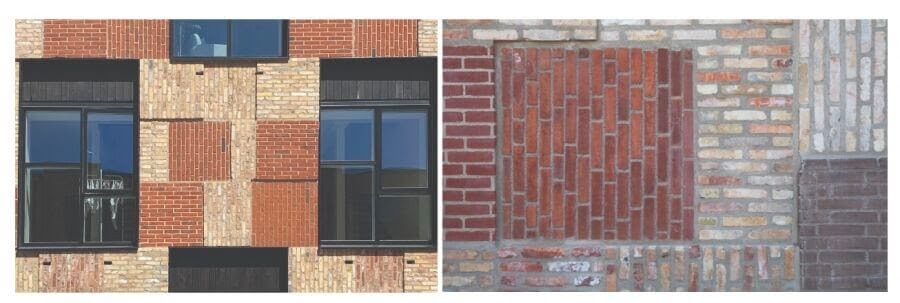
A residential area near Copenhagen built from recycled materials
Ørestad Syd is a new development area in Copenhagen. During the urbanization process, abandoned rural houses are often demolished, leading to the loss of a large amount of materials. The Resource Rows residential complex uses demolition waste during construction, which over 50 years reduces the carbon footprint at the building level by 29% and saves 463 tons of waste, according to a Life Cycle Assessment (LCA).
Recycled materials include facade brick and aluminum, interior flooring, and exterior wood for terraces, decking, and roofs, including windows.
The Future of Eco-Cities
Benefits of Building Green Cities
The design of sustainable cities is currently just gaining momentum. It is important to develop this area to improve the population's standard of living and protect the environment. This will also lead to economic growth in the future.