Optimizing HSE and Industrial Safety Personnel in the New Economic Reality
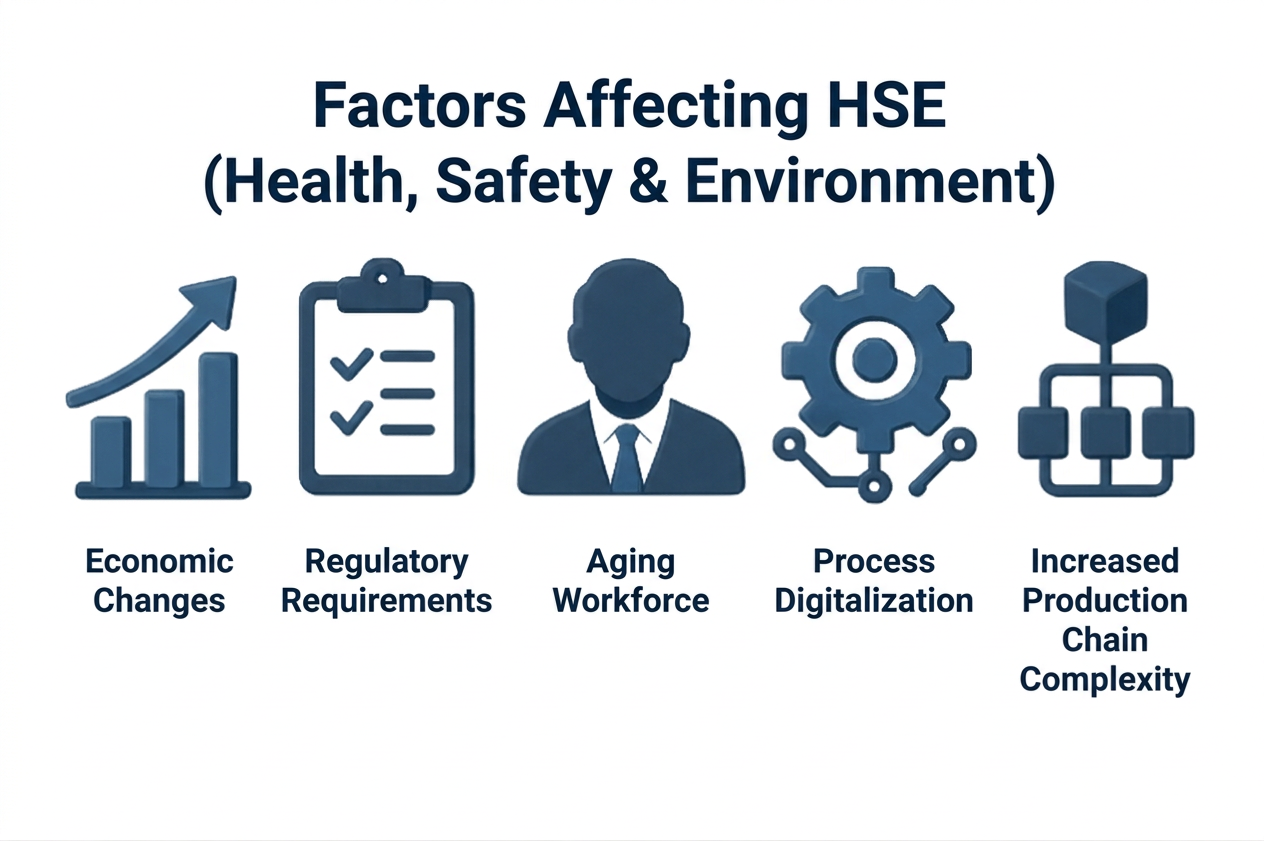
The situation in which industrial enterprises operate today requires a different approach to key management systems. Changes in logistics, inflationary pressure, labor shortages, and increasing demands from the state and international partners all create new challenges. In these conditions, HSE and industrial safety are no longer purely regulatory functions. Today, they are tools for ensuring production stability, business reputation, and, ultimately, business survival.
While HSE and industrial safety could previously be viewed as a "safety net" — for inspections or incidents — they are now a full-fledged management loop that must be embedded into the strategy. The issue of optimizing this area is not just technological or financial. It is a matter of responsibility. And the approach to it must be appropriate.
 Not About Cuts — About Systemic Consistency and Precise Focus
When it comes to personnel optimization, headcount reduction is usually the first thing that comes to mind. This is logical — it's how the cost management approach works. However, in the HSE and industrial safety system, such an approach is often destructive. It works on the "chain link" principle: a weak link is a risk for the entire section. You cannot remove people here without a complete reconfiguration of the process, overlapping functions, retraining, and control validation.
True optimization is a re-evaluation of functions, delimitation of responsibility, and identification of inefficient areas. For example, some organizations reveal excessive paperwork where the same incident is recorded in parallel by three departments, but none of them bears full responsibility for it. Or, conversely, a situation where key zones on the site do not have a designated inspector.
Where a system is built, there is predictability. Where the system is "for show," there is an illusion of safety. Optimization should begin with questions: who is responsible for what and how often? Where is the weak point? Where is the redundancy? Only after this can you proceed to change the headcount or structure.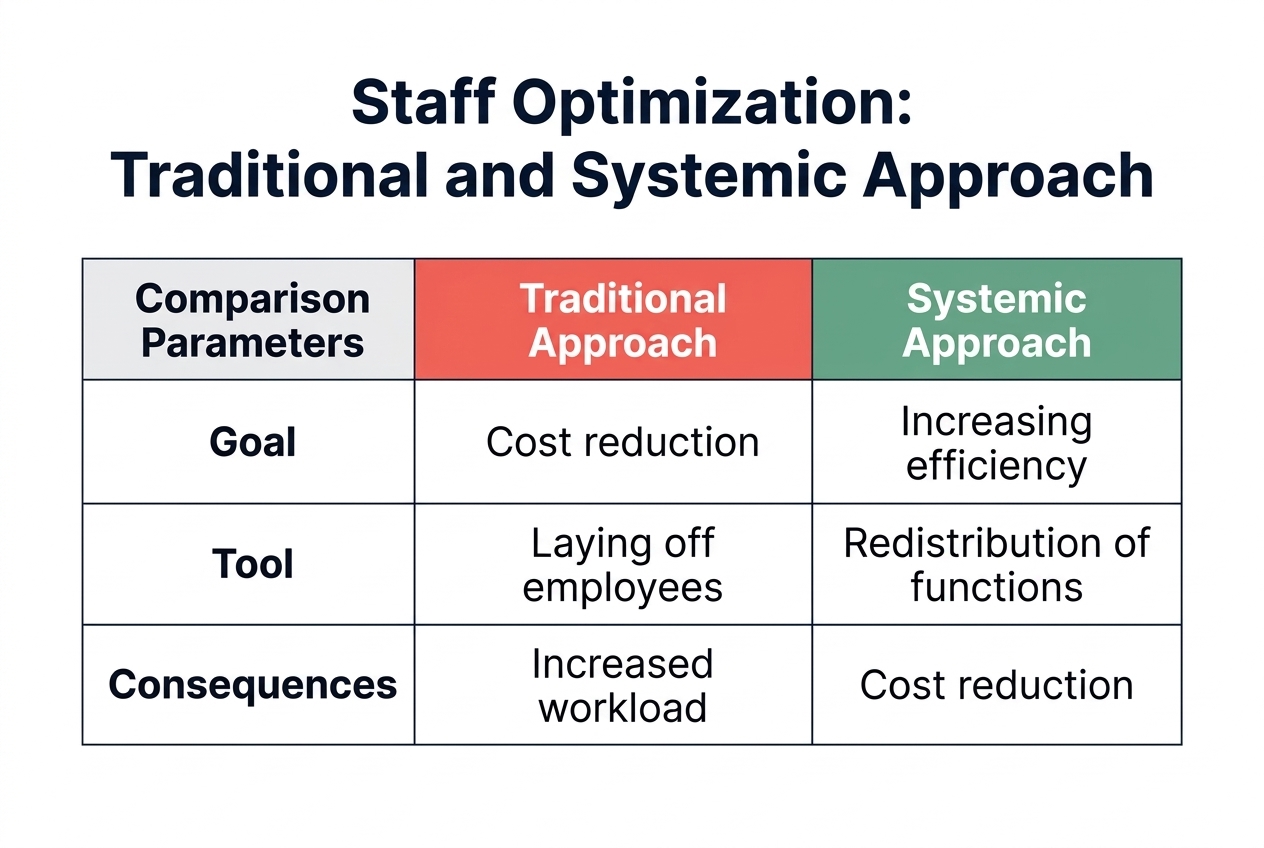
Technology — Not an Alternative, but an Enhancer of Professional Expertise
Digitalizing HSE processes is no longer a trend but a condition for survival in large-scale production and multi-shift workloads. Online monitoring of atmospheric parameters, biometric access, automatic registration of violations, and data-based accident forecasting are all real and technically available.
However, the level of penetration of such solutions in practice remains limited. Even at enterprises with high levels of digitalization, there is often no unified system for end-to-end analysis. Devices exist, and data is recorded — but it is not processed in a single loop. As a result, there is no management effect.
Furthermore, implementing technology without personnel preparation leads to the opposite effect: anxiety, misunderstanding, and local sabotage. We have seen examples where motion sensors were physically disconnected — "so they wouldn't interfere with work." This is a management failure. Therefore, every digital system must be built into a logic that people understand: why, how, with whom, and what it will lead to.
Digital is just a means. Decisions are made by people. And this link must work for the benefit of safety, not create new risks.
Workforce Sustainability: Systemic Shortages and an Aging Core
It is already clear: we are entering a period of shortage of HSE professionals. The average age of specialists is 47. More than a third are of pre-retirement age. Young personnel hardly enter the system. The reasons are obvious: low prestige of the profession, insufficient support, administrative overload, and a formalized career track.
If nothing changes, the personnel gap will become irreversible in 3 – 5 years. Therefore, enterprises need to move toward actively forming an internal reserve. This is not just about training future managers. It is necessary to develop horizontal competencies: experts, mentors, and multi-functional specialists on the ground.
What can work? Internal corporate academies, flexible advanced training programs, dual education with vocational schools and universities, payment for certifications, and mentorship in the workshops. Even simple rotation with accompanying training can have a powerful effect.
Key point: you cannot expect the market to cover personnel needs. In conditions of competition for specialists, you need to form your own teams — purposefully and strategically.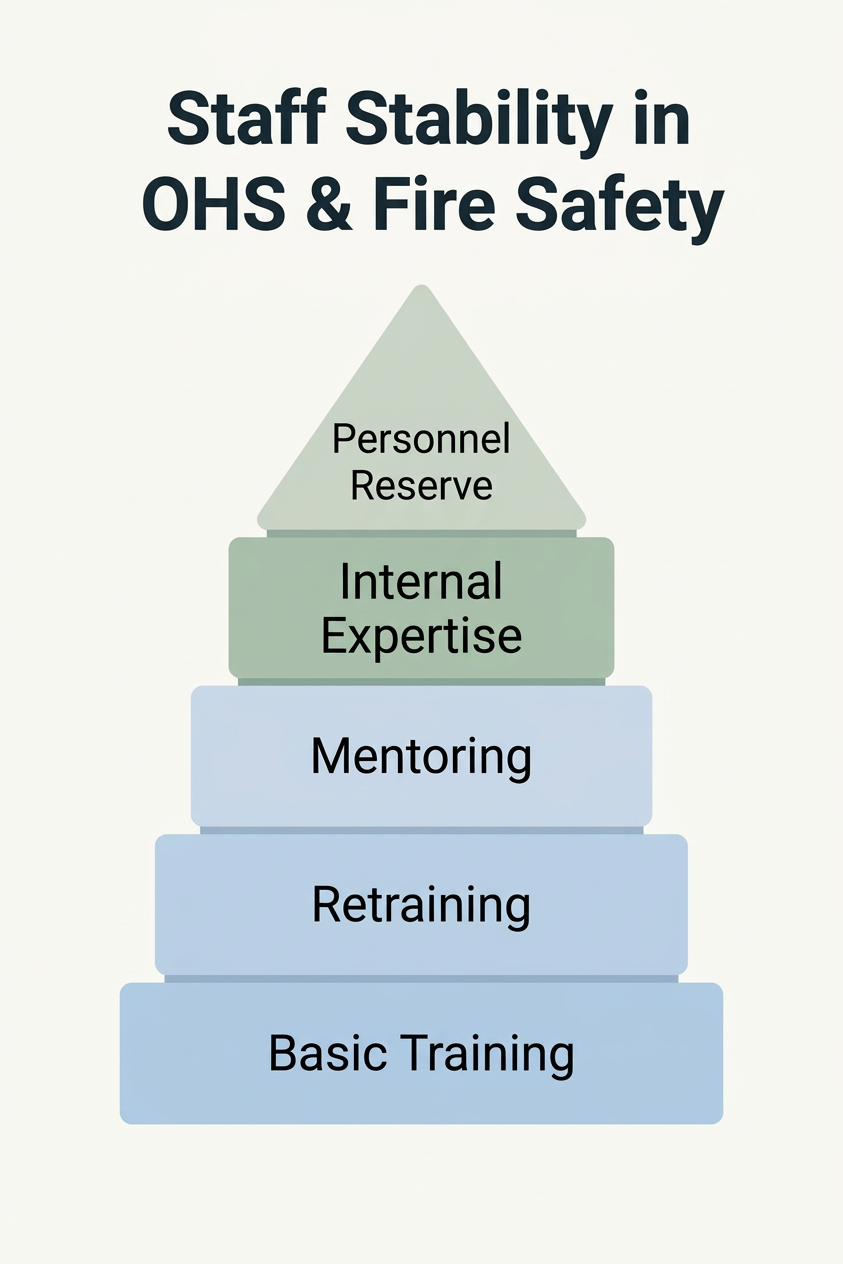 Metrics and Indicators: From Reporting to Management
Until recently, the effectiveness of an HSE specialist was evaluated by the number of briefings conducted and the timely submission of reports. Now, this is not enough. We must move to figures that reflect the real impact on safety. This means measurable risk reduction, compliance with orders, reduction in downtime, and reduction in the severity of incidents.
Clear and transparent KPIs are needed. For example:
- average incident response time;
- safety culture index based on surveys;
- number of identified and eliminated violations per 100 employees;
- index of preventive measures in high-risk zones.
Such metrics provide management with a tool for control, not just background figures. Moreover, they can be used to build a system of motivation and personnel development.
The Human Factor and Fatigue: A New Risk Zone
Safety is not just about technology and standards. It's about people. Their state, level of attention, and motivation. We are already seeing an increase in the number of incidents related to fatigue, burnout, and violations of work and rest schedules.
Increased work intensity, instability, internal conflicts, and personal anxieties — all of this has an impact. And closing one's eyes to this is dangerous. We are not talking about introducing psychologists at every site. But basic measures are needed:
- overtime control;
- limiting consecutive shifts;
- monitoring emotional state;
- creating "feedback without fear" mechanisms.
All of this is already part of the risk management system. If we do not take a person's state into account, we are not managing safety. We are just hoping that everything will turn out fine.
In Conclusion
Optimization in the field of HSE and industrial safety is not a "reduction" project. It is a reboot of the management model, taking new conditions into account. These conditions will not be simple: competition is growing, pressure on margins is increasing, processes are being digitalized, and regulatory requirements are rising. But even in these realities, safety is not something to save on. It is what ensures survival.
Companies that understand this are restructuring their processes systematically: strengthening the core, creating reliable structures, and investing in people and data. They are the ones who will be resilient. The rest will either follow the path of "paper" safety or face the consequences too late.