#Prompting
Prompt-engineering merging AI into HSE bones. Unleashing ChatGPT or Claude against grinding routines. Showcases casting perfect AI spells to spawn immediate safety rule drafts, translate tech-laws, or forge audit checklists.

AI as the Investigation Committee’s Assistant: From a Cloud Agent to Offline Incident Investigation
How we moved from our first cloud experiments to an operational “masking tool → AI agent → unmasking” workflow, then built a test offline investigation system, and are now preparing for the next step: Fire, a secure corporate AI environment.
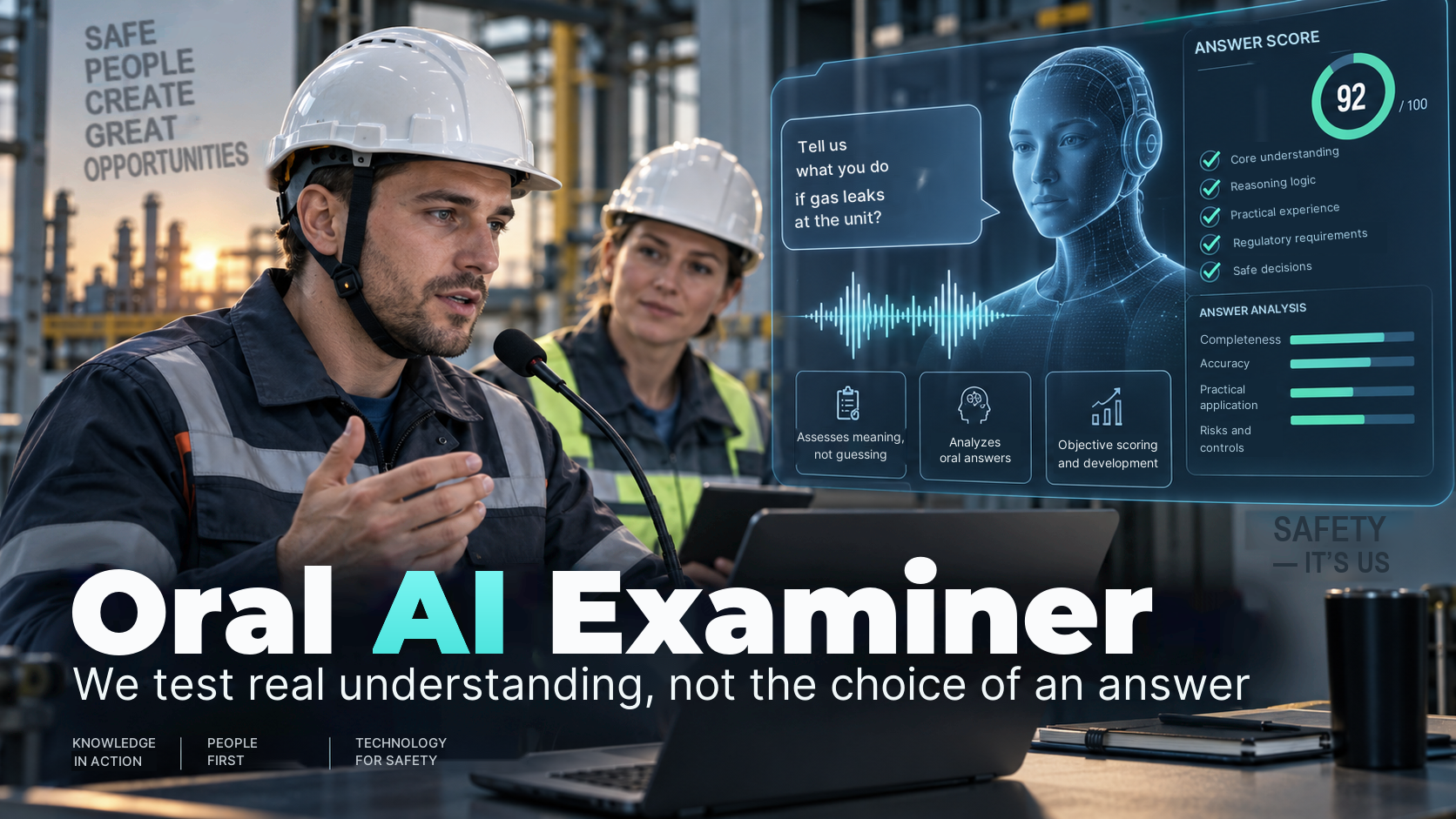
No Options A, B, and C: The Oral AI Examiner
How we went from a NotebookLM and Gemini combo and our own random question generator to a portable browser examiner that listens to the answer and assesses actual understanding. A pilot on 54 employees, an RSS code instead of a full name, and nine ready-made prompts to replicate it yourself.

New Paradigms in Personnel Training for Remote Sites and Fly-in Fly-out Operations
Transformation of the corporate training system for remote and FIFO sites amidst labor shortages and changing demographic profiles. A preboarding process has been implemented, starting remote training before arrival at the site, alongside targeted hybrid educational solutions. For safe skill practice, VR simulators with error analytics are used, while prompt libraries based on artificial intelligence and a 360-degree assessment system are utilized for on-the-job self-study.

AI Prompting: A Fundamental Skill for the HSE Specialist of the Future
Integration of artificial intelligence into the daily tasks of an HSE specialist through mastering prompting skills and using no-code platforms. Practice includes automating routine processes, delegating analytical tasks to AI assistants, and transitioning to the Prompt First paradigm to improve management system efficiency.

The "Digital Oracle" Illusion: Why AI in Safety Remains a Calculator, Not an Expert
The implementation of artificial intelligence in occupational health and safety creates a dangerous illusion of automatic elimination of workplace risks, although technically AI remains a probability calculator that does not understand real context. The author relies on practical experience working with neural networks since 2024 and details the pitfalls of digitalization: from hidden financial costs and "metric blindness" to the risks of algorithmic hallucinations. The material shows why AI sho...

Diving into AI: A Brief Guide for Beginners on Creating a Personal Assistant
The article is a step-by-step guide to mastering general-purpose text AI models to create a personal assistant. The material shows how to progress from initial everyday dialogues to solving professional tasks, particularly in the field of occupational health and safety, and to build a personal library of effective prompts. Gradually increasing the complexity of requests allows adapting AI to one's work processes to systematize information and free up time for risk analysis and working with peopl...

How I Created an AI Assistant for Developing HSE Instructions
The author describes personal experience in creating an AI assistant for the automated development of occupational health and safety instructions. The article examines the testing results of various neural networks, the methodology for dividing instructions into invariant and variable parts, as well as the algorithm for forming a knowledge base and a detailed prompt. The material explains how to set up the model to comply with a business style and the requirements of Order of the Ministry of Lab...

Six Simple Questions That Turn AI from a Dreamer into an Assistant
The article explains how to move from vague AI responses to accurate and predictable results by changing the approach to task formulation. The author shares a six-point checklist that helps to correctly set the goal, role, style, format, constraints, and audience. Using this template allows you to formulate clear instructions for the neural network and get exactly the result that is needed.
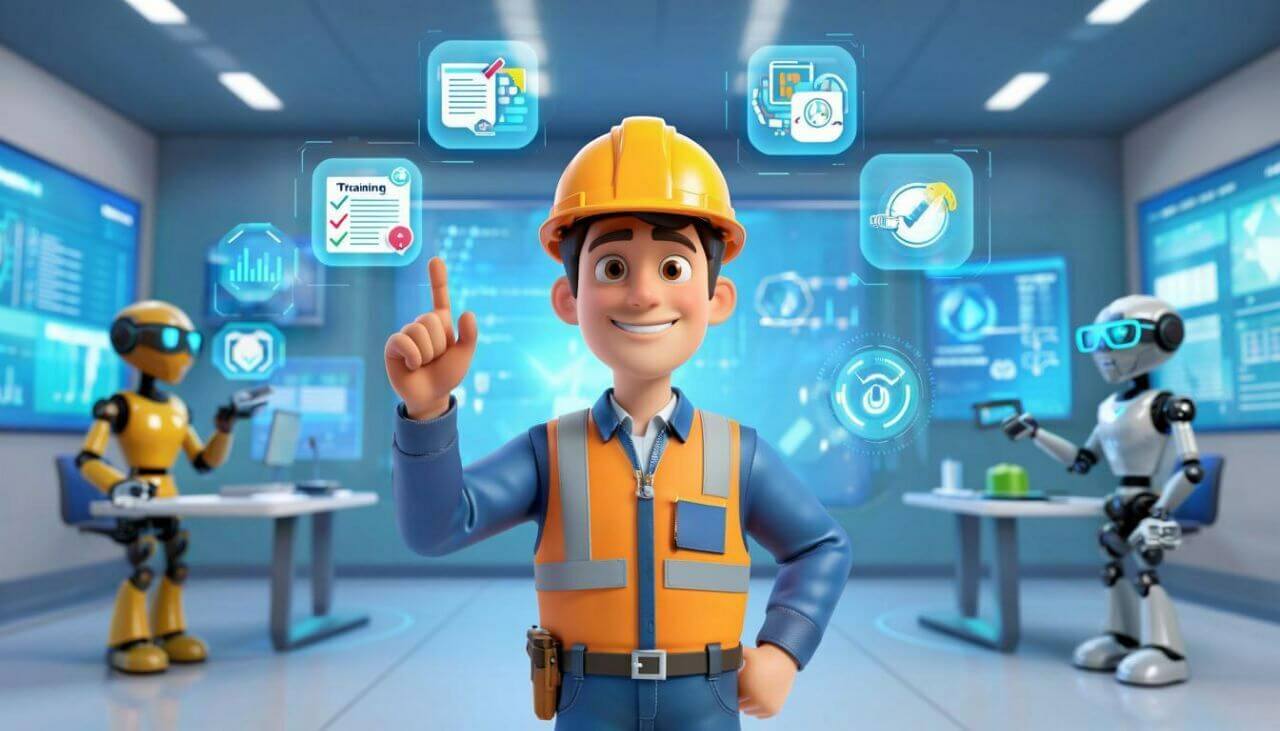
From Digital Literacy to AI Literacy: New Competencies for HSE Professionals
The article discusses the transition from digital literacy to AI literacy in the field of occupational health and safety, transforming the role of the specialist from an operator of ready-made systems into a process architect. By training neural networks to work with documents and designing the logic of their interaction, the specialist frees up time for strategic tasks, deep risk analysis, and working with people. The material reveals how mastery of prompting and domain knowledge allows turning...

Three Myths About Artificial Intelligence
The article examines common myths that become the main obstacle when implementing artificial intelligence into workflows. The author explains that a neural network does not replace a human, but enhances a specialist if tasks are formulated correctly, the tool is customized to one's needs, and one possesses deep professional knowledge. Analyzing these misconceptions helps form realistic expectations of AI and learn to delegate routine tasks to algorithms.