Digitalization and Predictive Analytics in Contractor Safety Management
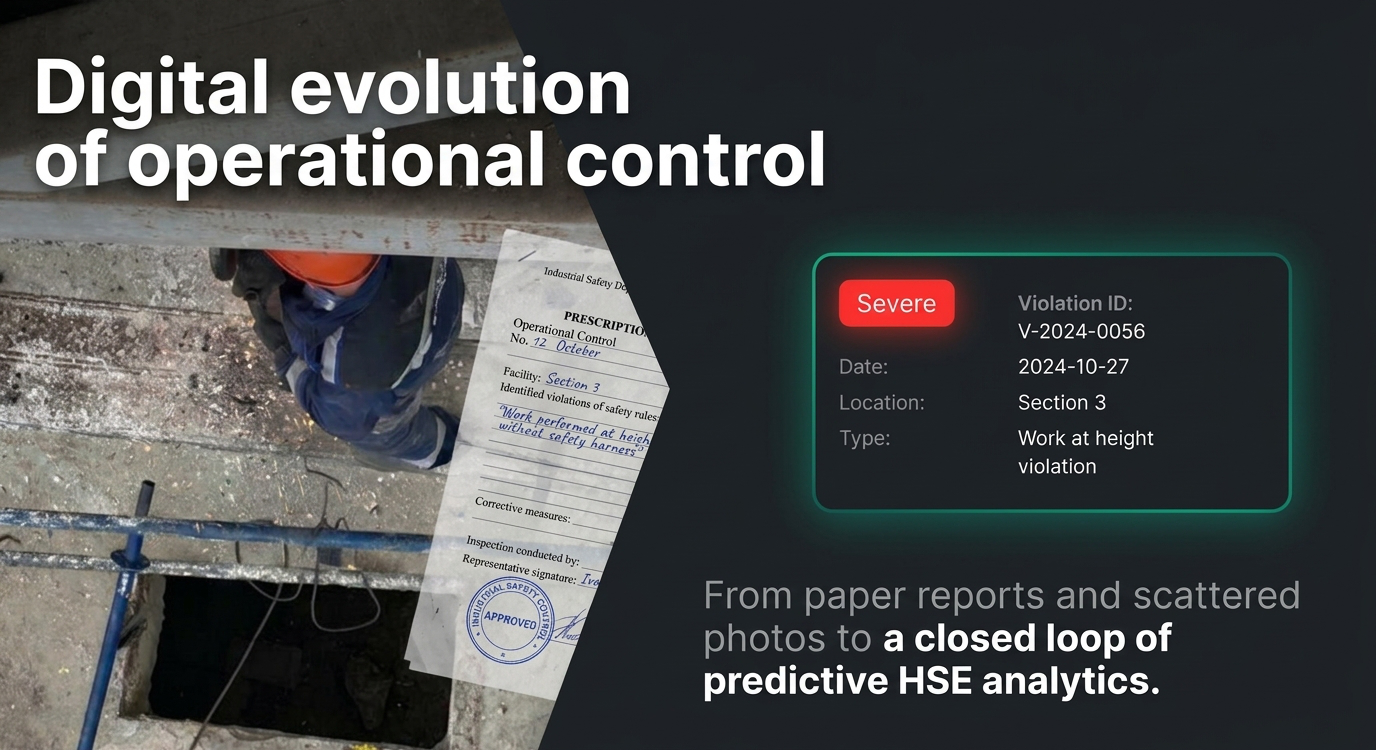
Analyzing contractor performance and developing predictive work clearance. Contractor audit results should help prepare for upcoming tasks. When findings remain isolated in separate inspection reports, managers struggle to spot recurring violations, evaluate corrective actions, and determine what to verify before issuing a new permit to work.
To address this challenge, the digital product "Contractor HSE Compliance Analytics" was developed. The application consolidates data on violations, inspection reports, and responsible work supervisors, generating analytics for a selected period. I associate the further development of this product with predictive clearance assessment: leveraging historical data to identify high-risk conditions.
A Unified History of the Contractor and Work Supervisor
At the core of the product is the record of a specific violation. It links the contractor organization, facility, finding category and severity, description, photo evidence, date of detection, and remediation details. The inspection report records the responsible work supervisor. Warnings and violation reports are stored in a log, and their registration is tracked separately.
The software enables analysis by individual work supervisors regardless of the contractor's legal name, accounting for potential company name changes.
Analytics for Targeted Control
Within the application, users can select a timeframe, compare contractors, view the breakdown of minor and major violations, track monthly trends, and review data by departments, contract owners, and work supervisors. Drilling down from summary metrics to the report log helps examine the basis for an assessment using specific records.
On this basis, the client's manager can hold substantive discussions with the contractor regarding repeat non-conformities, work organization, and the effectiveness of corrective measures. A targeted report shows which issues pertain to a specific organization and work supervisor, which findings remain open, and what should be inspected before the crew's next deployment.
When comparing organizations, it is important to account for the volume and hazard level of the work, duration of site presence, and inspection frequency. A low number of findings may simply reflect insufficient inspection coverage. Therefore, the rating serves as a starting point for analysis alongside primary facts and actual working conditions.
Predictive Assessment Before Clearance
The next stage of product development involves cross-referencing the schedule of upcoming works with the contractor's verified safety history. This requires supplementing violation records with the facility, type and schedule of planned work, supervisor, crew composition, and planned safety controls.
Consider an example of future application. A contractor plans to perform work at height. Their history shows repeat violations during similar tasks, and the implementation of several agreed-upon corrective actions has not yet been verified. The system should flag this combination in advance and generate readiness verification questions: whether root causes have been eliminated, whether the crew is equipped with required fall protection, whether the work area is prepared, and whether supervision procedures are defined.
The proposed assessment must be backed by clear rationale and lead to specific actions: a standard readiness check, additional controls and enhanced supervision, or consideration of restricting work clearance until unacceptable risks are mitigated. The final decision is made by the authorized manager based on actual readiness for the specific task and established procedures.
I propose developing the predictive module in stages. First—verifiable alert rules based on violation history and work schedules. Once comparable data is accumulated—validating signal quality and refining assessment factors. This approach makes it possible to evaluate which alerts genuinely help identify hazardous conditions in advance.
Post-Clearance Field Control
Once work begins, the records should be updated with field inspection results. A new major or repeat violation requires reviewing root causes, the adequacy of existing controls, and the conditions for continuing the task. Verified remediation, in turn, serves as the basis for reassessment.
For the contractor's management, this creates clear feedback: what issue was identified, who supervised the work, what corrective actions were agreed upon, and how the outcome will be verified. For the client, it preserves a historical record that can be used when planning future assignments.
Measuring Product Impact
The practical outcome of the current application is linked tracking of findings and inspection reports, accessible histories of work supervisors, and analytics generation based on entered data. The product is designed to run standalone in a web browser, complete with data storage and report generation.
For further evaluation, it is proposed to track the recurrence rate of major violations, timely closure of findings, time spent preparing summary reports, and—once the predictive phase launches—the proportion of upcoming high-risk tasks covered by pre-assessments and the share of actionable alerts. Injury reduction remains the ultimate goal, which must be validated through separate analysis.
The evolution of "Contractor Performance Analytics" is meant to bridge the gap between past inspections and future work clearances. Accumulated experience then becomes the foundation for targeted contractor onboarding, readiness verification, and ongoing field safety supervision. This product, and its automated reporting feature in particular, serves as an additional tool for engaging with the general contractor.