#Contractors
Managing safety when working with contractors. Complex interaction systems: from pre-qualification (PQ) to final audit. Cases on introducing safety passports and digital access systems for contractors at industrial sites.

12 Life-Saving Rules: Why They Are Enforced and How to Properly Document a Violation
Mistakes when drafting a Life-Saving Rules violation report can invalidate disciplinary action in court and derail contractor penalties. We break down 7 rules for legally flawless violation reporting: from committee composition and exact coordinates to photographic evidence and written explanations.

When Deviation Becomes the Norm
Two major incidents show how unsafe practices become entrenched within existing safety management systems. We examine why regular inspections do not guarantee barrier reliability and how open dialogue with contractors helps identify and eliminate hidden risks.

Contractor's Foreman: Why Safety Is Decided at 7 AM by the Site Trailer, Not in the Contract
Flawless safety documentation does not guarantee safety. The real responsibility for human lives rests on the foreman's shoulders. Why shouldn't foremen be turned into supply clerks, and how should contractor control be built? We analyze where paper safety ends and real safety begins.

Prequalification: is a stack of documents enough?
86 documents, 42 criteria, 100 points — and still it is no guarantee. The Head of Contractor Safety at Uralkali analyzes what pre-qualification actually screens out, why only 50 out of 80 companies returned the questionnaire, what to do if a contractor is the only one on the market, and why “accidents don't happen every day” is the most honest and most dangerous argument.
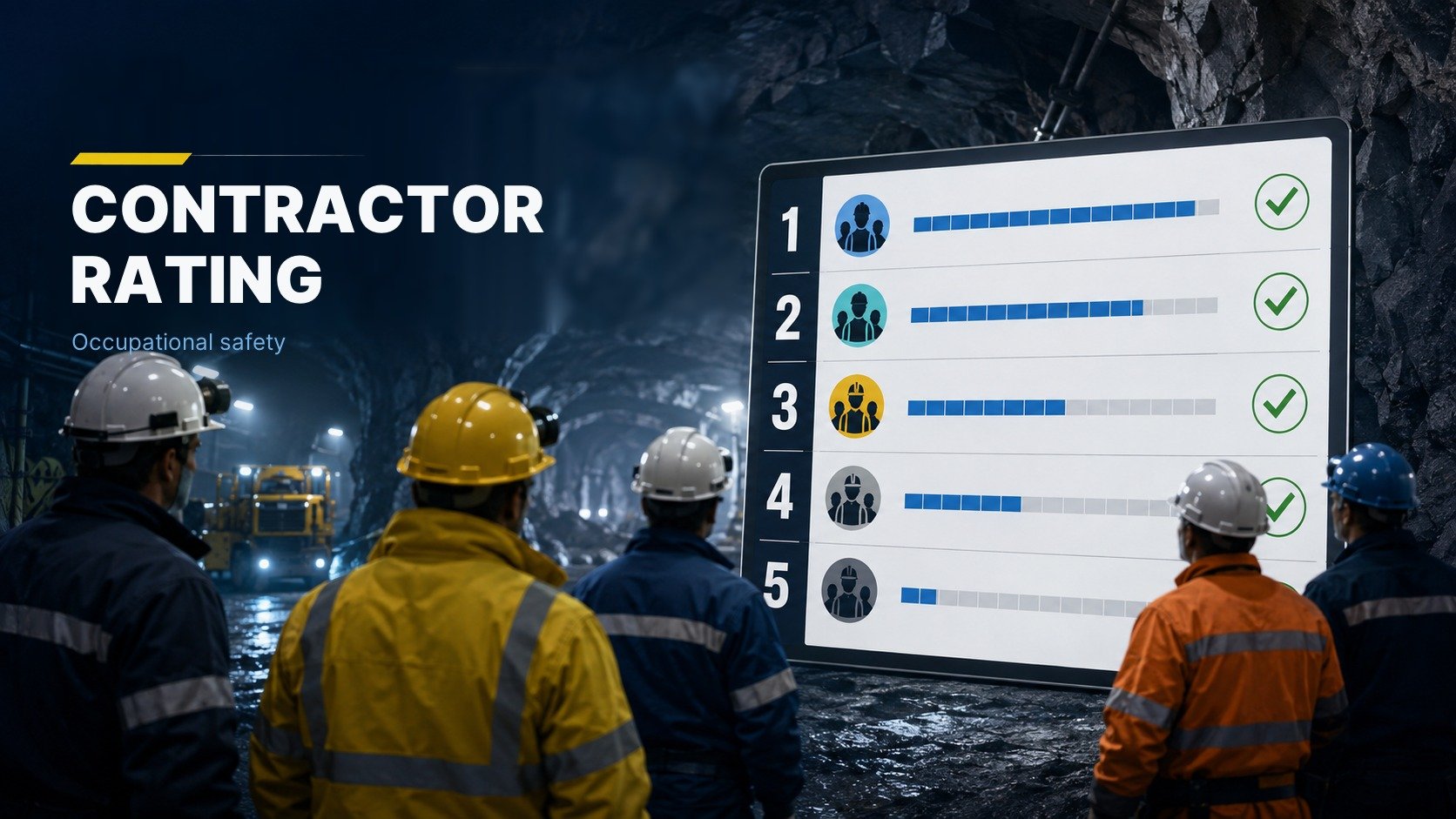
How to turn contractor control into a development system: creating an occupational safety rating
Experience in creating a contractor rating for industrial safety and occupational health and safety: three data sources — work executor assessment, control and preventive inspection, and management system audit — a management cycle instead of one-off inspections and pre-pilot results at a mine: 23 organizations, 36 contracts, growth of the median score of repeat audits from 73 to 91.

Contractors are not one-off deals: how to manage safety throughout the entire lifecycle, not just at the entry point
A comprehensive contractor safety management system based on the PDCA cycle and ISO 45001 standard. The practice includes digital pre-qualification using local AI models, on-site technical audits of contractor bases, a transition to shift-based work permits, and the creation of a dynamic rating for long-term motivation of reliable partners.

Automation of High-Risk Work in Metallurgy
Creation of an end-to-end digital system for managing high-risk work in a metallurgical company. Automated processes for issuing electronic permits-to-work, remote approval, mobile photo recording of measures, and contractor control using automatic violation blocks.

Freight Car Building: Manufacturer Efficiency VS Customer Safety
Integration of safety elements (brake shoes and structural anchors for fall protection systems) directly into the freight rolling stock design at the production stage. The initiative aims to reduce injury risks for consumer companies and change industry standards in railcar building.

Balance of Three Cultures: Production, Corporate, and Safety Culture
Step-by-step involvement of the production unit in safety processes through simplifying control and training tools. Reducing behavioral audit training time, transferring responsibility for contractors to production workers, and implementing digital solutions for recording hazardous situations.

Developing Competencies in HSE
Transformation of the HSE competency development system, shifting from formal training to practical skill building. Implementation of centralized providers, in-house trainer-mentors at production sites, and an LMS for training management.

Contractor Risk Management: From Blind Spots to a Barrier System
Implementation of an end-to-end contractor risk management system focusing on maintenance work. Using digital tools (Power BI dashboards, electronic permits-to-work, heat maps) for online monitoring and management decision-making.

Element of the Contractor Management System: Contractor's Personal Account IT Platform
Implementation of the unified digital platform "Contractor's Personal Account" to automate contractor management processes. The platform integrates registers of contractors, contracts, personnel, and equipment, and automates safety rating calculations for cooperation decisions.