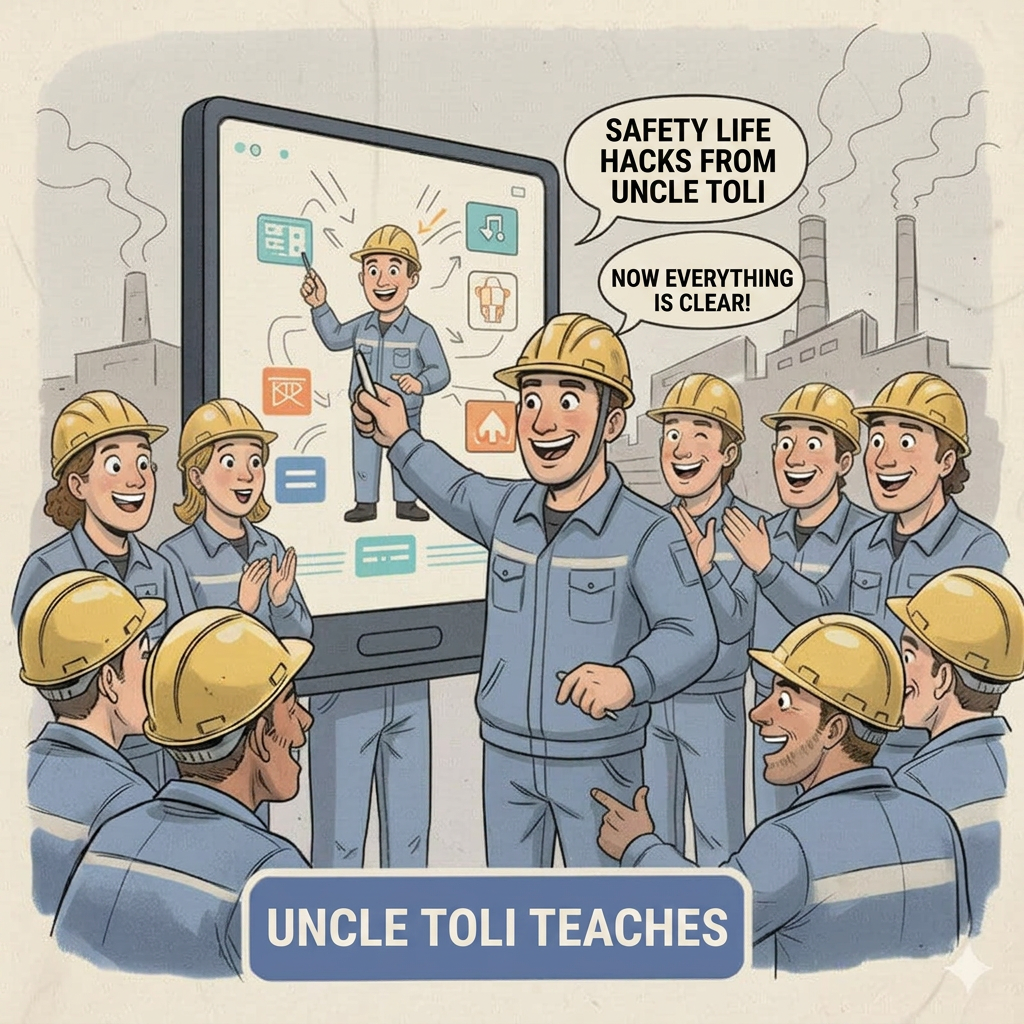
Making the Boring Interesting: Secrets of Engaging HSE Content
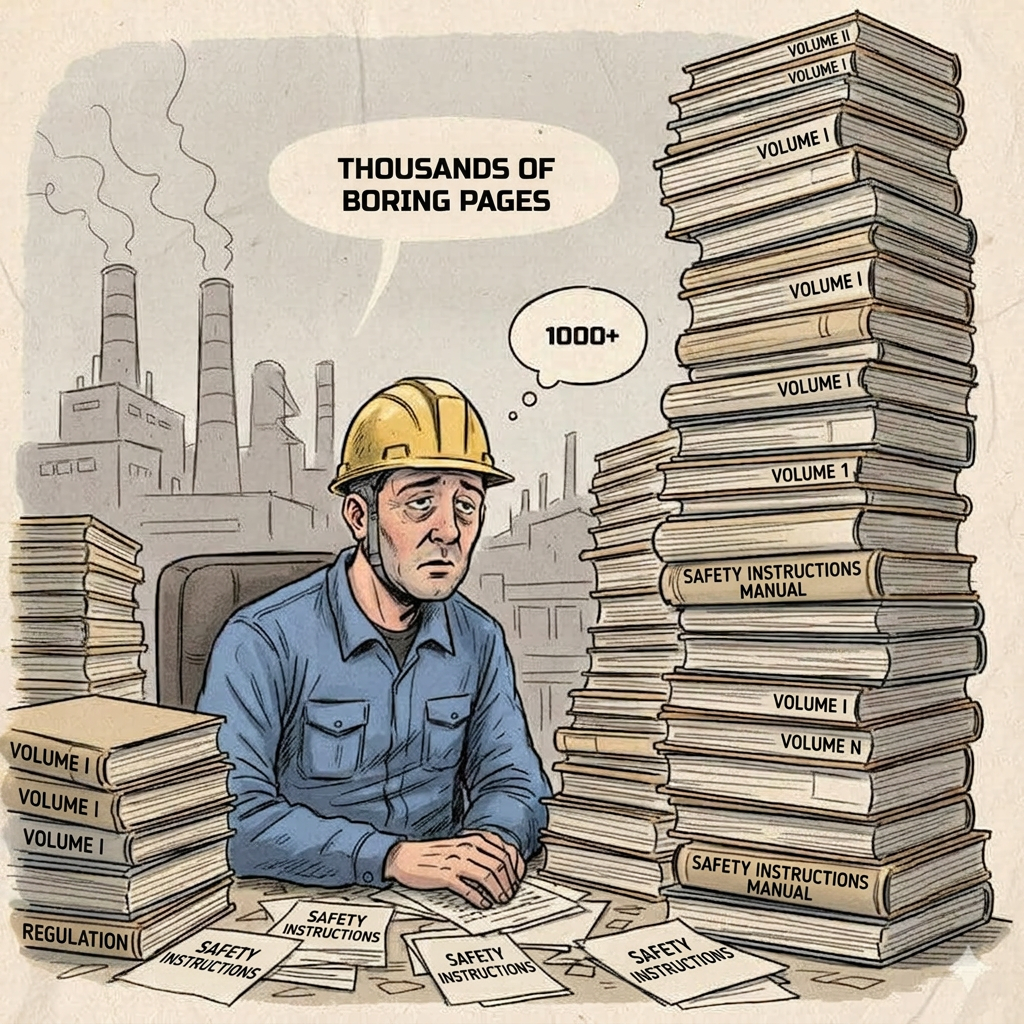
Imagine a stack of documents as thick as a phone book. "Regularly undergo medical examinations to monitor health, identify early signs of occupational diseases and general contraindications for working with hazardous factors, and undergo unscheduled examinations as directed by the employer."
How quickly will you forget what you just read? By the second or third sentence like this?
Welcome to the world of Health, Safety, and Environment (HSE), where life-saving rules often put minds to sleep. But what if I told you that all of this could be made interesting?
Why HSE is Boring
Let's be honest: nobody wakes up in the morning thinking, "Hooray, I'm going to read a safety manual today!" The problem isn't the substance (instructions are important and necessary), but the delivery format.
First, there is bureaucratic jargon — that dry, dead language full of cumbersome phrases and the passive voice.
Standard text: "In accordance with established regulatory requirements for ensuring labor safety and preventing industrial injuries, it is strictly forbidden to intervene with fingers or other body parts into the functional area of the meat-grinding equipment's operation to avoid the occurrence of severe consequences, including irreversible tissue injuries and loss of anatomical integrity, which may lead to loss of working capacity."
Living text: "Don't put your fingers in the meat grinder — it'll cut them off!"
Research shows that a formal style reduces employee engagement in training by 40 – 50% because the brain simply shuts down from an overload of abstractions.
Second is the excessive number of documents and reports. We have so many different documents, instructions, and regulations that it creates a feeling among workers that HSE is an endless formal paper trail disconnected from real life. Employees simply get lost in the vast amount of boring paperwork and stop taking it seriously, which leads to a disregard for the rules.
And finally, the constant prohibitions. "Don't do that, don't touch this." Who likes hearing "no" all the time? Experts from OSHA (Occupational Safety and Health Administration) note that a negative focus on risks causes "rule fatigue" — employees start ignoring them. OSHA emphasizes that rule overload without positive reinforcement increases stress and reduces productivity. But all is not lost!
A New Communication Format
One of the most powerful tools is visualization. Look at how we consume content today. Most of it is images and short videos. We can thank social media for that. If it's text, it's short and engaging. Nowadays, people rarely read long articles (says the author who wrote a 3-page article), unless it's something useful and valuable to the reader.
Modern research shows that the human brain processes visual data 60% faster than text. Also, according to Allan Paivio's dual-coding theory, the brain processes information through two interconnected systems: verbal and imagery. Visual images allow for better absorption of information received through speech. This is one of the secrets behind why short videos are so popular.
As for infographics — they help make sense of complex and structural things. For example, the design of a device or the algorithm of actions during an accident or first aid. Plain text no longer works here. It's boring and requires too much effort and time to understand the issue. In today's world, that's an unaffordable luxury.
Therefore, the future belongs to new communication formats. Create short video reviews, interviews with employees where they share life hacks, and keep text posts short and accompanied by images. I'll tell you how to make content as viral as possible in the next article.
Engage Your Employees
A new communication format is only part of the strategy. Real success is achieved when a company involves employees in the agenda, making them active participants. How do you do this? Make them the heroes of your videos. Let a regular employee explain why it's important to wear safety glasses, rather than an HSE officer. There's a better chance that others will hear this rule and follow it.
But the best way is to give employees the opportunity to share their own content. In the professional community, this is called UGC (User-Generated Content). Let employees share their videos or articles with colleagues. This solves several problems at once:
-
The topic is chosen by the employees themselves — this ensures relevance, as in the case of a video about daily risks in a warehouse.
-
Workers talk to workers about safety — this increases trust and engagement.
-
Content creators will attract colleagues and friends to watch, rate, and share. Everyone loves attention!
Research confirms: companies with high employee engagement in safety reduce incidents by 52%, and UGC reinforces this effect through personal stories. Engagement through UGC turns passive compliance into an active culture.
When employees become co-authors of a safe environment, and complex rules turn into vivid images and clear stories, safety stops being a burden. It becomes part of the corporate culture where everyone understands: "I follow the rules not because I have to, but because I want to — for myself and my colleagues." Use visualization, involve the team, add creativity — and HSE will not only save lives but also inspire!