Implementation of the Climate Agenda at Tatneft
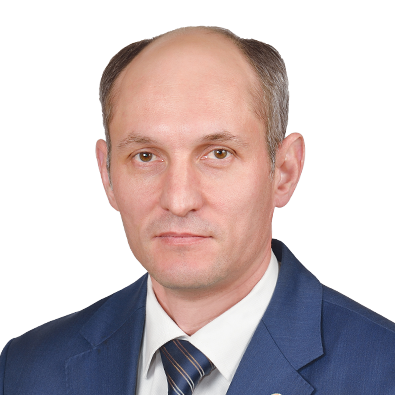
The transition to carbon neutrality and the implementation of circular economy principles require large industrial holdings to go beyond mere declarations and undertake a deep technological restructuring. The integration of climate projects into the production chain is becoming a natural stage in the industry's development, where ecology is directly linked to efficiency and safety. During the webinar, Azat Khabibrakhmanov, Deputy General Director for HSE at PJSC Tatneft, details the company's practical steps to reduce its carbon footprint and implement green technologies.
Carbon Capture, Utilization, and Storage (CCUS)
One of the key areas of decarbonization is managing concentrated greenhouse gas emissions. Using large facilities as an example, the speaker demonstrates how a comprehensive approach to CO2 capture is implemented. Deep geological horizons, securely sealed by dense rocks, are used for reliable gas isolation, eliminating reverse emissions.
In parallel, carbon dioxide is used for enhanced oil recovery methods. Injecting CO2 into terrigenous and carbonate reservoirs not only neutralizes the gas through reaction with the rock but also increases production, providing a synergistic effect between ecology and production.
Drones and AI for Safety and Emissions Control
A comprehensive visual analytics system has been implemented to monitor distributed emissions and control the condition of production facilities. The use of unmanned aerial vehicles (UAVs) equipped with thermal imagers and laser methane detectors allows for the prompt detection of leaks and technological deviations.
The collected data is processed using trained artificial intelligence. With an accuracy of over 80%, the neural network filters out false alarms and identifies violations: from the lack of personal protective equipment among personnel to equipment wear and tear. This minimizes the routine workload on dispatchers and accelerates the response to potential incidents.
Circular Economy and Deep Processing
The presentation details a project for the complete recycling of used car tires. Instead of simple processing into crumb rubber, a pyrolysis method is used, yielding pyrogas, pyrocondensate, and carbon residue. These components are returned to the production cycle to create new "green" tires and generate high-pressure steam, which halves the carbon footprint of the final product.
What you will learn from this webinar:
- How to organize safe CO2 storage in deep geological horizons?
- How AI and UAVs help monitor PPE usage and equipment condition?
- How to build a closed-loop recycling system for rubber products using pyrolysis?
- How to synchronize data from drones, stationary eco-posts, and automated process control systems for rapid response?