#Artificial intelligence
Artificial Intelligence (AI) in occupational health and safety management. Moving to predictive analytics. Cases on neural networks analyzing Big Data, forecasting incidents, and tailoring training.

UAVs Over Facilities: Protecting People and Assets
The threat of UAV strikes on industrial sites demands new safety approaches. Learn how to organize an effective response in the first 30 minutes: from declaring shelter to operating without communications. Real-world emergency preparedness experience.
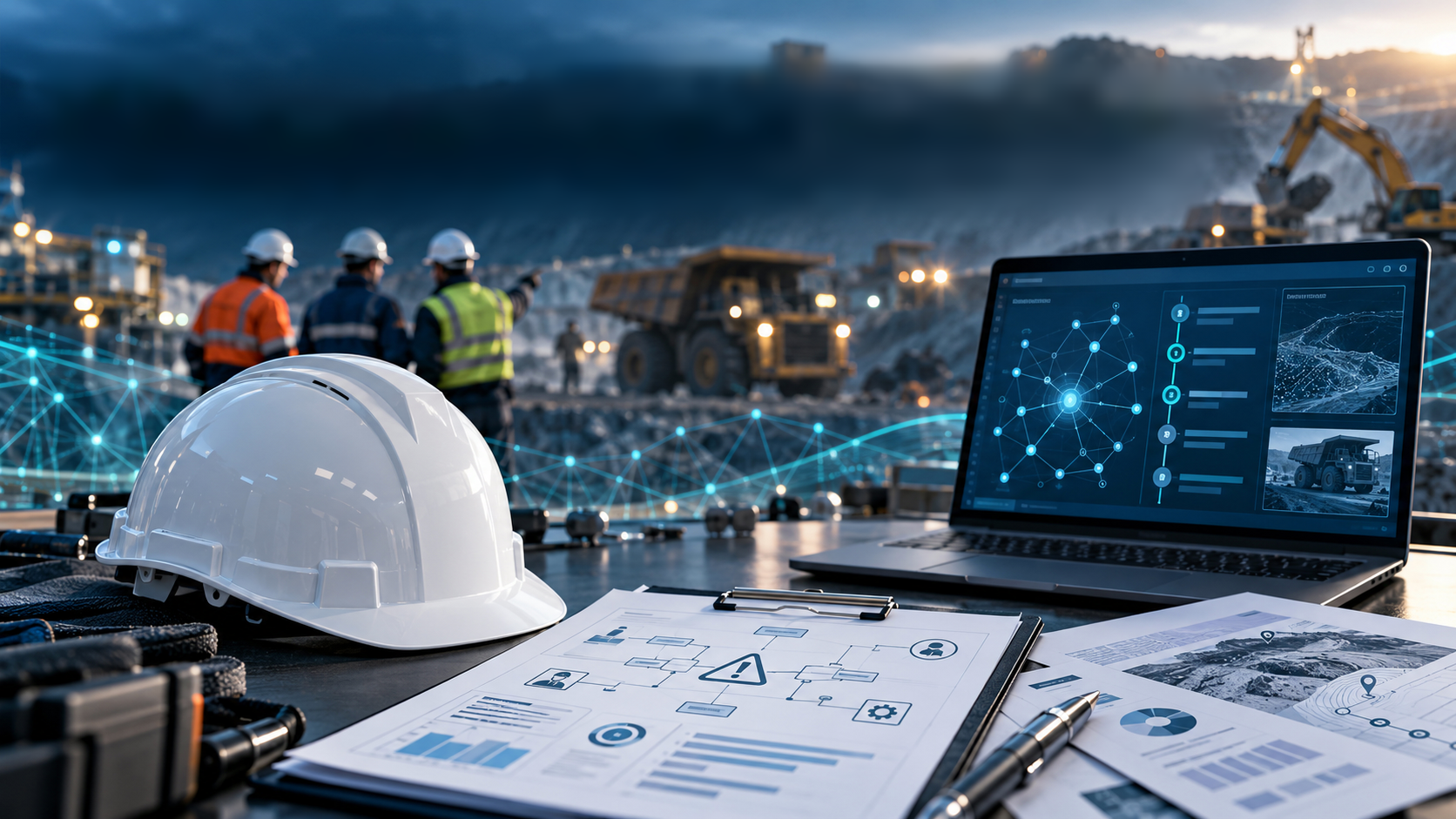
AI as the Investigation Committee’s Assistant: From a Cloud Agent to Offline Incident Investigation
How we moved from our first cloud experiments to an operational “masking tool → AI agent → unmasking” workflow, then built a test offline investigation system, and are now preparing for the next step: Fire, a secure corporate AI environment.
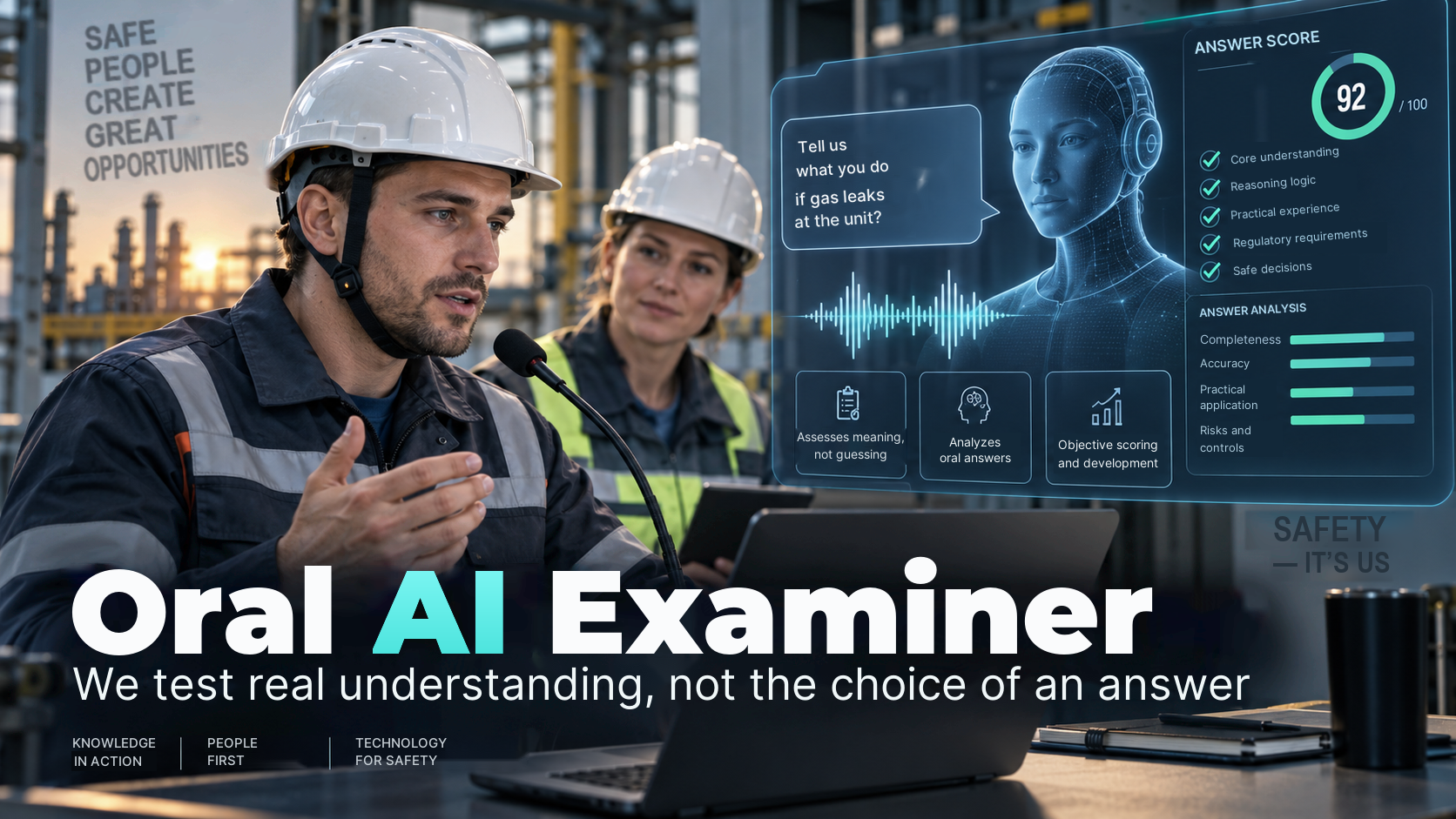
No Options A, B, and C: The Oral AI Examiner
How we went from a NotebookLM and Gemini combo and our own random question generator to a portable browser examiner that listens to the answer and assesses actual understanding. A pilot on 54 employees, an RSS code instead of a full name, and nine ready-made prompts to replicate it yourself.
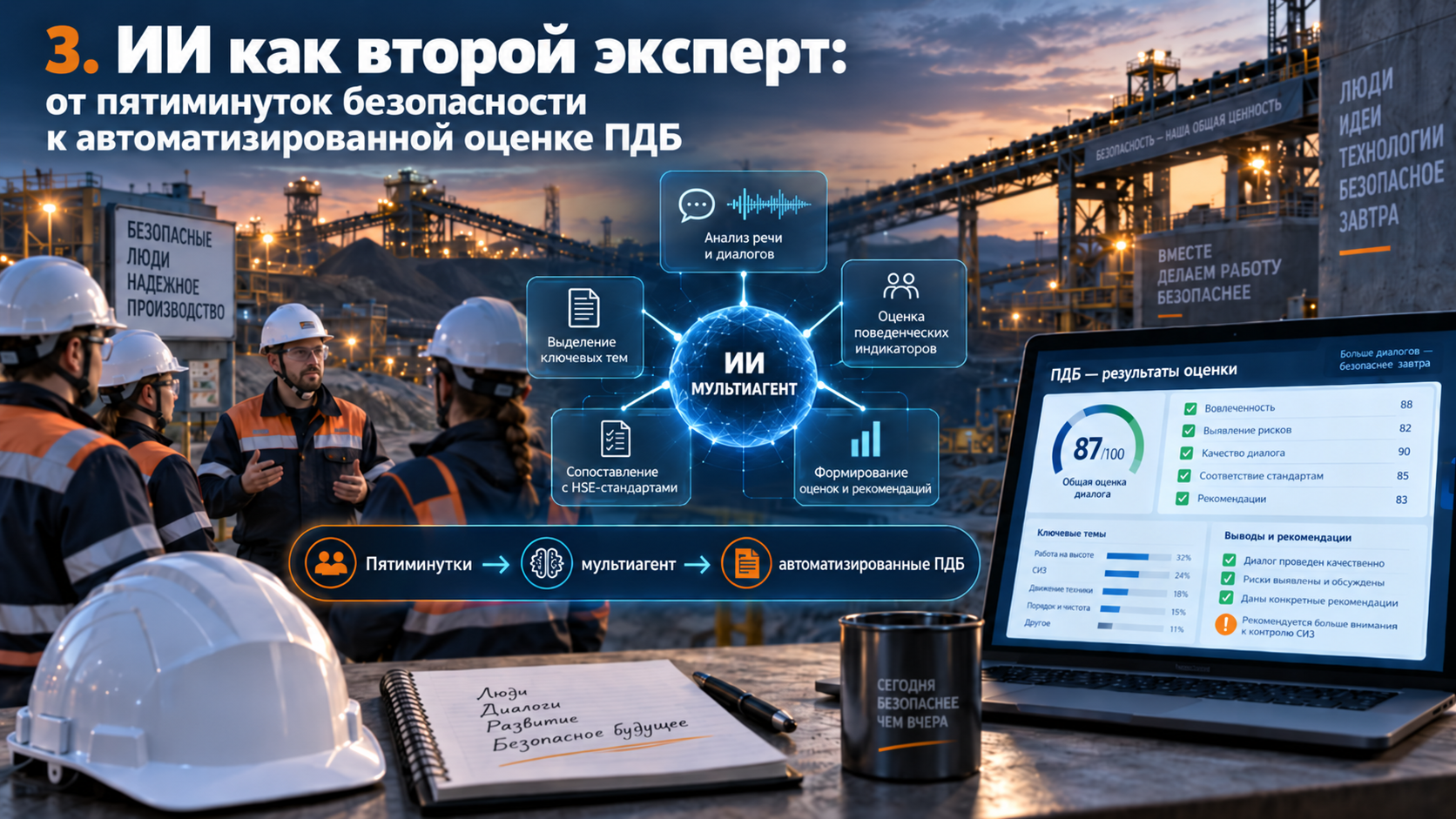
AI as a second expert: from safety talks to automated BSD evaluation
A conducted safety talk is easy to count — it is hard to understand if the conversation took place. The occupational health and industrial safety director of SSGPO JSC shows the next stage of their scheme: an AI assessor analyzes the audio recording of the safety talk and the behavioural safety dialogue using the same criteria, and the manager receives a personal review in about forty seconds. Inside: the path from a manual loop in Perplexity to a Telegram bot on Make and seven ready-made prompt...
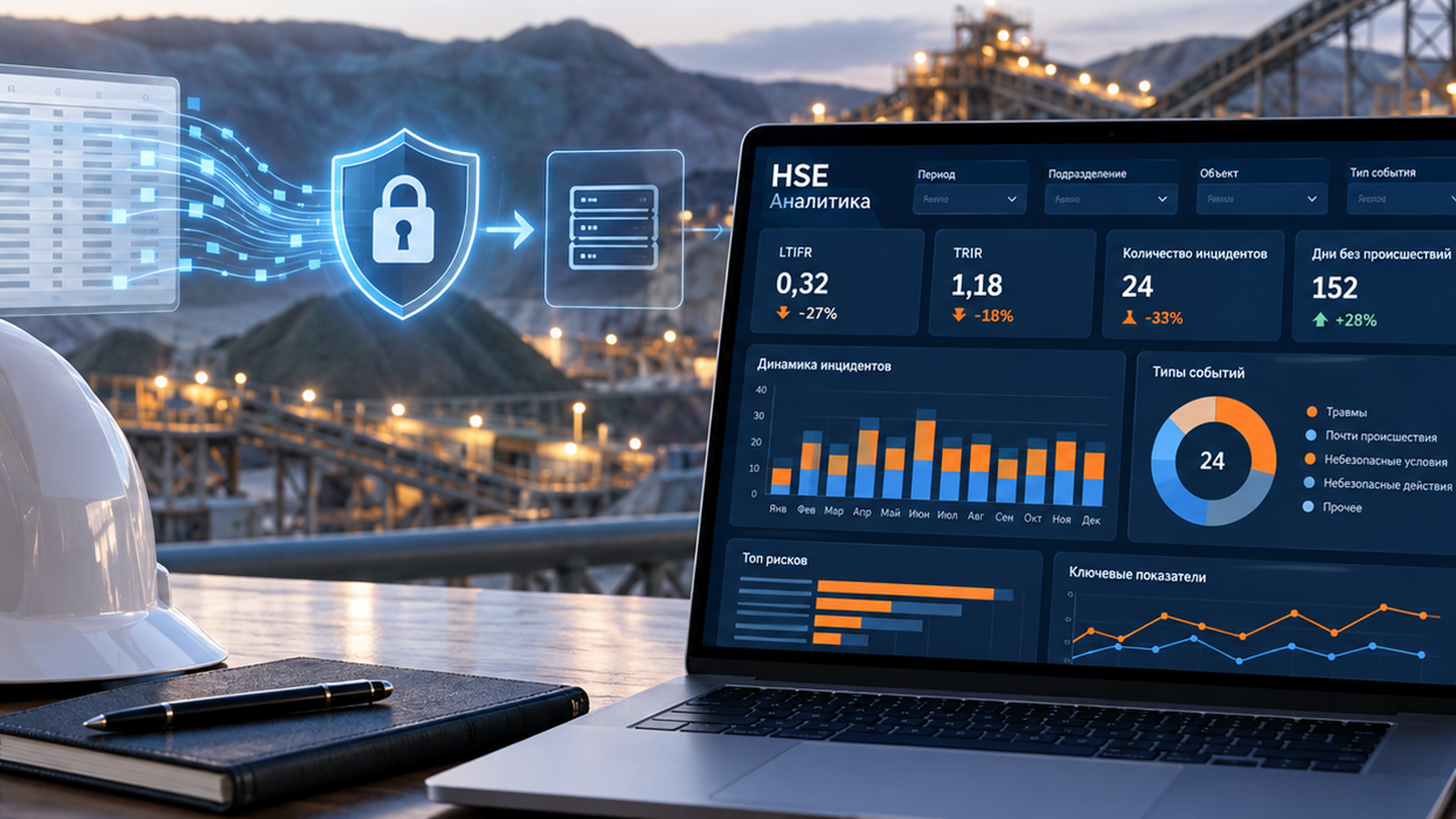
From an anonymized Excel file to management-level HSE analytics. Stage 2: building a standalone interactive HSE dashboard with vibe coding
The anonymized template is ready — what do you do with it next? The HSE director of JSC SSGPO shows stage two: in a few iterations the template turns into a standalone HTML dashboard for behavioural safety dialogues and critical risk control — with filters, clickable charts and drill-down from a general figure to a single record. The real working database is connected locally, once the program is finished. Includes all eight prompts in full.

From Excel to an HSE dashboard and incident analysis without handing over personal data. Stage 1: the offline masker
You cannot simply upload a working spreadsheet or an explanatory note to a cloud AI: they hold full names, personnel numbers, contractors, phone numbers. The HSE director of SSGPO shows the first stage of his scheme — a local masker in a single HTML file: only an anonymized copy leaves the company, while the recovery key and the password stay inside. With ready-made prompts for building the tool.

From Video Monitoring to an AI Safety Ecosystem: How to Turn HSE Data into Incident Prevention
Building a comprehensive AI ecosystem for industrial safety using an internal team without hiring professional software developers. The solution includes a computer vision system, a hardware-software module for pupil-reaction fatigue monitoring, automated generation of training materials and standard operating procedures, as well as AI simulators for behavioral audits and knowledge checks.

AI Agents in Health and Safety
A chatbot carries out one instruction and stops; an AI agent drives the task through to the result. We compare the two on a real end-to-end fatal accident investigation — and explain why managing agents is becoming a skill everyone needs.
🛡️ Safety: Is the "Polished Reports" Disease Curable?
Why are “polished” reports that hide real problems so popular in the field of occupational health and safety and industrial safety? We examine where this corporate disease comes from, why technologies like AI won't save the situation, and how a leader's personal example can change safety culture.
AI Agents and Vibecoding: What Has Changed in HSE Over the Last 6 Months
The application of autonomous AI agents and vibecoding technology to automate routine processes in industrial safety. The practice includes using neural networks to independently identify hazards from photos, fill out risk registers, calculate budgets, and generate local regulatory acts without involving IT specialists. Implementing this approach transforms the role of the HSE specialist into a "knowledge broker," radically reducing the time spent on analyzing regulatory frameworks and investiga...
The Future of HSE Through the Lens of AI Development Trends
Phased implementation of artificial intelligence tools in occupational health and safety processes to automate routine tasks and data management. The practice includes preparing internal "knowledge brokers," launching a secure corporate analog of generative neural networks, and integrating AI with accounting systems. Implementing this approach in a mining company reduced labor costs for intellectual tasks by 20%.
AI + Automation in HSE
Implementing artificial intelligence tools to automate routine HSE processes. Practices include using AI bots to collect Near Miss data, hybrid search systems (RAG) for regulatory databases, software robots (RPA) for reporting, and generating engaging content for briefings.