#HSE TOP 100
Advanced work practices of finalists and participants in the national HSE TOP 100 rating: from contractor qualification and operational risk management to mentoring and competence development. This section features proven cases from industry leaders demonstrating a systemic approach to enhancing industrial safety, benchmarking, and effective tools for personnel engagement.

Monitoring Hazardous Substances in Workplace Air
The article is devoted to monitoring the content of gases, vapors, and dust in the workplace air of industrial enterprises that cause acute or chronic poisoning. The material describes the requirements for accredited laboratories, 4 stages of hygienic standardization, and the procedure for establishing maximum permissible concentrations of harmful substances. The publication explains how the implementation of an effective air monitoring system creates prerequisites for improving working conditio...

From "Russian Roulette" to Modern Safety Systems
The article is dedicated to the Lockout/Tagout (LOTO) protective lockout system used to prevent the uncontrolled release of hazardous energy and the unexpected startup of equipment during maintenance or repair. The material examines the causes of occupational injuries, key steps for isolating energy sources, and principles of hazardous energy control. The author explains how to properly implement clear LOTO procedures and train personnel to ensure the safety of employees at the enterprise.
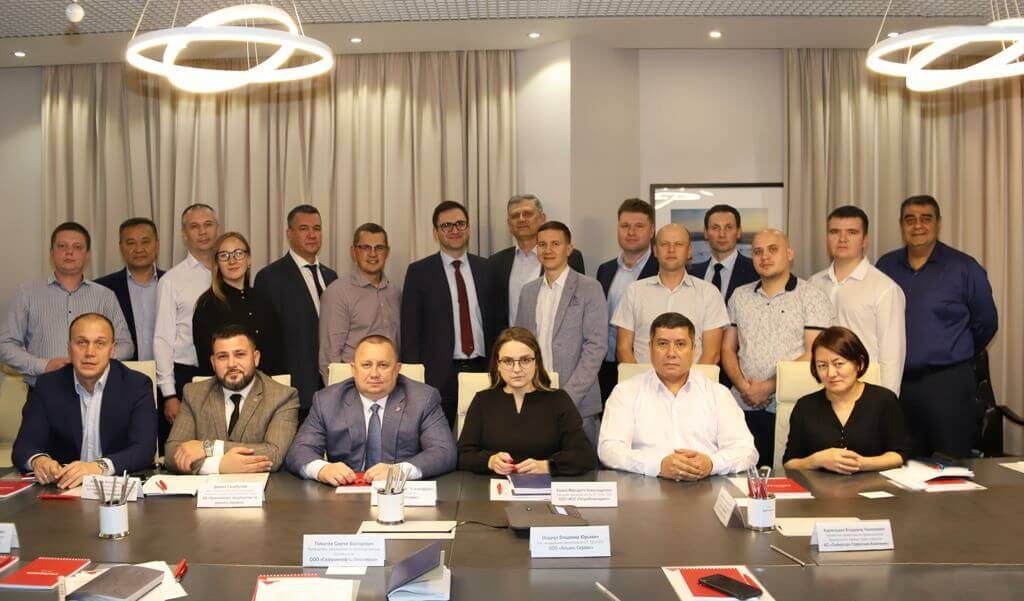
HSE Interaction with Contractors
The article is devoted to the work of the Partner Coordination Council, established by PJSC Gazprom Neft to develop cooperation with contracting organizations in the field of industrial safety. The platform brings together company specialists and contractors for joint problem solving at facilities, sharing best practices, and implementing joint projects. The material shows why this approach to interaction is the most effective for increasing safety levels at production facilities.

Mobile Inspector: A Mobile Solution for Real-Time Equipment Monitoring
Implementation of the "Mobile Inspector" system based on explosion-proof smartphones and NFC tags to automate equipment condition monitoring. The solution allows planning routes, recording defects with photo/video, transferring data to the M&R system, and analyzing inspection results via BI dashboards.

HSE Months: A Tool for Building Safe Work Habits
Implementation of an annual program of thematic HSE months to form a sustainable habit of safe behavior. Each month is dedicated to a specific topic (transport safety, PPE, work at height, etc.) with targeted inspections, practical workplace training, and contests with positive motivation.
"External Knowledge Assessment" Project. Development of Knowledge Matrices for Drilling and Well Intervention Crews
Implementation of a remote HSE knowledge testing system for contractor personnel using AI proctoring. Development of specialized knowledge matrices involving contractor experts and integration of testing results into an automated facility admission system.

Competency Barrier
A multi-stage admission system for contractors at an industrial facility, including risk appetite assessment, remote knowledge testing with proctoring, and practical skills verification. For on-site control, an admission passport with a tear-off coupon system for safety violations is used.

Managing Industrial Safety Risks with Digital Solutions
Transitioning from managing risk areas to managing specific incident scenarios using the Bow-Tie method. Developing and implementing an in-house IT ecosystem for risk analysis, ranking safety barriers, and monitoring their performance via mobile apps and dashboards.

Implementation of a remote supervision system at facilities
Implementation of an industrial safety remote control system on an ice-resistant stationary offshore platform. The practice includes automated collection of telemetry data, video streams, and electronic document flow with Rostechnadzor for continuous monitoring of technological processes and risk assessment.

Standard Operating Procedures – Standardization of HSE Document Management
Integration of HSE document management into the enterprise's overall quality management system via Standard Operating Procedures (SOPs). The practice includes visualizing steps for work processes, centralized control of document updates by the QA department, and placing paper copies of SOPs directly at workplaces.

Recycled Water Supply System for Facilities
Implementation of an autonomous reagent-free recycled water supply system at remote facilities (gas stations) based on electrochemical coagulation and destruction. The plant purifies domestic wastewater to a quality suitable for reuse in technical needs, reducing water supply and sanitation costs by 80-90%.

Implementation of a Critical Risk Management Project at the International Mine of ALROSA PJSC
Implementation of a critical risk management system in an underground mine using barrier thinking. The practice includes developing paper checklists for workers and electronic checklists in a mobile app for mining foremen to monitor barrier operability before starting a shift.