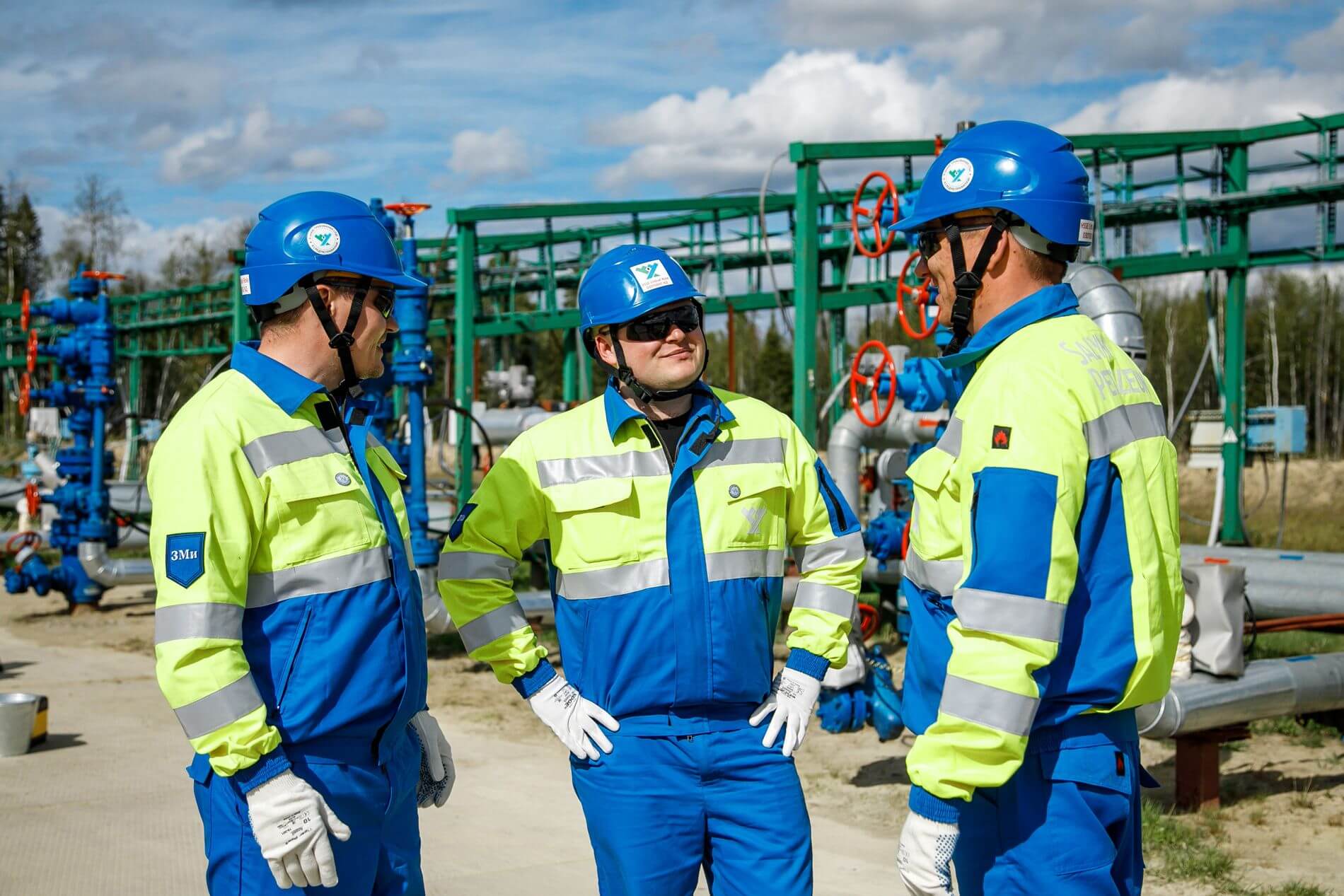
Weekly Safety Talks, or How We Agree to Work Safely
Much has been said about the value of leadership and high-quality communication in building a safe production culture. However, practice shows that these two concepts are often replaced by audits and information sharing, which ultimately fails to deliver the desired results.
I want to share a simple tool with you that fits harmoniously into the production process while simultaneously combining leadership with communication. We call it "Weekly Safety Talks."
The word "talks" is used here for a reason – this format allows participants to "open up," express their opinions, and, most importantly, participate in the process of internalizing simple truths that bring us closer to zero harm.
How to use:
• Each topic is discussed in small groups or by all team members;
• A new topic is chosen for discussion every week;
• Explain to everyone that this is a discussion, not just information;
• If the conversation lacks energy at the start, share your own thoughts and stories as an example;
• To start a discussion, address each person individually;
• Encourage everyone to participate in the discussion.
Where and when to conduct:
• At any time during the day;
• In any location, provided you ensure people can communicate calmly and hear each other.
Who conducts them:
• Managers at all levels.
A safe production culture is a conscious choice to work safely; it cannot be imposed through fines and sanctions. Regular safety talks in an informal setting allow a manager to gauge the level of commitment among their employees, help them reach this conscious choice independently, and sometimes even identify "gray zones" or barriers to achieving zero harm at work sites.
No. 1: Don't Be Afraid to Speak Up
Goal: To create an environment where every person feels empowered to voice their opinion on safety under any circumstances.
When talking to our employees about safety, we often ask them why they come to work – expecting answers like "to earn money," "to provide for my family," "for self-realization," etc. In this way, we try to help them prioritize and understand the true value of safe work.
However, the same motivation can work in the opposite direction. Those same reasons can make a person stay silent when it comes to intervening in a manager's actions. And the higher the manager's rank, the harder it is to point out a mistake. The fear of not getting a promotion, losing a bonus, or even losing one's job is the very reason why "orders are not discussed" and "the boss knows best."
The sad truth is that regardless of professional achievements, we are all just human; we all make mistakes. The only difference is that a manager's mistake can turn into a tragedy for the people they are responsible for. That is why our task is to eliminate the aforementioned fears. We must be sure that our employees are not afraid to speak up if they have safety concerns. And if that isn't quite the case, we need to find out from them what management can do so that subordinates are not afraid to point out their mistakes.
Every manager's task is to be a role model, and this is especially important when it comes to safety issues. Every action and every deed of a manager is under close scrutiny, as it is through these actions that they signal to employees what is right and what is wrong. A true leader not only leads others but also knows how to listen to the opinions of their subordinates at the right moments and, most importantly, knows how to react correctly to their intervention.
Our task this week is to remind employees that everyone is equal when it comes to safety. When a person's health and safety are at risk, each of us has a responsibility to intervene in the actions of both a colleague and a manager, regardless of their position.
When conducting talks this week, ask employees to provide examples of their intervention in unsafe actions by managers, assure them that they are free to intervene in your own unsafe actions, and thank them for their readiness to intervene and prevent an injury or incident.
Supporting questions:
• If you noticed someone performing work unsafely, what would you do?
• Is it possible to speak up here without fear if something seems wrong?
• Can you calmly express your opinion here if you don't fully understand what the job is and what needs to be done?
• How can we ensure that everyone in our team feels truly comfortable speaking up about any issue of interest, especially regarding safety?
Comments 2
Thank you so much to Andrey for the practice he presented.
This is truly a great achievement when workers can freely speak about safety and raise concerns to their supervisors.
A supervisor is a human being too and is prone to making mistakes.
At first glance, nothing seems to have been done, no investments in culture development...
But in reality, it is such a big step towards achieving zero injuries!
Awesome!!!
Olga Baklashova,
Thank you for the feedback!