Safety as a Standard: How Implementing the LOTO System Shapes a New Production Culture
In modern high-tech production, personnel safety is not just a set of rules, but a fundamental value and a key factor in operational efficiency. Equipment maintenance and repair remain among the most dangerous types of work. The unexpected start-up of a machine, or the release of voltage, steam, or compressed air, can lead to tragic consequences.
In 2024, in one of the Company's divisions, we implemented a pilot project to introduce the Lockout/Tagout (LOTO) safety system. This is not just a set of new instructions, but a comprehensive system that mechanically prevents the unauthorized supply of energy to equipment during maintenance.
What is LOTO?
LOTO is a standardized protocol that ensures equipment is completely de-energized, shut down, and safe for work. Its essence lies not in trusting procedures, but in physically preventing risk.
Key principles of the LOTO system:
- Physical lockout: Special devices (padlocks, lockouts, hasps) are used to lock switches, valves, and taps in the off position.
- Individual responsibility: Every employee working on the equipment attaches their personal padlock to the lockout device. Only they can remove it.
- Visual communication: A tag is attached to each locked device, informing everyone: "Work in progress. Do not operate!" along with the specialist's name, reason, and time of lockout.
- Collective safety: The equipment cannot be started until all workers have completed their tasks and removed their padlocks. This protects entire crews.
Five steps to flawless safety: how we implemented LOTO
The pilot project at one of our production sites was the result of the coordinated work of a cross-functional team, which included the division head, maintenance specialists, operating personnel, and HSE experts.
Step 1: Hazard identification. We conducted a detailed audit of all equipment and identified all types of energy requiring control: electrical, mechanical, hydraulic, pneumatic, gas, thermal, and residual energy. For convenience, each energy type was assigned its own color.
Step 2: Marking isolation points. All points where energy can be isolated (switches, valves, taps) were marked with special tags. The tag color corresponds to the energy type, and a unique number allows for unambiguous identification of the point in the documentation.
Step 3: Equipping with lockout devices. We purchased a full set of modern lockout devices: padlocks of various sizes, lockouts for levers and valves, and plug lockouts. The quantity was calculated to cover all concurrent work and every employee.
Step 4: Developing step-by-step procedures. An individual LOTO procedure was created for each machine or unit — a clear visual instruction. It includes photos of the equipment, diagrams of isolation points, lockout methods, and, crucially, instructions for verifying the absence of residual energy and safely dissipating it.
Step 5: Training and competence development. We didn't just hand out instructions. We conducted comprehensive training sessions where employees practiced using all types of lockout devices. Special attention was given to device tracking, storage, and, critically, the procedure for transferring keys between shifts to ensure continuous protection.
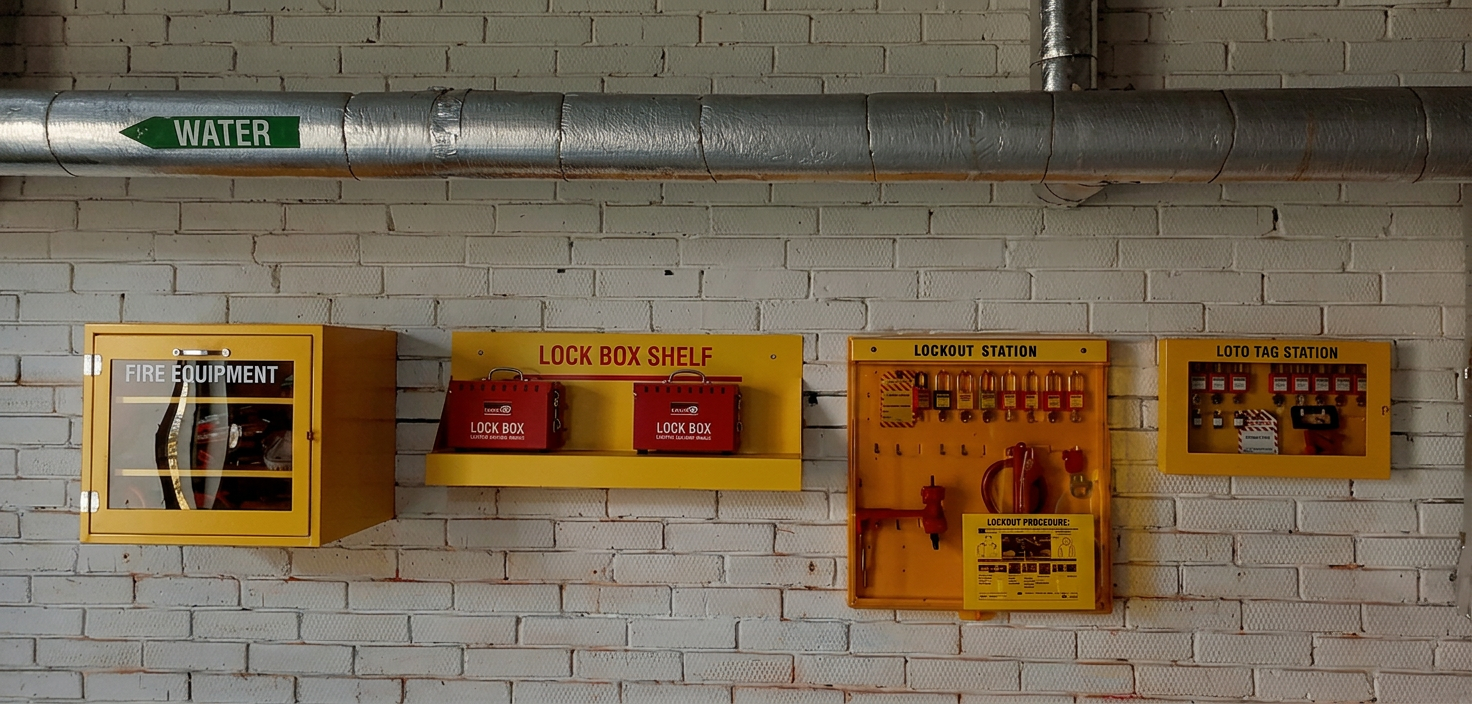
Implementing the LOTO system is a significant step forward in our commitment to creating a production environment where every employee is protected, and efficiency and safety are inseparable. LOTO transforms the team's mindset. Safety becomes tangible and a personal responsibility for every employee who attaches their padlock.
We have received positive results and feedback from the team. The success of the pilot project is just the beginning; we are currently scaling this practice across all OTEKO production sites. Step by step, we are building a future where safety is an integral part of our success.