🛡️ Safety: Safety Observation Program (UC RUSAL) | Part 4
“The road is… pretty poor—for trucks.” — “The road is quite decent,” I objected. “I was promised I wouldn’t get through at all.” — Arkady and Boris Strugatsky, “Monday Begins on Saturday”
1. Know Your Maneuver
Large-scale changes do not happen at the snap of your fingers: preparing people is an absolutely essential part of the process. As Suvorov’s tactics teach us, everyone must understand their maneuver.
In the previous part of this article (https://hsedays.com/insights/safety-observations-rusal-part-3), I described how roles are distributed among participants in the “Look Around” program: observer, manager, and controller. Building on this concept, we implemented a continuous training process based on the “nesting doll” principle (Figure 1).
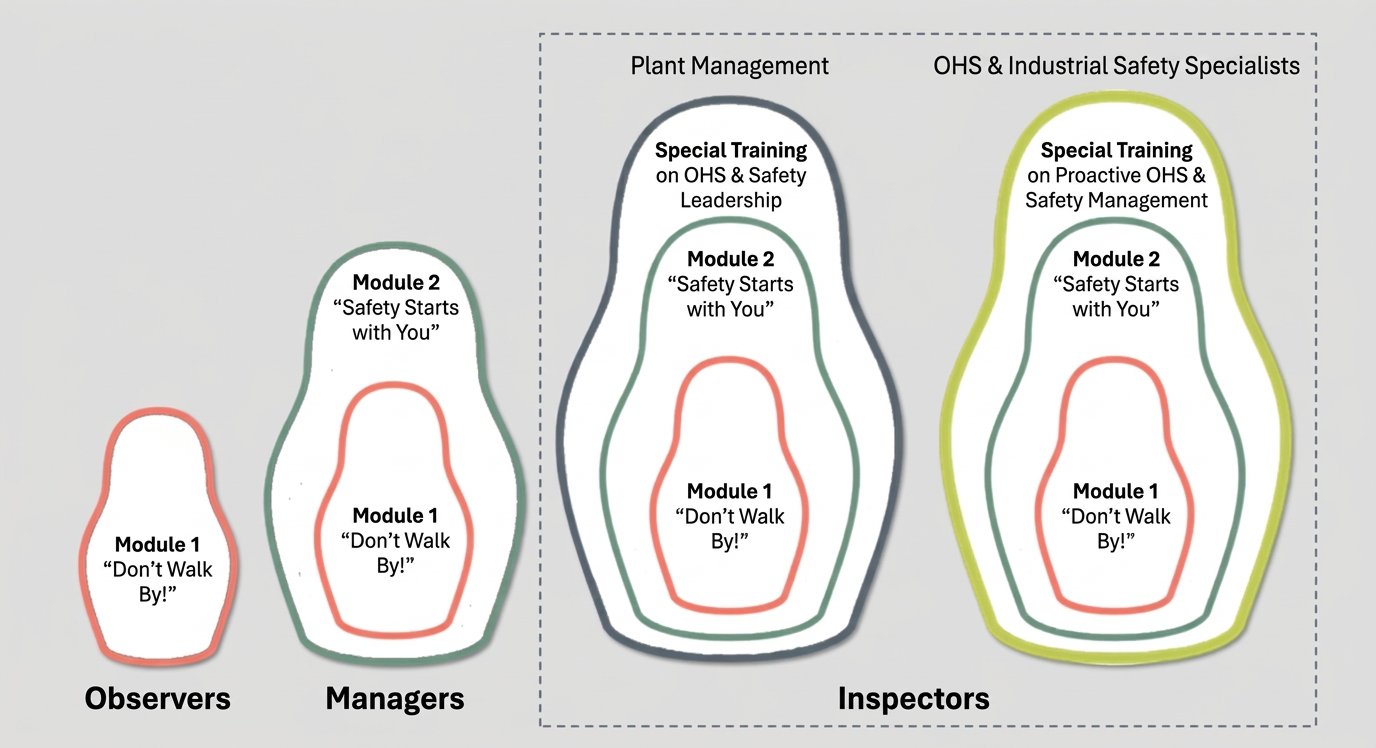
“Don’t Walk By!” is the name we gave our foundational training module. We designed it for a broad range of observers to teach them how to spot hazards in the work environment and respond properly when they find them.
Alongside mastering essential concepts (“unsafe conditions,” “unsafe acts,” and more), participants completed a series of diverse interactive exercises and analyzed the circumstances and root causes of real workplace injuries. Zero fluff—only what an employee genuinely needs in the field.
Balanced content and a well-thought-out methodology delivered the most important outcome—strong motivation and proactive engagement among our observers:
💡 Don’t walk by! Turn away, and you leave your teammates in danger!
For contractors and visitors at Downstream Division facilities, we found a simpler approach. The “Safety Observations” module was integrated directly into the safety induction program and video.
“Safety Starts with You” is a dedicated module for line managers—from senior shop-floor supervisors to the CEO. We created it to help them grow as leaders capable of guiding people, managing teams, and organizing effective safety observations through teamwork.
Among other things, this training proved valuable in explaining and promoting the principle of cascading personal accountability: every manager is personally accountable for everything that happens in their assigned area, even when they are not physically present. Safety either starts with the leader, or it does not start at all.
Our managers were guided by five leadership commandments:
- All incidents are preventable.
- Over 90% of them result from unsafe acts by people.
- The “zero incidents” goal is entirely achievable.
- The level of safety in a unit always matches the lowest standard of personal expectations a manager sets for employee behavior.
- People are influenced most not by words, but by a leader’s real actions and personal example.
First and foremost, we aimed to equip managers with practical people-management skills. To achieve this, the hands-on part of the course included a detailed walkthrough of effective workflows within the “Look Around” program—from day-to-day organizational routines to the functionality of the dedicated information system of the same name.
For both training courses, we introduced a final knowledge assessment consisting of mandatory yet straightforward quiz questions.
To manage the training process, my colleagues and I had to build and deploy our own administration system. It covered the entire lifecycle: from training needs assessment and planning to recording results and tracking refresher intervals. This eliminated box-ticking formalism and made training thousands of employees transparent, manageable, and maximally effective.
2. When BSAs Blossom
You might ask: where are the behavioral safety audits? Did you use cutting-edge AI or at least a Telegram bot to roll out mass BSA training, as some companies do?
My answer is no. Behavioral safety audits are not at all what many people think they are.
Over the past quarter-century, I have seen plenty of companies solemnly pledge to roll out BSAs at breakneck speed despite being completely unprepared for them. At times, impressive budgets were even allocated to the effort. Yet accelerated training was typically followed by a sharp spike in bureaucratic workload for line managers, pushback, and the collapse of an attractive but poorly thought-through idea.
In my experience, such failures are predictable. Their root cause lies in a lack of senior leadership commitment and an entrenched culture of window dressing. In that kind of environment, loud slogans and promises of quick fixes are usually valued above honest feedback and systematic work. As a result, decision-makers try to skip several steps at once—or simply keep making the exact same mistakes one after another.
Earlier, I noted that whatever safety control mechanism you currently have in place, it is an exact mirror of your corporate culture (https://hsedays.com/insights/safety-observations-rusal-part-1). If the BSAs you introduce clash with that culture, people will inevitably reject them.
💡 The main barrier to reform lies not in poor strategies, but in human psychology—people’s fears, habits, and management actions. — John Kotter, author of the classic change management model
Mass training of questionable quality cannot solve this problem. As a wise man once said, rather than indulging in scholasticism, we must appeal to the heart and the will—not merely to the intellect and memory.
Another serious misconception is that many view behavioral safety audits as a standalone inspection system. The truth is that BSAs are simply an everyday practice of informal, motivating conversations with staff about safety. They help prevent unsafe acts while sustaining high productivity.
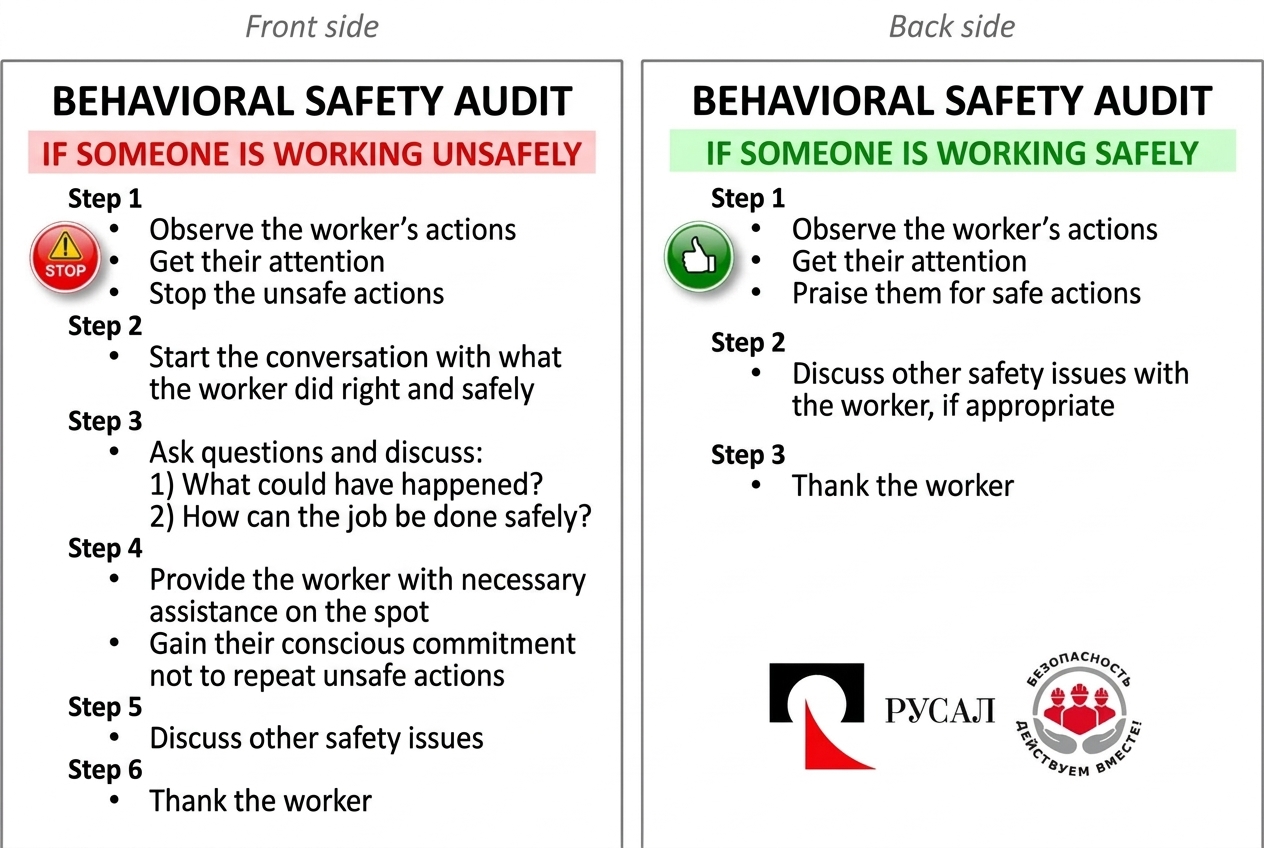
If you have ever attended classic DuPont® training, you probably remember the structure of such a motivating dialogue:
- 3 steps when someone is working safely;
- 6 steps when someone is working unsafely.
When introducing BSAs, the primary goal is not to train people and then collect reports from them, but to help line managers recognize the value of motivating dialogues and genuinely want to use them.
Alienating people is easy—winning them over is hard!
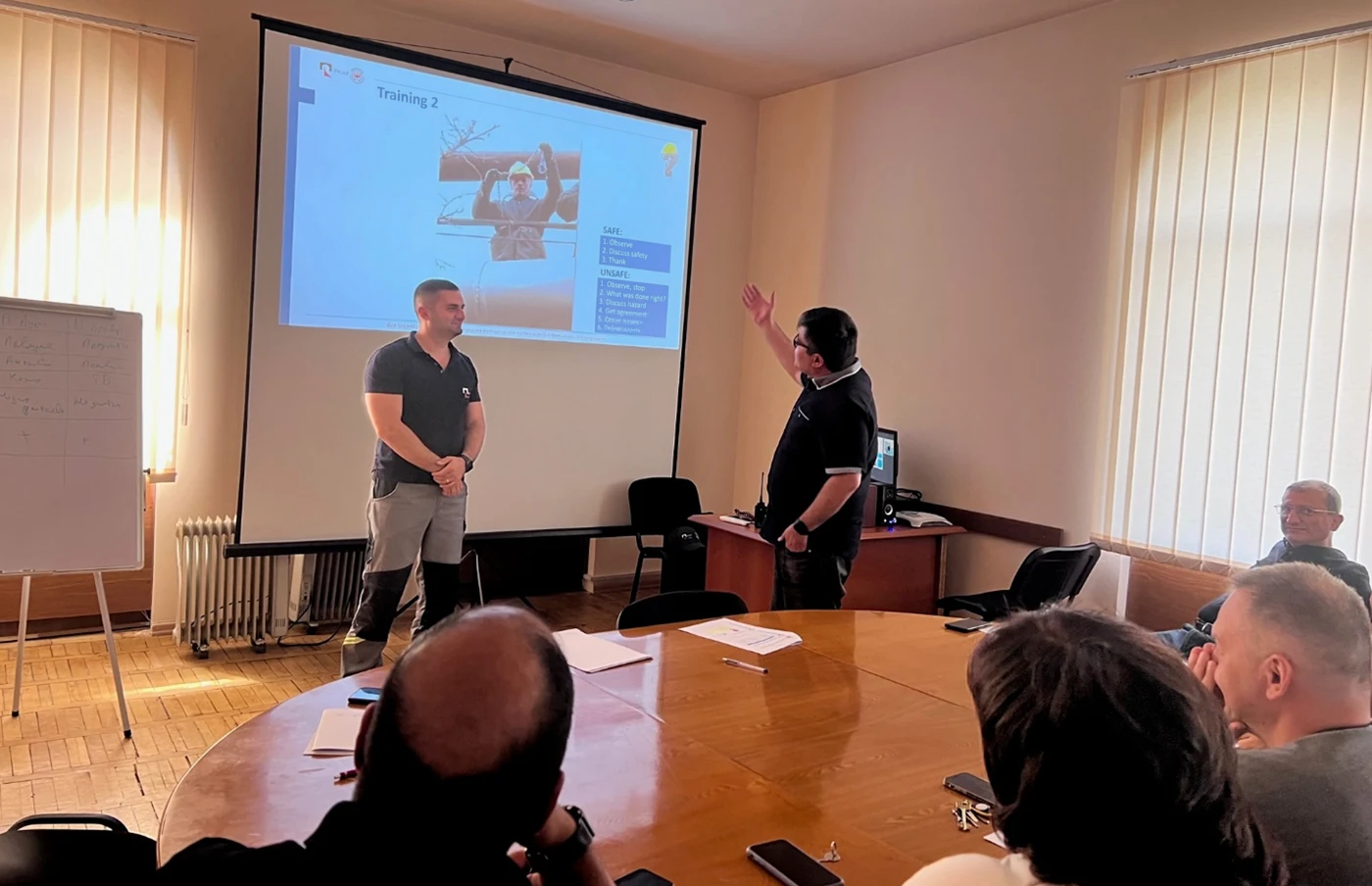
During the first stage of the “Look Around” program, our top priorities were engaging employees and establishing a safety observation process that was completely new to them. For that reason, we held behavioral safety audit workshops exclusively in person—and only at facilities where plant managers specifically requested them (Photo 1).
Pocket reference cards (Figure 2) and other “soft promotion” tools for BSAs saw widespread adoption across our sites. At the “Reactive” and “Dependent” stages of safety culture maturity, this approach genuinely works—unlike attempts at forced rollout.
We understood clearly that behavioral safety audits cannot be imposed by decree from above. They must be cultivated patiently and carefully. BSAs are bound to take root and bear fruit once the ground has been properly prepared for them.
💡 For large companies to change, we need to stop thinking like mechanics and start acting like gardeners — Peter Senge, creator of the “learning organization” concept and author of “The Fifth Discipline: The Art and Practice of the Learning Organization”.
If I had to sum up the key takeaway, my advice would be this: do not rush to implement behavioral safety audits without thorough analysis and proper groundwork. They are not a quick fix, but one of the most challenging tasks in management psychology.
Please let me know in the comments if you would like to discuss a systematic approach and methodology for implementing behavioral safety audits.
3. The “Look Around” Digital Ecosystem
Today, safety observations are unthinkable without automation. But how can you achieve it quickly without straining budgets and resources?
In the Downstream Division, we found an optimal solution:
- relying on in-house talent—just a few specialists from our corporate IT team;
- leveraging existing software—zero external procurement.
Incidentally, as our foundation we chose a simple, reliable electronic ticketing platform that had already been running in our company for years.
Naturally, it required major upgrades and expanded functionality. Our IT specialists handled the challenge brilliantly. I hope they are reading this article—I want to sincerely thank them for their smooth collaboration and outstanding work!
Of course, some funding was still needed, but it was purely symbolic and handled as part of routine operations through cost-sharing among the plants.
As a result, we quickly gained:
- our own custom-built “Look Around” Information System (LAIS) rather than an off-the-shelf product;
- the ability to implement 100% of the know-how behind our safety observation program;
- seamless integration with other corporate systems;
- ongoing technical support;
- continuous evolution of our digital tools.
Moreover, both the observation program itself and the IT platform became fully mature for scaling across the entire UC RUSAL Group. If needed, we could even offer this end-to-end solution to external companies.
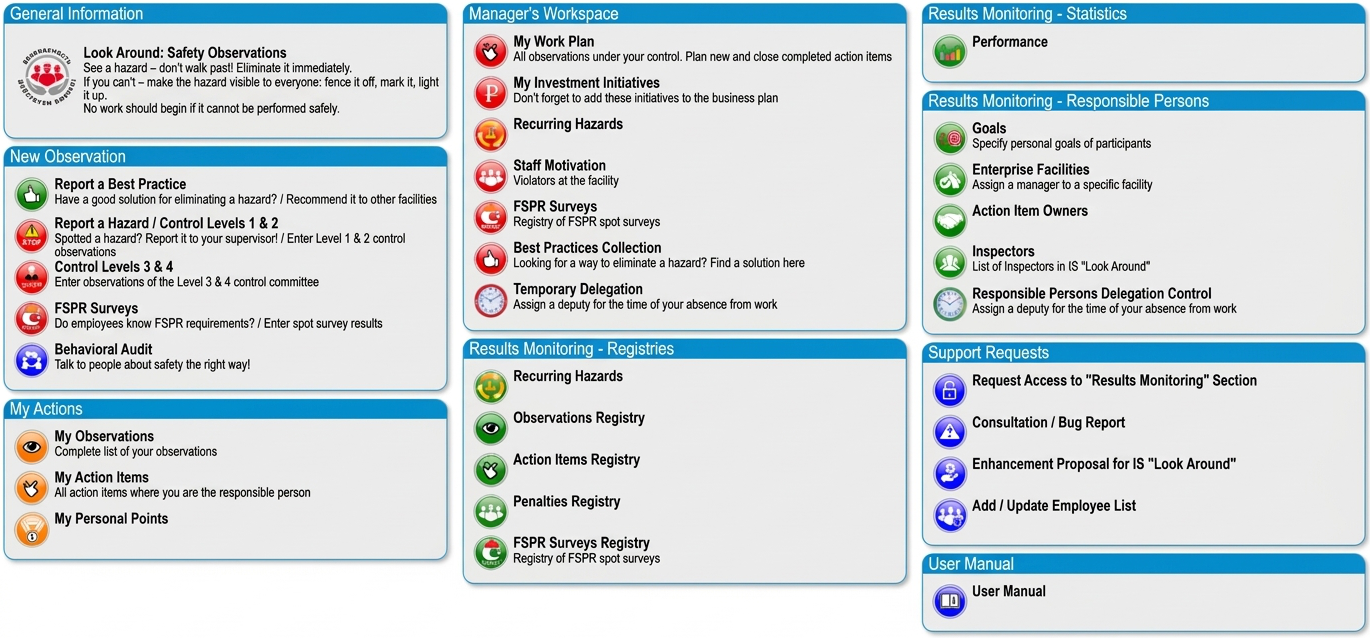
To illustrate how our system is structured, here is the main menu interface (Figure 3). It clearly reflects how tools are allocated across the three core roles:
- Observers have access to the “New Observation” and “My Actions” sections.
- Managers (responsible for inspected areas) work in a dedicated “Manager’s Workspace” section.
- HSE specialists and senior plant executives use the three “Performance Monitoring” sections.
Digital Watch
As you already know, observers are the “eyes and ears” of our safety monitoring system. Promoting universal engagement, we granted this role to every single user of the “Look Around” IS without exception.
Each user gained access to the system’s core features:
- Report a Hazard: this feature is used when an employee needs assistance eliminating a hazard on the spot. If an issue can be resolved independently right away, there is no need to log it in the system—such entries are rejected by the manager to minimize “digital clutter.”
- Share a Best Practice: this tool lets an observer share an effective solution for eliminating a hazard (or reducing risk). Such entries go into a repository of safe-work best practices and are used to share experience across the Division and the Company as a whole.
Every observer submission triggers an automated email notification confirming its registration in the system. This is part of an end-to-end process keeping all stakeholders informed about identified hazards, planned corrective actions, and their completion status.
In addition, observers have a personal dashboard where they can track in real time:
- the status of their submissions;
- hazard mitigation actions assigned to them for execution;
- their accumulated personal points and individual KPIs.
Manager’s Workspace
This workspace was designed specifically for shop superintendents and heads of major operational areas. Five core tools give them full control over safety in their units:
- My Action Plan: all hazard reports submitted within the unit (facility) flow here. The manager’s job is to verify incoming reports, define corrective actions, deadlines, and responsible persons, and, of course, verify the final outcome—supported by “Before” and “After” photos.
- My Investment Actions: if eliminating a hazard requires substantial capital expenditure, the task is logged as an investment item. Once the annual business plan is approved, the manager must move it to current tasks and schedule its execution through the standard workflow.
- Recurring Hazards: a rapid analysis tool for scanning the observation log to pinpoint and investigate “chronic” issues that demand more decisive, systemic action. Today, analysis of this depth can be effectively powered by artificial intelligence.
- Employee Motivation: this feature generates recommendations for targeted measures regarding a specific employee whose actions or inaction created a hazard. We discussed the concept of progressive motivation in the previous part of this article (https://hsedays.com/insights/safety-observations-rusal-part-3).
- Temporary Delegation: safety never takes a vacation. Before leaving on a business trip or for training, a manager is required to appoint an acting deputy so that safety oversight never stops—not even for a single day.
Analytics at Your Fingertips
HSE specialists and senior plant executives hold special permissions in the “Look Around” IS. Their primary responsibility is to oversee compliance with program rules and evaluate the quality and effectiveness of safety work both plant-wide and within individual units.
They have access to end-to-end analytics and can step into the process at any stage whenever necessary—from initial hazard reporting all the way to final hazard elimination:
- Observation Log and Corrective Action Log: two intuitive digital dashboards that provide real-time tracking of incoming hazard reports and the progress of corrective actions.
- Disciplinary Log: a tool for recording progressive motivation measures applied by unit managers under established procedures. It serves as the repository for records generated through the “Employee Motivation” feature described above.
- Performance: a dedicated analytics section for setting team and individual targets and automatically tracking progress toward achieving them.
Field Access
Most people on the shop floor do not have a computer at their workstation, yet when a hazard is spotted, they need to act immediately. We solved this challenge in three ways:
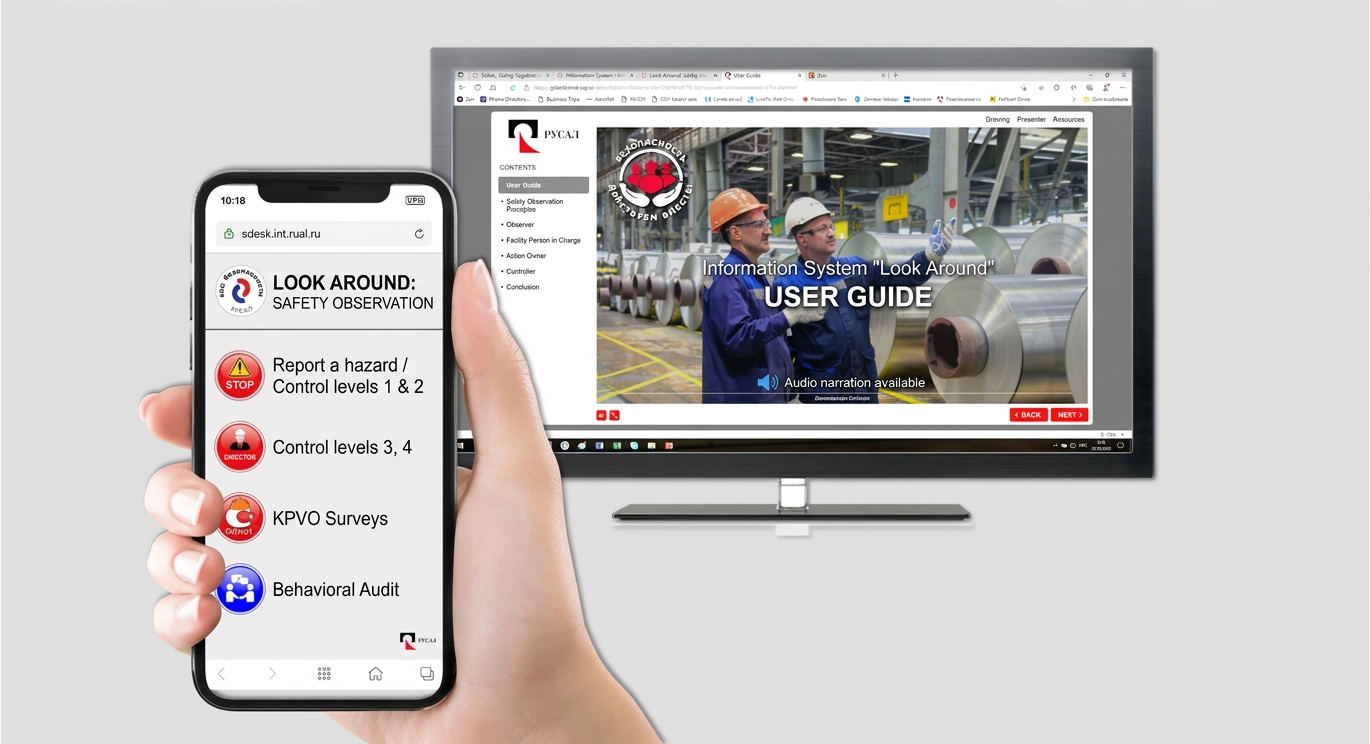
- Mobile version in your pocket. Our “Look Around” IS received a dedicated smartphone version. It offers all key observer features (Figure 4) and requires only a one-time login within the corporate IT environment.
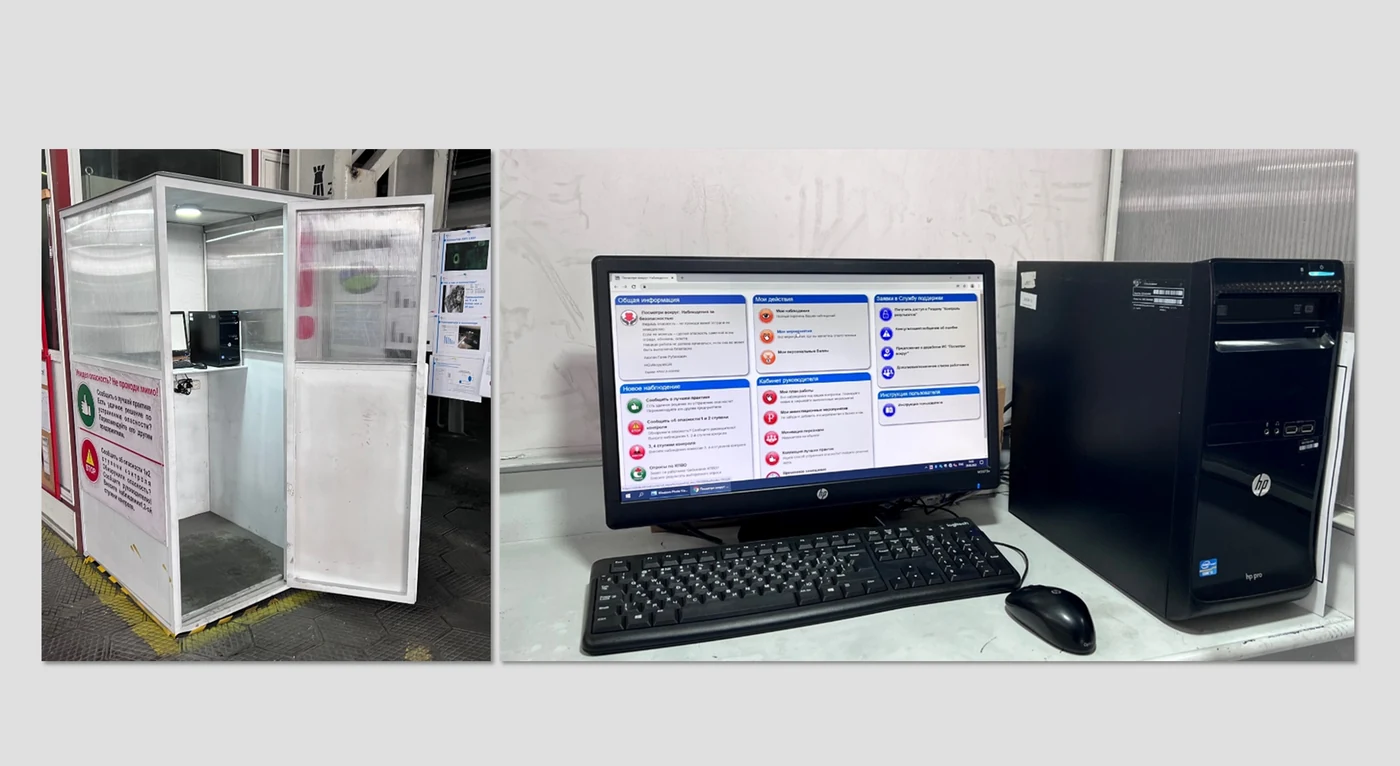
- Shop-floor terminals within easy reach. This solution was needed for anyone without a smartphone at hand or without corporate network access. Beyond our own employees, contractors and visitors are guaranteed to find themselves in this situation. Following an initiative from colleagues at one of our plants, we began installing dedicated computer kiosks right on the shop floor—next to workstations (Photo 2).
- Tried-and-true classics. So that our observers can act without gadgets—and even without electricity—we placed stands stocked with blank paper observation cards at key locations in every shop. Any worker can fill out a card and hand it to their supervisor or to the HSE Department.
Here, however, I must emphasize one simple truth: digitalization and modern technologies are indispensable, yet their role should not be overestimated. They are not what drives real change in employee behavior and corporate culture.
💡 If knowledge management were solved by information technology alone, we would have solved it 20 years ago. In reality, technology accounts for just 10% of success, while 90% comes down to people and culture. — Thomas Davenport, one of the foremost researchers in knowledge management and business analytics.
In the next, concluding part of this article, I will share:
- How we turned KPIs from a “stick” into a navigator for moving forward.
- What replaced getting “called on the carpet” in the plant director’s office.
- How we said “thank you” to champions of change.
- What 5 years of safety observations brought us.
- How to assess your readiness for similar changes.
To be continued. Don’t miss it!