🛡️ Safety: Safety Observation Program (UC RUSAL) | Part 2
"It’s a dangerous business, Frodo, going out your door. You step onto the road, and if you don't keep your feet, there's no knowing where you might be swept off to," — J. R. R. Tolkien, "The Lord of the Rings"
1. What Does Safety Culture Eat for Breakfast?
In the first part of this article (https://hsedays.com/insights/safety-observations-rusal-part-1), we discussed the "enough eyes" principle and its advantages over the rigid framework of three-stage control.
I think you now understand why we chose the direct call to action "Look Around!" as the name for our safety observation program.
Back then, in the newly formed Downstream Division of UC RUSAL, our team faced a major challenge. We needed to ensure reliable, uninterrupted production — with zero injuries and accidents — across all 11 sites scattered across Russia and beyond.
We had to build our corporate HSE system brick by brick and establish truly effective management based on the best known practices.
The "Look Around" program became an important part of our Strategy (https://hsedays.com/insights/safety-acting-together-rusal).
When we started in 2018, the situation across our sites resembled a patchwork quilt. Some plants operated under a classic three-stage control system, others had four stages, a third group used a "roadmap" methodology, while some sites lacked systematic control altogether.
We realized that approving a unified regulation by decree was quick and easy. However, what would that actually change at the workplaces across all 11 of our plants? How would it affect the behavior of workers and their managers?
Regulations often seem like an easy fix, but they are just paper. On their own, they cannot make safety management effective in any real way.
As one of the classics of modern management famously said, "Culture eats strategy for breakfast."
💡 In our case, strategy along with regulations is eaten not by just anything, but by safety culture.
We needed to change the very philosophy of the process. But how could we achieve that?
The situation was almost like in a Strugatsky brothers novel: "Three roads lay before him, each with an inscription: 'Turn right and you will lose your horse, turn left...' — the standard set, in short."
Where would you have started?
2. Fast Start: Betting on Wins
Changes of this scale are no simple task. Therefore, we decided to thoroughly prepare for launch and secure the support of our colleagues at the facilities.
The success of the entire undertaking depended on it.
💡 People don't resist change. They resist being changed, — Richard Beckhard, one of the founders of organizational development.
We had to ensure that our colleagues:
Clearly understood every next step.
Gained new experience, gradually shedding outdated and ineffective practices.
Felt secure, seeing that the ground was not slipping from beneath their feet.
Our plan was simple: set up a "pilot" team at each plant and immediately start safety observations using their workforce.
We were looking for more than just supporters; we needed change leaders who could help overcome organizational inertia and make the transformation manageable and energetic.
We named this initiative traditionally: "Quick Wins". I am sure many have heard of them.
To briefly recap the concept: right at the beginning of the transformation, identify and execute simple, low-cost tasks that deliver tangible results here and now. At this stage, we needed victories over "chronic" hazards — those that had taken root long ago and become accepted "features" of the working environment.
💡 A coalition of reform leaders must include enough key managers so that others cannot sabotage the transformation process, — John Kotter, author of the classic change management model.
Our pilot groups were compact — between 4 and 6 people — and their membership typically looked like this:
Technical Director (group leader).
Chief Mechanical Engineer.
Chief Electrical Engineer.
Section Head or Senior Supervisor.
HSE Specialist.
This balance of competencies helped address all key issues:
Agility: decision-making directly on-site during walkarounds, allocating resources without lengthy approvals.
Technical Expertise: precise identification of core issues with equipment, utilities, buildings, and structures.
Operational Vigilance: deep understanding of hidden risks in production technology and work processes.
Methodological Support: ongoing guidance of group activities by an HSE expert.
3. From Oversight to Leadership
The Quick Wins initiative did not replace our existing HSE controls; instead, it ran in parallel. It focused specifically on the third stage, reinforcing it and making it more flexible and dynamic:
Tangible Leadership: walkarounds became an active tool for direct engagement by top plant management.
Agility over Bureaucracy: the third stage effectively turned into an operational headquarters, with walkaround frequency increasing to once a week or more, up from the previous once-a-month format.
Digital Visibility: mandatory photo documentation of identified hazards and their remediation made the work transparent and the group's results as objective as possible.
Direct Dialogue over Supervision: identified hazards and corrective measures were discussed on the spot with managers and workers of the inspected departments.
Immediate Action over Approvals: all significant hazards that could be eliminated quickly using OPEX budgets were immediately put into action. Meanwhile, measures requiring extra funding or longer implementation were not ignored; they were logged and handed off through regular channels, keeping the active Quick Wins plan free of stalled tasks (Figure 1).
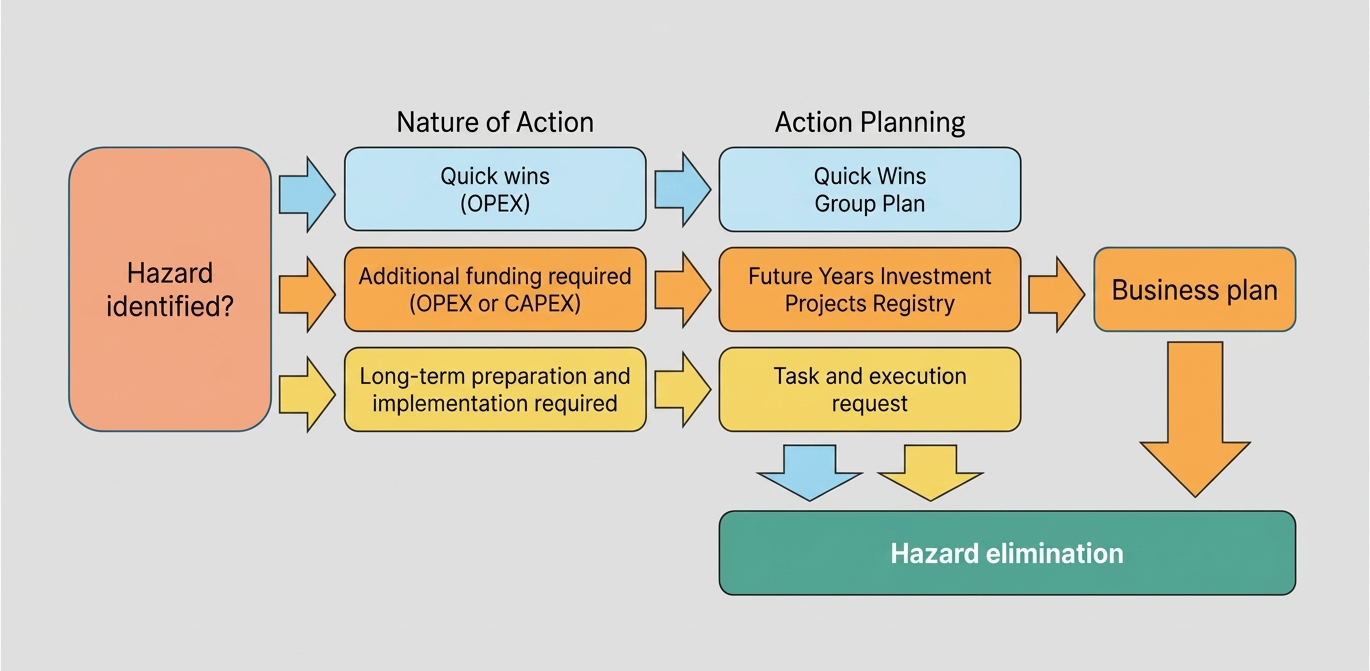
Figure 1. Quick Wins: corrective action planning flowchart
To evaluate performance, two complementary KPIs were applied:
Number of hazards identified per working group member (units/month).
Share of eliminated hazards (%, cumulative total).
We wanted to eradicate the toxic "quota-driven" culture, focusing instead on leadership and personal initiative among plant team members:
Set target thresholds at a minimal level so they merely indicated the direction of travel.
Shifted focus toward monthly tracking of KPI trends.
Unlinked performance metrics from the bonus system.
We clearly understood how important it was right from the start to communicate real changes to all employees — candidly and without exaggeration, whatever those changes were.
💡 Without short-term wins, too many people give up or actively join the ranks of those resisting change, — John Kotter, author of the classic change management model.
Therefore, we documented all quick wins in "Before – After" information sheets (Figure 2), using them to launch a focused yet energetic communication campaign.
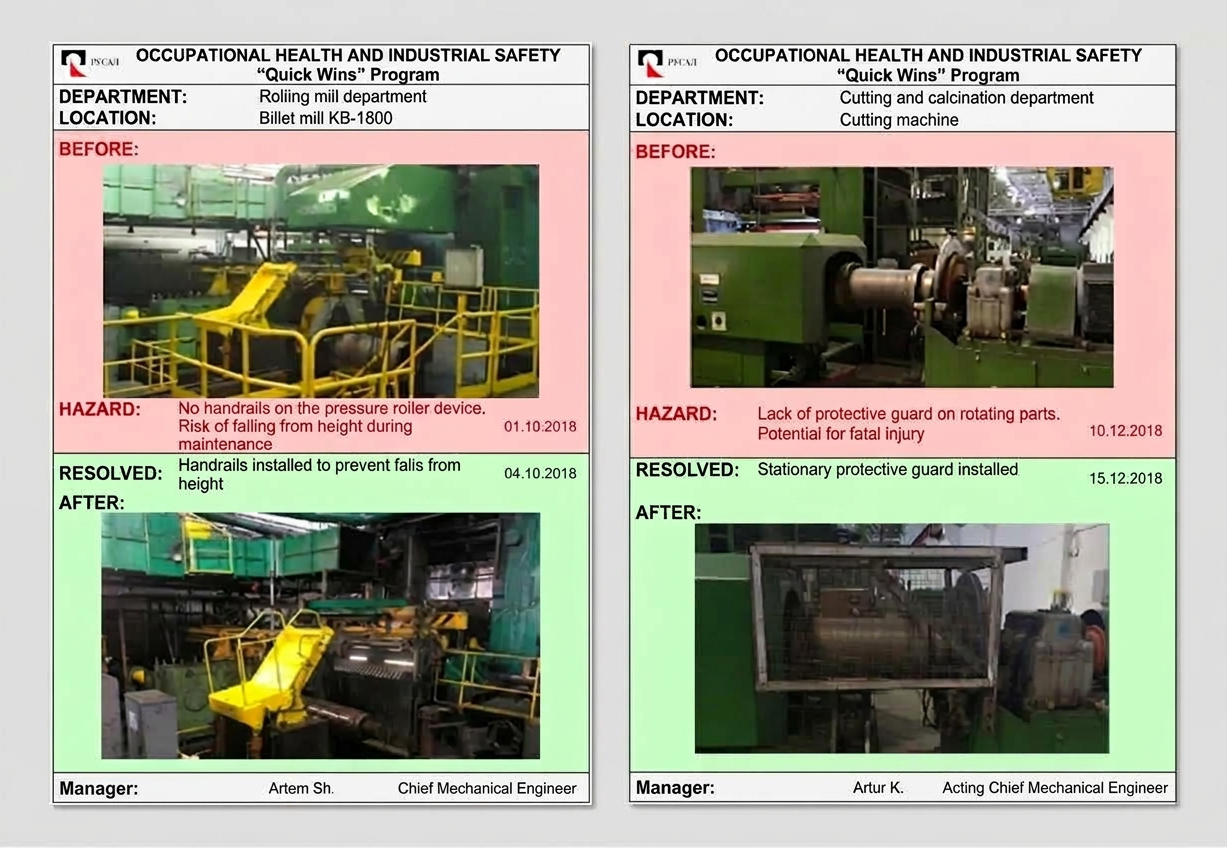
Figure 2. Information sheets on ongoing changes
Naturally, executing our Quick Wins generated significant new streams of information. To manage this large volume of data, we needed a simple and convenient IT tool.
At the launch stage, the tools we had on hand proved quite sufficient:
Centralized electronic repositories.
Specially developed Excel files with VBA (Visual Basic for Applications) automation.
These simple — and notably free — solutions delivered almost all the functionality we needed:
Eliminated clutter in email correspondence and scattered files.
Helped verify observations and control their quality.
Enabled automated data analysis and KPI monitoring.
Ensured the generation of required reports in the right format at the right time.
4. Initial Results: All Systems Go
The Quick Wins initiative yielded compelling results (table).
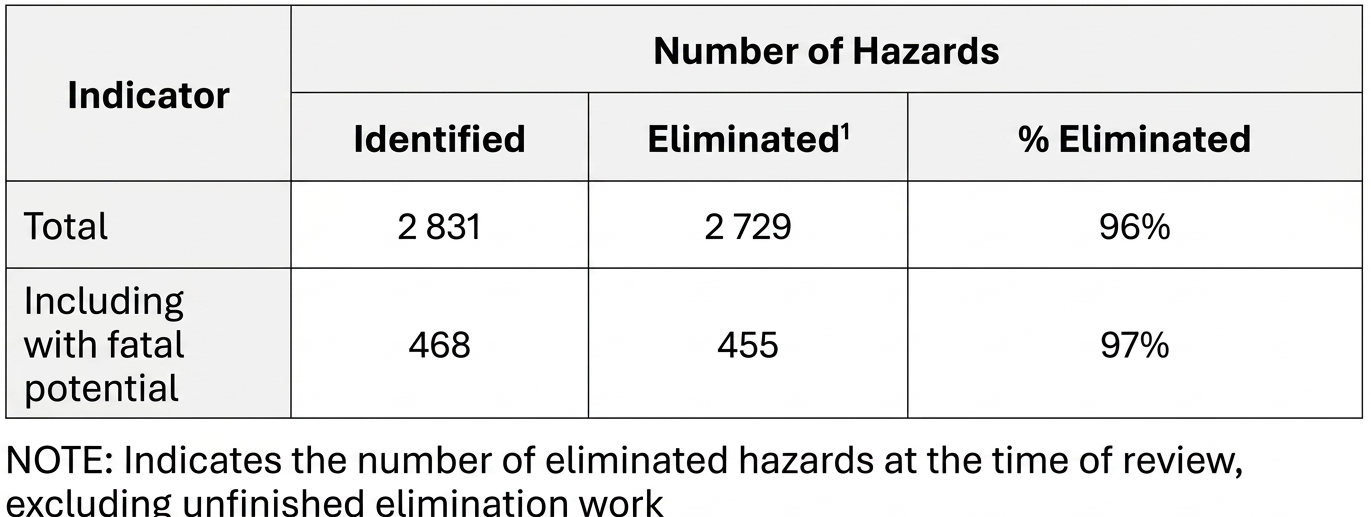
In just three months, our small pilot groups identified and eliminated nearly as many hazards as all plant foremen and line managers combined over the entire previous year — with a difference of only 16%.
The following hazard categories dominated the overall structure:
Workplace housekeeping.
Electrical safety.
Pedestrian movement.
Fire safety.
Equipment safety.
Rotating and moving machine parts.
Furthermore, one in six hazards (17%) carried potential for a fatality.
You might say, "It couldn't have gone that smoothly!" — and you would be right.
Breaking the long-standing habit of check-the-box compliance in inspection logs was not easy for some participants. We had to help them realize that their role was now key — the role of a leader.
We addressed this challenge using two additional tools:
Verification and quality control of observations, including rejection when signs of unreliability were detected.
Regular assessment of individual contributions to overall team results.
Reviewing the outcomes, Division management acknowledged that the set goals had been achieved. Among the three winning teams, the top-performing team received special recognition, and its members were awarded monetary bonuses.
However, our main achievement lies elsewhere: all Quick Wins participants were able to see themselves and their routine work processes in a new light. They saw firsthand the effectiveness of the upcoming changes, testing and reinforcing their practical skills.
Our HSE team gained equally valuable experience. We found solutions to the most challenging methodological and organizational questions. This helped us gain a clear understanding of the features required in our future corporate IT system.
You have probably already guessed: while working on Quick Wins, we were simultaneously preparing to launch a full-scale management program.
Thus, our safety observations got off the ground smoothly. All teams fulfilled their tasks as planned and are in good shape.
Let's draw the line here for now.
* * *
In the next part of the article — the story of our "Look Around" program:
Why it is NOT just software (or rather, far more than just software).
Why we needed "control entities."
How personal accountability was assigned.
What progressive safety incentives look like.
And much more...
To be continued.
Stay tuned!