The Wheel of Life
In continuation of the topic "Emotional Burnout," I want to share one of the practices that my yoga teacher introduced to me.
Sometimes work takes up all our free time, leaving none for personal life. We are torn between career and family, while forgetting about rest and health. We give all our energy to raising children, leaving no time for hobbies and activities for the soul. I think everyone is familiar with this.
The Wheel of Life is a tool that helps you assess how satisfied you are with the state of affairs in different areas of your life, analyze existing problems, and realize how to fix them.
The technique was developed in the 1970s by Paul Meyer, founder of the Success Motivation Institute and author of over 100 books on self-development. He created this technique to help people evaluate and improve their lives by paying attention to various aspects.
We are all human, and in our profession, in my opinion, it is essential to seek balance. Since we sometimes have to work non-stop, find solutions here and now, and in some cases, we have no room for error.
One of the advantages of this technique is its simplicity.
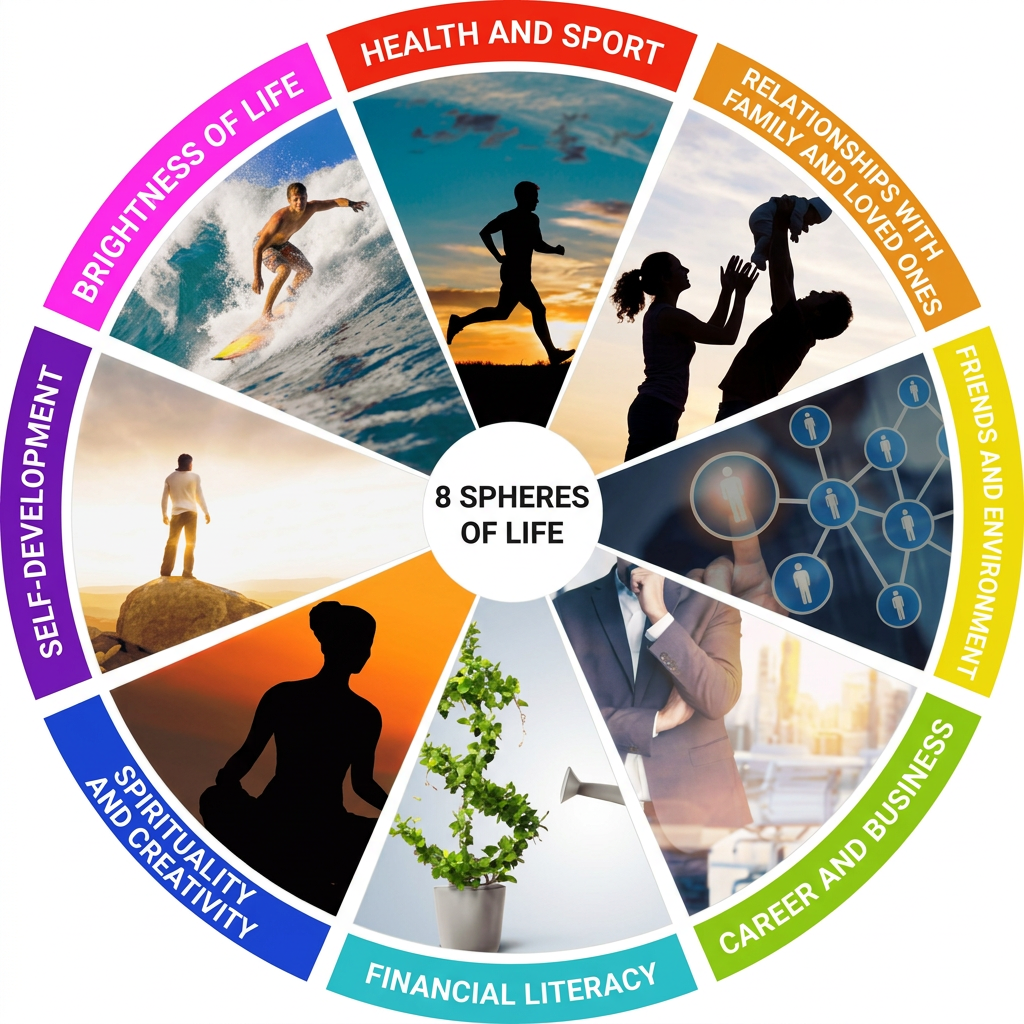
To sort out your life, it is enough to draw a circle on paper and divide it into 8 parts. Each of them will be responsible for specific areas of life:
- health, sports, nutrition;
- family, children, love;
- friends, relatives;
- career, business;
- financial literacy, money, wealth;
- spirituality, creativity, hobbies, entertainment;
- self-development, personal growth;
- vibrancy of life, rest, free time, travel.
Then divide each sector into 10 equal parts. Mark the center with the number zero, and the edge of the circle with the number ten. Rate each area on a scale from 0 to 10, where 0 is "everything is bad" and 10 is "everything is wonderful." Shade the segment up to the number you determined.
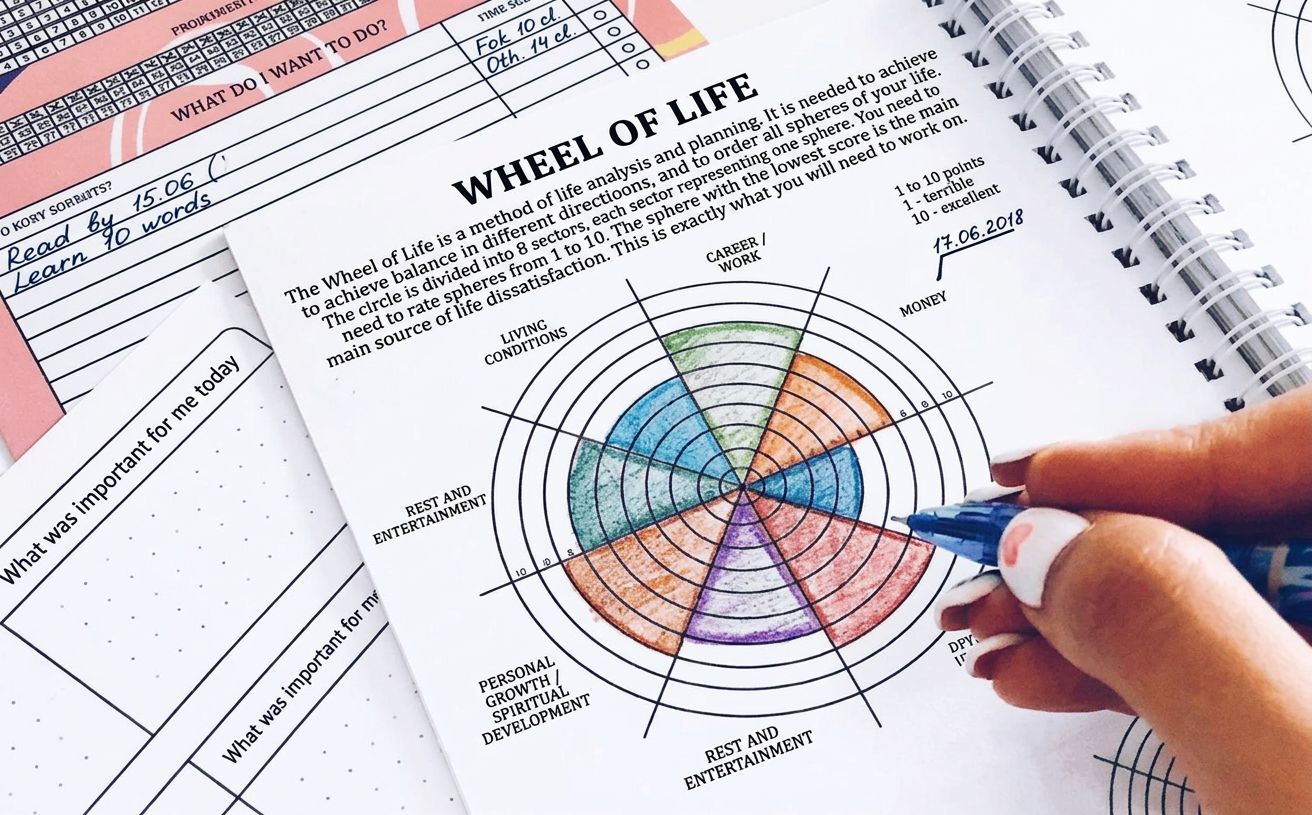
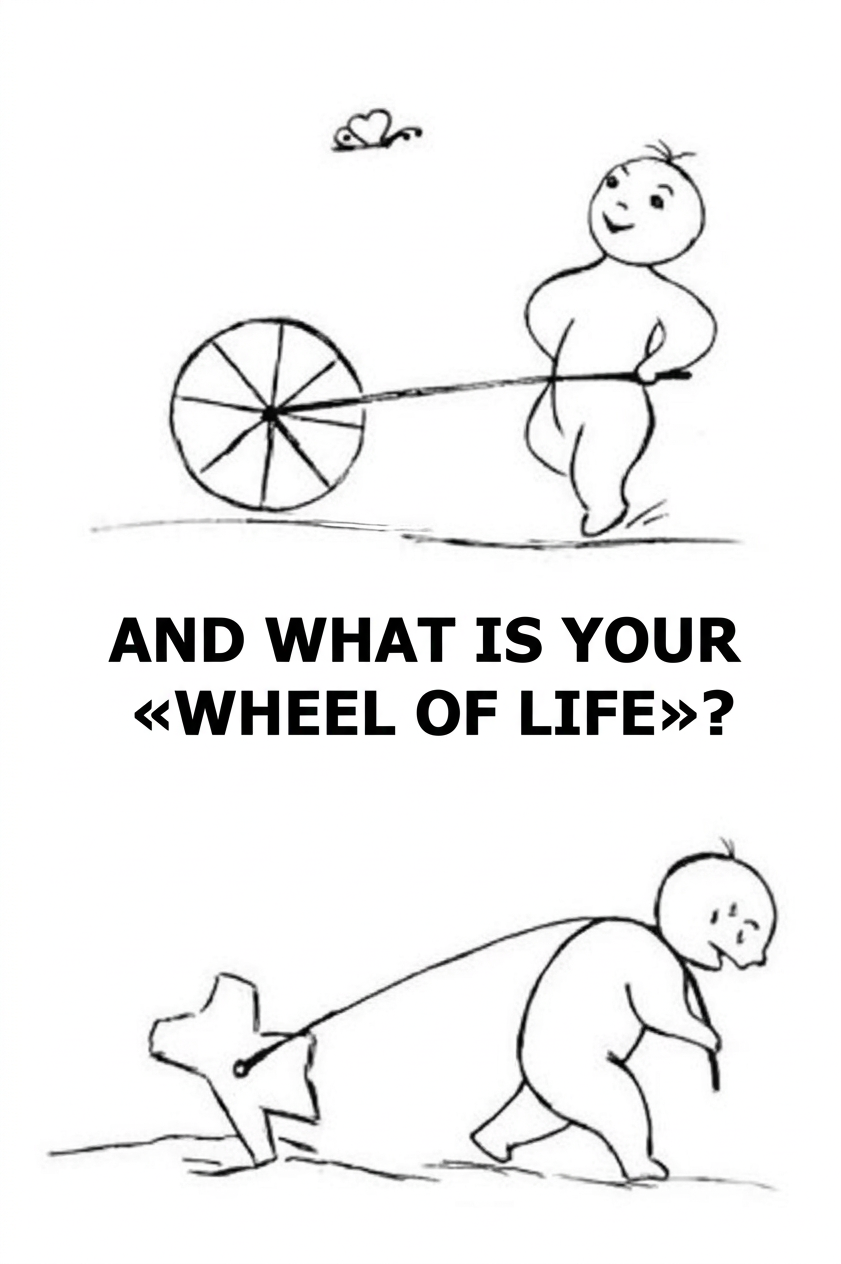
Now look — is your wheel smooth?
Can you ride it without shaking?
Values from 8 to 10 are considered normal — they show that everything is fine in that area. Anything less already requires attention.
Also, ideally, you need to reach these numbers in all areas so that your wheel of life balance rolls smoothly, quickly, and can lead you into a wonderful future. If you see low values somewhere and the wheel itself has major imbalances, then you need to work on leveling it and achieving balance. For more detailed work, you can create your own wheel for each area.
Health
We put this in first place, because in the absence of health, all other areas will also suffer. This point includes physical exercise, nutrition, sleep, psychological state, lifestyle, and so on.
Remember when you last saw a doctor. Think about whether your diet can be called healthy. Is there sport, walking, and full sleep in your life?
Family
Second in importance are relationships with loved ones: spouse, children, parents. This includes love and romance, raising and developing children, calls and trips to parents.
Analyze whether you trust each other, how often you communicate, how much time you spend together. Is there anything you would like to change or improve?
Career
Of course, this will be work, professional skills, promotion, prospects, and career plans. If you are in business, this includes its development and growth.
Figure out if everything suits you in the current state of affairs. Do you like what you do for a living? Are your ambitions being met?
Friends
This area includes your environment: not only friends but also colleagues, relatives, acquaintances, and even neighbors. Some of them can inspire and give positivity, while others can hold you back and drain you.
Hobbies
Everything related to gaining energy, pleasure, and positive emotions. Painting, dancing, yoga, shopping, or swimming — find what recharges and energizes you.
Money
What is your relationship with money: do you know how to save, multiply, and preserve it? Does it come easily? Do you feel a constant lack of money, and if so, why?
Rest
Assess whether you get enough rest. Is it always the way you want it? Do you know how to relax, or even on vacation do you constantly try to do something?
Self-development
This can be reading books, attending trainings and courses, professional development, learning foreign languages, and so on. Evaluate your work on yourself, personal growth, and desire for knowledge.
After the analysis, think about what can be done to improve the lagging areas of life. Set a specific goal and create a plan to achieve it. To make it easier, take two related areas, for example, career and money — improving the first will automatically lead to the development of the second.
Dear colleagues, use the Wheel of Life as a tool for building harmony in your life across its various spheres. You can even create such a wheel with colleagues or family to understand the state of everyone around you.
Thank you for your attention!