4 Stages of HSE Development
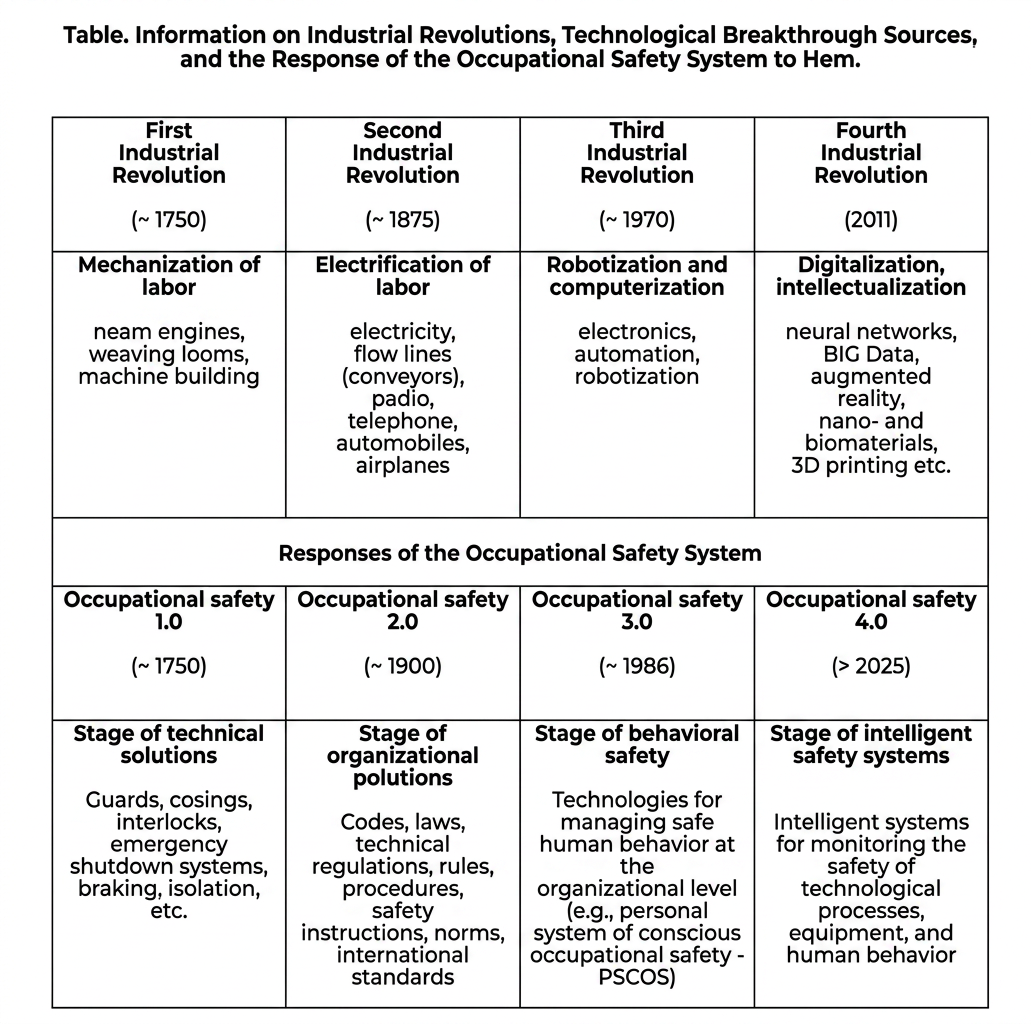
The development of HSE is closely linked to industrial progress. The goal of each stage of this progress — the industrial revolution — is to radically reduce human labor costs per unit of output through the revolutionary introduction of the latest means of production.
In this sense, the development of HSE occurs as a business's adequate response to these revolutionary innovations. It is evident that under these conditions, HSE has undergone and is currently undergoing its own four stages of development (see figure and table).
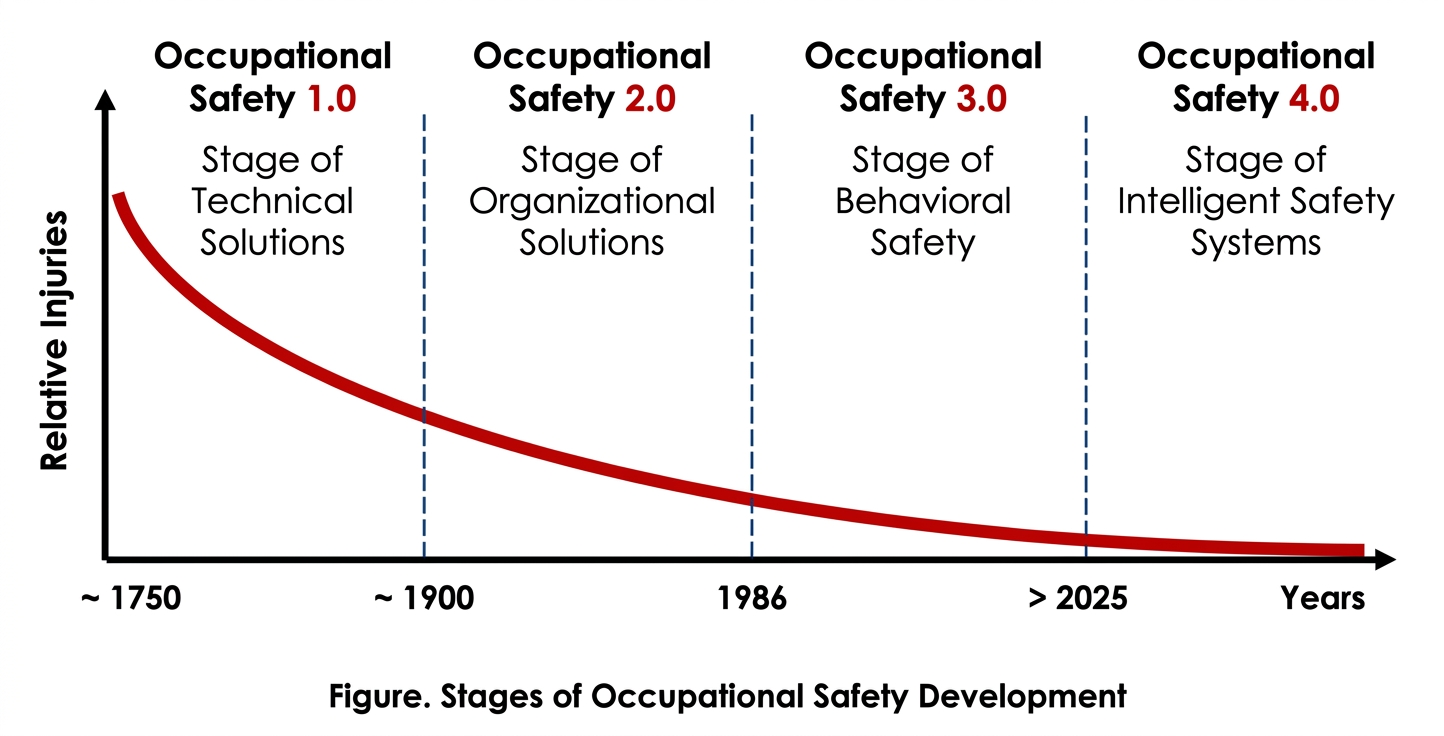
Theoretically, the solutions of the first two stages should reduce injury rates to the required level, but this does not happen. The third stage shows that humans have become the weakest link in the industrial safety triad: "equipment-procedure-person."
The low effectiveness of attempts to change human behavior is due to the fact that they all stem from the interests of the enterprise rather than the worker. This means that today we should abandon the outdated paradigm of the organization-worker relationship as "system-tool" and move to a new "system-system" approach. Within this new paradigm for the third stage, it is necessary to develop new tools for managing safe personnel behavior at the organizational level of the enterprise. One such attempt has been made by the author based on the "Personal System of Conscious HSE" model.
However, even a successful resolution of HSE issues at the third stage does not guarantee the complete elimination of injuries: even if a worker eliminates conscious violations of safety rules, they can still make unintentional violations or errors.
It is clear that with the development of computer and information technologies, the problem of unintentional violations and errors will be resolved at the fourth stage. The beginning of mass application of intelligent safety systems is expected in the second quarter of the 21st century.