On a Model for Adaptation and Mentoring
The primary goal of any organization is to achieve fast and high-quality performance results from a new employee. This goal is met through adaptation and mentoring procedures, each aimed at developing an employee's competencies to a specified level in accordance with corporate requirements.
Adaptation and mentoring represent a two-stage individual on-the-job training system based on the transfer of corporate knowledge, rules, and experience from the organization's most experienced employee to a new or less experienced one.
Adaptation is the process of training and mastering a specific set of necessary competencies by a new employee, ensuring the rapid achievement of performance results in line with organizational standards.
Mentoring is the process of developing a new employee's competencies, aimed at maximizing their professional potential to achieve organizational goals.
New employee training focuses on three areas of competency development:
• Professional
• Organizational
• Cultural
The general structure of the 3-focus model for adaptation and mentoring is shown in the figure below.
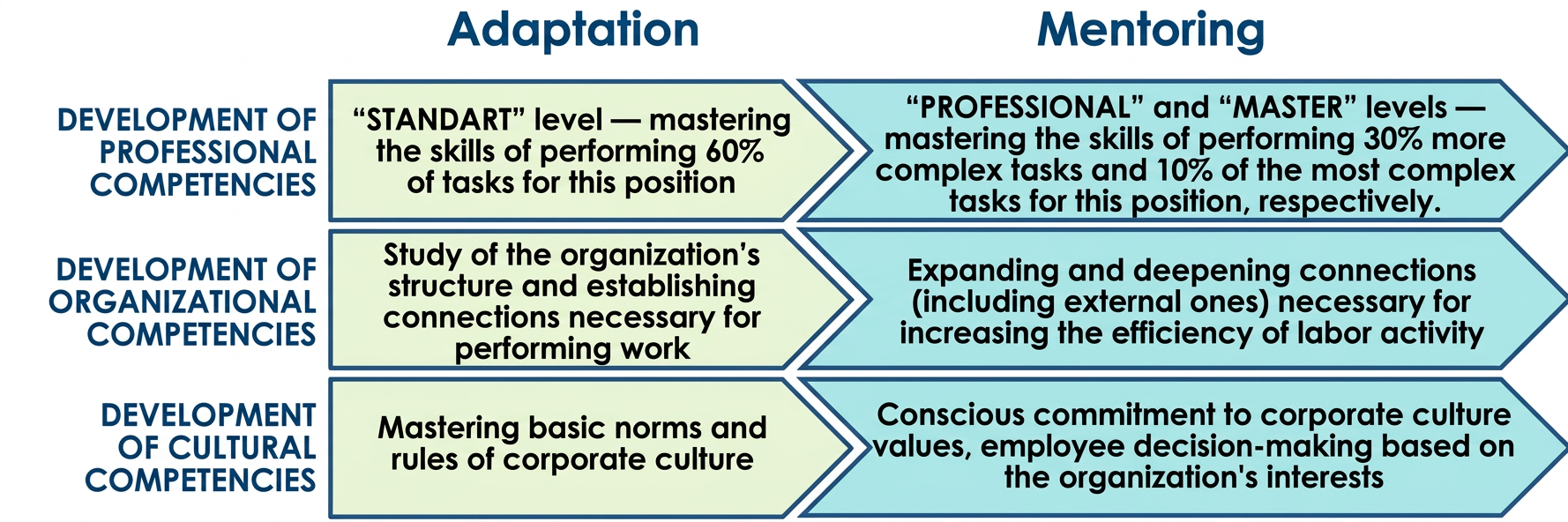
Clearly, mentoring is broader and longer-lasting than adaptation, differing in the depth of mastery across each of the three competency development areas, and it may encompass adaptation.
The recommended duration for the adaptation period should not exceed 3 months, while mentoring should last at least one year. The duration of each stage is determined by the maximum length of the training program (one of the three competency development areas).
The described model clearly defines the objectives and the class of tasks to be solved, both in terms of training areas and the depth of knowledge and skill acquisition at each of the two training stages. This approach ensures the harmonization and consistency of training programs to help the new employee reach the specified level of competency development.