ECOSPACE (Sustainable Development Concept, Goals, Eco-policy)
Currently, there is practically no area of human activity where the term "Ecology" is not used.
Ecology is the science that studies the conditions of existence of living organisms and the relationships between organisms and the environment in which they live.
"Ecology" as a science includes the entire complex of interacting factors, including natural, technological, social, moral, and ethical ones.
Starting from the 60s and 70s of the last century, environmental changes under the influence of anthropogenic (human) and technogenic factors became global, i.e., affecting all countries of the world without exception; therefore, they began to be called global, some of which evolved into environmental problems that pose a threat to the present and future of humanity and require the combined efforts of all states for their solution.
Global environmental problems are:
- Earth's climate change;
- destruction of the ozone layer;
- transboundary air pollution;
- depletion of freshwater reserves and pollution of the World Ocean;
- degradation of land and soil resources;
- reduction of biological diversity;
- increasing environmental damage from natural disasters and technogenic catastrophes.
The number of social and environmental problems is growing faster than countries can accumulate funds to solve them. In this regard, in June 1992, at the UN Conference on Environment and Development in Rio de Janeiro, the Sustainable Development Concept (the Concept) was adopted at the level of heads of state and government. Its main idea was to meet current human needs while preserving the environment and resources — that is, without compromising the ability of future generations to meet their own needs.
Sustainable development is a concept of human development oriented toward ensuring socio-economic growth under the condition of rational use of natural resources and preservation of the environment (Great Russian Encyclopedia).
In 2015, the Concept received a new interpretation: 193 countries of the United Nations adopted the resolution "Transforming our world: the 2030 Agenda for Sustainable Development." This document established 17 Sustainable Development Goals (SDGs). In total, these goals contain 169 targets.
Sustainable Development Goals are a new global development strategy centered on human interests rather than those of individual corporations or political business elites.
The Sustainable Development Goals aim to eliminate poverty, preserve the planet's resources, ensure its protection, improve the quality of life, and enhance prospects for all people worldwide. These 17 Goals are the priority directions for human development (Figure 1).
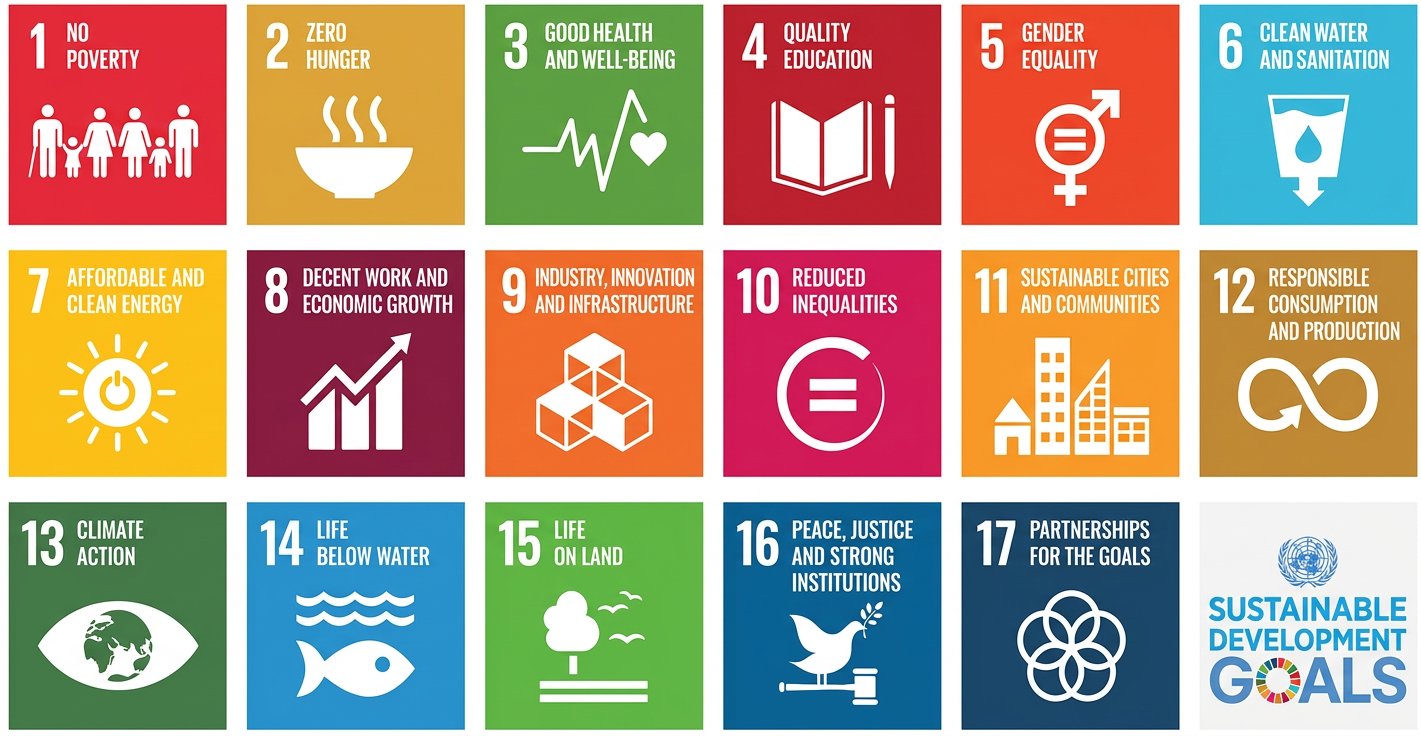
Figure 1 — UN Sustainable Development Goals
The SDGs are not legally binding; nevertheless, states that signed this document are expected to voluntarily take responsibility and create national mechanisms to achieve these goals.
Each goal is aimed at resolving a specific global problem.
All goals are interconnected, as are the tasks within them: achieving one is impossible without achieving others. Implementing the SDGs will allow for a transition to a more sustainable path of economic development, create a fair system for distributing benefits in society, and significantly reduce risks for future generations in their further existence and development.
Corporate social responsibility and the charitable focus of any business, which accumulate social and environmental projects to varying degrees, are structured into the ESG concept, which brings a systematic approach and ultimate goal-setting for the implementation of the SDGs for the benefit of life on the planet:
- E (Environmental) — an organization's attitude toward the environmental situation and its actions to care for the environment. Key elements of the environmental component in a company's activities: environmental management system, conservation of natural resources (electricity, water), atmospheric pollution, land use, waste, energy efficiency, biodiversity, climate change, as well as control over the entire product life cycle: raw material extraction, production, use, and disposal.
- S (Social) — an organization's actions to implement policies of loyal treatment toward personnel, partners, clients, and other members of society. Key elements of social policy in a company's activities: working conditions and safety at work (HSE), personnel policy, human rights and discrimination, social support, care for employees' families, provision of benefits, employment of people with disabilities, social services for the disabled, and interaction with local communities.
- G (Governance) — corporate governance, i.e., how an organization ensures remuneration, defines the rights/responsibilities of managers and personnel, and their social guarantees. Key elements of the corporate governance system: ownership structure, strategy, influence of shareholders/participants, interaction with stakeholders, compliance with the interests of shareholders/participants, risk management and internal control systems, regular reports on all areas of activity, level of disclosure and quality of non-financial information, level of disclosure and quality of financial information, and management in the field of sustainable development.
The concept of sustainable development, despite all its abstractness, encourages large companies to think not only about profits but also about other important aspects. And not just to think, but to act. Implementing ESG standards allows organizations and businesses to launch a process of sustainable development where resources are distributed rationally and investments are directed toward good causes (for example, supporting socially significant projects).
In general, environmental values and social responsibility are coming to the forefront of society today. Manufacturers track how their actions and products affect nature and society. The environmental agenda sounds louder every year; "green" technologies and environmental consciousness are becoming part of our daily lives.
Environmental Policy of Russia
Russia supports the sustainable development strategy and actively implements its main components: environmental, social, and economic. Moreover, support is provided both at the state level and at the level of industrial enterprises.
Currently, the foundations of Russia's environmental policy are established in:
- The Constitution of the Russian Federation (adopted on 12.12.1993);
- Federal Laws:
- No. 7-FZ of 10.01.2002 "On Environmental Protection";
- No. 174-FZ of 23.11.1995 "On Environmental Impact Assessment";
- No. 89-FZ of 24.06.1998 "On Production and Consumption Waste";
- No. 96-FZ of 04.05.1999 "On Atmospheric Air Protection";
- No. 74-FZ of 03.06.2006 "Water Code";
- Decree of the President of the Russian Federation "On the Concept of the Russian Federation's Transition to Sustainable Development" No. 440 of 01.04.1996;
- Order of the Government of the Russian Federation No. 1225-R of 31.08.2002 "On the Environmental Doctrine";
- Order of the Government of the Russian Federation No. 1912-R of 14.07.2021 "On Approval of the Goals and Main Directions of Sustainable (including Green) Development of the Russian Federation."
Environmental policy in Russia is carried out at the legislative, executive, and judicial levels, and is implemented at the federal, regional, and municipal levels of state administration.
Environmental Policy of Rosatom State Corporation
State Atomic Energy Corporation Rosatom (Rosatom State Corporation) is a powerful complex consisting of about 350 enterprises and organizations employing over 250,000 people. In modern conditions, the nuclear industry is one of the most important sectors of the Russian economy. The dynamic development of the industry is an important condition for ensuring the energy independence of our state and the stable growth of the country's economy. Rosatom State Corporation is an organization that implements policies contributing to the development of the regions and territories where its enterprises and subsidiaries are located; special attention is paid to sustainable development, as it has a positive effect on the overall standard of living in the country.
Since October 2020, Rosatom State Corporation has been a member of the United Nations Global Compact — the largest international UN initiative for business in the field of corporate social responsibility and sustainable development.
In its activities, Rosatom State Corporation focuses on the global agenda in the field of sustainable development and adheres to the 10 principles of the UN Global Compact. The Corporation influences the achievement of the UN Sustainable Development Goals through the implementation of its product line and financial and economic results, as well as by ensuring the sustainability of internal processes in the areas of environmental impact, social sphere, and management quality. Overall, the activities of Rosatom State Corporation influence the implementation of all 17 SDGs; however, based on the scale of influence and the specifics of the Corporation's activities, the key goals are:
- No. 7 "Affordable and Clean Energy";
- No. 8 "Decent Work and Economic Growth";
- No. 9 "Industry, Innovation and Infrastructure";
- No. 12 "Responsible Consumption and Production";
- No. 13 "Climate Action";
- No. 17 "Partnerships for the Goals."
In the Russian nuclear industry, through the efforts of many generations of nuclear workers and the modern management of Rosatom State Corporation, a system for implementing environmental policy has been created and functions, meeting the highest international environmental standards. This contributes to the sustainable development of the domestic nuclear power industry and industry and the active promotion of Russia in the international nuclear power market.
"Unified Industry Environmental Policy of Rosatom State Corporation and its Organizations" (Environmental Policy) was developed based on the study and analysis of the experience of creating environmental policies of the largest domestic and global companies (Toshiba, BNFL, Lukoil, Gazprom, etc.) and was introduced by order of the Director General of Rosatom State Corporation dated 05.12.2017 No. 1/1232-P. Subsequently, in order to improve the system for implementing the Environmental Policy, changes were made to it by order dated 29.11.2021 No. 1/1553-P.
The Environmental Policy reflects the strategic goal of the State Corporation — to ensure sustainable development and become one of the world's leading companies in the use of nuclear energy to solve global energy and environmental problems. Rosatom State Corporation pursues a responsible policy regarding environmental safety. It is based on the principles of prioritizing the preservation of natural ecological systems; the mandatory use of the latest scientific technologies and ensuring safety; and the transparency and accessibility of information about the environmental aspects of the industry's activities for a large audience.
In 2009, 65 organizations with environmentally significant production facilities were selected in the Russian nuclear industry. They committed to complying with the principles of the Environmental Policy of Rosatom State Corporation and declared that they would set and fulfill environmental tasks aimed at the continuous improvement of the environmental management system and the reduction of negative environmental impact.