Expert Blog

Water and Hydration Regimes in the Workplace
Maintaining a proper drinking regime in production helps prevent dehydration, increase work capacity, and reduce the risk of occupational diseases. The article explains why under high-temperature conditions fresh water does not restore water balance and how consuming mineralized salted water replenishes salt loss. It also highlights the experience of PJSC "MMK" in providing workers in severe working conditions with balanced drinking water.
Prevention of Acute Respiratory Diseases
The article is devoted to the problem of high incidence of influenza and acute respiratory viral infections (ARVI), the risk of developing dangerous complications, and the decrease in protective immunity to respiratory infections. The material examines key preventive measures, including personal hygiene and good nutrition, as well as explains the role of annual vaccination. The publication will remind readers of the need to consult a doctor at the first symptoms and will suggest how to protect oneself and loved ones from acute respiratory diseases.

"Safety is Everyone's Choice": How Social Networks Help Build a Safety Culture
The article describes the experience of Vorkuta LPUMG in using the social network VKontakte to develop an occupational health and safety culture through the weekly column 'Safety is Everyone's Choice'. The project, based on the principle of peer-to-peer learning, helped go beyond formal information sharing and raise employees' knowledge of safety requirements. The material shows how modern communication tools complement traditional working methods and help convey critically important rules.

HSE Leadership: Why Leaders Set the Safety Culture
The article explains why a sustainable culture of industrial safety is formed through the personal example and practical actions of a leader, rather than solely through regulations and standards. The text describes key elements of leadership — from regular dialogue with the team and supporting positive behavior to effective risk management and analyzing the causes of incidents without searching for someone to blame. The material shows how active management involvement helps employees shift from reacting to preventing incidents and lower the injury rate in the company.

GARANT – the core principle of operational control!
The article is dedicated to improving the production control system through the transition from eliminating deviations to their preventive prevention and the implementation of a barrier risk management model. The author explains key safety principles through the acronym GARANT, revealing the roles of managers, the procedure of active control, and the systemic analysis of the causes of non-conformities. The material shows how a comprehensive approach prevents hazardous situations, reduces occupational injuries, and ensures efficient production.

Organizing and Conducting a Production Safety Cross-Audit
The article is devoted to the practice of organizing and conducting cross-audits of labor and production safety between enterprises of the SUEK company. The author examines how mutual inspection of production facilities by specialists of occupational health and safety services makes it possible to identify non-obvious hazardous situations, exchange practical experience, and diagnose one's own safety system. The material shows the value of joint analysis of similar problems and the application of systemic solutions for the planned reduction of injury risks at open-pit mines.
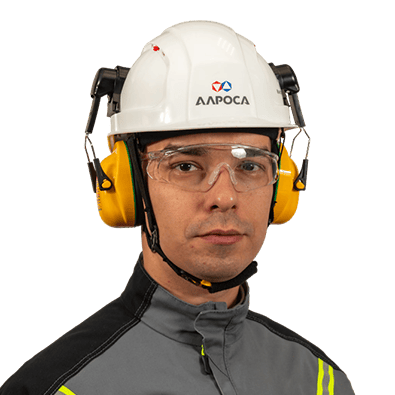
ALROSA Safety Improvement Projects
The article is dedicated to ALROSA's projects on digitalization and improving occupational health and safety at the company's production sites. The material examines the implementation of digital work permit issuance, remote production control, the transition to PPE outsourcing, the LOTO system, as well as the installation of onboard vehicle monitoring kits. The described solutions make it possible to speed up documentation processing, eliminate injuries when working with equipment, and reduce road accident rates.
Personnel Involvement in HSE Management
The article is devoted to the safety system at ALROSA, based on employee engagement, the work of occupational health and safety representatives, and leadership of managers. The material examines public control mechanisms, the procedure for conducting working conditions inspections, and ways to contact the single hotline. Readers will learn how the Company motivates personnel for their contribution to safety and what measures are taken based on the results of reviewing employee appeals.

From Dry Bulletins to Real Stories: How the "Matter of Chance" Video Series Shapes a Conscious Safety Culture
Instead of dry newsletters, the company launched a video series titled "Matter of Chance", in which employees share personal experiences of injuries and safety rule violations. Real stories and candid emotions from colleagues make risks tangible and force one to think about consequences before taking risky actions. This approach helps bridge the gap between formal informing and the formation of a conscious attitude toward safety.

Occupational Risk Assessment: A Crucial Element of the HSE Management System
Occupational risk level assessment allows employers to systematically influence the creation of safe working conditions and the preservation of workers' health. The article explains why involving the organization's own employees helps to move away from a formal approach and make this procedure a "live" mechanism for ensuring safety. Constant monitoring and feedback from personnel allow timely adjustments to risk reduction measures.
Side Rearview Mirrors: A Distance That Costs Lives...
The article explains why the inscription “Objects in mirror are closer than they appear” is applied to the right side mirror of a car and how the convex shape of the mirror expands the field of view. Due to the characteristics of the spherical mirror, the driver can make a mistake in estimating the time to collision by 0.5 seconds. The material describes the purpose of this safety measure and reminds of the need to additionally check “blind spots” by turning one's head.
Conscious Safety. Myth or Reality?
The material examines an approach to conscious safety in production, formed through the knowledge and skills of the employee. The author analyzes key types of attitudes toward rule compliance — 'prisoner', 'vacationer', and 'partner'. The publication helps to understand how a personal choice in favor of safety affects professionalism and the preservation of employees' lives.