5S as a Tool for Occupational Safety
Many are familiar with the 5S system as a tool for workplace standardization. In its classic form, this system is designed to improve production efficiency — in other words, to optimize material and labor costs.
The 5S system is a set of organizational and technical measures for the rational organization of workplaces, ensuring operational safety, increased labor productivity, and improved product quality.
Based on the fundamentals of this system, we are primarily interested in the aspect related to work safety.
Taking this direction as a foundation, the engineering and technical team at JSC "PAVLIK" began implementing the 5S system in 2022. The primary goal of the implementation was to achieve risk reduction and increase the level of work safety, giving this particular point top priority.
The essence lies in standardizing workplaces. Our innovative approach in this area was that, along with standardizing stationary workplaces, we set a goal to standardize mobile workplaces as well (for example, the mobile workplace of a drill rig operator, or a welder performing work outside stationary welding stations, etc.).
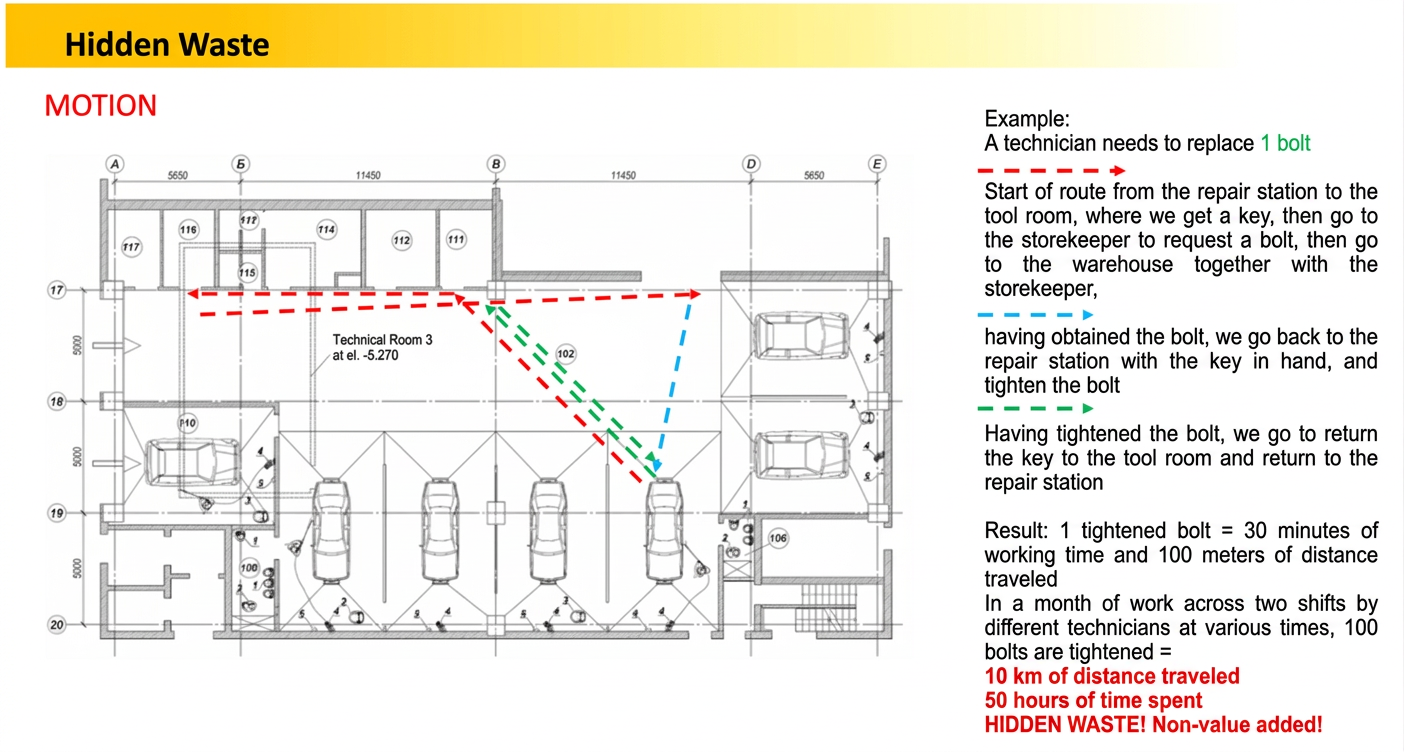
The second important task in this project was the identification and elimination of hidden losses. Or, to put it simply, reducing unnecessary movements and bustle, since every action in production carries a mandatory requirement for risk assessment, and risks arising during unnecessary movements also affect safety.
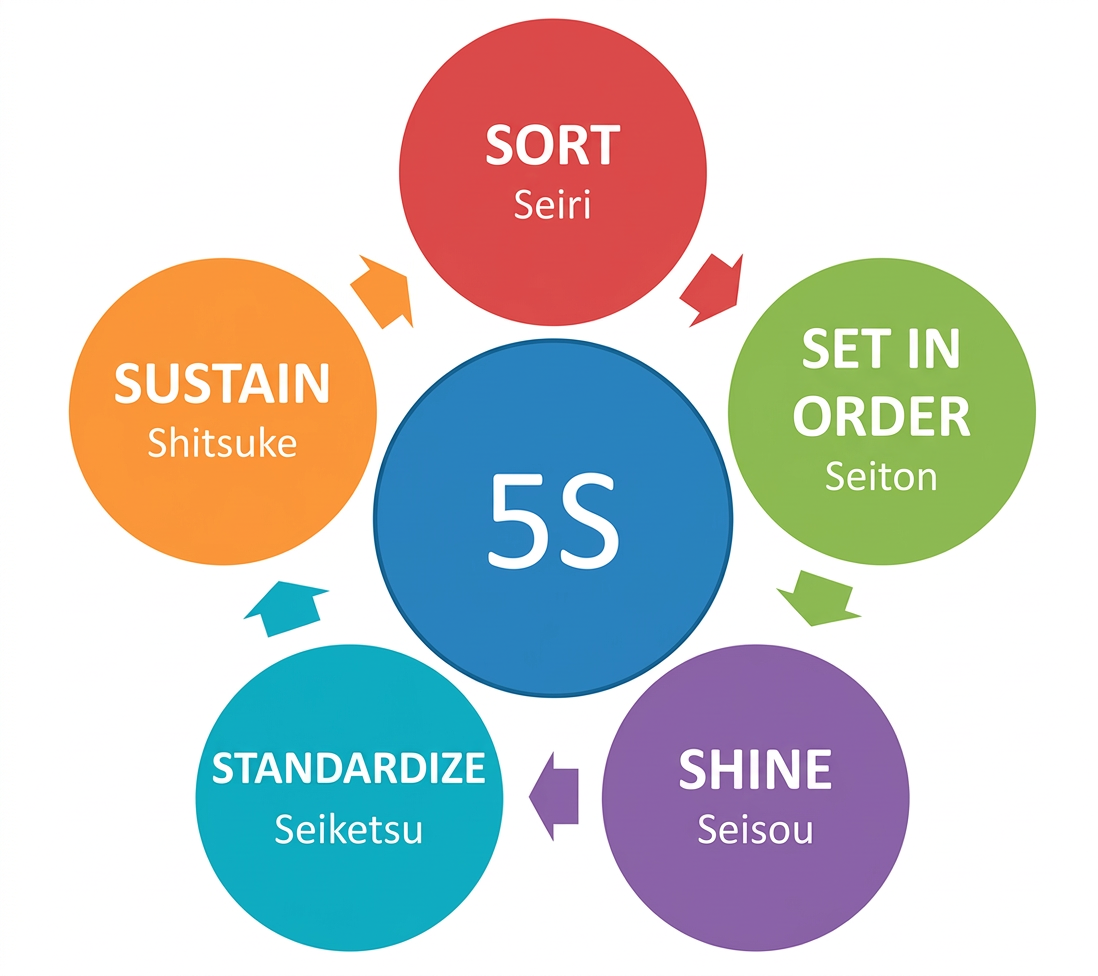
The foundation of the standardization system tool we use remained unchanged and consists of five core elements.
During the implementation process, we also noticed an interesting pattern in element No. 3, "Shine" (Keep it Clean).
Shine — keeping the workplace clean and tidy.
Cleaning the production environment, including machines, tools, floors, walls, and other work surfaces.
Example: An operator tidying up equipment can find many defects. If it is covered in oil, soot, and dust, it is difficult to identify problems that may arise. When cleaning machines or mechanisms, it is easy to find an oil leak, a crack in the coating, or loose nuts and bolts. Once these problems are identified, they are easy to solve.
And subsequent operation of the equipment will be safe.
Overall, by implementing the 5S system from an HSE perspective and achieving the execution of all five elements, we undoubtedly reduce risks and increase the level of safety in the workplace.
In the attachment to this article, I would like to share with my colleagues training material on the 5S system that I developed personally, aimed at achieving the priority goal of safe working conditions in the workplace... and then everything else.